

Dear Investor, Welcome to Deep Research Global.
Executive TL;DR
Abbott (ABT) closed the $21 billion Exact Sciences deal on March 23, 2026, reshaping the Diagnostics segment into a cancer-screening powerhouse and adding Cologuard to the portfolio.
Q2 2026 revenue landed at $12.59 billion, up 13% reported, with adjusted EPS of $1.31 beating estimates. Management raised the 2026 adjusted EPS range to $5.45 to $5.60.
Medical Devices grew 9% to about $5.85 billion in Q2, driven by CGM, Structural Heart, and Electrophysiology. Nutrition slipped 3.6% comparable, the current soft spot to watch.
Balance sheet stays investment grade even after the Exact Sciences cash payout, and the company just declared its 410th consecutive dividend, extending a 53-year growth streak.
Recommended - Read Full Reports

Read All Reports
Table of Contents
Executive TL;DR
Introduction
Abbott Company Profile: Key Facts Snapshot
Abbott Investment Thesis
Abbott Business Model Overview
Abbott Revenue Analysis
Quarterly Earnings Guidance, Margins, and Earnings Quality
EPS Trajectory
Cash Flow Mechanics
Balance Sheet Health
Abbott Segment-by-Segment Teardown
Major Abbott Competitors
Abbott Strategic Context
Abbott Valuation Framework
Bull, Base, and Bear Case Scenario Analysis
Key Risks for Abbott
Catalysts to Watch
Latest Analyst Price Targets
My Final Thoughts
Official Sources and Data
Disclaimer: This analysis is for informational & educational purposes only and should not be construed as investment advice. Investors should conduct their own due diligence before making investment decisions. Past performance does not guarantee future results.
Introduction
Abbott (ABT) spent $21 billion of shareholder cash on a colorectal cancer diagnostics maker, cut its own earnings guidance the same day it announced the deal, and then… its stock quietly held up while management delivered two straight beats. Not a fireworks show. A grind higher.
That grind is the thesis.
Abbott isn’t the sexiest name in medtech. It doesn’t have a GLP-1. It doesn’t have a robotic surgery platform stealing headlines.
What it does have is a durable four-legged business, a CGM franchise crossing key scale thresholds, and a newly acquired cancer screening asset that took Diagnostics from a shrinking, COVID-hangover story to a top-line growth engine again.
For investors sizing up ABT for the back half of 2026 and into 2027, the question is whether the Exact Sciences bet, the tariff drag, and the nutrition softness will get in the way of the double-digit EPS story management keeps promising.
Let’s analyze it all.

Abbott Company Profile: Key Facts Snapshot
Abbott Laboratories is an Illinois-domiciled diversified healthcare company. Founded in 1888 by Dr. Wallace Abbott. Publicly traded on the NYSE under the ticker ABT. Headquarters in Abbott Park, Illinois. And it has been paying dividends without interruption since 1924.
The company operates through four reporting segments after the AbbVie spin-off years ago: Established Pharmaceuticals (branded generics for emerging markets), Nutrition, Diagnostics, and Medical Devices. That’s it. Four buckets. Simple to model on paper, tricky to model in practice because each bucket has its own cyclicality.
Full-year 2025 sales came in at $44.3 billion, up 5.7% reported. Adjusted operating margin was in the mid-23% range. R&D spend hit $2.94 billion for the year, roughly 6.6% of sales, which is on the low side for a medtech and near the middle for a diversified healthcare.
Global employees are north of 114,000 across 160-plus countries.
Company snapshot (Abbott Laboratories, ABT):
- HQ: Abbott Park, Illinois, USA
- CEO / Chairman: Robert B. Ford (since Mar 2020 / Dec 2021)
- Ticker / Exchange: ABT / NYSE
- FY 2025 revenue: $44.3B
- FY 2025 R&D: ~$2.94B
- Segments: Established Pharma | Nutrition | Diagnostics | Medical Devices
- Dividend streak: 53 years (Aristocrat)
- Consecutive quarterly dividends: 410
Chairman and CEO Robert Ford took over as CEO in March 2020, right into the pandemic, and became chairman in December 2021. His 23-year Abbott career has been mostly on the medical devices side, and it shows in the way he talks about the company.
Abbott Investment Thesis
Why now, and why Abbott specifically
The short version: Abbott is buying a durable, mid-single-digit organic grower for what should be a mid-teens EPS growth story, if the Exact Sciences integration lands. The stock, hovering in a mid-90s to low-100s range through most of 2026, hasn’t fully re-rated for that scenario.
The medium version: Abbott has four independent growth engines and only two of them have to fire well for the earnings model to work. Right now, Medical Devices and Diagnostics are firing. Nutrition is stalled but stabilizing. EPD is quietly ripping in emerging markets.
The long version comes next. Read on.
The four-legged stool argument, revisited
Investors love the “diversification protects you” argument. Fine. But diversification alone isn’t a thesis.
The real point about Abbott is that no single segment can sink it and no single product line can carry it. That’s structurally different from Dexcom (concentrated in CGM), Medtronic (concentrated in devices), or Roche Diagnostics (concentrated in labs). It shapes how the stock trades.
When infant formula blew up in 2022, Abbott absorbed the hit. When COVID testing rolled off in 2023 and 2024, Abbott absorbed the hit. When the FreeStyle Libre gets pricing pressure in Europe, Diagnostics or Structural Heart usually fills the hole. It doesn’t always look pretty inside a quarter, but the annual number keeps grinding.
The Exact Sciences bet in short
Abbott paid $105 per share in cash for Exact Sciences. Total equity value about $21 billion. Deal closed March 23, 2026. Exact was projected to generate more than $3 billion of revenue this year, most of it from Cologuard, the stool-based colorectal cancer screening test.
Why does Abbott want this?
Because its own Diagnostics segment, minus COVID, was structurally boring. Core lab is a slow grower. Rapid diagnostics was in decline post-pandemic. Adding Cologuard, plus Exact’s Oncotype DX line for cancer treatment decisions, plus a pipeline in MRD (minimal residual disease) and MCED (multi-cancer early detection), immediately turns Diagnostics into the fastest-growing segment inside Abbott.
That’s a business mix shift, not just a bolt-on. Which is what management is actually selling here.
Abbott Business Model Overview
Selling into three very different types of buyers
Abbott sells into three fundamentally different customer types.
Hospitals and labs pay for its high-end diagnostics and cardiac devices with long procurement cycles. Consumers and pharmacies pay for its Nutrition brands and, increasingly, its over-the-counter Lingo biowearable. And emerging-market physicians and pharmacies pay for EPD’s branded generics with much less pricing power than a US hospital sale.
This matters because each channel has a different sales cycle, gross margin structure, and receivables profile.
When people call Abbott “defensive,” they’re really pattern-matching on the fact that at least one of those channels is usually resilient in any given macro environment.
The recurring revenue quality nobody prices in
A big chunk of Abbott’s revenue is what I’d loosely call annuity-like. Not SaaS. But sticky.
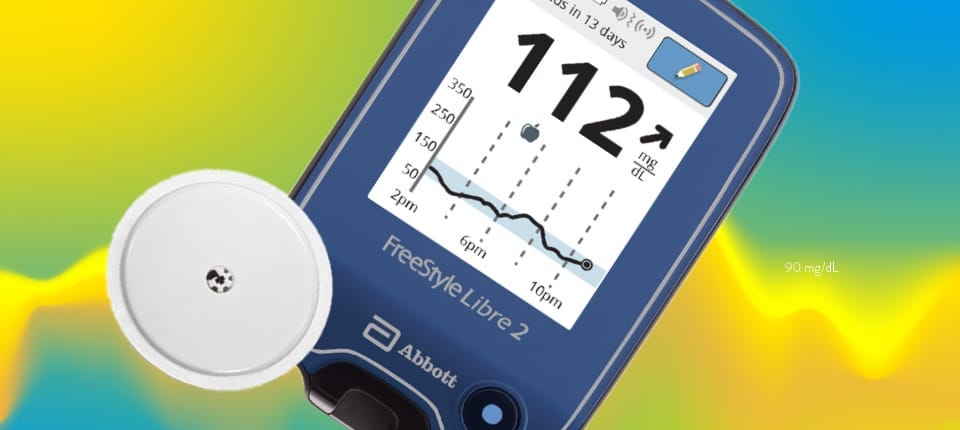
FreeStyle Libre sensors are consumables that a diabetic user replenishes every two weeks. Alinity diagnostics analyzers, once placed in a lab, generate multi-year reagent pull-through. TriClip and MitraClip generate follow-on imaging and echocardiography referrals. Cologuard is recommended for repeat screening on a three-year interval for average-risk adults.
Consumables and reagent pull-through don’t get the same multiple as software recurring revenue. That’s a market inefficiency that Abbott has quietly exploited for two decades.
Rough revenue durability profile (my read):
- Nutrition (Ensure, Similac, Pedialyte): recurring, low switching, brand-driven
- Diabetes Care (Libre + Lingo): consumable-driven, high stickiness
- Structural Heart / EP: procedure-driven, physician preference sticky
- Diagnostics (Alinity + Cologuard): reagent + repeat-testing recurring
- EPD: prescription-driven, emerging market volume growth
R&D that actually converts into launches
Abbott spends about 6-7% of sales on R&D. That looks light next to pure medtech peers like Boston Scientific or Edwards. But the conversion into commercial products has been reasonably efficient in recent years. Volt PFA, AVEIR DR, TriClip, Esprit BTK, Navitor, Libre 3, Lingo. All hit the market inside the last 3 years.
Management flagged more than 15 new growth announcements in 2024 alone as part of its Q4 2024 commentary. The pace hasn’t slowed in 2025 or into 2026.