

American Electric Power Company $AEP ( ▲ 0.58% ) stands as one of the largest electric utilities in the United States.
The Columbus, Ohio-based power giant serves approximately 5.6 million customers across an 11-state footprint spanning 200,000 square miles.
As 2026 approaches, AEP finds itself at a defining moment, propelled by unprecedented electricity demand growth driven by data centers and industrial expansion.
Meanwhile, it’s simultaneously managing the complexities of grid modernization, regulatory oversight, and the ongoing energy transition.
Table of Contents
Understanding AEP’s Current Position
AEP operates as a pure-play regulated electric utility with diversified operations spanning both vertically integrated utilities and transmission and distribution businesses. The company owns and operates the nation’s largest transmission network, with approximately 40,000 circuit miles of transmission lines and 252,000 distribution miles.
In October 2025, AEP announced a remarkable upgrade to its growth trajectory. The company unveiled a $72 billion five-year capital investment plan running from 2026 through 2030, representing a substantial increase from previous projections. This ambitious capital program supports a new long-term operating earnings growth rate of 7% to 9%, with expectations for a 9% compound annual growth rate (CAGR) through 2030.
Strengths: Foundation for Growth
Unmatched Transmission Infrastructure
AEP’s transmission network represents its most formidable competitive advantage. As the largest transmission operator in the United States, the company operates critical high-voltage infrastructure that forms the backbone of regional power grids. This includes the nation’s only 765 kV transmission network, which offers superior efficiency for long-distance power delivery.
The company’s transmission footprint spans three regional transmission organizations (RTOs): PJM Interconnection, Southwest Power Pool (SPP), and the Electric Reliability Council of Texas (ERCOT). This geographic diversity provides operational resilience and multiple growth opportunities across different regulatory environments.
Transmission Metric
PJM
SPP
ERCOT
Total
Transmission Stations
1,501
442
445
2,388
Transmission Line Miles
22,024
8,298
10,699
41,021
Retail Customers
3,379,116
1,141,438
1,130,769
5,651,323
In January 2025, AEP completed a transformative transaction by selling a 19.9% minority stake in its Ohio and Indiana Michigan transmission companies to KKR and PSP Investments for $2.82 billion. This strategic partnership provides substantial capital while maintaining operational control, validating the premium value of AEP’s transmission assets.
Explosive Load Growth Driven by Data Centers
AEP benefits from remarkable demand growth unmatched by most utility peers. The company projects retail load growth of 8% to 9% annually through 2027, primarily driven by commercial and industrial customers, particularly data centers. This represents a dramatic shift from the decades of flat to modest growth that characterized the utility sector.
By 2030, AEP anticipates total peak load of approximately 65 GW, incorporating 28 GW of incremental contracted load backed by Energy Service Agreements (ESAs) and Letters of Agreement (LOAs). Three-quarters of this new demand stems from data centers supporting artificial intelligence and cloud computing infrastructure.
In July 2025, the Public Utilities Commission of Ohio (PUCO) approved AEP Ohio’s innovative data center tariff, requiring large facilities to commit to paying for at least 85% of their contracted capacity for up to 12 years. This groundbreaking regulatory framework protects existing customers from cross-subsidization while enabling AEP to invest confidently in infrastructure to support massive new loads.
Strategic Geographic Positioning
AEP’s service territory encompasses high-growth states positioned to benefit from domestic manufacturing resurgence, data center expansion, and population migration. Key growth markets include:
Indiana: Manufacturing renaissance and logistics expansion
Ohio: Data center hub development and advanced manufacturing
Oklahoma: Energy sector strength and distribution logistics
Texas: Technology sector growth and renewable energy development
This geographic footprint provides exposure to diverse economic drivers while maintaining regulatory stability across multiple state jurisdictions.
Federal Support and Financing Advantages
In October 2025, AEP received a significant boost when the U.S. Department of Energy finalized a $1.6 billion loan guarantee through the Loan Programs Office. This favorable financing supports upgrading nearly 5,000 miles of transmission lines across Indiana, Michigan, Ohio, Oklahoma, and West Virginia.
The loan guarantee delivers an estimated $275 million in savings to customers through reduced financing costs while accelerating critical infrastructure improvements. This demonstrates AEP’s ability to access federal programs that enhance returns while benefiting ratepayers.
Strategic Quanta Services Partnership
In November 2025, AEP and Quanta Services announced a strategic partnership to advance transmission and power infrastructure development. The agreement combines AEP’s operational expertise as the nation’s first and largest 765 kV operator with Quanta’s proven construction capabilities.
This partnership enhances project execution efficiency, improves cost competitiveness, and accelerates delivery of critical transmission infrastructure. The collaboration addresses industry-wide constraints in skilled labor and specialized equipment while supporting AEP’s $72 billion capital program.
Image source: commons.wikimedia.org
Balanced Generation Portfolio
AEP maintains a diversified generation fleet totaling approximately 30 GW of owned and contracted capacity. The portfolio spans natural gas (45%), coal (23%), renewables (28%), nuclear (4%), and demand response programs.
The company has successfully executed a coal retirement strategy, reducing coal capacity from 24,800 MW in 2010 (representing 26% of net plant) to approximately 10,680 MW in 2024 (9% of net plant). Planned retirements through 2028 will further reduce coal exposure to approximately 6,500 MW (4% of net plant).
AEP is investing $9.4 billion in renewable energy projects through 2028, positioning the company to meet carbon reduction targets of 60% below 2000 levels by 2030 and 80% by 2050.
Weaknesses: Challenges to Navigate
Regulatory Lag and Rate Case Complexity
Despite operating in states with generally supportive regulatory frameworks, AEP faces inherent regulatory lag between capital deployment and cost recovery. The company operates across 11 states with varying regulatory environments, rate case procedures, and recovery mechanisms.
Rate case cycles can extend 9 to 13 months from filing to final order across different jurisdictions. This creates cash flow timing challenges, particularly given the magnitude of AEP’s capital program. While approximately 90% of transmission capital benefits from tracker or rider mechanisms that minimize regulatory lag, distribution and generation investments face more traditional rate case processes.
Customer Affordability Concerns
As AEP pursues aggressive infrastructure investment, customer affordability emerges as a material constraint. In 2025, utility rate increases requested and approved totaled $9 billion in Q2 alone, making 2025 a record year for utility rate escalation nationally.
AEP Ohio customers faced opposition to proposed rate increases in December 2025, with residential bills set to rise approximately $4 per month on average. The tension between necessary infrastructure investment and customer bill impacts creates political and regulatory pressure that may constrain rate relief or extend regulatory proceedings.
AEP State
Rate Case Test Year
Months to Final Order
Fuel Clause Frequency
Ohio
Forecast (optional)
12 months
Semi-Annual
Indiana
Historical/Forecast/Hybrid
10 months
Bi-Annual
Oklahoma
Historical
9 months
Semi-Annual
Texas (ERCOT)
Historical
10 months
Annual
Virginia
Historical
10 months
Annual
Data center demand growth, while beneficial for revenue, creates allocation challenges. Existing customers express concern about subsidizing infrastructure for new large loads, particularly when those loads may not materialize as projected.
Coal Asset Stranded Cost Risk
Although AEP has significantly reduced coal exposure, remaining coal plants face accelerating retirement timelines driven by economics, environmental regulations, and renewable competition. The company’s 2025 to 2028 retirement plans include approximately 4,800 MW of coal capacity.
Regulatory recovery of remaining undepreciated investment in retiring coal plants remains uncertain. While regulatory frameworks generally support prudent investment recovery, disallowances or extended amortization periods reduce shareholder value and complicate capital planning.
Capital Intensity and Financing Requirements
AEP’s $72 billion capital program through 2030 represents approximately 10% rate base CAGR. This ambitious investment pace requires substantial external financing, creating exposure to interest rate fluctuations and capital market conditions.
As of September 2025, AEP maintained strong liquidity of $6.8 billion, including $6.0 billion in revolving credit facilities and $1.1 billion in cash. However, the company’s long-term debt maturity profile requires ongoing refinancing, with billions in maturities throughout the five-year capital period.
Rising interest rates in 2024 and 2025 increased financing costs for utilities sector-wide. While AEP benefits from investment-grade credit ratings and diversified banking relationships, elevated interest rates compress returns and may pressure authorized returns on equity (ROEs) in future rate cases.
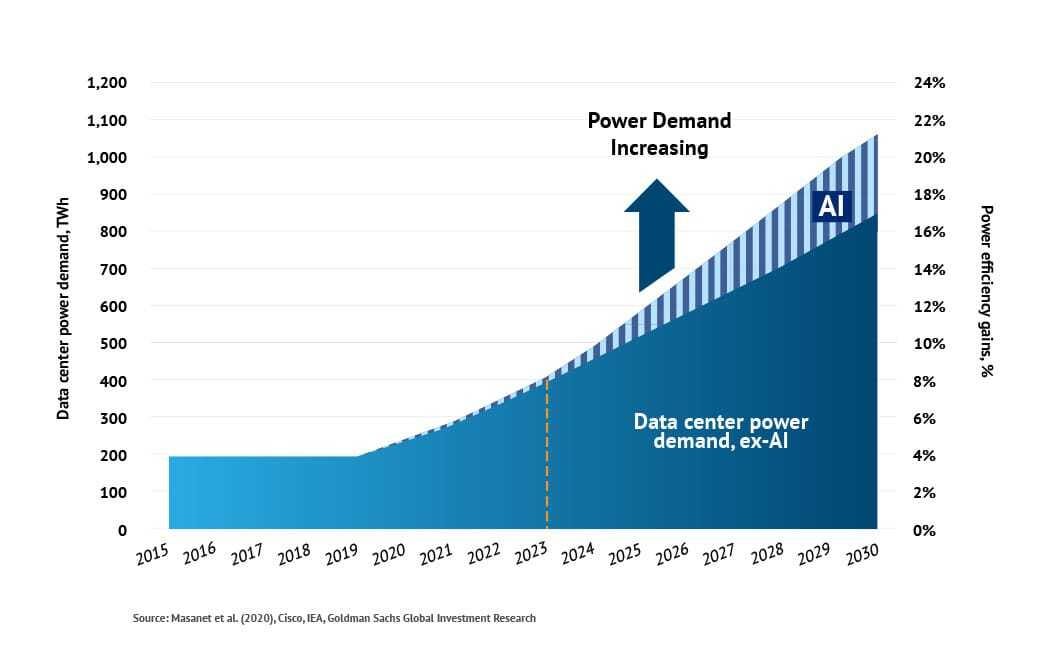
Image source: navitassemi.com
Data Center Demand Uncertainty
In October 2025, AEP’s electric load forecast dropped from 17,890 MW to 9,296 MW after Ohio PUCO implemented requirements for large loads to prepay for infrastructure. This substantial revision highlights the speculative nature of data center development forecasts.
Data centers face multiple development constraints including:
Power availability and delivery timeframes (3 to 7 years for major transmission upgrades)
Water resource requirements for cooling systems
Local permitting and community acceptance challenges
Technology evolution that may reduce power intensity per unit of computing capacity
If projected data center loads fail to materialize as contracted, AEP faces underutilized infrastructure and potential regulatory disallowances for investments not “used and useful” in serving customers.
Opportunities: Pathways to Value Creation
Transmission Investment Acceleration
AEP’s transmission business offers premium returns with reduced regulatory lag. The company’s state transmission companies (Transcos) operate under FERC formula rate mechanisms that provide forward-looking cost recovery with annual true-ups.
Authorized returns on equity for AEP’s transmission assets range from 9.76% to 10.5%, with equity ratios up to 55%. These returns exceed typical distribution and generation ROEs while benefiting from efficient cost recovery mechanisms.
The $72 billion capital plan allocates substantial resources to transmission, including:
High-voltage transmission expansion to support load growth
Grid reliability and resilience improvements
Interconnection infrastructure for renewable resources
Replacement of aging transmission infrastructure
Regional transmission planning processes in PJM, SPP, and ERCOT identify billions in additional transmission needs beyond AEP’s current capital program, creating opportunities for supplemental investment.
Energy Storage and Grid Modernization
Energy storage deployment represents a significant growth vector as intermittent renewable generation increases. AEP can develop utility-scale battery storage projects to provide capacity, frequency regulation, and transmission deferral benefits.
Grid modernization investments in advanced metering infrastructure (AMI), distribution automation, and grid edge technologies enhance operational efficiency while creating new revenue opportunities through time-of-use rates, demand response programs, and distributed energy resource management.
Renewable Energy Development
AEP’s $9.4 billion renewable investment program through 2028 positions the company to develop or contract for solar, wind, and energy storage resources. Regulated renewable development offers:
Federal production tax credits (PTCs) and investment tax credits (ITCs) that enhance returns
Fuel cost certainty compared to fossil generation
Alignment with state renewable portfolio standards and corporate customer sustainability commitments
Positive regulatory reception supporting cost recovery
AEP’s geographic footprint includes excellent renewable resources in Oklahoma, Texas, and Indiana, providing competitive development opportunities.

Image source: sharevault.com
Industrial and Manufacturing Resurgence
Beyond data centers, AEP benefits from broader industrial expansion across its service territory. Manufacturing sectors including primary metals, chemicals, paper products, and food processing demonstrate stable demand growth.
Federal infrastructure legislation, semiconductor manufacturing incentives, and supply chain reshoring initiatives drive industrial development in AEP’s service area. The company’s industrial sales represent approximately 50% of retail revenues, providing diversification from data center concentration.
Natural Gas Generation Expansion
Natural gas generation offers flexible capacity to support renewable integration while providing reliable baseload power. AEP has secured 8.7 GW of gas-fired turbine capacity from major manufacturers, positioning the company to meet near-term capacity needs while advancing carbon reduction goals.
Gas generation complements renewable resources by providing dispatchable capacity during periods of low renewable output. Combined-cycle gas turbine (CCGT) technology offers high efficiency and relatively low emissions compared to coal generation.
Regulatory Innovation
The data center tariff approved by Ohio PUCO in July 2025 represents regulatory innovation that protects existing customers while enabling growth. Similar mechanisms may be adopted in other AEP jurisdictions, providing frameworks for managing large load interconnections.
Forward-looking regulatory mechanisms including multi-year rate plans, performance-based regulation, and accelerated depreciation enhance returns while aligning utility and customer interests. AEP’s scale and regulatory expertise position it to shape constructive policy frameworks.
Threats: Risks to Monitor
Cybersecurity and Physical Security Vulnerabilities
Electric utilities face escalating cybersecurity threats from nation-state actors, criminal organizations, and hacktivists. The U.S. electric grid represents an attractive target for adversaries including China and Russia.
According to federal regulators, the grid’s virtual and physical vulnerabilities grew to approximately 23,000 weak points in 2024. AI-powered malware enables adversaries to rapidly identify vulnerabilities and automate cyber intrusions.
Physical security risks also persist, with substation attacks and copper theft representing ongoing concerns. Critical infrastructure protection requires substantial ongoing investment in both physical security measures and cybersecurity capabilities.
Climate Change and Extreme Weather
Physical climate risks pose increasing threats to utility infrastructure and operations. Extreme weather events including severe storms, flooding, wildfires, extreme heat, and winter storms cause service disruptions and infrastructure damage.
AEP’s service territory spans regions exposed to diverse weather risks:
Ohio River Valley: Flooding and severe thunderstorms
Oklahoma and Texas: Tornadoes, ice storms, and extreme heat
Appalachian region: Flooding and winter storms
Climate adaptation requires substantial investment in infrastructure hardening, vegetation management, emergency response capabilities, and system resilience. These costs create upward pressure on customer rates while potentially outpacing regulatory cost recovery mechanisms.
Competitive Threats and Disruptive Technologies
Distributed generation technologies including rooftop solar, microgrids, and behind-the-meter battery storage enable customers to reduce grid reliance. While currently limited in penetration, technological advancement and cost reduction may accelerate adoption, eroding utility sales and cost recovery.
Demand response and energy efficiency programs, while beneficial for system capacity, reduce energy sales and throughput-based revenues. Decoupling mechanisms address some throughput risk but may not fully offset sales erosion.
Electric vehicle adoption creates both opportunity (increased load) and threat (potential for off-grid charging solutions or customer-owned generation to offset EV load).
Policy and Regulatory Uncertainty
Changes in federal and state energy policy create uncertainty for utility planning and investment. Potential policy shifts include:
Modification or elimination of tax credits supporting renewable energy and carbon capture
Changes to environmental regulations affecting generation facilities
Federal transmission siting and permitting reform (positive or negative)
State-level carbon pricing or cap-and-trade programs
The transition from the Biden administration to a new presidential administration beginning January 2025 introduces policy uncertainty across environmental regulation, energy incentives, and infrastructure funding priorities.
Competition for Skilled Workforce
The utility sector faces workforce challenges including an aging workforce, competition from technology sector employers, and specialized skill requirements for emerging technologies. AEP’s ambitious capital program requires substantial increases in both internal staff and contractor workforces.
Workforce availability constraints may delay project execution, increase labor costs, or force reliance on less experienced personnel, introducing execution risks and safety concerns.
Image source: bakerhomeenergy.com
Interest Rate Sensitivity
Utility valuations demonstrate inverse correlation with interest rates. Rising rates increase financing costs, compress authorized ROEs in rate cases, and reduce the present value of future cash flows.
The Federal Reserve’s monetary policy actions in 2024 and 2025 maintained elevated interest rates to combat inflation. While some rate reduction occurred in late 2024, rates remain substantially above the low levels of 2020-2021.
Utilities’ high debt levels and capital intensity create significant interest rate sensitivity. Each 100 basis point increase in borrowing costs materially impacts earnings and return on equity.
Strategic Implications for Investors
AEP’s investment case centers on accelerating growth driven by unprecedented electricity demand, supported by premier transmission infrastructure and strategic positioning in high-growth markets. The $72 billion capital program and 7% to 9% operating earnings growth rate represent substantial improvements over historical utility sector growth profiles.
Key investment considerations include:
Positive factors:
Industry-leading load growth (8-9% annually through 2027)
Premium returns on transmission investments with reduced regulatory lag
Strong regulatory relationships across 11 states
Federal financing support reducing customer costs
Diversified revenue base across industrial, commercial, and residential segments
Risk factors:
Customer affordability constraints may limit rate relief
Data center load uncertainty following PUCO requirements
Capital intensity requiring substantial external financing
Regulatory recovery uncertainty for retiring coal assets
Cybersecurity and physical climate risks requiring ongoing investment
For investors seeking exposure to structural electricity demand growth, grid infrastructure investment, and the energy transition, AEP offers scale, operational expertise, and financial strength. The company’s pure-play regulated utility structure provides earnings predictability and dividend sustainability, with a current dividend yield of 3.32% supported by a 62% payout ratio.
The 2026-2030 period represents a transformative phase for AEP as it executes its capital program, integrates massive new loads, and advances its clean energy transition. Success depends on regulatory support, customer acceptance of rate increases, execution excellence on capital projects, and realization of contracted load growth.
My Final Thoughts
American Electric Power stands positioned to capitalize on a once-in-a-generation opportunity in electricity demand growth. The convergence of data center expansion, industrial resurgence, and electrification creates a fundamentally transformed growth environment for regulated utilities.
AEP’s unmatched transmission infrastructure, strategic partnerships with Quanta Services and financial investors, and supportive regulatory frameworks provide competitive advantages to execute its ambitious capital program. The company’s geographic footprint in high-growth states and diverse customer base create resilience while capturing multiple growth vectors.
However, investors must weigh these opportunities against material risks including customer affordability pressures, data center demand uncertainty, cybersecurity threats, and climate change impacts. Regulatory execution remains paramount as AEP seeks to deploy $72 billion in capital while maintaining constructive relationships with customers, regulators, and policymakers across 11 states.
As the utility sector enters 2026, AEP exemplifies both the opportunities and challenges facing the industry. The company’s ability to deliver on its growth commitments while managing customer impacts, regulatory requirements, and operational risks will determine shareholder value creation over the coming five years.
The SWOT analysis reveals a company with strong fundamentals and exceptional growth prospects, balanced by execution challenges and external uncertainties inherent to the regulated utility business model.
For investors with appropriate risk tolerance and investment horizons, AEP offers exposure to the infrastructure and energy investments required to power America’s digital and economic future.
Disclaimer: This analysis is for informational purposes only and should not be construed as investment advice. Investors should conduct their own due diligence and consult with financial advisors before making investment decisions.