

The enterprise collaboration software sector continues to experience rapid transformation as organizations worldwide adopt cloud-based productivity platforms.
Atlassian Corporation $TEAM ( ▼ 2.56% ) the Australian software giant behind popular tools like Jira, Confluence, and Trello, stands at a pivotal position as it navigates this dynamic environment.
Our comprehensive analysis examines Atlassian’s strengths, weaknesses, opportunities, and threats as the company positions itself for sustained growth through 2026 and beyond.
Table of Contents
Company Overview and Financial Performance
Atlassian has established itself as a dominant player in team collaboration and productivity software, serving more than 300,000 customers worldwide, including over 80% of Fortune 500 companies.
The company’s fiscal year 2025 performance demonstrated remarkable resilience and growth, with total revenue reaching $5.2 billion, representing a 20% increase year-over-year from $4.4 billion in fiscal 2024.
The revenue breakdown reveals a business model increasingly centered on cloud services. In the fourth quarter of fiscal 2025, Atlassian generated $1,384.3 million in total revenue, with subscription revenue of $1,313 million increasing 23% year-over-year. Cloud revenue specifically surged 26% to $928 million, underscoring the successful migration strategy the company has pursued.
FISCAL YEAR 2025 KEY FINANCIAL METRICS

Total Revenue: $5.2 billion (+20% YoY)
Subscription Revenue: $4.9 billion (+23% YoY)
Cloud Revenue (Q4): $928 million (+26% YoY)
Free Cash Flow: $1.4 billion
Operating Margin (non-GAAP): 25%
Customers >$10K Cloud ARR: 51,978 (+13% YoY)
For fiscal year 2026, Atlassian has provided guidance projecting approximately 18% total revenue growth, with cloud revenue expected to grow approximately 21% year-over-year. This ambitious outlook reflects management’s confidence in the company’s strategic initiatives, particularly in artificial intelligence, enterprise adoption, and cloud migration.
Financial Metric
FY2024
FY2025
YoY Growth
FY2026 Guidance
Total Revenue
$4.4B
$5.2B
+20%
~18% growth
Cloud Revenue Growth
N/A
26% (Q4)
N/A
~21%
Data Center Revenue Growth
N/A
N/A
N/A
~12.5%
Free Cash Flow
$1.4B
$1.4B
0.04%
N/A
Operating Margin (non-GAAP)
23%
25%
+2pp
~24%
However, it’s important to note that while Atlassian demonstrates strong revenue growth and impressive cash flow generation, the company continues to report GAAP net losses.
In fiscal 2025, Atlassian posted a net loss of $256.7 million, though this represents an improvement from the $300.5 million loss in fiscal 2024. This reflects the company’s continued investment in product development, particularly in AI capabilities, sales infrastructure, and strategic acquisitions.
Strengths: Building Blocks of Competitive Advantage
Dominant Market Position and Brand Recognition
Atlassian’s most formidable strength lies in its entrenched position within the enterprise software market. The company powers collaboration for over 80% of Fortune 500 companies, creating significant switching costs and network effects that protect its market share.
The Jira platform has become synonymous with project management and issue tracking, particularly within software development teams. Confluence, the company’s knowledge management solution, captures 1.88% of the knowledge management market, with 312,860 entities having adopted the platform globally. This widespread adoption creates powerful network effects, as teams become increasingly dependent on these platforms for their daily workflows.
Atlassian’s recognition as a Leader in the 2025 Gartner Magic Quadrant for Collaborative Work Management Platforms validates its competitive position. The company also achieved Leader status in The Forrester Wave for Value Stream Management Solutions and DevOps Platforms, demonstrating comprehensive strength across multiple product categories.
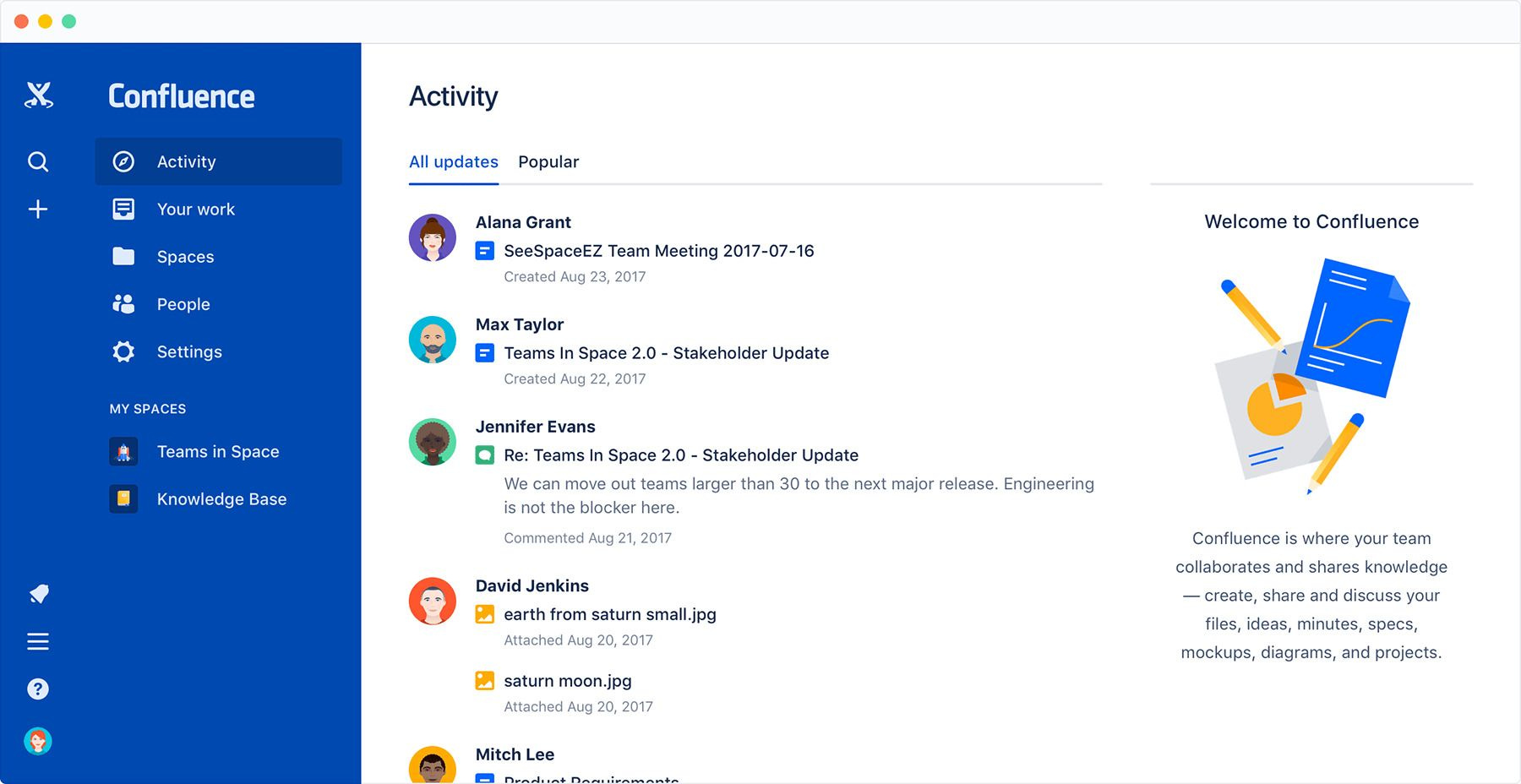
Image source: atlassian.com
Robust Financial Performance and Cash Generation
The company’s ability to generate substantial free cash flow distinguishes it from many high-growth SaaS companies. Atlassian produced $1.4 billion in free cash flow in fiscal 2025, representing a 27% free cash flow margin. This strong cash generation provides financial flexibility for strategic investments, acquisitions, and potential return to profitability when management chooses to prioritize that objective.
The company’s subscription-based revenue model creates predictable, recurring revenue streams with high visibility. Subscription revenue now represents the overwhelming majority of total revenue, providing stability and enabling better long-term planning. The increasing number of customers exceeding $10,000 in Cloud Annual Recurring Revenue (ARR) demonstrates successful expansion within the existing customer base.
Comprehensive and Integrated Product Ecosystem
Atlassian has built a comprehensive suite of tools that address various aspects of team collaboration, creating what the company calls the Atlassian System of Work. This integrated approach offers customers significant value through seamless workflows across different products:
ATLASSIAN PRODUCT PORTFOLIO BY CATEGORY

SOFTWARE DEVELOPMENT
- Jira Software (Agile project management)
- Bitbucket (Git repository management)
- Bamboo (Continuous integration/deployment)
- Compass (Developer experience platform)

WORK MANAGEMENT
- Jira Work Management
- Trello (Visual project boards)
- Confluence (Team collaboration & documentation)

SERVICE MANAGEMENT
- Jira Service Management (IT service desk)

STRATEGIC PLANNING
- Jira Align (Enterprise agile planning)
- Talent (Workforce planning - new offering)
The Atlassian Marketplace further extends the platform’s capabilities, featuring thousands of third-party apps and integrations. This ecosystem has generated over $6 billion in lifetime sales, demonstrating the value partners extract while simultaneously enhancing Atlassian’s core offerings.
Innovation in Artificial Intelligence
Atlassian has made substantial strides in integrating AI capabilities across its platform. The company’s Rovo AI platform represents a significant innovation, combining search, chat, and specialized AI agents to unlock organizational knowledge at scale. By the end of fiscal Q1 2026, Atlassian had achieved 3.5 million monthly active AI users, up from 2.3 million in Q4 fiscal 2025, indicating rapid adoption.
The Rovo Dev product brings agentic AI directly into the command line interface, enabling developers to automate routine tasks like bug fixes and code refactoring. This AI-first approach positions Atlassian to benefit from the industry-wide shift toward intelligent automation in software development and team collaboration.
Atlassian’s strategic partnership with Google Cloud, announced in August 2025, will integrate Gemini models and Vertex AI into core products like Jira, Confluence, and Loom. This collaboration accelerates Atlassian’s AI roadmap while providing access to cutting-edge machine learning infrastructure.
Product-Led Growth Model
Atlassian’s distinctive product-led growth (PLG) strategy has enabled efficient customer acquisition with relatively low sales and marketing expenses. The company allows teams to start using products with minimal friction, often beginning with free tiers or low-cost plans, then expanding organically as usage grows and value becomes apparent.
This model has proven particularly effective for bottom-up adoption within large enterprises. Individual teams can adopt Atlassian tools independently, creating grassroots momentum that eventually leads to enterprise-wide standardization. This approach has allowed Atlassian to scale efficiently while maintaining relatively lower customer acquisition costs compared to traditional enterprise software vendors.
Weaknesses: Challenges Requiring Strategic Attention
Persistent Profitability Challenges
Despite impressive revenue growth and strong cash flow generation, Atlassian continues to report GAAP operating losses. The company recorded an operating loss of $130.4 million in fiscal 2025, compared to $117.1 million in fiscal 2024. While management emphasizes non-GAAP profitability, the persistent GAAP losses raise questions about the sustainability of the current investment pace.
The company’s significant stock-based compensation expenses represent a major factor in these losses. Atlassian has indicated that it expects to achieve GAAP profitability by mid-2027, but this remains a future milestone rather than a present reality. For investors seeking near-term profitability, this extended timeline may present concerns.
Profitability Metric
FY2024
FY2025
Status
GAAP Operating Loss
$(117.1M)
$(130.4M)
Increasing loss
GAAP Net Loss
$(300.5M)
$(256.7M)
Improving
Non-GAAP Operating Income
$1,014.1M
$1,287.3M
Profitable
Non-GAAP Operating Margin
23%
25%
Expanding
Data Center Revenue Deceleration
While cloud revenue continues strong growth, Atlassian’s Data Center business is experiencing significant deceleration. The company’s announcement in September 2025 that Data Center products will reach end-of-life by March 2029 creates both challenges and opportunities.
In the near term, this transition creates headwinds. Sales of new Data Center subscriptions will end on March 30, 2026, and existing customers face a three-year migration timeline. Some enterprise customers, particularly those with stringent data residency, security, or compliance requirements, may resist cloud migration or consider alternative vendors. The guided 12.5% Data Center revenue growth for fiscal 2026 represents a significant slowdown from historical rates.
Recent Major Acquisitions Present Integration Risks
Atlassian made two substantial acquisitions in 2025 that could strain resources and execution. The company acquired The Browser Company for $610 million and DX for $1 billion, representing significant capital deployment.
While both acquisitions align with Atlassian’s strategic vision, integrating these companies successfully requires flawless execution. The Browser Company brings the Arc and Dia browsers, which Atlassian plans to develop into business workflow tools. DX provides engineering intelligence and developer productivity insights. However, as noted by analysts at Seeking Alpha, these acquisitions deplete net cash and may delay operating leverage improvements.
The integration challenges include:
ACQUISITION INTEGRATION RISKS

TECHNICAL INTEGRATION
- Merging different technology stacks
- Data integration across platforms
- Maintaining product stability during transition

CULTURAL ALIGNMENT
- Blending different organizational cultures
- Retaining key talent from acquired companies
- Maintaining product innovation velocity

FINANCIAL IMPACT
- $1.61 billion total acquisition cost
- Reduced net cash position
- Potential delays in profitability timeline

MARKET EXECUTION
- Communicating value proposition to customers
- Cross-selling to existing customer base
- Avoiding customer confusion or churn
Enterprise Sales Motion Underdevelopment
While Atlassian’s product-led growth model has proven effective, the company faces challenges in fully penetrating large enterprise accounts. Despite having over 80% of Fortune 500 companies as customers, these enterprises represent only approximately 10% of total business.
This indicates that while Atlassian has a foothold in large organizations, it hasn’t achieved the same level of enterprise-wide standardization as some competitors. Traditional enterprise software vendors with mature sales organizations and professional services capabilities may have advantages in securing company-wide deployments and extracting higher average contract values.
The departure of President Anu Bharadwaj, effective December 31, 2025, creates additional uncertainty regarding enterprise strategy execution. While Bharadwaj played a key role in the cloud platform strategy, her departure represents a loss of institutional knowledge and leadership continuity.
Pricing Increases May Create Customer Friction
Atlassian implemented price increases effective October 15, 2025, with Standard plans increasing approximately 5%, Premium plans rising about 7.5%, and some Enterprise editions seeing 7.5-10% increases. While price optimization represents a legitimate lever for revenue growth, these increases risk creating customer dissatisfaction, particularly among small-to-medium businesses operating with constrained budgets.
In an environment where customers face multiple SaaS price increases, Atlassian must carefully balance revenue optimization against customer retention. Competitors may seize opportunities to position themselves as more cost-effective alternatives, particularly for price-sensitive customer segments.
Opportunities: Pathways to Accelerated Growth
Expanding Enterprise Penetration
The most significant growth opportunity lies in deeper penetration of existing enterprise accounts. With over 80% of Fortune 500 companies as customers but representing only 10% of revenue, Atlassian has substantial room to expand within these large organizations.
The strategy involves several components:
Cross-Selling Across Product Portfolio
Many enterprise customers use one or two Atlassian products but haven’t adopted the full suite. Expanding from Jira Software to include Jira Service Management, Confluence, Bitbucket, and other tools within the same organization represents a significant revenue opportunity. The integrated nature of these products creates natural upsell pathways.
Enterprise-Grade Features and Services
Atlassian continues to enhance enterprise-specific capabilities, including Atlassian Guard for advanced security controls, data residency options, and dedicated support. These premium offerings command higher price points and strengthen relationships with large organizations.
Professional Services and Implementation Support
Expanding professional services capabilities can help large enterprises implement Atlassian tools more comprehensively. While this represents a departure from the pure product-led growth model, it addresses a real enterprise need and creates additional revenue streams.
Enterprise Growth Strategy
Current State
Growth Potential
Expected Impact
Fortune 500 Revenue Share
~10%
20-30%
$1-2B incremental revenue
Average Enterprise Contract Value
Undisclosed
2-3x increase
Higher margins
Products per Enterprise Customer
1-2 average
3-5 suite adoption
Stronger retention
Enterprise Professional Services
Limited
Expanded offering
Service revenue
Artificial Intelligence as a Competitive Differentiator
The integration of AI capabilities across Atlassian’s platform presents transformative opportunities. With 3.5 million monthly active AI users already, Atlassian has demonstrated that customers value these capabilities. Several specific opportunities emerge:
Rovo Adoption and Monetization
Rovo, Atlassian’s AI-powered search, chat, and agent platform, can drive significant incremental revenue. As organizations recognize the value of AI-enhanced knowledge management and workflow automation, Rovo can become a premium offering commanding substantial pricing power. The platform’s ability to surface insights from across the Atlassian ecosystem creates unique value that competitors struggle to replicate.
AI-Powered Developer Productivity
The DX acquisition positions Atlassian to offer comprehensive engineering intelligence and developer productivity measurement. As organizations invest billions in AI development infrastructure, with the global AI data center market valued at $18 billion in 2025 and projected to reach $90 billion by 2032, Atlassian can capture value by helping enterprises optimize their AI development processes.
AI Agents for Specialized Workflows
Beyond general AI assistants, Atlassian can develop specialized AI agents for specific workflows: project planning agents, incident response agents, documentation generation agents, and more. These vertical AI applications can command premium pricing while delivering measurable ROI to customers.
Cloud Migration Tailwinds
The mandatory migration from Data Center to Cloud by March 2029 creates both challenges and opportunities. While some customers may resist, this transition ultimately strengthens Atlassian’s business model:
Improved Economics
Cloud products generally deliver higher margins than Data Center offerings. Cloud customers receive automatic updates, reducing support costs, while Atlassian benefits from operational efficiencies of serving customers from centralized infrastructure.
Faster Innovation Delivery
Cloud platforms enable Atlassian to deploy new features and AI capabilities more rapidly. Rather than waiting for customer upgrade cycles, innovations reach all cloud customers simultaneously, accelerating value delivery and competitive differentiation.
Enhanced Data and Analytics
Cloud deployments provide better visibility into product usage patterns, enabling data-driven product development and more proactive customer success initiatives. This telemetry can identify expansion opportunities and predict churn risk more effectively.
The expanded partnership with Google Cloud supports this strategy. By hosting core apps on both Amazon Web Services and Google Cloud, Atlassian offers customers multi-cloud flexibility while accessing best-in-class AI infrastructure for both platforms.
International Market Expansion
While Atlassian has substantial international presence, significant growth opportunities remain in emerging markets. As digital transformation accelerates globally, organizations in Asia-Pacific, Latin America, and other developing regions represent untapped potential.
The company’s product-led growth model translates well across geographies, as teams can adopt tools without requiring extensive local sales presence. However, targeted investments in regional go-to-market resources, localized product experiences, and regional data centers can accelerate expansion.
INTERNATIONAL EXPANSION PRIORITIES

HIGH-GROWTH MARKETS
- India: Rapidly expanding tech sector
- Southeast Asia: Digital transformation acceleration
- Latin America: Growing enterprise software adoption
- Middle East: Government digital initiatives

ENABLEMENT REQUIREMENTS
- Localized product interfaces and documentation
- Regional data residency options
- Local payment methods and pricing
- Compliance with regional regulations

SUCCESS METRICS
- International revenue as % of total
- Customers by region
- Net dollar retention by geography
- Regional product adoption rates
Marketplace Ecosystem Growth
The Atlassian Marketplace has generated over $6 billion in lifetime sales, demonstrating a vibrant partner ecosystem. Continued marketplace growth creates value for all stakeholders:
For Atlassian, the marketplace extends platform capabilities without requiring direct development investment. Third-party apps solve niche use cases, making the core platform more attractive to diverse customer segments. The marketplace also generates direct revenue through transaction fees.
For partners, access to Atlassian’s 300,000+ customer base and 80% of Fortune 500 companies provides significant distribution opportunities. As Atlassian’s customer base grows, partner opportunities expand proportionally.
For customers, the marketplace offers specialized solutions that address specific industry or workflow requirements, increasing the overall value proposition of the Atlassian platform.
Vertical Market Solutions
While Atlassian has historically pursued a horizontal, industry-agnostic strategy, opportunities exist to develop vertical-specific solutions. Healthcare organizations, financial services firms, government agencies, and other regulated industries have unique requirements that tailored solutions could address.
The recent introduction of Atlassian Government Cloud and Isolated Cloud offerings demonstrates recognition of vertical needs. Expanding these specialized offerings can unlock new customer segments and command premium pricing for compliance-enhanced solutions.
Threats: Risks Requiring Vigilance and Mitigation
Intensifying Competition Across Multiple Fronts
Atlassian faces competition from diverse sources, each targeting different aspects of its business:
Microsoft’s Comprehensive Suite
Microsoft represents perhaps the most formidable competitive threat. The Microsoft 365 suite includes Teams for collaboration, Azure DevOps for software development, and Planner for project management. Microsoft’s ability to bundle these tools with Office 365 and leverage existing enterprise relationships creates significant competitive pressure.
Microsoft SWOT Analysis (2025)
www.deepresearchglobal.com/p/microsoft-swot-analysis
Microsoft’s go-to-market advantages include:
Existing enterprise relationships and procurement channels
Bundle pricing that can undercut standalone tools
Deep integration with Windows, Office, and other Microsoft products
Massive sales and marketing resources
ServiceNow’s Enterprise IT Management Platform
In the IT service management space, ServiceNow competes directly with Jira Service Management. ServiceNow’s comprehensive platform for enterprise workflows and strong presence in large enterprises poses challenges. According to Gartner comparisons, ServiceNow receives high marks for enterprise scalability, though Atlassian often wins on ease of use and cost-effectiveness.
Point Solution Competitors
Numerous point solutions compete with specific Atlassian products:
Monday.com, Asana, and ClickUp for project management
Notion and Coda for knowledge management
GitLab and GitHub for DevOps
Zendesk and Freshservice for service management
While Atlassian’s integrated suite provides advantages, best-of-breed point solutions can appeal to organizations prioritizing specific capabilities over platform consistency.
Competitor
Competitive Threat Area
Key Advantage
Atlassian Counter-Strategy
Microsoft
Entire product portfolio
Enterprise relationships, bundling
Superior user experience, specialized tools
ServiceNow
IT service management
Enterprise scale, comprehensive ITSM
Ease of use, lower cost, broader platform
Slack/Salesforce
Team collaboration
Communication focus
Integrated work management
Monday.com/Asana
Project management
Modern UI, marketing
Developer focus, technical depth
GitHub/GitLab
DevOps
Developer community
Comprehensive Jira ecosystem
Macroeconomic Pressures and IT Budget Constraints
Economic uncertainty creates headwinds for software spending. During economic downturns, organizations scrutinize software subscriptions more carefully, potentially leading to:
Increased Churn Risk
Small and medium-sized businesses, which represent a significant portion of Atlassian’s customer base, face greater financial pressure during economic contractions. These customers may downgrade subscriptions, reduce user counts, or seek lower-cost alternatives.
Lengthened Sales Cycles
Enterprise purchasing decisions may require additional approvals and scrutiny, extending sales cycles and creating forecast uncertainty. Projects viewed as discretionary may face delays or cancellations.
Pricing Pressure
In competitive situations, customers may negotiate more aggressively on pricing, potentially compressing margins or requiring increased discounting to close deals.
However, Atlassian’s role in core business processes provides some insulation. Unlike discretionary marketing or analytics tools, project management and development collaboration tools are often considered mission-critical, making them more resilient to budget cuts.
Cybersecurity and Data Privacy Risks
As a custodian of sensitive organizational data, Atlassian faces persistent cybersecurity threats. A significant security breach could have catastrophic consequences:
Reputational Damage
Security incidents erode customer trust, particularly among security-conscious enterprise customers. Competitors could exploit security concerns to win competitive situations.
Regulatory Penalties
With customers in the European Union, Atlassian must comply with GDPR and similar data protection regulations. Non-compliance can result in substantial fines and legal consequences.
Operational Disruption
Cyber attacks can disrupt service delivery, causing downtime that impacts customers’ business operations. Even brief outages can generate customer dissatisfaction and support costs.
Atlassian has invested substantially in security infrastructure and maintains multiple compliance certifications including ISO 27001, SOC 2, and others. However, the threat landscape continues to intensify, requiring ongoing vigilance and investment.
Technology Platform Shifts and Disruption
The rapid advancement of artificial intelligence technologies creates both opportunities and threats. While Atlassian has invested in AI capabilities, the pace of innovation in this space is unprecedented:
AI-Native Competitors
New entrants building collaboration platforms from the ground up with AI at the core could potentially leapfrog Atlassian’s capabilities. These AI-native tools might offer fundamentally different and superior user experiences that make traditional project management and collaboration interfaces seem outdated.
Large Language Model Platform Effects
As large language models become more capable, users might interact directly with AI assistants to manage projects and collaborate, potentially bypassing traditional software interfaces. If workflow orchestration shifts to AI agents rather than specialized applications, Atlassian’s value proposition could face existential challenges.
Open Source Alternatives
The open source community continues to develop sophisticated collaboration and development tools. While commercial support and enterprise features create differentiation, open source alternatives can appeal to cost-conscious or technically sophisticated organizations.
Data Center Migration Execution Risks
The mandatory migration from Data Center to Cloud by March 2029 presents significant execution challenges:
Customer Resistance and Churn
Some customers, particularly those with stringent data sovereignty requirements, extensive customizations, or regulatory constraints, may resist cloud migration. These customers might:
Migrate to alternative vendors offering on-premises solutions
Extend their existing Data Center deployments beyond support timelines
Challenge Atlassian’s end-of-life policies through negotiation or public pressure
Migration Complexity
Large enterprises with extensive Atlassian deployments face complex migration projects requiring significant planning, testing, and execution. Failed or problematic migrations can generate customer dissatisfaction and temporarily impact satisfaction metrics.
Support and Services Strain
As migration activities intensify approaching the March 2029 deadline, Atlassian’s support and professional services resources may face capacity constraints. Inadequate support during migration can damage customer relationships and increase churn risk.
Atlassian has established a three-year transition program with dedicated support to mitigate these risks, but execution remains challenging given the scale: hundreds of thousands of Data Center installations need migration.
Regulatory and Compliance Complexity
Operating in multiple jurisdictions creates an increasingly complex regulatory environment:
Data Localization Requirements
Countries including Russia, China, and others have implemented or proposed data localization requirements mandating that certain data be stored within national borders. Complying with these diverse requirements increases operational complexity and cost.
Evolving Privacy Regulations
Beyond GDPR, new privacy regulations continue to emerge globally. The California Consumer Privacy Act (CCPA), Brazil’s LGPD, and similar frameworks require ongoing compliance investments and create potential liability.
Government Access and Surveillance Concerns
Enterprise customers, particularly those in defense, intelligence, or sensitive commercial sectors, express concerns about government access to cloud-hosted data. While Atlassian offers data residency options, addressing these concerns completely may require isolated or sovereign cloud deployments that increase complexity and cost.
Strategic Implications and Recommendations for Investors
Based on this comprehensive SWOT analysis, several strategic considerations emerge for investors evaluating Atlassian:
Investment Thesis Strengths
Structural Growth Drivers
Atlassian benefits from long-term structural trends favoring its business:
Continued digital transformation across industries
Remote and hybrid work models requiring collaboration platforms
DevOps adoption and software development proliferation
Artificial intelligence integration into business workflows
These trends support sustained revenue growth beyond near-term cyclical fluctuations.
Financial Strength and Resilience
The company’s $1.4 billion annual free cash flow and $2.9 billion in cash and marketable securities provide financial flexibility. This strength enables continued investment in product development, strategic acquisitions, and potential shareholder returns without requiring external financing.
Market Position Defensibility
High switching costs, network effects, and integration depth within customer workflows create meaningful competitive moats. Once Atlassian tools become embedded in organizational processes, displacement requires significant effort and disruption.
Multiple Expansion Opportunities
With Fortune 500 customers representing only 10% of revenue despite 80% penetration, substantial room exists for expansion within the existing customer base before requiring new customer acquisition.
Key Investment Risks
Profitability Timeline Uncertainty
The extended path to GAAP profitability (mid-2027 guidance) creates uncertainty. If revenue growth slows or expenses increase beyond expectations, this timeline could extend further. Investors requiring near-term profitability should weigh this consideration carefully.
Execution Challenges
The concurrent challenges of integrating major acquisitions, managing Data Center end-of-life, competing with well-resourced competitors, and delivering on AI promises create significant execution risk. Any meaningful stumble could impact growth trajectories and market confidence.
Valuation Sensitivity
Software company valuations often correlate with growth rates and profitability metrics. Any deceleration in cloud growth or deterioration in operating margins could trigger multiple compression. The stock’s sensitivity to quarterly results and guidance requires consideration.
Monitoring Metrics for Ongoing Evaluation
Investors should track these key performance indicators to assess whether Atlassian is successfully executing its strategy:
CRITICAL METRICS TO MONITOR

GROWTH INDICATORS
- Cloud revenue growth rate (target: 20%+ annually)
- Customers with >$10K Cloud ARR growth
- Net dollar retention rate
- AI monthly active users

PROFITABILITY PROGRESSION
- Non-GAAP operating margin expansion
- Free cash flow and FCF margin
- Path toward GAAP profitability

STRATEGIC EXECUTION
- Data Center to Cloud migration pace
- Enterprise customer penetration (Fortune 500 revenue %)
- AI product adoption and monetization
- Integration success of Browser Company and DX

COMPETITIVE POSITION
- Market share in key categories
- Win/loss rates against major competitors
- Customer satisfaction scores
- Product innovation velocity
Positioning Within a Portfolio Context
Atlassian occupies a distinctive position within the enterprise software sector:
Growth Characteristics
The company offers growth rates typical of mid-stage SaaS companies (18-21% guided growth) rather than early-stage hypergrowth. This positions it between mature software giants growing single digits and emerging companies growing 40%+.
Risk/Return Profile
With established products, strong market positions, and substantial scale, Atlassian presents moderate risk compared to early-stage software companies. However, the persistent GAAP losses and execution challenges create more risk than mature profitable software leaders.
Correlation Considerations
Atlassian’s performance correlates with broader trends in enterprise software spending, SaaS adoption, and technology sector sentiment. During technology sector corrections, Atlassian typically experiences volatility alongside peers.
My Final Thoughts
Atlassian Corporation stands at a significant inflection point as it navigates the transition to becoming a cloud-only, AI-powered collaboration platform provider. The company’s strengths are formidable: dominant market positions in project management and collaboration, strong financial performance with substantial cash generation, a comprehensive integrated product ecosystem, and promising AI initiatives through Rovo and other innovations.
However, significant challenges demand management’s attention. Persistent profitability challenges, Data Center business deceleration, integration risks from major acquisitions, and intensifying competition all require skillful navigation. The mandatory migration of Data Center customers to Cloud by March 2029 represents both a near-term challenge and a long-term opportunity.
The opportunities ahead are substantial. Deeper enterprise penetration, AI-powered differentiation, cloud migration tailwinds, international expansion, and marketplace ecosystem growth all provide pathways to accelerated growth. Successfully executing against these opportunities while managing competitive threats, macroeconomic pressures, cybersecurity risks, and technological disruption will determine Atlassian’s trajectory through 2026 and beyond.
For investors, Atlassian represents a company with strong structural growth drivers, meaningful competitive advantages, and multiple expansion opportunities, balanced against execution risks, extended profitability timelines, and significant competitive pressures. The company’s ability to maintain cloud revenue growth above 20%, successfully migrate Data Center customers, monetize AI capabilities, and expand enterprise penetration will prove critical to long-term value creation.
As the collaboration software market continues to mature and artificial intelligence reshapes how teams work, Atlassian’s success will depend on maintaining its innovation edge, deepening customer relationships, and executing flawlessly on its strategic priorities.
The next several years will prove defining for the company’s long-term competitive position.
Disclaimer: This analysis is for informational purposes only and should not be construed as investment advice. Investors should conduct their own due diligence and consult with financial advisors before making investment decisions.