

The software industry continues to witness a remarkable transformation as design and manufacturing workflows become increasingly digital and cloud-based. At the center of this revolution stands Autodesk, Inc. $ADSK ( ▼ 3.47% ) , a global leader in 3D design, engineering, and entertainment software solutions.
With a market capitalization exceeding $68 billion as of December 2, 2025, Autodesk has positioned itself as an indispensable partner for professionals across architecture, engineering, construction (AEC), manufacturing, and media & entertainment industries.
For investors evaluating opportunities in the software-as-a-service (SaaS) sector, understanding Autodesk’s competitive positioning becomes critical. This comprehensive SWOT analysis examines the company’s strategic position heading into 2026 and beyond, drawing on the latest financial data, market research, and industry trends to provide actionable insights for investment decision-making.
Table of Contents

Image source: wikimedia.org
Executive Overview: Autodesk’s Current Market Position
As of Q3 fiscal year 2026 (ending October 31, 2025), Autodesk reported revenue of $1.85 billion, representing an impressive 18% year-over-year growth in constant currency terms. The company’s full fiscal year 2025 revenue reached $6.13 billion, marking a 12% increase from the prior year. More importantly for investors, recurring revenue now represents 97% of total revenue, demonstrating the successful completion of its business model transformation from perpetual licenses to subscription-based services.
The company serves over 100 million users across more than 150 countries, with flagship products including AutoCAD, Revit, Maya, 3ds Max, Fusion 360, and the comprehensive Autodesk Construction Cloud platform. This extensive product portfolio addresses critical needs across multiple vertical markets, creating a diversified revenue stream that insulates the company from sector-specific downturns.
Strengths: Building on a Foundation of Market Leadership
Dominant Market Position and Brand Equity
Autodesk commands a formidable position in the computer-aided design (CAD) software market. According to 6sense market data, AutoCAD alone holds 39.12% market share in the CAD software category, establishing itself as the industry standard for 2D and 3D design. The company’s Revit platform similarly dominates the Building Information Modeling (BIM) space, particularly within the AEC sector where it has become the de facto choice for architects and engineers worldwide.
This market leadership translates into significant competitive advantages:
MARKET DOMINANCE METRICS (2025)

AutoCAD Market Share:           39.12%
Combined Autodesk Portfolio:    60%+ of design professionals
Annual Active Users:            100M+
Countries Served:               150+
Product Portfolio:              100+ software applications
The company’s brand equity creates powerful network effects. When educational institutions teach AutoCAD and Revit, graduates enter the workforce already proficient in Autodesk tools, creating organic demand from employers. This self-reinforcing cycle has proven remarkably durable over the company’s four-decade history.
Successful Subscription Model Transition
One of Autodesk’s most significant strategic achievements has been the complete transformation of its business model. The company has successfully transitioned from one-time perpetual license sales to recurring subscription revenue, a move that initially challenged short-term profitability but has delivered substantial long-term benefits.
The numbers tell a compelling story. Recurring revenue now comprises 97% of total revenue, up from less than 20% a decade ago. This transformation provides multiple investor benefits:
Business Model Advantage
Impact on Investment Value
Revenue Predictability
Enhanced financial forecasting accuracy and reduced earnings volatility
Customer Lifetime Value
Extended revenue streams from each customer relationship
Cash Flow Stability
More consistent quarterly cash generation patterns
Reduced Piracy Impact
Subscription authentication minimizes unauthorized software usage
Continuous Updates
Ongoing value delivery strengthens customer retention
According to the Q3 FY26 earnings call, net revenue retention remains within the healthy 100-110% range, indicating that existing customers are not only renewing but also expanding their Autodesk footprint through additional seats or upgraded subscription tiers.
Robust Financial Performance and Margin Expansion
Autodesk’s financial metrics demonstrate operational excellence and disciplined capital allocation. The company generated $199 million in free cash flow during Q3 2025, with full-year FY25 free cash flow reaching approximately $1.47-1.5 billion. Management projects FY26 free cash flow at approximately $2.05 billion, representing a substantial 37% increase year-over-year.
Operating metrics showcase the company’s profitability trajectory:
FINANCIAL PERFORMANCE SNAPSHOT (FY25-FY26)

Q3 FY26 Results:
- Total Revenue:              $1.85B (+18% YoY)
- Operating Income:           $988M
- Net Income:                 $809M
- Diluted EPS:                $3.73
- Non-GAAP EPS:              $2.67 (beat consensus by 7.23%)

Margin Profile:
- Gross Margin:               90%+ (typical for SaaS)
- Operating Margin:           25% (Q2 FY25)
- Non-GAAP Operating Margin: 35.5-36% (FY25 guidance)
The company’s margin expansion strategy is particularly noteworthy for investors. Despite economic headwinds, Autodesk maintains industry-leading gross margins above 90%, typical for software businesses with minimal variable costs. More impressively, operating margins continue expanding as the subscription transition matures and the company realizes economies of scale from its cloud infrastructure investments.
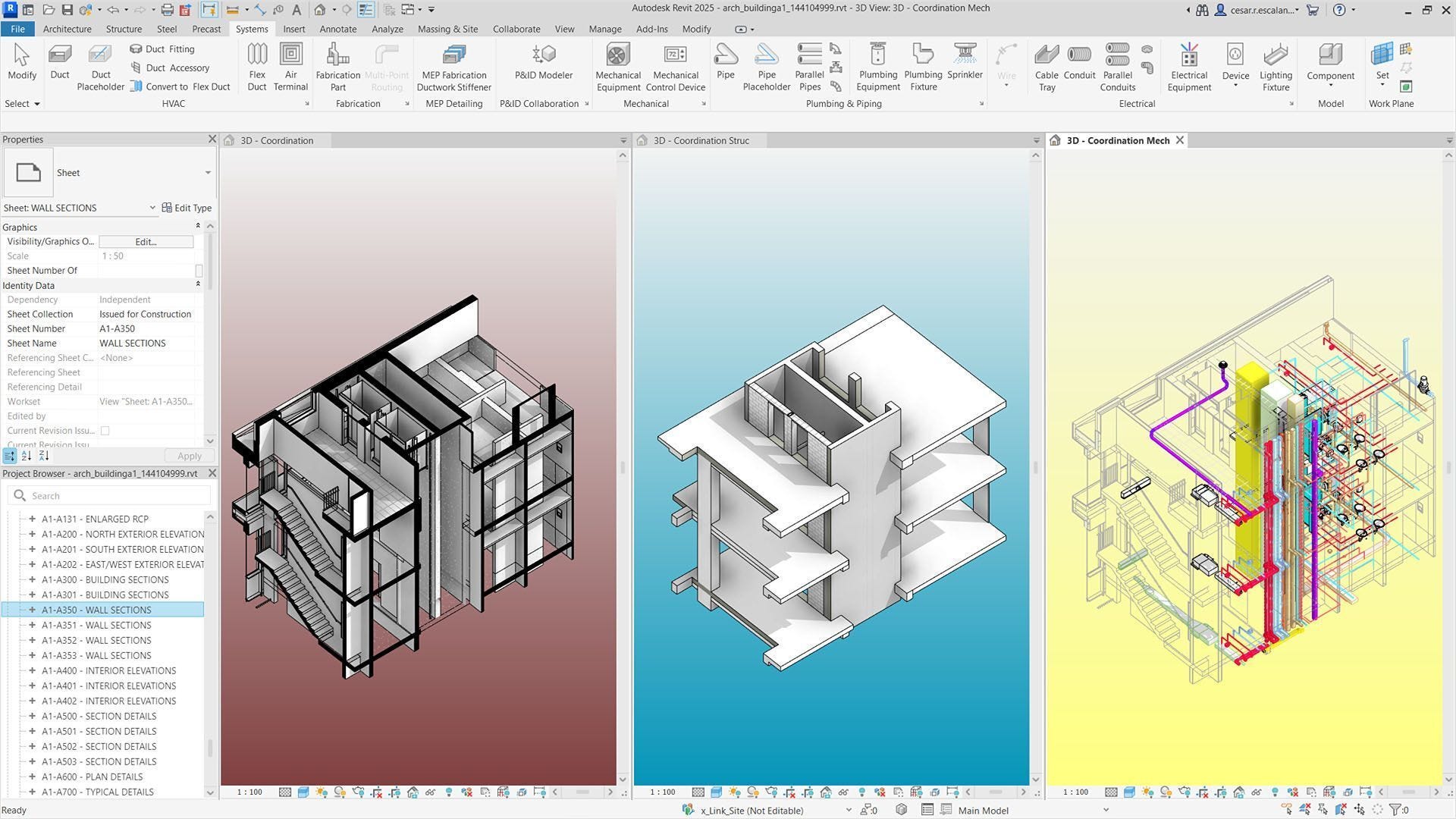
Image source: autodesk.com
Diversified Product Portfolio Across Multiple Verticals
Unlike software companies concentrated in a single vertical, Autodesk’s diversified portfolio spans multiple high-growth industries, providing natural hedging against sector-specific downturns. The company reports revenue across four primary segments:
Architecture, Engineering & Construction (AEC): This segment, which includes Revit, AutoCAD Architecture, and Autodesk Construction Cloud, grew 12% in constant currency during Q3 FY26. The AEC industry is undergoing profound digital transformation, with building information modeling (BIM) adoption accelerating globally. The global AEC software market is projected to grow at a 10.8% CAGR through 2030, with cloud deployment accounting for 60.3% of market share.
Manufacturing: Representing products like Fusion 360, Inventor, and PowerMill, this segment delivered impressive 16% growth in constant currency during Q3 FY26. The manufacturing industry’s push toward Industry 4.0, digital twins, and generative design creates sustained demand for Autodesk’s solutions.
Media & Entertainment: Including Maya, 3ds Max, and Arnold, this vertical grew 15% in constant currency. The explosion of streaming content, video game development, and virtual production techniques in film and television continues driving demand for Autodesk’s industry-standard tools.
AutoCAD and AutoCAD LT: As the company’s foundational product, AutoCAD grew 8% in constant currency. Its ubiquity across industries, from civil engineering to industrial design, provides stable base revenue.
This diversification strategy proved its value during the pandemic, when construction slowdowns were partially offset by strong media & entertainment growth driven by increased digital content consumption.
Strategic Cloud Platform and AI Integration
Autodesk has invested billions in building a comprehensive cloud platform that connects design, collaboration, and construction workflows. The Autodesk Construction Cloud platform has emerged as a particularly strong growth driver, connecting project stakeholders from preconstruction through operations and maintenance.
Key platform strengths include:
Platform Component
Strategic Value
Centralized Data Hub
Eliminates data silos and enables real-time collaboration across distributed teams
API Ecosystem
Allows third-party integrations, expanding platform utility and stickiness
AI-Powered Insights
Predictive analytics for risk management, cost estimation, and schedule optimization
Mobile Access
Field teams can access and update project information in real-time
Version Control
Automatic tracking of changes ensures data integrity and accountability
The company announced at AU 2025 that artificial intelligence capabilities are being integrated throughout its product suite. The Autodesk Assistant, powered by agentic AI, can understand natural language queries and perform complex tasks across multiple applications, effectively lowering the learning curve for new users while accelerating productivity for experienced professionals.
According to Autodesk’s Trusted AI white paper, the company has developed proprietary AI models specifically trained on design and manufacturing data, providing domain-specific capabilities that general-purpose AI tools cannot match.
Strong Customer Retention and Expanding Enterprise Agreements
Customer retention metrics provide critical insight into product value and competitive moat strength. Autodesk reports exceptionally high renewal rates, with net revenue retention consistently in the 100-110% range. This indicates not only that customers are renewing their subscriptions but also expanding their usage through additional seats or upgraded tiers.
The company’s Enterprise Business Agreement (EBA) strategy has proven particularly successful. These multi-year contracts with large organizations provide revenue visibility while delivering volume discounts that appeal to enterprise buyers. During Q3 FY26, direct revenue increased 23% and now represents 42% of total revenue, up 4 percentage points year-over-year, demonstrating successful execution of the direct sales strategy.
Notable customer wins and retention drivers include:
ENTERPRISE CUSTOMER SUCCESS INDICATORS

Direct Revenue Growth:        +23% YoY
Direct Revenue Mix:           42% of total (up from 38%)
EBA Contract Value:           Multi-million dollar average deal sizes
Net New Customers:            2x growth in construction segment
Customer Success Rate:        Industry-leading retention metrics
The upcoming fiscal year 2026 will see the largest multi-year and EBA renewal cohort in company history, representing a significant revenue opportunity and a potential inflection point for accelerated growth.
Weaknesses: Addressing Strategic Vulnerabilities
Premium Pricing Strategy and Customer Affordability Concerns
While Autodesk’s market-leading position justifies premium pricing, the company faces increasing pressure from cost-conscious customers, particularly small and medium-sized businesses (SMBs) and independent professionals. AutoCAD subscriptions currently cost approximately $1,865 per year for a single-user license, while comprehensive product suites like the AEC Collection exceed $3,000 annually.
This pricing structure creates several challenges:
Market Accessibility: The subscription costs can be prohibitive for freelancers, startups, and businesses in developing economies. While Autodesk offers educational licenses and startup programs, the transition from free or discounted student licenses to full commercial pricing often creates sticker shock that drives some users toward more affordable alternatives.
Customer Backlash: Online forums and social media regularly feature complaints about annual price increases that exceed inflation rates. Some long-time users feel trapped by file format lock-in, as their project archives and client collaboration requirements make switching to alternative platforms extremely difficult.
Competitive Vulnerability: Lower-cost competitors like Onshape, FreeCAD, and emerging AI-powered design tools are steadily improving their capabilities while maintaining more accessible pricing tiers. While these alternatives currently lack feature parity with Autodesk’s mature platforms, the price-performance gap is narrowing.
According to the 2025 State of Design & Make Report, 33% of industry leaders cite cost control as their primary business challenge, suggesting potential resistance to future price increases.
Dependence on Cyclical Industries
Autodesk’s revenue is significantly exposed to cyclical industries, particularly construction and manufacturing, which experience pronounced boom-bust cycles correlated with broader economic conditions. This creates earnings volatility that can concern risk-averse investors.
Historical patterns demonstrate this cyclicality:
Economic Indicator
Impact on Autodesk Business
Construction Spending
Direct correlation with AEC product demand
Manufacturing PMI
Leading indicator for manufacturing segment performance
Corporate Capital Expenditure
Influences enterprise software spending decisions
Real Estate Development
Drives architecture and engineering services demand
Energy Commodity Prices
Affects infrastructure and industrial project viability
During the 2008-2009 financial crisis, construction activity plummeted, causing significant headwinds for Autodesk’s AEC business. While the subscription model provides more revenue stability than the previous perpetual license approach, the company remains vulnerable to extended economic downturns that cause customers to delay renewals, reduce seat counts, or downgrade to less expensive subscription tiers.
Current macroeconomic indicators present mixed signals. The 2025 State of Design & Make Report reveals that industry leaders are confronting “daunting headwinds, from increased geopolitical uncertainty and inflation to persistently high interest rates.” These factors could suppress capital-intensive construction and manufacturing projects, dampening demand for Autodesk’s solutions.
Geographic Revenue Concentration
While Autodesk operates globally, its revenue remains concentrated in developed markets, particularly the Americas and EMEA (Europe, Middle East, and Africa). During Q3 FY26, revenue growth by region was 11% in the Americas, 13% in EMEA, and 14% in APAC in constant currency terms.
This geographic concentration presents several risks:
Currency Fluctuation: With substantial international operations, Autodesk faces foreign exchange headwinds when the U.S. dollar strengthens. The company regularly reports results on both a GAAP basis and constant currency basis, with currency fluctuations sometimes obscuring underlying business momentum.
Regulatory Complexity: Operating across more than 150 countries requires navigating varied data privacy regulations (GDPR in Europe, emerging frameworks in Asia), export controls for certain technologies, and software licensing requirements that differ by jurisdiction.
Emerging Market Penetration: While the Asia-Pacific region shows healthy growth, Autodesk’s penetration in high-growth emerging markets remains below developed market levels. Price sensitivity, local competition, and software piracy present ongoing challenges in regions like Southeast Asia, Latin America, and parts of Africa.
The APAC State of Design & Make Report notes that most Asia-Pacific leaders continue investing in entering new markets, suggesting both opportunity and competitive pressure in the region.
New Business Growth Headwinds
While Autodesk maintains strong renewal rates from its existing customer base, management has acknowledged challenges in new business acquisition. During the Q3 FY26 earnings call, CEO Andrew Anagnost noted “headwinds to new business growth” stemming from macroeconomic uncertainty, budget constraints at prospective customers, and extended sales cycles for large enterprise deals.
Key indicators of new business challenges include:
NEW BUSINESS ACQUISITION METRICS

Lead Generation:          Slowing in certain verticals
Sales Cycle Length:       Extending for enterprise deals
Win Rate:                Facing increased competition
SMB Segment:             Price sensitivity limiting conversions
Trial Conversion:        Room for improvement in freemium-to-paid
For a subscription business, new customer acquisition is essential for offsetting natural customer churn and driving net revenue growth. While Autodesk’s retention metrics remain strong, a sustained slowdown in new business could eventually constrain top-line growth and pressure management to rely increasingly on price increases to hit revenue targets, potentially exacerbating affordability concerns.
Cybersecurity and Data Protection Risks
As a cloud-first software provider handling sensitive design and project data for millions of users globally, Autodesk faces significant cybersecurity responsibilities and associated risks. The company’s Trust Center regularly publishes security advisories addressing vulnerabilities discovered in its products.
Recent security concerns include:
Software Vulnerabilities: In 2025 alone, Autodesk issued multiple security advisories addressing vulnerabilities in products including 3ds Max, Revit, and AutoCAD. While the company maintains responsible disclosure practices and releases patches promptly, each vulnerability represents potential exposure for customers and reputational risk for Autodesk.
Third-Party Plugin Risks: An October 2025 research report from Trend Micro revealed exposed Azure Storage Account credentials in Axis Communications’ Autodesk Revit plugin, allowing unauthorized modification. This incident highlights supply chain security risks inherent in Autodesk’s ecosystem of third-party integrations.
Data Breach Potential: A significant data breach affecting customer design files or proprietary project information could result in substantial financial liability, regulatory penalties under various data protection regimes, and lasting damage to customer trust. Research from SealPath highlights that compromised CAD data represents an increasing concern for organizations.
Compliance Burden: Operating in highly regulated industries (aerospace, defense, healthcare) requires Autodesk to maintain numerous security certifications and comply with stringent data handling requirements, creating ongoing operational complexity and cost.
Opportunities: Pathways for Sustained Growth
Artificial Intelligence and Generative Design Revolution
The integration of artificial intelligence into design and manufacturing workflows represents perhaps the most significant growth opportunity for Autodesk. The company is well-positioned to capitalize on this transformation through several strategic initiatives.
Generative Design: Autodesk’s generative design technology uses AI algorithms to explore thousands of design variations based on specified constraints (materials, manufacturing methods, cost targets, performance requirements). This capability, available in Fusion 360 and other platforms, enables engineers to discover innovative solutions that human designers might never conceive. According to Autodesk’s research, generative design can reduce material usage by 30-70% while maintaining or improving structural performance.
AI-Powered Automation: The Autodesk Assistant, unveiled at AU 2025, leverages agentic AI to automate repetitive tasks, accelerate learning curves, and enhance productivity. Early customer feedback suggests potential productivity improvements of 15-30% for common design tasks. If Autodesk can successfully monetize these AI capabilities through premium subscription tiers or usage-based pricing, it could unlock substantial incremental revenue.
Predictive Analytics: For construction projects, AI-driven predictive analytics can forecast potential delays, cost overruns, and safety issues before they materialize. The Autodesk Construction Cloud platform increasingly incorporates machine learning models trained on billions of construction project data points to deliver actionable insights.
Market sizing data supports the AI opportunity. The AI in construction market is expected to grow from approximately $3.99 billion in 2024 to $11.85 billion by 2029, reflecting a compound annual growth rate (CAGR) of 24.3%. Autodesk’s early investments in AI position the company to capture disproportionate share of this growth.
Expanding Construction Cloud Platform Adoption
Autodesk Construction Cloud represents one of the company’s highest-growth opportunities. The platform connects project stakeholders from preconstruction through operations, addressing persistent pain points in an industry notorious for fragmentation, cost overruns, and project delays.
Current adoption metrics demonstrate strong momentum:
Construction Cloud Metric
Performance Indicator
Net New Customers
Doubling year-over-year
Platform Revenue
Growing faster than company average
Feature Expansion
40+ new releases in recent quarters
Customer Retention
Above company average
Market Penetration
Still early-stage, significant headroom
The addressable market remains vast. Construction represents approximately 13% of global GDP, with the global construction industry valued at over $10 trillion annually. Digital adoption in construction lags other industries significantly, with many projects still relying on paper-based processes and disconnected software tools.
Autodesk’s recent proposed acquisition of Payapps, a construction payment management solution, demonstrates the company’s commitment to building an end-to-end platform that addresses every stage of the construction lifecycle. By integrating financial workflows with project management and design tools, Autodesk can deepen customer relationships and increase switching costs.
The platform strategy also enables new business models. Rather than selling discrete software licenses, Autodesk can offer project-based or transaction-based pricing for specific Construction Cloud features, expanding addressable market beyond traditional software buyers to include general contractors, specialty subcontractors, and property owners.
Geographic Expansion in High-Growth Markets
While Autodesk maintains strong positions in developed markets, significant growth opportunities exist in emerging economies experiencing rapid urbanization and infrastructure investment.
Asia-Pacific Opportunity: The APAC region, which grew 14% in constant currency during Q3 FY26, offers particularly compelling prospects. UBS predicts Asia will account for 40% of the global smart-city market by 2025, representing tens of billions in new infrastructure investment. Countries like India, Indonesia, Vietnam, and the Philippines are experiencing construction booms driven by urban population growth and government infrastructure initiatives.
China Market Dynamics: The China Autodesk Channel Partner Market was valued at $5.67 billion in 2025 and is expected to grow at a 16.94% CAGR through 2033, significantly exceeding the global software market growth rate. While political and regulatory complexities present challenges, China’s massive construction and manufacturing sectors offer substantial long-term opportunity.
Middle East Infrastructure: Major projects like Saudi Arabia’s NEOM development and UAE’s Expo City represent multi-billion dollar opportunities for Autodesk’s AEC solutions. These mega-projects demand sophisticated BIM and construction management capabilities that play directly to Autodesk’s strengths.
Localization Strategy: Success in these markets requires more than simply translating software interfaces. Autodesk must adapt pricing strategies for local economic conditions, build relationships with regional channel partners, navigate varying regulatory frameworks, and compete with local software vendors who understand indigenous market dynamics.
Manufacturing Industry 4.0 and Digital Twin Adoption
The manufacturing sector is undergoing profound digital transformation, commonly termed Industry 4.0, characterized by increased automation, data exchange, and smart manufacturing technologies. This transformation aligns closely with Autodesk’s product capabilities.
Digital Twin Technology: Manufacturers increasingly create digital twins (virtual replicas of physical assets) to simulate, predict, and optimize operations before implementing changes in the physical world. Autodesk’s Fusion 360 platform enables engineers to create comprehensive digital twins that incorporate design data, performance simulations, and real-time sensor data from Internet of Things (IoT) devices.
Additive Manufacturing Integration: As 3D printing technology matures and finds broader application in production (not just prototyping), Autodesk’s generative design and additive manufacturing capabilities position the company as a critical enabler. The technology can automatically optimize designs for 3D printing, accounting for factors like support structure minimization, print orientation, and material properties.
Supply Chain Digitization: Manufacturing leaders in the 2025 State of Design & Make Report identified supply chain resilience as a critical concern, with 49% saying their supply chain is fragile due to geopolitical tensions. Autodesk’s cloud-based collaboration tools enable manufacturers to work seamlessly with globally distributed suppliers, rapidly onboard alternative vendors when disruptions occur, and maintain version control across complex supply networks.
Market Growth Trajectory: The global 3D CAD software market is projected to grow from $11.55 billion in 2024 to $21.08 billion by 2034, at a 6.2% CAGR. Manufacturing applications represent a substantial portion of this growth, with Autodesk’s manufacturing segment growing 16% in constant currency during Q3 FY26, significantly outpacing the company average.
Media & Entertainment Evolution and Virtual Production
The media and entertainment industry continues rapid evolution driven by streaming content demand, video game sophistication, and revolutionary virtual production techniques. Autodesk maintains dominant positions in key M&E workflows through industry-standard tools like Maya, 3ds Max, and Arnold renderer.
Streaming Content Boom: Major streaming platforms (Netflix, Amazon Prime Video, Disney+, Apple TV+) are collectively investing tens of billions annually in original content production. Visual effects, animation, and computer-generated imagery have become central to both episodic television and feature films, driving sustained demand for Autodesk’s M&E tools.
Virtual Production Revolution: The techniques pioneered for productions like “The Mandalorian,” using LED walls and real-time rendering to create immersive environments on set, represent a paradigm shift in filmmaking. This workflow relies heavily on Autodesk Maya and related tools to create, preview, and render digital assets in real-time during production, compressing traditional post-production timelines.
Game Development Growth: The global video game industry generates over $200 billion in annual revenue, exceeding film and music industries combined. AAA game development increasingly resembles film production in scale and complexity, with development teams of hundreds of artists creating massive, detailed virtual worlds. Autodesk’s M&E segment grew 15% in constant currency during Q3 FY26, reflecting robust demand from this vertical.
Metaverse and XR Applications: While the near-term metaverse opportunity remains speculative, the longer-term trend toward extended reality (XR) applications in entertainment, education, and enterprise collaboration will require sophisticated 3D content creation tools. Autodesk’s established position in 3D design and animation workflows positions the company to benefit as these markets mature.
Strategic Acquisitions and Ecosystem Expansion
Autodesk has completed 56 acquisitions throughout its history, strategically adding capabilities, entering new markets, and eliminating potential competitors. The company’s approach to M&A presents ongoing opportunities for value creation.
Tuck-In Acquisitions: Autodesk has signaled a preference for smaller “tuck-in” acquisitions that can be rapidly integrated into existing platforms rather than transformational mega-deals. This approach minimizes integration risk while filling specific capability gaps. The proposed Payapps acquisition exemplifies this strategy, adding construction payment management to the Construction Cloud platform.
Technology Acquisitions: Purchasing companies with specialized AI, machine learning, or simulation capabilities can accelerate Autodesk’s technology roadmap. The 2020 Spacemaker acquisition ($240 million) brought AI-powered early-stage design optimization for architects and urban planners, a capability that would have taken years to develop organically.
Geographic Expansion: Acquiring regional software vendors with established customer relationships and local market expertise provides an efficient path to geographic expansion, particularly in high-growth emerging markets where organic growth may be slower.
PTC Speculation: Market speculation during mid-2025 suggested Autodesk was evaluating a potential acquisition of PTC, a rival engineering software company with a market cap exceeding $20 billion. While Autodesk ultimately pulled back from pursuing the deal, it signals management’s willingness to consider substantial strategic transactions when synergy and valuation align.
The company’s strong balance sheet and robust free cash flow generation provide ample financial flexibility for strategic acquisitions without jeopardizing the capital return program (share buybacks and potential dividends) that equity investors value.
Image source: autodesk.com
Threats: Navigating External Challenges
Intensifying Competitive Pressure from Multiple Fronts
While Autodesk maintains dominant market positions across many verticals, competitive threats are intensifying from both established players and disruptive newcomers leveraging new business models and emerging technologies.
Traditional Competitors: Established software vendors continue investing heavily to close capability gaps with Autodesk:
Dassault Systèmes (SolidWorks, CATIA) maintains a strong position in mechanical design and product lifecycle management
PTC (Creo, Onshape) offers competitive parametric modeling and increasingly sophisticated cloud-based solutions
Bentley Systems specifically targets infrastructure and civil engineering, competing directly with Autodesk’s Civil 3D and InfraWorks
Trimble (SketchUp, Tekla) provides architectural modeling and structural engineering software with growing BIM capabilities
Siemens (NX, Solid Edge) leverages its industrial automation ecosystem to offer integrated design and manufacturing solutions
According to market share data, while AutoCAD maintains 39.12% market share, SolidWorks holds 13.61%, and various competitors collectively command substantial market presence, creating fragmented market dynamics in certain segments.
Low-Cost Disruptors: A new generation of cloud-native design tools is emerging with significantly lower price points:
Onshape (owned by PTC) offers browser-based CAD with no software installation required, starting at $1,500/year (20% below AutoCAD)
Fusion 360 Competitors like Shapr3D and FreeCAD target prosumers and small businesses with accessible pricing
Open Source Alternatives including FreeCAD and Blender (for 3D modeling/animation) provide free options that, while lacking enterprise features and support, serve certain user segments effectively
AI-Native Startups: Venture-backed companies are building AI-first design tools that promise to democratize design capabilities and reduce the need for specialized CAD expertise. While these solutions currently lack the sophistication and industry-specific features of Autodesk’s mature platforms, rapid AI advancement could narrow capability gaps faster than anticipated.
Vertical-Specific Specialists: In certain niches, specialized software providers offer deep domain expertise and workflow optimization that generalist platforms struggle to match. For example, in structural engineering, RISA Technologies and RAM (Bentley) provide specialized analysis capabilities that some engineers prefer over Revit Structure.
Autodesk’s response to competitive pressure requires continuous innovation, strategic pricing adjustments, and ecosystem development to maintain switching costs. Any loss of market leadership position could trigger negative feedback loops as file format standardization and training availability shift toward competitive platforms.
Macroeconomic Uncertainty and Cyclical Exposure
Global economic conditions create substantial headwinds for Autodesk’s business. Multiple macroeconomic factors are converging to create challenging near-term conditions:
Interest Rate Environment: After years of historically low interest rates, central banks globally have raised rates to combat inflation. Higher borrowing costs directly impact construction activity (residential and commercial) and manufacturing capital expenditure, two primary drivers of Autodesk’s business. Construction project financing becomes more expensive, reducing overall construction volume and potentially depressing architectural and engineering services demand.
Inflation Pressures: Persistent inflation in materials, labor, and energy costs squeezes customer budgets. While Autodesk can partly offset inflation through price increases, customer resistance grows when their own business economics are deteriorating. The 2025 State of Design & Make Report found that 33% of industry leaders cite cost control as their primary challenge, suggesting limited tolerance for substantial price increases.
Geopolitical Tensions: Ongoing geopolitical instability (U.S.-China relations, Russia-Ukraine conflict, Middle East tensions) creates business uncertainty that often translates into delayed capital expenditure decisions. Companies postpone major design projects and software purchases during periods of elevated geopolitical risk.
Supply Chain Fragility: Despite recovery from pandemic-era disruptions, 49% of business leaders report supply chain fragility due to geopolitical tensions, up from 45% in 2024. Supply chain concerns can delay or cancel manufacturing projects that would otherwise generate demand for Autodesk’s solutions.
Regional Economic Variations: Economic conditions vary significantly by geography. While the U.S. economy has shown resilience, Europe faces stagnation concerns, and China’s economic growth has decelerated from historical norms. This geographic variability complicates Autodesk’s business planning and resource allocation.
For investors, these macroeconomic factors create near-term earnings uncertainty. While the subscription model provides more revenue stability than traditional license sales, extended economic weakness could eventually pressure renewal rates, seat count growth, and pricing power.
Rapid Technological Change and Disruption Risk
The accelerating pace of technological change presents both opportunity and threat. While Autodesk has historically navigated technological transitions successfully (desktop to cloud, perpetual to subscription), future disruptions could be more rapid and profound.
AI Disruption Potential: While Autodesk is actively integrating AI into its products, there’s risk that AI advancement could commoditize certain design capabilities. If AI tools enable non-experts to create professional-quality designs without mastering complex CAD software, Autodesk’s addressable market could contract. Alternatively, AI-powered design tools from tech giants (Google, Microsoft, Adobe) could leverage superior AI capabilities and massive user bases to enter adjacent markets.
Platform Shift Risk: The next computing platform (whether AR/VR, spatial computing, or something yet to emerge) could disrupt existing design workflows. While Autodesk has invested in VR and immersive design capabilities, a major platform shift could create openings for nimbler competitors unburdened by legacy product architectures.
Changing User Preferences: Younger designers entering the workforce have different expectations around user experience, mobile access, and collaboration patterns. If Autodesk’s products are perceived as dated or difficult to learn, the company could lose mindshare among next-generation users who drive future buying decisions.
Open Source Momentum: While open source CAD tools currently lack the polish and features of commercial alternatives, rapid improvement in projects like FreeCAD, driven by global developer communities, could eventually create viable alternatives for certain use cases. Even if open source tools never achieve feature parity for complex enterprise workflows, they could erode the low end of Autodesk’s market.
Browser-Based Disruption: Fully browser-based design tools (no software installation required) offer compelling advantages in device flexibility, automatic updates, and reduced IT burden. While Autodesk has cloud-based offerings, some products still require desktop applications. Competitors that build cloud-native architectures from the ground up may achieve performance and user experience advantages that legacy architectures struggle to match.
Successfully navigating these technological disruption risks requires sustained high levels of R&D investment, willingness to cannibalize existing products with superior alternatives, and organizational agility that large enterprises often struggle to maintain.
Regulatory and Compliance Complexity
Operating globally as a cloud-based software provider subjects Autodesk to an expanding web of regulatory requirements that create compliance costs, strategic constraints, and legal risks.
Data Privacy Regulations: The European Union’s General Data Protection Regulation (GDPR), California Consumer Privacy Act (CCPA), and emerging data protection frameworks in countries worldwide impose stringent requirements on how companies collect, process, and store personal data. Autodesk must ensure its products and internal practices comply with varied and sometimes conflicting regulatory requirements across more than 150 countries, creating significant operational complexity.
Export Controls: Design software that can be used for defense applications or dual-use technologies faces export control restrictions. The U.S. government regulates exports of certain technologies to specific countries or end users. While Autodesk’s commercial design software generally doesn’t trigger the strictest export controls, regulatory scope could expand, particularly for AI-powered design capabilities that could have military or strategic applications.
Intellectual Property Challenges: Operating in countries with varying levels of intellectual property protection creates persistent piracy challenges. While the subscription model with cloud authentication reduces piracy compared to perpetual licenses, determined actors can still circumvent protections. Emerging markets with potentially high growth often have the weakest IP enforcement, creating a tension between market opportunity and revenue realization.
Antitrust Scrutiny: As Autodesk has grown through acquisitions and achieved dominant positions in certain market segments, antitrust regulators in multiple jurisdictions could scrutinize future M&A activity or business practices. Major acquisitions (like the speculated PTC deal) would face intensive regulatory review, potentially blocking transactions or imposing divestitures that reduce strategic value.
Industry-Specific Regulations: Customers in heavily regulated industries (aerospace, defense, healthcare, financial services) impose additional compliance requirements on their software vendors. Autodesk must maintain various security certifications (e.g., FedRAMP for U.S. government customers, ITAR compliance for defense) and submit to regular audits, creating ongoing operational burden.
AI Governance: As AI capabilities become central to Autodesk’s products, emerging AI governance frameworks (particularly in the EU with its AI Act) will impose requirements around algorithmic transparency, bias testing, and human oversight. While Autodesk has published its Trusted AI principles, regulatory requirements may exceed current practices, necessitating additional investment in AI governance and documentation.
The cumulative effect of expanding regulatory requirements is higher compliance costs, strategic constraints on business model innovation, and elevated legal risk. For investors, material regulatory violations could result in substantial fines, business practice changes that impact profitability, or reputational damage that affects customer relationships.
Customer Concentration and Key Account Risk
While Autodesk serves millions of users globally, revenue concentration among large enterprise customers creates potential vulnerability. The company’s shift toward Enterprise Business Agreements (multi-year contracts with large organizations) has improved revenue visibility but also increased dependence on key accounts.
Several factors amplify this risk:
Budget Consolidation: Large enterprises periodically review their software portfolios and seek to consolidate vendors to reduce complexity and negotiate better pricing. If a major customer decides to standardize on a competitive platform, Autodesk could lose significant recurring revenue.
Private Equity Ownership: Many architecture, engineering, and construction firms have been acquired by private equity firms focused on operational efficiency and margin expansion. PE-backed customers often aggressively renegotiate software contracts or consider alternative solutions as part of cost reduction initiatives.
Economic Sensitivity: Enterprise customers in cyclical industries may dramatically reduce software spending during economic downturns. The 2008-2009 financial crisis saw construction firms and manufacturers slash discretionary technology expenditures, a pattern that could repeat in future economic contractions.
Competitive Displacement: If a major customer’s primary competitor achieves notable competitive advantages using alternative design software, there’s risk of wholesale platform switches. “Nobody gets fired for buying Autodesk” has been a truism, but this defensive buying behavior weakens if competitive platforms demonstrably outperform.
Customer M&A Activity: When large customers merge or are acquired, the combined entity often rationalizes software investments. If an acquisition target used competitive software, the merged company might choose to standardize on the alternative platform, particularly if the acquired business was larger than the Autodesk customer.
Mitigating customer concentration risk requires continuous innovation to maintain product superiority, proactive customer success management to deepen relationships, and pricing strategies that reflect delivered value rather than simply exploiting switching costs.
Investment Implications and Strategic Positioning
For investors evaluating Autodesk in late 2025, the SWOT analysis reveals a company with substantial strengths and attractive long-term growth opportunities, balanced by meaningful near-term challenges and external threats.
Key Investment Drivers for 2026 and Beyond
Several catalysts could drive near-term stock performance:
Multi-Year Contract Renewal Cohort: Management has signaled that FY26 will see the largest multi-year and EBA renewal cohort in company history. Successful renewals at maintained or improved pricing would validate the company’s pricing power and customer satisfaction, providing visibility into FY27 revenue.
AI Monetization: As AI capabilities mature and become more integral to daily workflows, Autodesk has opportunities to introduce premium AI-powered subscription tiers or consumption-based pricing for compute-intensive AI features. Success in AI monetization could accelerate revenue per user expansion and improve margins as AI features require limited incremental support costs.
Construction Cloud Inflection: The platform’s net new customer count is already doubling year-over-year. If this momentum continues, Construction Cloud could transition from a growth initiative to a significant revenue contributor, potentially warranting a higher revenue multiple due to superior growth rates.
Operating Leverage: As the subscription transition matures, operating leverage should accelerate. The company guides to non-GAAP operating margins of 35.5-36% for FY25, with potential for continued expansion as infrastructure investments level off and customer acquisition costs decline due to improved direct sales efficiency.
Capital Allocation: Autodesk repurchased 1.2 million shares for $319 million during Q3 FY26, with approximately $9 billion remaining in the authorized repurchase program. Sustained capital returns through buybacks (and potentially future dividends) support valuation floors and improve per-share metrics.
My Final Thoughts: Navigating the Next Growth Chapter
Autodesk stands at an inflection point. The successful completion of its subscription transition has created a more predictable, higher-quality revenue stream. The company’s dominant market positions across AEC, manufacturing, and media & entertainment provide durable competitive advantages. Growing investments in AI, continued expansion of the Construction Cloud platform, and opportunities in emerging markets offer multiple paths for sustained growth.
However, near-term headwinds including macroeconomic uncertainty, new business growth challenges, and intensifying competition require careful monitoring. The company’s premium pricing strategy creates both pricing power and affordability concerns that could limit market expansion. Cyclical industry exposure means Autodesk will experience periods of slower growth during economic downturns.
For investors with a three-to-five-year time horizon, Autodesk presents a compelling value proposition. The combination of:
Established market leadership with demonstrable competitive moats
Successful business model transformation to high-quality recurring revenue
Multiple growth drivers (AI, Construction Cloud, geographic expansion, Industry 4.0)
Strong free cash flow generation enabling capital returns
Reasonable valuation relative to growth and profitability profile
Together, these factors suggest that Autodesk should continue creating shareholder value despite near-term volatility. The key for investors is maintaining conviction during inevitable cyclical downturns, when market pessimism may create attractive entry points for long-term holders.
As design and manufacturing processes continue their inexorable shift to digital, cloud-based workflows, Autodesk’s comprehensive platform, trusted brand, and ecosystem of complementary tools position the company to remain the partner of choice for professionals creating the physical world around us. For patient, growth-oriented investors willing to accept moderate cyclical volatility, Autodesk deserves serious consideration as a core software holding in 2026 and the years ahead.
Key Takeaways for Investors
INVESTMENT SUMMARY

Strengths:
✓ Market-leading positions across multiple verticals
✓ 97% recurring revenue provides predictability
✓ Strong financial performance with expanding margins
✓ Comprehensive cloud platform with growing AI capabilities
✓ High customer retention and expanding enterprise agreements

Weaknesses:
✗ Premium pricing creates affordability concerns
✗ Exposure to cyclical construction and manufacturing industries
✗ New business growth headwinds in current environment
✗ Geographic concentration in developed markets
✗ Cybersecurity and data protection risks

Opportunities:
+ AI and generative design integration could unlock new revenue streams
+ Construction Cloud platform has significant growth runway
+ Geographic expansion in high-growth emerging markets
+ Manufacturing Industry 4.0 adoption accelerating
+ Strategic M&A can add capabilities and market access

Threats:
⚠ Intensifying competition from multiple directions
⚠ Macroeconomic uncertainty and cyclical industry exposure
⚠ Rapid technological change could disrupt workflows
⚠ Expanding regulatory complexity across jurisdictions
⚠ Customer concentration creates key account risk


Key Metrics to Monitor: Renewal rates, ARR growth, Construction Cloud adoption, direct revenue mix
Disclaimer: This analysis is for informational purposes only and should not be construed as investment advice. Investors should conduct their own due diligence and consult with personal financial advisors before making investment decisions.