

Rail freight transportation stands at a crossroads as economic shifts, infrastructure investments, and regulatory changes reshape the industry.
CSX Corporation $CSX ( ▲ 1.15% ) , one of America’s premier Class I freight railroads, navigates this complex terrain with a 21,000-mile network spanning 23 states and parts of Canada.
As the company moves toward 2026, understanding its strategic positioning becomes essential for investors assessing long-term value creation potential in the transportation sector.
Table of Contents
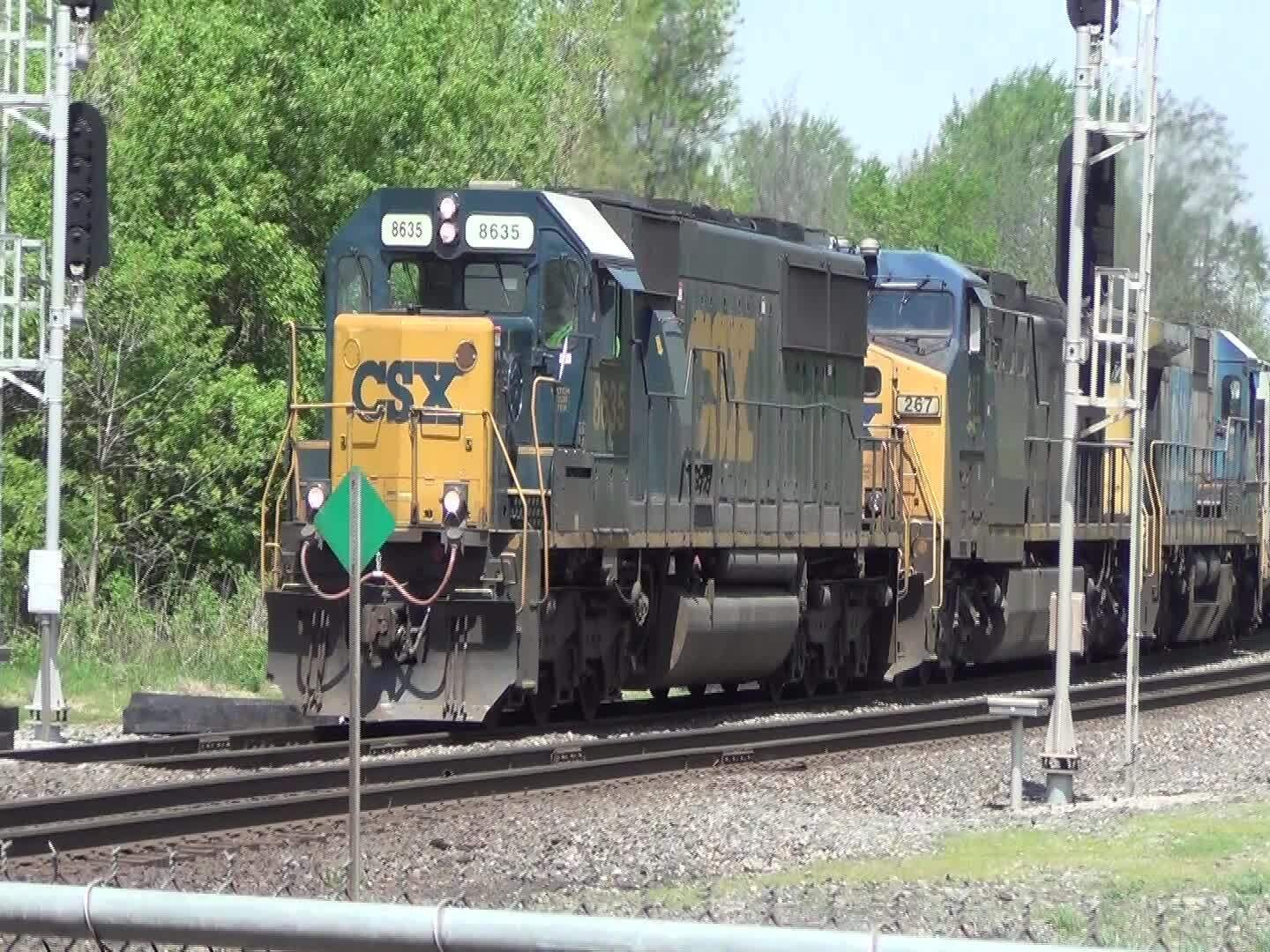
Image source: commons.wikimedia.org
Understanding CSX Corporation’s Core Business
CSX operates as a leading rail-based freight transportation provider in North America. The company’s operations span the eastern United States, connecting major population centers and industrial hubs across approximately 21,000 route miles.
The company serves diverse markets through three primary business segments. The merchandise segment handles chemicals, automotive products, agricultural commodities, and industrial materials.
Coal transportation, while declining, remains a revenue contributor. Intermodal services connect rail with trucking and container shipping, representing a growing portion of CSX’s business.
Recent Financial Performance Overview
CSX’s financial results for 2025 reflect both operational achievements and market challenges. Third-quarter 2025 figures show operating income of $1.09 billion with net earnings reaching $694 million, translating to $0.37 per share.
Revenue decreased 1% year-over-year to approximately $3.59 billion. This modest decline stems from reduced coal demand and lower fuel surcharge revenues, partially offset by intermodal volume growth.
Financial Metric
Q3 2025
Q3 2024
Change
Operating Income
$1.09 billion
$1.23 billion
-11.4%
Net Earnings
$694 million
$764 million
-9.2%
Earnings Per Share
$0.37
$0.41
-9.8%
Revenue
$3.59 billion
$3.62 billion
-1.0%
For the full year 2025, analysts expect earnings per share of $1.64, representing a 10.4% decline from 2024’s $1.83. However, fiscal 2026 projections show a recovery, with EPS anticipated to rebound 15.9% year-over-year to $1.90 per share.
Strengths: Built-In Competitive Advantages
Irreplaceable Network Infrastructure
CSX’s most formidable strength lies in its extensive rail network. The company operates approximately 20,000 route miles across 23 states, the District of Columbia, and the Canadian provinces of Ontario and Quebec.
This network provides direct access to major ports, including Savannah, Charleston, Baltimore, and New York/New Jersey. The infrastructure represents decades of capital investment and secured right-of-way that would be virtually impossible for competitors to replicate.
The strategic positioning along the I-95 corridor and connections to Midwest manufacturing centers create natural barriers to competition. This network effect generates pricing power and customer retention advantages that protect long-term profitability.
Precision Scheduled Railroading Implementation
CSX has successfully implemented Precision Scheduled Railroading (PSR) principles to enhance operational efficiency. PSR focuses on running scheduled trains with optimal asset utilization rather than accumulating railcars to build longer trains.
The operational model has delivered measurable improvements in key metrics. Train velocity, terminal dwell times, and asset turnover have all improved compared to pre-PSR periods.
These efficiency gains translate directly to cost savings and improved customer service. Faster, more reliable transit times make rail competitive against trucking for time-sensitive freight, expanding CSX’s addressable market.
Key PSR Benefits:
- Reduced equipment needs through higher asset turns
- Lower fuel consumption from optimized train scheduling
- Improved service reliability attracting new customers
- Enhanced employee productivity per unit shipped
Howard Street Tunnel Transformation
The completion of the Howard Street Tunnel expansion represents a transformative infrastructure achievement for CSX. The $450 million project, finished ahead of schedule in September 2025, enables double-stack container trains to reach the Port of Baltimore.
Previously, the 1890s-era tunnel’s height restrictions prevented double-stack operations, forcing costly detours or single-stack configurations. The tunnel lowering project now allows full double-stack clearance, dramatically reducing per-container transportation costs.
This capability enhancement positions CSX to capture growing East Coast intermodal volumes. With full double-stack service launching in Q2 2026, the company expects significant volume growth as network projects conclude.
Strategic Alliance Partnerships
CSX has forged strategic partnerships with BNSF Railway to offer seamless coast-to-coast intermodal solutions. These joint service products provide customers efficient transcontinental shipping without the operational complexities of multi-carrier coordination.
The partnership with Canadian Pacific Kansas City (CPKC) creates the Southeast Mexico Express corridor. This direct Class I interchange connects Mexico, Texas, and the U.S. Southeast, opening new markets and competitive options.
These alliances extend CSX’s effective reach beyond its physical network. Customers gain access to western markets and Mexican manufacturing centers through single-line-quality service, enhancing CSX’s competitive position against trucking alternatives.
Diversified Revenue Streams
CSX maintains revenue diversification across multiple freight categories, reducing dependence on any single market segment.
Business Segment
Revenue Contribution
Key Commodities
Merchandise
~47%
Chemicals, automotive, metals, forest products
Intermodal
~30%
Containers, trailers, domestic/international
Coal
~15%
Export thermal, domestic thermal, metallurgical
Other
~8%
Real estate, logistics services
This diversification provides stability when individual sectors experience cyclical downturns. Strong intermodal growth can offset declining coal volumes, while merchandise freight offers exposure to economic expansion.
Labor Stability Achievement
CSX has successfully negotiated labor agreements covering the majority of its workforce through 2025. Agreements with 11 labor unions representing 14 work groups now cover approximately 54% of unionized employees.
The five-year agreement with locomotive engineers, ratified in June 2025, provides compounded wage increases of 18.77%. This labor stability reduces the risk of service disruptions and provides operational predictability.
Stable labor relations enable management to focus on strategic initiatives rather than contract negotiations. The agreements also reduce the risk of work stoppages that could severely impact customer confidence and revenue continuity.
Weaknesses: Persistent Challenges
Coal Revenue Structural Decline
Coal transportation represents CSX’s most significant structural weakness. Q1 2025 coal revenues declined approximately 27% year-over-year, with continued pressure expected.
The accelerated transition to renewable energy and natural gas power generation drives this decline. Power plant retirements scheduled through 2026 will further reduce domestic coal shipments.
Coal Revenue Trend Analysis:
Q1 2024: ~$580 million
Q1 2025: ~$423 million (-27%)
Q3 2025: 11% decline year-over-year
Projected 2026: Continued double-digit decline
While CSX diversifies into other freight categories, coal historically provided high-margin revenues due to unit train economics. Replacing coal’s profitability contribution requires substantial volume growth in other segments operating at potentially lower margins.
The company cannot fully control this decline, as it stems from fundamental shifts in electricity generation away from fossil fuels. This structural headwind will continue pressuring overall revenue growth for the foreseeable future.
Cyclical Economic Exposure
CSX’s financial performance demonstrates strong correlation with economic cycles and manufacturing activity. The merchandise segment, representing nearly half of revenues, serves industrial customers sensitive to economic conditions.
Automotive manufacturing, steel production, chemical processing, and construction materials all fluctuate with GDP growth. Economic slowdowns directly translate to reduced freight volumes and pricing pressure.
Economic Indicator
Impact on CSX
Manufacturing PMI
Directly affects merchandise volumes
Consumer spending
Influences intermodal container flows
Housing starts
Impacts lumber, cement, building materials
Industrial production
Drives chemicals, metals, automotive freight
The Q1 2025 results reflected this vulnerability, with weather disruptions and infrastructure projects compounding economic weakness to produce disappointing results.
This cyclical exposure limits CSX’s ability to deliver consistent earnings growth through complete business cycles. Investors must account for potential earnings volatility during economic contractions.
Liquidity Constraints
CSX’s liquidity position shows concerning metrics compared to industry standards. The company exited Q3 2025 with cash and cash equivalents of $602 million, down from $933 million at year-end 2024.
The current ratio of approximately 0.8 indicates current assets fall short of covering current liabilities. This tight liquidity position reduces financial flexibility during unexpected disruptions or market downturns.
Liquidity Metrics (Q3 2025):
Cash and equivalents: $602 million
Current ratio: ~0.8
Working capital: Negative
Quick ratio: Below 1.0
Total debt stood at $19.64 billion as of September 2025, resulting in a debt-to-equity ratio of approximately 1.54. While not excessive for a capital-intensive railroad, this leverage combined with weak liquidity limits financial flexibility.
The company maintains a $1.2 billion revolving credit facility, providing some cushion. However, reliance on credit facilities rather than strong cash positions indicates potential vulnerability to credit market disruptions.
Operational Performance Inconsistency
CSX faced significant operational challenges during Q1 2025, with results falling below management expectations. Infrastructure projects and adverse weather contributed to service disruptions.
Dwell times increased 10% during certain periods, indicating trains spent more time waiting in terminals. This metric degradation suggests operational execution issues that directly impact customer satisfaction.
Network velocity fluctuations create uncertainty for shippers requiring predictable transit times. Service inconsistency drives customers toward trucking alternatives despite rail’s cost advantages.
The company has outlined recovery targets and network stabilization plans, but operational volatility remains a near-term weakness requiring close monitoring.
Capital Intensity Requirements
Railroad operations demand continuous capital expenditure to maintain track, bridges, signals, and rolling stock. CSX projected 2025 capital spending of $2.5 billion excluding hurricane rebuild costs.
This capital requirement consumes substantial cash flow, limiting funds available for dividends, buybacks, or debt reduction. Unlike asset-light business models, railroads cannot significantly reduce capital spending without compromising safety and service quality.
Infrastructure aging requires ongoing investment. Many rail lines, bridges, and tunnels date from the early 20th century, necessitating modernization spending beyond routine maintenance.
This capital intensity creates competitive disadvantages against asset-light logistics models. Technology companies and freight brokers operate with minimal fixed assets while accessing CSX’s network through competitive markets.
Opportunities: Growth Catalysts for 2026
Nearshoring and Mexico Trade Expansion
The Southeast Mexico Express corridor partnership with CPKC positions CSX to capitalize on nearshoring trends. As manufacturers relocate production from Asia to Mexico, rail freight between Mexico and the U.S. Southeast is growing.
The new direct Class I interchange at Myrtlewood, Alabama, eliminates previous handoff inefficiencies. Shippers gain seamless service from Mexican manufacturing centers to eastern U.S. distribution networks.
2026 represents a breakthrough year for Mexico-U.S. trade flows through this corridor. Trade policy shifts favoring North American production over Asian imports create structural tailwinds.
Mexico’s manufacturing exports to the U.S. continue growing as companies diversify supply chains. CSX’s enhanced connectivity captures this freight growth, offsetting coal decline with higher-value manufactured goods transportation.
Intermodal Market Share Gains
CSX’s intermodal business showed resilience throughout 2025 despite broader volume challenges. Container and trailer volumes posted growth even as other segments declined.
The Howard Street Tunnel transformation unlocks significant intermodal capacity. Previously constrained Baltimore port access now supports double-stack operations competitive with other East Coast gateways.
Intermodal Growth Drivers:
✓ Double-stack Baltimore operations (Q2 2026)
✓ E-commerce fulfillment freight growth
✓ BNSF partnership expanding West Coast access
✓ Port congestion driving modal shift from trucking
✓ Sustainability initiatives favoring rail vs. truck
Intermodal typically provides better growth prospects than merchandise or coal. E-commerce expansion drives container volumes as retailers distribute inventory across regional fulfillment networks.
CSX’s network serves major metropolitan areas and distribution centers along the I-95 corridor. This alignment with consumer population density creates natural advantages in the intermodal market.
Infrastructure Investment Completion
CSX is completing major infrastructure projects that temporarily disrupted 2025 operations. The Howard Street Tunnel, Blue Ridge Subdivision work, and various clearance improvements approach completion.
These investments, while painful short-term, expand network capacity and capability. The Blue Ridge Subdivision reopening restores critical routing flexibility between the Southeast and Midwest.
Management expects operational performance recovery as construction disruptions end. The investment cycle shifts from heavy spending and service impacts to harvest mode, where improved infrastructure supports volume growth.
Federal infrastructure legislation provides potential funding support for rail projects with public benefits. Grade crossing improvements, bridge replacements, and positive train control systems may receive partial government funding.
E-commerce and Logistics Evolution
Online retail growth fundamentally reshapes freight transportation patterns. E-commerce requires distributed inventory networks with frequent replenishment shipments between regional distribution centers.
This freight pattern favors intermodal rail over long-haul trucking. Container-based transportation efficiently moves palletized goods between major nodes, with local trucking handling final delivery.
CSX serves major e-commerce fulfillment clusters. The company’s network connects ports, importers, and distribution centers operated by major retailers and third-party logistics providers.
E-commerce Impact Factors:
- Import container volumes from Asian suppliers
- Domestic repositioning between fulfillment centers
- Returns processing generating reverse logistics freight
- Same-day/next-day delivery driving inventory decentralization
- Omnichannel retail requiring flexible distribution networks
As e-commerce penetration increases, the structural shift toward rail-friendly freight patterns provides lasting growth opportunities. Unlike coal’s permanent decline, e-commerce represents expanding demand aligned with CSX’s capabilities.
Pricing Power Recovery Potential
Railroad industry pricing typically demonstrates disciplined behavior during recovery phases. With only four major Class I railroads controlling over 90% of U.S. rail traffic, oligopolistic market structure supports pricing power.
As economic conditions improve and freight demand recovers, CSX can implement price increases above inflation. Service improvements from completed infrastructure projects strengthen the value proposition justifying higher prices.
Trucking capacity constraints during peak periods create opportunities for rail pricing gains. Driver shortages and hours-of-service regulations limit trucking industry flexibility, making rail relatively more attractive.
Environmental regulations potentially increase trucking costs more than rail costs. Carbon pricing or emissions restrictions would disproportionately impact truck transportation, improving rail’s competitive position.
Threats: External Risks and Headwinds
Intensified Competitive Dynamics
CSX faces competition from Norfolk Southern throughout its eastern U.S. territory. The two railroads maintain parallel routes serving many markets, creating direct competition for freight.
Trucking represents the more significant competitive threat. Approximately 70% of U.S. freight moved by truck in 2024, with trucks offering door-to-door service advantages rail cannot match.
Competitor Category
Market Share
Competitive Advantages
Norfolk Southern
19.6%
Parallel eastern routes, similar capabilities
Union Pacific
37.1%
Western coverage, transcontinental reach
Trucking industry
~70%
Flexibility, door-to-door, speed
Canadian Pacific KC
17.4%
North American integration, Mexico access
The proposed Union Pacific-Norfolk Southern merger, if approved, would create the largest U.S. railroad with estimated 40% market share. This consolidation could intensify competitive pressure on CSX.
Merger approval remains uncertain given regulatory scrutiny. The Surface Transportation Board must evaluate competitive impacts, shipper concerns, and service reliability implications.
Regulatory and Policy Uncertainty
Railroad regulation exists in a state of flux. The STB continues evaluating competition policies, rate reasonableness standards, and merger criteria. Policy changes could significantly impact CSX’s business model.
Potential regulatory developments include:
Regulatory Risk Factors:
- Reciprocal switching requirements expanding shipper options
- Rate regulation changes affecting pricing flexibility
- Merger policy evolution impacting industry consolidation
- Crew size mandates increasing labor costs
- Environmental emissions regulations requiring investments
- Crossing safety rules demanding additional capital
State and local regulations add complexity. Municipalities impose restrictions on train lengths, speeds, and operational hours. Complying with varied local rules increases costs and operational constraints.
Environmental regulations could require significant capital investments. Locomotive emissions standards, noise restrictions, and potential carbon pricing mechanisms would increase operating costs.
The regulatory environment’s unpredictability creates planning challenges. Major capital investments require long-term payback horizons, but regulatory changes can alter project economics unexpectedly.
Trucking Industry Modal Shift Risk
Technology advances could strengthen trucking’s competitive position against rail. Autonomous truck development promises to address driver shortage issues while reducing labor costs per mile.
Electric truck commercialization would eliminate diesel emissions, reducing trucking’s environmental disadvantage. Battery technology improvements extend range, making electric trucks viable for routes currently favoring rail.
Trucking Technology Threats:
→ Autonomous vehicles: Eliminate driver costs, extend hours
→ Electric powertrains: Remove emissions disadvantage
→ Platooning systems: Improve fuel efficiency via automation
→ Real-time optimization: Better utilize existing capacity
→ Digital freight matching: Reduce empty miles
If autonomous trucking proves commercially viable at scale, rail could lose significant long-haul freight. Trucks would maintain door-to-door flexibility while matching or exceeding rail’s cost advantages.
CSX cannot directly control trucking industry evolution. The company must respond through service improvements, efficiency gains, and pricing adjustments as competitive dynamics shift.
Economic Recession Vulnerability
Railroad freight volumes correlate strongly with economic activity. A significant recession would compress CSX’s volumes across most freight categories simultaneously.
Manufacturing downturns reduce merchandise freight. Consumer spending declines impact intermodal container volumes. Even coal, despite structural decline, remains subject to cyclical demand fluctuations.
Economic contractions also pressure pricing. Shippers negotiate aggressively when freight demand weakens, limiting CSX’s pricing power. The combination of volume and price pressure compounds earnings impact.
CSX’s operating leverage magnifies economic cycle effects. High fixed costs mean revenue declines flow disproportionately to earnings. A 10% revenue decline could translate to 15-20% earnings reduction depending on the mix.
The company’s debt load of $19.64 billion creates financial risk during severe downturns. Interest coverage could deteriorate if earnings decline substantially, potentially threatening credit ratings.
Climate Change Physical Impacts
Extreme weather events pose increasing operational risks. Hurricanes, floods, heat waves, and winter storms disrupt rail operations through track damage, equipment failures, and safety restrictions.
CSX’s eastern network spans hurricane-prone coastal regions. Storm surge and flooding can wash out track infrastructure, requiring expensive emergency repairs and creating extended service disruptions.
Climate Risk Exposures:
☂ Hurricane impacts: Coastal route damage, port disruptions
❄ Winter storms: Network paralysis, derailment risks
☀ Heat waves: Speed restrictions, rail buckling concerns
🌊 Flooding: Washouts, bridge undermining, service outages
🔥 Wildfires: Smoke impacts, evacuation zones, property damage
Temperature extremes affect rail infrastructure. Heat causes track expansion and potential buckling. Extreme cold makes steel brittle and causes brake system failures.
Climate adaptation requires capital investment in resilient infrastructure. Elevating track in flood zones, improving drainage systems, and hardening facilities against storms demand resources beyond normal maintenance.
Insurance costs may rise as climate risks increase. Property and liability coverage premiums could climb, adding to fixed costs. Some high-risk routes might become uninsurable at reasonable costs.
Cybersecurity and Technology Risks
Railroad operations increasingly depend on digital systems for train control, dispatching, maintenance scheduling, and customer interactions. This digitalization creates cybersecurity vulnerabilities.
A successful cyberattack could paralyze operations. Compromised dispatching systems might prevent safe train movements across the network. Customer data breaches could result in significant legal and reputational costs.
Technology Risk Categories:
▸ Operational technology attacks: Train control system compromises
▸ Information technology breaches: Customer data theft
▸ Ransomware incidents: Network-wide operational paralysis
▸ Supply chain attacks: Vendor system compromises
▸ Insider threats: Employee-originated security incidents
CSX must continuously invest in cybersecurity defenses. As threats evolve, defense systems require updating. This creates an ongoing cost burden with no direct revenue generation.
Federal regulations around rail cybersecurity are evolving. Compliance with new security standards will require additional investments in personnel, systems, and auditing capabilities.
Strategic Implications for Investors
Financial Health Assessment
CSX demonstrates mixed financial health indicators that investors must carefully evaluate. The debt-to-equity ratio of 1.54 indicates moderate leverage appropriate for capital-intensive operations.
However, weak liquidity metrics raise concerns. The low current ratio suggests potential working capital constraints during unexpected disruptions. Operating cash flow remains strong, providing some confidence about meeting obligations.
Credit ratings remain investment grade, indicating access to debt markets at reasonable rates. Maintaining these ratings requires disciplined capital allocation and consistent operating performance.
Key Financial Metrics Summary:

Strengths:
✓ Investment-grade credit ratings
✓ Stable operating cash flow generation
✓ Manageable debt service coverage
✓ Diversified revenue streams

Concerns:
✗ Weak liquidity ratios
✗ High capital expenditure requirements
✗ Declining cash balances
✗ Exposure to economic cycles
The company’s ability to generate free cash flow after capital expenditures determines long-term value creation. With annual capex around $2.5 billion, CSX must generate sufficient operating cash flow to fund investments while returning capital to shareholders.
Valuation Considerations
CSX’s valuation metrics suggest limited margin of safety at current levels. Multiple valuation sources indicate the stock may be overvalued based on traditional metrics.
The forward P/E ratio based on 2026 earnings estimates implies investors are pricing in successful execution of growth initiatives. Any operational setbacks or economic weakness could pressure the valuation.
Valuation Metric
Interpretation
P/E ratio
Premium to historical averages
Price-to-book
Above peer median
EV/EBITDA
Reflects growth expectations
Dividend yield
Below utility alternative
Analyst consensus shows a “Moderate Buy” rating with 33% Strong Buy, 38% Buy, and 29% Hold recommendations. The absence of Sell ratings suggests general optimism tempered by valuation concerns.
Price targets cluster around current levels, indicating limited upside expectations. Investors should consider whether potential returns justify the risks inherent in cyclical transportation operations.
Risk-Adjusted Return Analysis
CSX offers investors exposure to U.S. economic growth with defensive characteristics from its oligopolistic market position. However, multiple risk factors demand careful consideration.
Coal revenue decline represents a structural headwind requiring offsetting growth elsewhere. The company must grow intermodal and merchandise volumes substantially to maintain revenue stability.
Economic sensitivity creates earnings volatility risk. Investors comfortable with cyclical exposure may view downturns as buying opportunities. Risk-averse investors might prefer companies with more stable earnings patterns.
Risk-Return Profile:

Positive Factors:
+ Oligopolistic market structure limits competition
+ Infrastructure investments expanding capacity
+ Nearshoring trends supporting volume growth
+ Operational leverage benefits in recovery phases

Negative Factors:
- Coal decline creating revenue headwind
- Economic recession vulnerability
- High capital requirements limiting free cash flow
- Regulatory uncertainty affecting operations
The company’s 2026 recovery potential depends on infrastructure project completion, economic conditions, and execution of operational improvements. Successfully navigating these factors could deliver strong returns.
Portfolio Positioning Recommendations
CSX fits specific investment portfolio roles based on individual circumstances. Conservative income-focused investors might find the dividend yield insufficient compared to less cyclical alternatives.
Growth investors seeking high appreciation potential may prefer companies with faster organic growth trajectories. CSX’s mature market position limits extraordinary growth possibilities.
The stock potentially suits investors seeking:
Suitable Investor Profiles:

✓ Economic recovery plays: Benefits from GDP growth
✓ Infrastructure investment themes: Capex creating value
✓ Nearshoring beneficiaries: Mexico trade exposure
✓ Oligopoly positioning: Limited competitive intensity
✓ Modest dividend income: Supplementing total returns
Value investors should wait for more attractive entry points. Current valuation appears to reflect optimistic scenarios without adequate margin of safety.
Position sizing should reflect CSX’s cyclical nature. Smaller positions limit downside exposure during economic contractions while maintaining upside participation during recoveries.
Monitoring Framework for Ongoing Assessment
Investors holding CSX positions should monitor specific operational and financial metrics quarterly. These indicators provide early warning of deteriorating conditions or confirm improving trends.
Key operational metrics include:
Metric
Significance
Target Trend
Revenue per unit
Pricing power indicator
Increasing
Operating ratio
Efficiency measure
Decreasing
Terminal dwell time
Service quality proxy
Decreasing
Train velocity
Network fluidity
Increasing
Intermodal volumes
Growth driver tracking
Increasing
Financial metrics requiring attention:
Critical Financial Indicators:

→ Free cash flow: Operating cash less capex
→ Debt/EBITDA: Leverage trending
→ Interest coverage: Debt service capacity
→ Working capital: Liquidity adequacy
→ Return on invested capital: Value creation
Quarterly earnings calls provide management commentary on competitive dynamics, pricing trends, and demand indicators. Management’s tone regarding 2026 outlook offers insights into business momentum.
Regulatory developments warrant close monitoring. STB decisions on merger applications, competition policies, and rate regulations could materially impact CSX’s competitive position and profitability.
Competitive Positioning in Industry Context
CSX operates within a concentrated oligopoly where four major Class I railroads control the vast majority of U.S. freight rail traffic. This market structure provides pricing discipline and competitive stability absent in fully competitive industries.
Market share data for Q3 2025 shows Union Pacific leading with 37.1%, followed by CSX at 21.4%, Norfolk Southern at 18.5%, and CPKC at 17.4%.
CSX maintains the second-largest market position, trailing only Union Pacific. However, Union Pacific’s western network focus creates limited direct competition for much of CSX’s eastern territory.
The more relevant competitive comparison involves Norfolk Southern, which operates parallel routes throughout the eastern United States. The two companies compete directly for freight in overlapping markets.
CSX vs. Norfolk Southern Comparison:

Network Size:
CSX: ~21,000 route miles
NSC: ~19,300 route miles

Geographic Coverage:
CSX: 23 states plus Ontario/Quebec
NSC: 22 states plus Ontario

Market Position:
CSX: Second-largest Class I (21.4%)
NSC: Third-largest Class I (18.5%)
The proposed Union Pacific-Norfolk Southern merger would fundamentally alter competitive dynamics. A combined entity would surpass CSX in scale and scope, potentially pressuring market share and pricing power.
CSX’s strategic response options include pursuing counter-mergers, focusing on service differentiation, or emphasizing unique network capabilities. The Southeast Mexico Express corridor represents differentiation through exclusive partnerships.
Outlook for 2026 and Strategic Priorities
CSX management has articulated clear strategic priorities for 2026 focused on operational recovery and volume growth. The completion of major infrastructure projects should eliminate 2025’s service disruptions.
The Howard Street Tunnel transformation enables double-stack operations beginning Q2 2026, unlocking significant intermodal growth potential. Management expects this capability to drive volume gains as customers recognize improved Baltimore port access.
Labor stability provides a foundation for consistent operations. With major union agreements ratified through 2026, the risk of service disruptions from labor disputes diminishes substantially.
Economic conditions will significantly influence 2026 performance. Analysts project 15.9% earnings growth to $1.90 per share, assuming modest GDP expansion and stable freight demand.
2026 Strategic Priorities:

1. Operational Excellence
   - Restore service metrics to pre-disruption levels
   - Leverage PSR principles for efficiency gains
   - Minimize weather/infrastructure disruption impacts

2. Volume Growth
   - Capture Howard Street Tunnel intermodal upside
   - Expand Mexico trade through CPKC partnership
   - Convert truck freight to rail in target lanes

3. Cost Management
   - Reduce operating ratio toward peer levels
   - Optimize asset utilization post-infrastructure completion
   - Control inflation impacts through productivity

4. Capital Allocation
   - Maintain infrastructure investment levels
   - Return excess cash to shareholders
   - Preserve financial flexibility
The company faces a critical year for demonstrating the value of recent infrastructure investments. Successful execution could validate management’s strategy and support valuation multiples. Execution failures would raise questions about capital allocation effectiveness.
Disclaimer: This analysis is for informational purposes only and should not be construed as investment advice. Investors should conduct their own due diligence and consult with financial advisors before making investment decisions.