

The cloud observability market stands at a transformative crossroads as enterprises accelerate their digital transformation initiatives and artificial intelligence (AI) workloads reshape infrastructure requirements.
Datadog, Inc. $DDOG ( ▼ 1.85% ) , the monitoring and security platform for cloud applications, has emerged as a dominant force in this sector. With revenue surpassing $886 million in Q3 2025 alone, representing 28% year-over-year growth, the company demonstrates remarkable resilience amid macroeconomic headwinds that have challenged many of its peers.
For investors seeking exposure to the intersection of cloud infrastructure, AI, and enterprise software, understanding Datadog’s competitive position requires an examination of its strengths, weaknesses, opportunities, and threats.
Our comprehensive SWOT analysis provides a strategic framework for evaluating the company’s potential to sustain its growth trajectory through 2026 and beyond, offering insights critical for portfolio allocation decisions in the observability platform sector.
Table of Contents
Executive Summary: Datadog’s Market Position at a Glance
Datadog operates at the epicenter of two converging technological megatrends: the ongoing migration to cloud-native architectures and the exponential growth of AI-driven workloads.
The company’s unified observability platform has achieved remarkable market penetration, serving approximately 32,000 customers as of September 30, 2025, including a substantial portion of Fortune 500 enterprises.
This customer base generates an impressive annual recurring revenue (ARR) profile, with 4,060 customers contributing $100,000 or more in ARR, representing a 16% increase year-over-year.
The company’s strategic positioning combines several competitive advantages: a comprehensive product portfolio spanning infrastructure monitoring, application performance management (APM), log management, security monitoring, and increasingly, AI observability; a differentiated land-and-expand business model that drives multi-product adoption; and industry-leading recognition, including Leader status in multiple Gartner Magic Quadrants for 2025.
These strengths position Datadog favorably as enterprises grapple with increasingly complex technology environments.
However, investors must also weigh significant challenges facing the company.
Pricing complexity has emerged as a recurring customer concern, with usage-based billing creating unpredictability in total cost of ownership.
Intensifying competition from both established players like Dynatrace and New Relic, as well as emerging open-source alternatives, threatens margin compression and market share.
Additionally, macroeconomic headwinds have prompted enterprises to scrutinize software spending, leading to optimization initiatives that can temporarily constrain revenue growth.
Key Performance Indicators Summary
Metric                           Q3 2025        YoY Growth
─────────────────────────────────────────────────────────
Revenue                          $886M          +28%
Total Customers                  ~32,000        +9.5%
$100K+ ARR Customers            4,060          +16%
Free Cash Flow                   $214M          +24% margin
Non-GAAP Operating Margin        23%            Stable
AI-Native Revenue Contribution   12% of total   +253% YoY
Understanding Datadog’s Business Model and Market Context
Before examining the SWOT framework, investors must understand how Datadog generates value in the observability ecosystem.
The company operates a software-as-a-service (SaaS) platform that ingests, processes, and analyzes massive volumes of telemetry data from customers’ infrastructure, applications, and services.
This data provides real-time visibility into system performance, security posture, and user experience metrics that are essential for modern DevOps and IT operations teams.
The Land-and-Expand Growth Engine
Datadog’s land-and-expand strategy represents a fundamental pillar of its growth model. Customers typically begin with a specific use case—perhaps infrastructure monitoring or APM—and progressively adopt additional products as they recognize the value of unified observability. This approach creates several investor-relevant dynamics:
Product Adoption Progression
83% of customers use 2 or more products
52% of customers use 4 or more products (up from 49% a year ago)
31% of customers use 6 or more products
Average revenue per customer continues expanding
The economic logic is compelling: as customers consolidate monitoring tools onto Datadog’s platform, switching costs increase dramatically. Each additional product integration creates technical dependencies and institutional knowledge that make migration to competitors progressively more difficult and expensive.
Market Opportunity and Total Addressable Market
The observability platform market is experiencing robust expansion driven by several secular trends. According to industry research, the global observability platform market is projected to reach $13.9 billion by 2034, growing at a 23.3% compound annual growth rate. Enterprise monitoring markets show similar trajectories, with the enterprise monitoring sector expected to reach $184.65 billion by 2034.
These projections understate the opportunity in several critical dimensions:
AI Observability: As enterprises deploy machine learning models and AI agents at scale, monitoring requirements multiply exponentially. Traditional observability tools lack the context-aware capabilities needed for AI workloads, creating greenfield opportunities for platforms like Datadog that have developed specialized AI observability products.
Security Convergence: The blurring boundaries between observability and security create expansion opportunities. Datadog’s Cloud Security Posture Management (CSPM), Cloud Workload Security, and Application Security products tap into distinct budget pools while leveraging the same underlying telemetry infrastructure.
Digital Experience Monitoring: As customer experience becomes a competitive differentiator, frontend monitoring and real user monitoring (RUM) transition from nice-to-have to mission-critical, expanding Datadog’s addressable market beyond traditional IT operations teams.
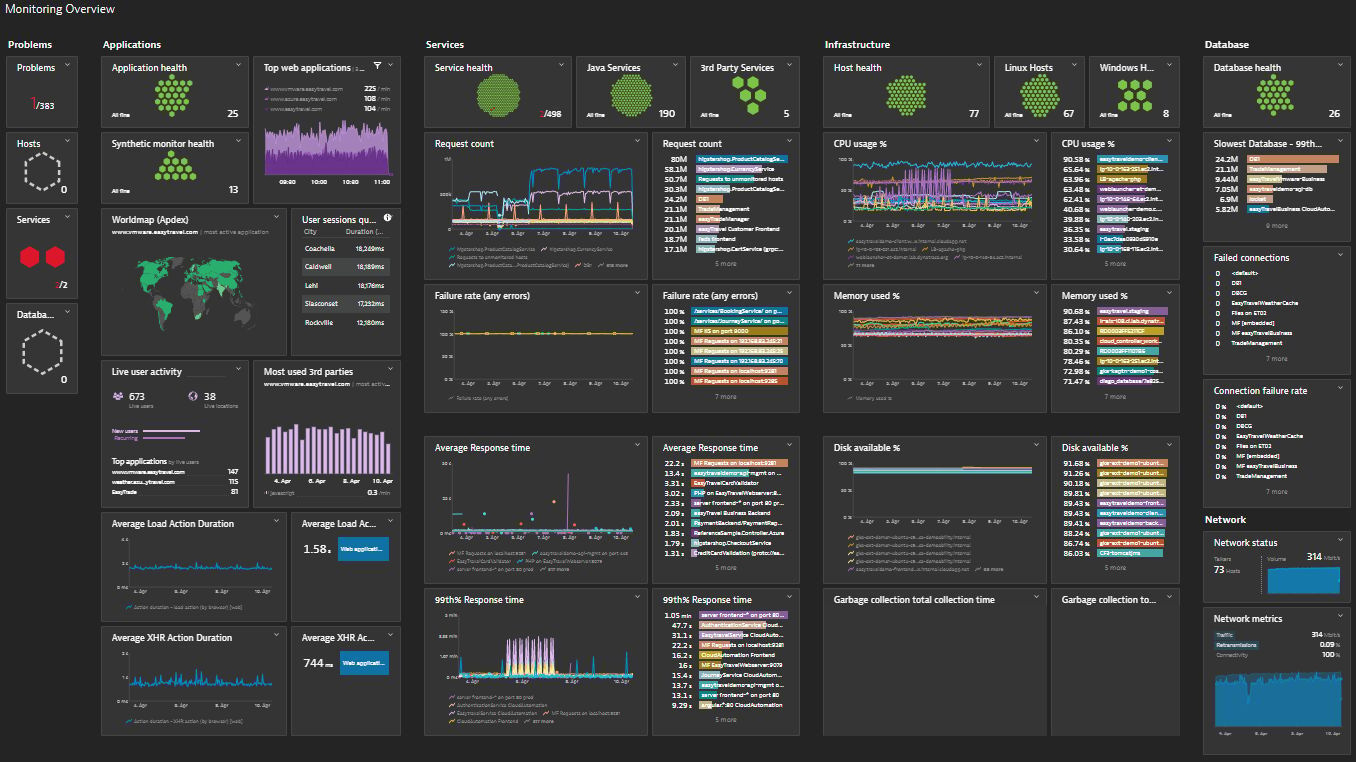
Image source: dynatrace.com
STRENGTHS: Competitive Advantages Driving Market Leadership
1. Comprehensive Platform Architecture and Integration Ecosystem
Datadog’s most formidable strength lies in its unified platform architecture, which consolidates disparate monitoring functions that historically required multiple point solutions. In October 2025, the company achieved a significant milestone by surpassing 1,000 integrations on its platform, underscoring the breadth of technology coverage available to customers.
This integration ecosystem provides several strategic advantages:
Vendor Consolidation Value Proposition
Traditional Multi-Vendor Approach     Datadog Unified Platform
─────────────────────────────────────────────────────────────
Infrastructure: Vendor A              Infrastructure: Datadog
APM: Vendor B                         APM: Datadog
Logs: Vendor C                        Logs: Datadog
Security: Vendor D                    Security: Datadog
Synthetics: Vendor E                  Synthetics: Datadog
RUM: Vendor F                         RUM: Datadog

Result: Data silos, integration    Result: Unified data model,
overhead, fragmented insights  correlated insights, single pane
The platform’s ability to correlate data across infrastructure, application, and security layers creates insights that fragmented point solutions cannot replicate. When an application performance issue occurs, Datadog can automatically trace it to underlying infrastructure problems, network latency, or security events, dramatically reducing mean time to resolution (MTTR).
2. Robust Financial Performance and Cash Generation
Datadog’s financial strength provides strategic flexibility for investment in product development and strategic acquisitions. The company’s Q3 2025 performance demonstrates exceptional operational discipline:
Financial Metric
Q3 2025 Performance
Strategic Implication
Revenue
$886M (+28% YoY)
Sustained high growth despite market maturation
Free Cash Flow
$214M
Demonstrates operational efficiency and scalability
Free Cash Flow Margin
24%
Among highest in enterprise software sector
Non-GAAP Operating Margin
23%
Proof of unit economics at scale
Cash & Securities
$4.1B
War chest for strategic initiatives
The company’s ability to generate substantial free cash flow while maintaining aggressive growth distinguishes it from many growth-stage software companies that sacrifice profitability for expansion. This balanced approach reduces execution risk and provides downside protection during market corrections.
Operating Leverage Analysis
Revenue Growth:           +28% YoY
Operating Expenses:       Growing slower than revenue
Result:                   Expanding margins demonstrating
                         operating leverage
For investors, this financial profile suggests Datadog has achieved the critical inflection point where incremental revenue increasingly translates to incremental profit, a characteristic of durable franchise businesses.
3. AI-Native Customer Growth and AI Observability Leadership
Perhaps the most strategically significant strength is Datadog’s positioning at the forefront of AI observability. The company reported that AI-native customers now represent 12% of total revenue, up from 6% a year ago, with revenue from this cohort growing 253% year-over-year.
This explosive growth reflects several underlying dynamics:
AI Workload Monitoring Complexity: Traditional observability tools struggle with AI workloads due to:
Non-deterministic behavior of machine learning models
Complex data pipelines spanning training and inference
GPU utilization patterns that differ from CPU workloads
Model drift and performance degradation over time
Prompt engineering and token usage optimization needs
Datadog has developed specialized capabilities to address these challenges, including LLM Observability that provides end-to-end tracing across AI agents, visibility into inputs and outputs, latency tracking, token usage monitoring, and error detection at each step.
AI-Native Customer Characteristics
Attribute
Impact on Datadog
Higher data volumes
Increased usage-based revenue per customer
Complex architectures
Greater product adoption breadth
Rapid scaling
Faster ARR expansion
Mission-critical nature
Lower churn rates
The strategic significance cannot be overstated. As enterprises across all sectors integrate AI capabilities, Datadog’s early leadership in AI observability creates a powerful moat. Teams deploying production AI systems have limited viable alternatives, positioning Datadog to capture disproportionate value from what may be the most significant technology shift since cloud computing.
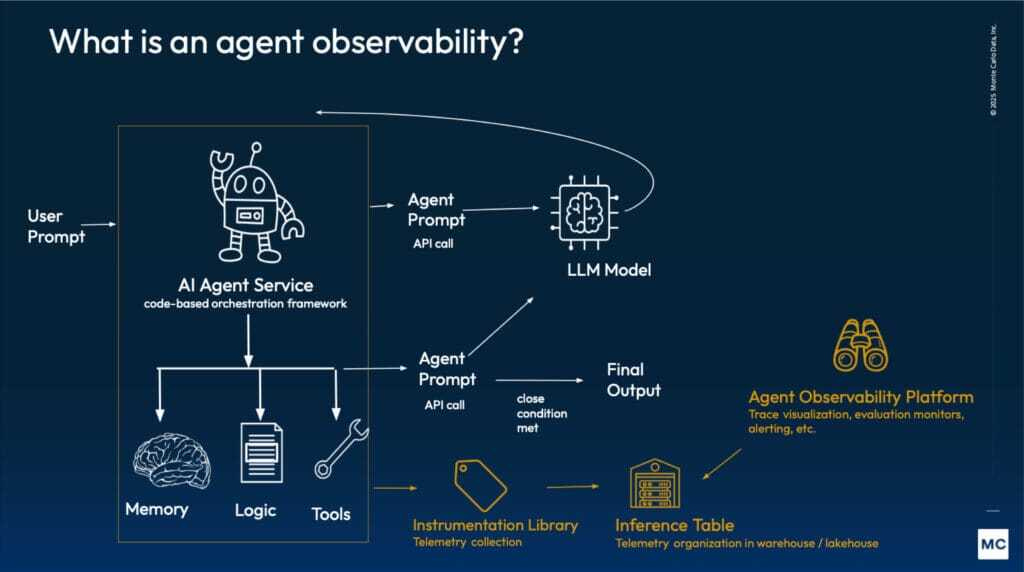
Image source: montecarlodata.com
4. Customer Quality and Enterprise Penetration
Datadog’s customer base skews toward large, sophisticated enterprises with complex technology environments and substantial budgets. This customer profile provides several advantages:
Large Customer Expansion Dynamics
Fortune 500 penetration creates long-term revenue visibility
Complex environments drive multi-product adoption
Enterprise budgets support premium pricing
Strategic relationships reduce competitive displacement risk
The company’s success in landing and expanding within large enterprises is evidenced by the robust growth in high-value customer cohorts. The 4,060 customers with $100,000+ in ARR represent the quality end of the customer spectrum, typically featuring multi-year contracts, multiple product deployments, and strategic vendor relationships.
Recent customer wins illustrate this strength. In Q3 2025, Datadog announced a seven-figure annualized expansion with a Fortune 500 financial services company starting with 14 products, and a seven-figure deal with a Fortune 500 technology hardware company adopting 11 products. These sophisticated deployments demonstrate that enterprise IT leaders view Datadog as a strategic platform rather than a tactical tool.
5. Industry Recognition and Analyst Validation
Gartner’s recognition of Datadog as a Leader in the 2025 Magic Quadrant for Observability Platforms marks the fifth consecutive year the company has achieved this status. Additionally, Datadog earned Leader recognition in the 2025 Magic Quadrant for Digital Experience Monitoring, with the highest position for Ability to Execute among all vendors.
These analyst endorsements carry significant weight in enterprise purchase decisions. IT leaders evaluating observability platforms frequently rely on Gartner research to develop vendor shortlists, and Leader positioning substantially increases the probability of inclusion in competitive bids. The consistency of this recognition over multiple years also validates that Datadog’s competitive advantages are durable rather than transitory.
6. Product Innovation Velocity and R&D Capabilities
Datadog maintains an aggressive product innovation cadence, regularly releasing new capabilities that expand addressable markets and deepen competitive moats. The company’s R&D investment as a percentage of revenue remains substantial, enabling continued innovation across multiple vectors:
Recent Innovation Highlights
AI & ML:
- Bits AI Agents for SRE, Developers, and Security teams
- TOTO time-series foundation model
- LLM Experiments for prompt optimization
- Enhanced AI observability for Amazon Bedrock and Strands

Data Management:
- Flex Frozen for cost-optimized log retention
- Archive Search for long-term log analysis
- CloudPrem for data residency compliance

Platform Enhancements:
- 1,000+ integration milestone
- MCP Server for extensibility
- Enhanced Oracle Cloud Infrastructure support
The breadth of innovation demonstrates that Datadog is not resting on its existing product portfolio but actively expanding into adjacent markets and addressing emerging customer needs. This innovation velocity creates a moving target for competitors, who must not only match Datadog’s current capabilities but also keep pace with continuous enhancements.
WEAKNESSES: Vulnerabilities and Internal Challenges
1. Pricing Complexity and Customer Cost Concerns
Despite its technical strengths, Datadog faces recurring criticism regarding pricing complexity and total cost of ownership unpredictability. The company’s usage-based pricing model, while theoretically aligning costs with value, creates several challenges:
Pricing Friction Points
Issue
Customer Impact
Business Risk
Overage charges
Budget surprises and CFO scrutiny
Relationship strain, churn risk
Metric explosion
Costs scale faster than anticipated
Defensive optimization behavior
Log volume unpredictability
Monthly bill volatility
Reduced adoption of log management
Complex SKU structure
Difficult cost modeling
Extended sales cycles
Industry analysis reveals that Datadog’s pricing can become prohibitively expensive as organizations scale, with some customers reporting 30% quarterly bill increases. These cost concerns have prompted a cottage industry of Datadog cost optimization services and tools, suggesting the issue is widespread rather than isolated.
The strategic risk extends beyond individual accounts. When customers experience billing surprises, they often respond by:
Implementing aggressive filtering to reduce ingested data
Limiting product adoption to essential use cases only
Evaluating competitors with more predictable pricing models
Advocating internally for vendor diversification
For investors, the pricing perception issue represents a potential governor on growth velocity. While Datadog’s net revenue retention remains healthy at approximately 120%, optimization-driven headwinds could compress this metric if macroeconomic conditions deteriorate further.
2. Customer Acquisition Costs and Sales Efficiency Pressures
As Datadog has matured and moved upmarket toward larger enterprises, customer acquisition costs have naturally increased. Enterprise sales cycles are longer, requiring extensive proof-of-concept engagements, security reviews, and multi-stakeholder buy-in. The company’s Q3 2025 commentary noted that new customer contribution to revenue growth increased to 25%, up from 20% in Q2, indicating healthy acquisition momentum, but the efficiency of this acquisition warrants scrutiny.
Sales Efficiency Considerations
Metric                          Trend              Implication
──────────────────────────────────────────────────────────────
Sales & Marketing % of Revenue  ~27%               Significant
Enterprise Sales Cycle          Lengthening        Higher CAC
Average Contract Value         Growing            Offsets CAC increase
Payback Period                 12-18 months       Within norms
While current metrics remain within acceptable ranges for enterprise SaaS companies, investors should monitor whether the company can maintain efficient growth as it exhausts the easier-to-reach segments of its addressable market. The land-and-expand model mitigates this concern somewhat, as expansion revenue requires less sales investment than new logos, but the challenge persists.
3. Dependence on Third-Party Cloud Infrastructure
Datadog’s platform runs on public cloud infrastructure, primarily AWS, which creates both operational and economic dependencies. The company incurs substantial costs for compute, storage, and data transfer from cloud providers, and these costs represent a significant portion of the cost of revenue.
Infrastructure Cost Dynamics
Factor
Current State
Risk Dimension
Cloud Provider Pricing
Stable but subject to change
Gross margin compression if prices increase
Data Egress Costs
High for cross-region traffic
Limits architectural flexibility
Vendor Lock-in
Limited multi-cloud leverage
Negotiating position constraints
Regional Expansion
Requires new infrastructure investment
Capital intensity of geographic growth
The economic challenge manifests in gross margins. While Datadog achieves impressive 80-81% gross margins, these trail pure-software companies that don’t incur infrastructure costs. Any deterioration in cloud provider economics flows directly to Datadog’s unit economics.
Additionally, this dependency creates operational risks. Major cloud provider outages directly impact Datadog’s service availability, and the company’s own reliability is partially contingent on third-party infrastructure operators. While Datadog has architected for high availability across multiple availability zones and regions, the fundamental constraint remains.
4. Limited Geographic Diversification
Datadog generates the majority of its revenue from North American customers, particularly within the United States. While the company operates globally and serves international customers, geographic concentration creates several risks:
Geographic Revenue Distribution (Approximate)
North America:      ~60-65% of revenue
Europe:            ~25-30% of revenue
Asia-Pacific:      ~10% of revenue
Other:             ~5% of revenue
This concentration exposes the company to region-specific risks:
Macroeconomic Exposure: North American economic conditions disproportionately impact financial performance
Regulatory Risk: U.S. regulatory changes have outsized effects on the business
Competitive Dynamics: Regional competitors may have advantages in local markets where Datadog has limited presence
Currency Risk: Dollar strength can make Datadog’s pricing less competitive internationally
For comparison, many enterprise software peers achieve more balanced geographic distribution, with 40-50% of revenue from international markets. Datadog’s relative under-indexing internationally represents both a weakness and an opportunity.
5. Talent Acquisition and Retention in Competitive Market
The company competes for engineering, sales, and product talent in one of the most competitive labor markets globally. As a New York-headquartered company, Datadog faces wage pressures from financial services firms, technology giants, and well-funded startups all competing for the same talent pool.
Talent Market Challenges
Competitive compensation requirements pressure operating margins
Stock-based compensation dilution concerns for existing shareholders
Remote work trends enable competitors from any location
Specialized skill requirements (AI/ML, distributed systems, security) face particularly acute shortages
The company’s Q3 2025 financial statements show stock-based compensation of $200.6 million in the quarter, or approximately 23% of revenue. While this level is not unusual for high-growth technology companies, it represents a real economic cost to shareholders through dilution. Investors should monitor whether compensation costs remain proportional to value creation or begin exceeding optimal levels.
OPPORTUNITIES: Growth Vectors for 2026 and Beyond
1. AI and Machine Learning Infrastructure Monitoring Explosion
The most significant growth opportunity for Datadog stems from the proliferation of artificial intelligence workloads across enterprise environments. As organizations transition from experimental AI projects to production deployments, observability becomes mission-critical infrastructure rather than a convenience.
AI Infrastructure Growth Drivers
The company’s position in this market is already yielding results, with AI-native customers growing from 6% to 12% of revenue in a single year. However, the opportunity has barely begun to materialize:
AI Adoption Stage
Current Penetration
Observability Need
Datadog Positioning
Experimentation
High (~60-70% of enterprises)
Low (development tools sufficient)
Limited revenue opportunity
Pilot Deployments
Medium (~30-40%)
Medium (monitoring becomes useful)
Early adoption phase
Production at Scale
Low (~10-15%)
High (observability becomes critical)
Maximum capture potential
As the distribution shifts rightward toward production deployments, Datadog stands to capture exponentially more value. A single large language model deployment monitoring contract can generate hundreds of thousands to millions in annual revenue, given the data volumes and monitoring complexity involved.
AI Observability Revenue Model
Traditional Application:
- 10-50 metrics per instance
- Moderate log volumes
- Standard APM traces

AI Application:
- 100-500 metrics (GPU utilization, inference latency, token usage)
- High log volumes (model inputs/outputs for debugging)
- Complex traces (multi-model workflows, vector database queries)

Revenue Multiple: 5-10x per workload
The company’s recent product innovations, including specialized LLM observability features, position it to capture disproportionate share of this greenfield market. Competitors that treat AI monitoring as an afterthought will struggle to match Datadog’s specialized capabilities.
2. Security and Compliance Market Expansion
The convergence of observability and security creates substantial expansion opportunities. Datadog’s security products, including Cloud Security Posture Management (CSPM), Cloud Workload Security, and Application Security Monitoring, tap into distinct budget allocations while leveraging the same underlying telemetry infrastructure.
Security Market Opportunity Dimensions
The global cloud security market is projected to exceed $40 billion by 2026, growing at over 20% annually. Datadog’s differentiation comes from its ability to correlate security signals with operational telemetry, enabling:
Integrated Security and Observability Use Cases
Use Case
Traditional Approach
Datadog Advantage
Vulnerability Response
Security team identifies issue, submits ticket to engineering
Real-time correlation with affected workloads and automatic remediation workflows
Performance vs. Security Trade-offs
Siloed decisions leading to suboptimal outcomes
Unified visibility enabling informed trade-off decisions
Incident Investigation
Manual correlation across multiple tools
Automated timeline reconstruction across security and operational events
Compliance Monitoring
Point-in-time audit snapshots
Continuous compliance verification with operational context
The company’s 2025 State of Cloud Security Report findings indicate that enterprises are adopting more sophisticated security strategies, creating demand for the integrated approach Datadog provides.
3. International Market Expansion and Geographic Diversification
Datadog’s relative under-penetration in international markets, particularly in Asia-Pacific and emerging markets, represents a substantial growth opportunity. While international expansion carries execution risks, the company’s SaaS delivery model and existing global infrastructure provide a foundation for acceleration.
International Expansion Opportunity Matrix
Region      Penetration   Opportunity  Strategic Priority
───────────────────────────────────────────────────────────
Europe      Medium-High   $5-7B TAM    Consolidate position
Asia        Low-Medium    $8-10B TAM   High growth potential
L. America  Low           $1-2B TAM    Selective expansion
Middle East Low           $1-2B TAM    Emerging opportunity
The company’s success in achieving GovRAMP High Authorization “In Process” status demonstrates its capability to meet stringent requirements for regulated markets, a skill transferable to international public sector opportunities.
Key expansion vectors include:
European Sovereignty Requirements: Data localization and sovereignty concerns create opportunities for regional deployments
Asia-Pacific Digital Transformation: Rapid cloud adoption in markets like India, Southeast Asia, and Japan
Industry Vertical Penetration: Healthcare, financial services, and government sectors with unique compliance needs
Channel Partnerships: Leveraging systems integrators and regional value-added resellers to accelerate market entry
4. Vertical Industry Solutions and Specialized Offerings
While Datadog has historically maintained a horizontal platform strategy, opportunities exist to develop specialized solutions for specific industries with unique monitoring and compliance requirements:
High-Potential Vertical Markets
Industry
Specific Needs
Datadog Opportunity
Healthcare
HIPAA compliance, patient data monitoring, medical device connectivity
PHI-specific logging, specialized compliance dashboards
Financial Services
Transaction monitoring, fraud detection, regulatory reporting
Real-time transaction tracing, audit trail guarantees
Retail/E-commerce
Customer journey analytics, inventory systems, POS monitoring
Integrated digital experience and inventory correlation
Manufacturing/IoT
Edge device monitoring, industrial equipment telemetry
Edge-to-cloud observability, predictive maintenance
The development of industry-specific solutions could command premium pricing while reducing competitive threats from generalist platforms. Moreover, specialized offerings create opportunities for professional services revenue and deeper customer relationships.
5. Strategic Acquisitions and Product Portfolio Enhancement
Datadog’s strong balance sheet, with $4.1 billion in cash and securities as of Q3 2025, provides substantial capacity for strategic acquisitions. The company’s recent acquisition of Eppo for approximately $220 million demonstrates management’s willingness to deploy capital for strategic expansion.
M&A Strategic Rationale
The Eppo acquisition illustrates Datadog’s acquisition criteria and strategy:
Expanding into adjacent markets (feature flagging and experimentation)
Acquiring specialized expertise and technology
Accelerating product development timelines
Eliminating potential competitive threats early
Future acquisition targets might include:
Specialized AI/ML monitoring platforms
Security information and event management (SIEM) capabilities
Cost optimization and FinOps tools
Incident management and on-call platforms
Business intelligence and data visualization capabilities
Each acquisition serves dual purposes: immediately expanding addressable market and cross-selling opportunities, while also preemptively neutralizing competitive threats. For investors, strategic M&A represents a catalyst for growth acceleration, though execution risk must be carefully evaluated.
THREATS: External Challenges and Risk Factors
1. Intensifying Competition from Established and Emerging Players
The observability market has attracted intense competitive interest, with well-funded adversaries attacking Datadog’s position from multiple angles. Competition manifests across several dimensions:
Competitive Threat Matrix
Competitor Type
Examples
Competitive Strategy
Risk to Datadog
Incumbent APM Vendors
Dynatrace, New Relic
All-in-one platforms with strong enterprise relationships
Direct feature and pricing competition
Log Management Specialists
Splunk (Cisco)
Deep logging/security capabilities with observability expansion
Security and log management displacement
Cloud Native Players
Grafana, Prometheus ecosystem
Open-source foundations with commercial offerings
Low-end disruption, pricing pressure
Cloud Provider Tools
AWS CloudWatch, Azure Monitor, Google Cloud Operations
Native integration and bundled pricing
Cloud provider lock-in effects
AI-Focused Entrants
Emerging startups
Specialized AI observability features
Niche displacement in fast-growing segments
Dynatrace has invested heavily in AI-powered automation and boasts strong performance in the Gartner rankings. New Relic has repositioned around consumption-based pricing that may be more attractive to cost-conscious customers. Meanwhile, the Grafana ecosystem provides capable open-source alternatives that resonate with engineering-led organizations.
Competitive Pressure Points
Pricing:        Aggressive discounting from challengers seeking share
Feature Parity: Competitors closing capability gaps through rapid development
Bundling:       Cloud providers offering "good enough" monitoring at no extra cost
Specialization: Vertical-focused solutions capturing niche use cases
The proliferation of alternatives creates deal risk at renewal time. As customers face budget scrutiny, competitive proposals provide leverage to demand concessions or justify vendor switches. While Datadog’s integrated platform creates switching friction, no position is unassailable.
2. Macroeconomic Headwinds and Enterprise IT Budget Pressures
Despite Datadog’s strong Q3 2025 performance, macroeconomic conditions continue to create headwinds for software spending. Several trends warrant investor attention:
Economic Environment Impacts
The company has acknowledged that customers are implementing optimization initiatives to control costs, leading to slower usage growth among existing customers. While new customer acquisition has partially offset this effect, sustained economic uncertainty could amplify these pressures.
Economic Scenario
Impact on Datadog
Probability
Risk Severity
Prolonged High Interest Rates
Reduced cloud migration velocity, extended sales cycles
Medium-High
Moderate
Technology Sector Recession
Budget cuts, project deferrals, aggressive optimization
Low-Medium
High
Gradual Recovery
Improving conditions through 2026
Medium
Low
Rapid Expansion
Accelerated digital transformation spending
Low-Medium
None (positive)
The company’s exposure to technology sector customers creates concentration risk. If technology companies that have driven recent growth face challenges, the impact on Datadog could be disproportionate. Conversely, expansion into more diverse industry verticals would provide natural hedging.
3. Open Source Alternative Adoption and Commoditization Pressure
The observability market faces ongoing commoditization pressure from open-source alternatives that have achieved remarkable maturity. The combination of Prometheus for metrics, Grafana for visualization, Elasticsearch for logs, and Jaeger for tracing provides a competent monitoring stack at zero software cost.
Open Source Ecosystem Maturity
Component     Open Source   Maturity    Competition
─────────────────────────────────────────────────────────────
Metrics       Prometheus    High        Direct feature parity
Visualization Grafana       Very High   Superior in some areas
Logs          Elasticsearch High        Strong capabilities
Tracing       Jaeger, Tempo Medium-High Catching up rapidly
While the total cost of ownership for open-source stacks includes operational overhead, skilled engineering teams can achieve significant savings. The trend toward platform engineering and internal developer platforms makes self-hosting more attractive for large enterprises with technical sophistication.
Datadog’s counter-strategy emphasizes managed service convenience, integrated workflows, and specialized capabilities like AI observability that open-source alternatives lack. However, the persistent pricing pressure from open-source alternatives constrains Datadog’s pricing power and margin expansion potential.
4. Data Privacy and Regulatory Compliance Complexity
As a platform that ingests and processes massive volumes of operational data, Datadog faces increasing regulatory scrutiny regarding data handling, privacy, and sovereignty. Multiple regulatory regimes create complex compliance obligations:
Regulatory Landscape Challenges
Regulation
Geographic Scope
Key Requirements
Datadog Impact
GDPR
European Union
Data localization, right to deletion, consent requirements
Regional infrastructure requirements, feature development costs
CCPA/CPRA
California, expanding
Consumer data rights, opt-out mechanisms
Operational complexity, potential liability
Data Sovereignty Laws
Various (China, Russia, etc.)
In-country data storage and processing
Market access barriers, infrastructure duplication
Industry-Specific (HIPAA, PCI-DSS, etc.)
U.S. and global
Specialized handling of sensitive data
Compliance certification costs, feature constraints
The challenge extends beyond compliance costs. Regulatory fragmentation requires region-specific infrastructure deployments, multiplying operational complexity. Additionally, heightened scrutiny of data handling practices creates reputational risk if breaches or mishandling incidents occur.
Datadog has made progress on compliance, including the GovRAMP authorization initiative and various certifications. However, the regulatory environment continues evolving, and unexpected requirements could necessitate significant architectural changes or feature limitations.
5. Technology Disruption and Platform Architecture Shifts
The observability market exists within a broader technology ecosystem subject to disruptive change. Several emerging trends could fundamentally alter requirements or create new competitive threats:
Potential Disruptive Forces
Edge Computing and Distributed Architectures: As computing moves closer to data sources and end-users, traditional cloud-centric observability models may require fundamental rethinking. Edge deployments create challenges for centralized data aggregation and analysis, potentially requiring new architectural approaches.
AI-Powered Autonomous Operations: Advanced AI systems that automatically detect and remediate issues could reduce the need for human-facing observability tools. While Datadog is investing in AI capabilities like Bits AI, truly autonomous systems could commoditize aspects of the observability stack.
eBPF and Kernel-Level Instrumentation: Technologies like eBPF (extended Berkeley Packet Filter) enable observability with zero application instrumentation. This shift could disintermediate traditional APM approaches, though Datadog has been adopting these technologies in its own stack.
Traditional Instrumentation:        eBPF-Based Approach:
────────────────────────────────────────────────────────
Application code modification   No application changes required
Language-specific agents        Language-agnostic observation
Performance overhead            Minimal performance impact
Deployment complexity           Simplified deployment
Serverless and Function-as-a-Service Evolution: As serverless computing matures, monitoring requirements evolve. Ephemeral execution environments, sub-second function invocations, and event-driven architectures create unique observability challenges that may favor purpose-built solutions over general platforms.
While Datadog has demonstrated adaptability to technology transitions, the pace of change creates ongoing execution risk. Missing a fundamental shift or being slow to adapt could enable competitors to gain share in emerging segments.
Strategic Implications for Investors
Investment Thesis Framework
Evaluating Datadog as a potential investment requires synthesizing the SWOT elements into a coherent framework. The following scenarios outline potential future trajectories:
Bull Case: AI-Driven Acceleration
In this scenario, AI workload proliferation accelerates faster than anticipated, with enterprises moving rapidly from experimentation to production deployments. Datadog’s specialized AI observability capabilities enable it to capture disproportionate market share, driving revenue growth acceleration to 30-35% annually through 2026-2027. The company successfully expands internationally while maintaining operating margins above 25%, generating substantial free cash flow that funds strategic acquisitions and shareholder returns.
Key Catalysts:
AI-native customer revenue exceeding 20% of total by end of 2026
Successful international expansion adding 5+ points to growth rate
Strategic acquisitions that expand TAM without margin dilution
Net revenue retention expanding above 125% as multi-product adoption accelerates
Base Case: Steady Growth with Gradual Margin Expansion
The most likely scenario involves Datadog maintaining revenue growth in the 22-28% range through 2026, with gradual operating margin expansion to 25-27% as the company achieves greater scale. AI observability contributes meaningfully but doesn’t transform growth trajectory dramatically. Competition intensifies but Datadog defends market position through platform advantages and execution consistency. Macroeconomic conditions gradually improve, reducing optimization headwinds.
Key Characteristics:
Revenue reaching $4.5-4.8 billion in 2026
Free cash flow margins sustaining in 23-26% range
Customer count growing at 8-12% annually with stable net retention
Operating efficiency improvements offsetting competitive pricing pressure
Bear Case: Margin Compression and Growth Deceleration
In the pessimistic scenario, intensifying competition forces aggressive pricing concessions while macroeconomic headwinds persist longer than expected. Large customers leverage competitive alternatives to extract discounts, compressing margins. Open-source alternatives gain enterprise traction. Growth decelerates to high-teens percentage rates while operating margins compress below 20%. The market re-rates growth-at-scale multiples downward.
Key Risk Factors:
Major customer losses to competitors or open-source alternatives
Pricing pressure leading to gross margin deterioration below 78%
AI observability opportunity maturing slower than anticipated
Regulatory changes requiring costly platform modifications
Valuation Considerations
For investors, determining appropriate valuation multiples requires considering Datadog’s growth, profitability, and competitive position:
Comparative Valuation Framework
Metric
Datadog
Growth SaaS Peers (Avg)
Enterprise Software (Avg)
Revenue Growth Rate
~25-28%
~20-25%
~12-18%
Free Cash Flow Margin
~24%
~15-20%
~25-30%
Net Revenue Retention
~120%
~115-120%
~105-110%
Rule of 40 Score
~47-52
~40-45
~35-40
Datadog’s Rule of 40 score (revenue growth rate plus free cash flow margin) of approximately 50 places it in the top quartile of enterprise software companies, justifying premium valuation relative to slower-growing or less profitable peers.
Key Valuation Drivers
Positive Factors:
- Exceptional growth and profitability balance
- Large and expanding TAM
- Strong competitive position with multiple moats
- Secular tailwinds from cloud and AI adoption

Risk Factors:
- High absolute valuation multiples vulnerable to multiple compression
- Execution risk in maintaining growth at scale
- Competitive intensity and pricing pressure
- Macroeconomic sensitivity
Portfolio Positioning Recommendations
For investors considering Datadog as a portfolio holding, several factors inform appropriate position sizing:
Conservative Investors (Risk Tolerance: Low to Moderate)
Rationale: Quality business with strong fundamentals but elevated valuation risk
Entry Strategy: Dollar-cost averaging on weakness, avoid chasing
Monitoring: Quarterly earnings, net retention trends, competitive developments
Growth-Oriented Investors (Risk Tolerance: Moderate to High)
Rationale: Multi-year growth runway with AI opportunity offering asymmetric upside
Entry Strategy: Core position with tactical additions on momentum
Monitoring: AI customer metrics, product innovation velocity, international expansion progress
Aggressive Growth Investors (Risk Tolerance: High)
Rationale: Best-in-class operator in massive addressable market with AI tailwind
Entry Strategy: Full position rapidly, potentially using options for leverage
Monitoring: Detailed analysis of customer cohort dynamics, competitive positioning shifts
Risk Mitigation Strategies
Investors holding or considering Datadog positions should implement monitoring frameworks to identify emerging risks early:
Key Performance Indicators to Monitor
Financial Health Metrics
Metric
Warning Threshold
Action if Breached
Revenue Growth Rate
Falls below 20% YoY
Reassess growth thesis, reduce position
Net Revenue Retention
Declines below 115%
Examine customer health and competitive losses
Free Cash Flow Margin
Falls below 20%
Evaluate operating efficiency and margin trajectory
Customer Acquisition Efficiency
Payback period exceeds 24 months
Question scalability of growth model
Operational Indicators
Metric
Warning Signal
Interpretation
$100K+ Customer Growth
Decelerates to single digits
Large customer momentum slowing
Multi-Product Adoption
Stagnates or declines
Platform strategy weakening
AI-Native Revenue %
Growth rate decelerates
AI opportunity materializing slower than expected
Gross Margin
Compression exceeding 100 basis points annually
Infrastructure costs or competitive pricing pressure
Competitive Intelligence Monitoring
Investors should track competitor developments that could signal shifting competitive dynamics:
Product Releases: Major feature announcements from Dynatrace, New Relic, or emerging players
Pricing Changes: Aggressive discounting or pricing model innovations from competitors
Customer Wins: High-profile customers switching from Datadog to alternatives
Market Share Data: Independent research on relative platform adoption
Analyst Reports: Gartner, Forrester, and IDC positioning updates
Macroeconomic Indicators
Given Datadog’s sensitivity to enterprise IT spending, several economic indicators provide early warning signals:
Leading Indicators:
- Technology sector employment trends
- Cloud infrastructure spending growth (AWS, Azure, GCP revenue)
- Software spending surveys (e.g., Gartner IT spending forecasts)
- Customer optimization commentary in earnings calls

Lagging Indicators:
- Datadog's own revenue growth rate
- Net retention rate trends
- Customer churn disclosures
My Final Thoughts: Assessment and Forward Outlook
Datadog occupies an enviable position at the nexus of multiple technology megatrends, with a proven platform, strong customer relationships, and meaningful competitive advantages. The company’s comprehensive SWOT profile reveals an organization with substantial strengths, manageable weaknesses, compelling opportunities, and identifiable but addressable threats.
Synthesis of Key Findings
The most critical takeaway for investors is that Datadog represents a high-quality growth business trading at growth stock valuations. The company’s ability to sustain 25%+ revenue growth while generating substantial free cash flow distinguishes it from many growth-stage software companies. This balanced profile reduces downside risk while preserving meaningful upside potential.
The AI observability opportunity could prove transformative, potentially accelerating growth and expanding addressable markets significantly. However, investors should avoid extrapolating current AI-native customer growth rates indefinitely, as some deceleration is inevitable as the cohort matures. The question is whether AI workloads represent a temporary boost or a sustained structural tailwind through the end of the decade.
Critical Success Factors for 2026
Several factors will determine whether Datadog can sustain its premium valuation and market leadership through 2026:
AI Observability Leadership: Maintaining technological edge as competitors introduce AI monitoring capabilities
International Expansion Execution: Successfully penetrating Asia-Pacific and emerging markets without margin dilution
Pricing and Value Perception: Addressing customer cost concerns while preserving unit economics
Platform Integration: Deepening product integration to increase switching costs and multi-product adoption
Competitive Defense: Fending off challengers without aggressive pricing concessions
Investment Verdict Framework
For most investors, Datadog merits consideration as a core holding within a growth-oriented technology portfolio, with position sizing calibrated to individual risk tolerance and conviction levels. The company’s combination of growth, profitability, and market position create an attractive risk-reward profile for patient investors with multi-year time horizons.
However, near-term volatility should be expected. Quarterly results will likely show variability as macroeconomic conditions evolve, and the stock may experience significant drawdowns during broader market corrections given its high valuation multiples. Investors prone to emotional decision-making or those requiring capital preservation should consider smaller positions or alternative investment vehicles.
The forward path through 2026 and beyond will test management’s ability to navigate intensifying competition while sustaining innovation velocity and operational efficiency. For investors willing to accept execution risk and valuation volatility, Datadog offers exposure to secular growth trends in cloud computing, artificial intelligence, and digital transformation that will likely define the next decade of enterprise technology.
As enterprises continue their inexorable migration toward cloud-native architectures and AI-augmented operations, the demand for sophisticated observability platforms will only intensify.
Whether Datadog can capitalize fully on this opportunity while defending against competitive incursions will determine its ultimate success as an investment.
Our SWOT analysis framework provided here offers investors a structured approach to monitoring progress and adjusting portfolio positions as new information emerges.
Disclaimer: This analysis is for informational purposes only and should not be construed as investment advice. Investors should conduct their own due diligence and consult with financial advisors before making investment decisions.