

The food delivery sector has undergone a remarkable transformation since the pandemic accelerated digital adoption, and DoorDash, Inc $DASH ( ▼ 2.59% ) has emerged as the undisputed leader in this space.
For investors seeking to understand the company’s strategic position as we move toward 2026, our comprehensive DoorDash SWOT analysis reveals key insights that will shape the company’s trajectory in the coming years.
Table of Contents
Understanding DoorDash’s Business Foundation
Founded in 2013 by Stanford students Tony Xu, Stanley Tang, Andy Fang, and Evan Moore, DoorDash has evolved from a modest food delivery service in Palo Alto to a comprehensive local commerce platform serving millions globally.
The company’s initial public offering in December 2020 marked a significant milestone, and since then, DoorDash has consistently expanded its market presence, acquiring competitors and diversifying its service offerings.
As of Q3 2025, DoorDash generated nearly $24 billion in combined sales for merchants and earnings for Dashers, with projections to exceed $100 billion in 2026. The company’s marketplace facilitated 776 million total orders in Q3 2025, representing a 21% year-over-year increase.
KEY FINANCIAL METRICS (Q3 2025)

Total Orders:                776 million
Marketplace GOV:             $25.0 billion
Revenue:                     $3.446 billion
Year-over-Year Growth:       27%
Net Income:                  $244 million
Adjusted EBITDA:             $754 million
EBITDA Margin:               3.0%
Strengths: Foundation of Market Leadership
Dominant Market Position
DoorDash commands an impressive 67-68% market share in the U.S. food delivery sector as of 2025, more than double its nearest competitor. This substantial lead provides significant competitive advantages, including stronger negotiating power with restaurant partners, greater driver network effects, and increased brand recognition among consumers.
The company’s market dominance translates into operational efficiency. With more orders flowing through its platform, DoorDash achieves better unit economics than competitors, enabling reinvestment in technology, marketing, and expansion initiatives that further cement its leadership position.
Metric
DoorDash
Uber Eats
Grubhub
U.S. Market Share
67-68%
23-24%
6-8%
Global Presence
40+ countries
70+ countries
4,000+ U.S. cities
Monthly Active Users
50+ million (global)
Data not disclosed
Data not disclosed
Subscription Members
18+ million (DashPass)
25+ million (Uber One)
Data not disclosed
Strong Financial Performance and Improving Profitability
DoorDash’s financial trajectory demonstrates consistent improvement across key metrics. In Q3 2025, the company achieved revenue of $3.446 billion, up 27% year-over-year, with Adjusted EBITDA reaching $754 million, a 41% increase from the prior year period.
The company’s path to profitability represents a significant milestone for the food delivery industry, historically characterized by thin margins and intense cash burn. DoorDash’s GAAP net income for Q3 2025 reached $244 million, demonstrating that the business model can generate sustainable profits while continuing to invest in growth.
REVENUE PROGRESSION

Q3 2024:    $2.706 billion
Q4 2024:    $2.873 billion
Q1 2025:    $3.032 billion
Q2 2025:    $3.284 billion
Q3 2025:    $3.446 billion

Five-Quarter Growth Rate: 27.3%
Diversified Revenue Streams
Unlike earlier incarnations focused solely on restaurant delivery, DoorDash has successfully diversified its revenue model across multiple channels. The company generates income through:
Commission Fees: Restaurant partners typically pay 15-30% commission on each order, varying based on partnership tier and services utilized.
Delivery Fees: Customers pay delivery charges that range from $0.99 to $7.99 depending on distance, demand, and membership status.
DashPass Subscriptions: The DashPass membership program surpassed 18 million users in 2025, providing predictable recurring revenue. Members pay $9.99 monthly for benefits including $0 delivery fees on eligible orders and reduced service fees.
Advertising Revenue: DoorDash’s advertising platform allows restaurants to promote their offerings within the app, creating a high-margin revenue stream that contributed significantly to the company’s improved net revenue margin of 13.8% in Q3 2025.
DoorDash Drive: This white-label fulfillment service enables businesses to use DoorDash’s logistics network for their own delivery operations.
Robust Technology Infrastructure and Innovation
Technology remains DoorDash’s core competitive advantage. The company invested heavily in developing proprietary systems for route optimization, demand prediction, and merchant integration. These technological capabilities enable faster delivery times, lower operational costs, and superior customer experiences compared to competitors.
In September 2025, DoorDash unveiled “Dot,” its first autonomous delivery robot designed entirely in-house. Unlike earlier robotic delivery attempts by competitors, Dot seamlessly navigates bike lanes, roads, and sidewalks, addressing one of the industry’s most persistent challenges: last-mile delivery costs. The company also announced its Autonomous Delivery Platform, which integrates various delivery modalities including robots, drones, and human drivers.
TECHNOLOGY INVESTMENTS (2025 INITIATIVES)

- Autonomous Delivery Platform
- Dot robotic delivery system
- New global technology platform
- AI-native development tools
- Enhanced mapping systems
- SmartScale logistics optimization
Strategic Acquisitions Expanding Global Reach
DoorDash’s acquisition strategy has proven instrumental in accelerating growth and entering new markets. The company completed its acquisition of Deliveroo for approximately $3.85 billion in October 2025, significantly expanding its international presence across the United Kingdom, Europe, Middle East, and Asia-Pacific regions.
The Deliveroo acquisition brought DoorDash into nine new markets including Singapore, Hong Kong, France, and several Middle Eastern countries. Combined with the earlier acquisition of Wolt, DoorDash now operates across more than 40 countries, positioning itself as a truly global local commerce platform.
In May 2025, DoorDash also announced plans to acquire SevenRooms, a restaurant reservation and table management platform, for approximately $1.2 billion. This acquisition represents DoorDash’s expansion beyond delivery into the full restaurant dining experience, creating additional touchpoints with consumers and merchants.
Acquisition
Date
Value
Strategic Rationale
Deliveroo
October 2025
~$3.85 billion
International expansion, 9 new markets
SevenRooms
Pending (2025)
~$1.2 billion
Restaurant reservation system, dine-in services
Wolt
Previous
Data not disclosed
European market entry, technology platform
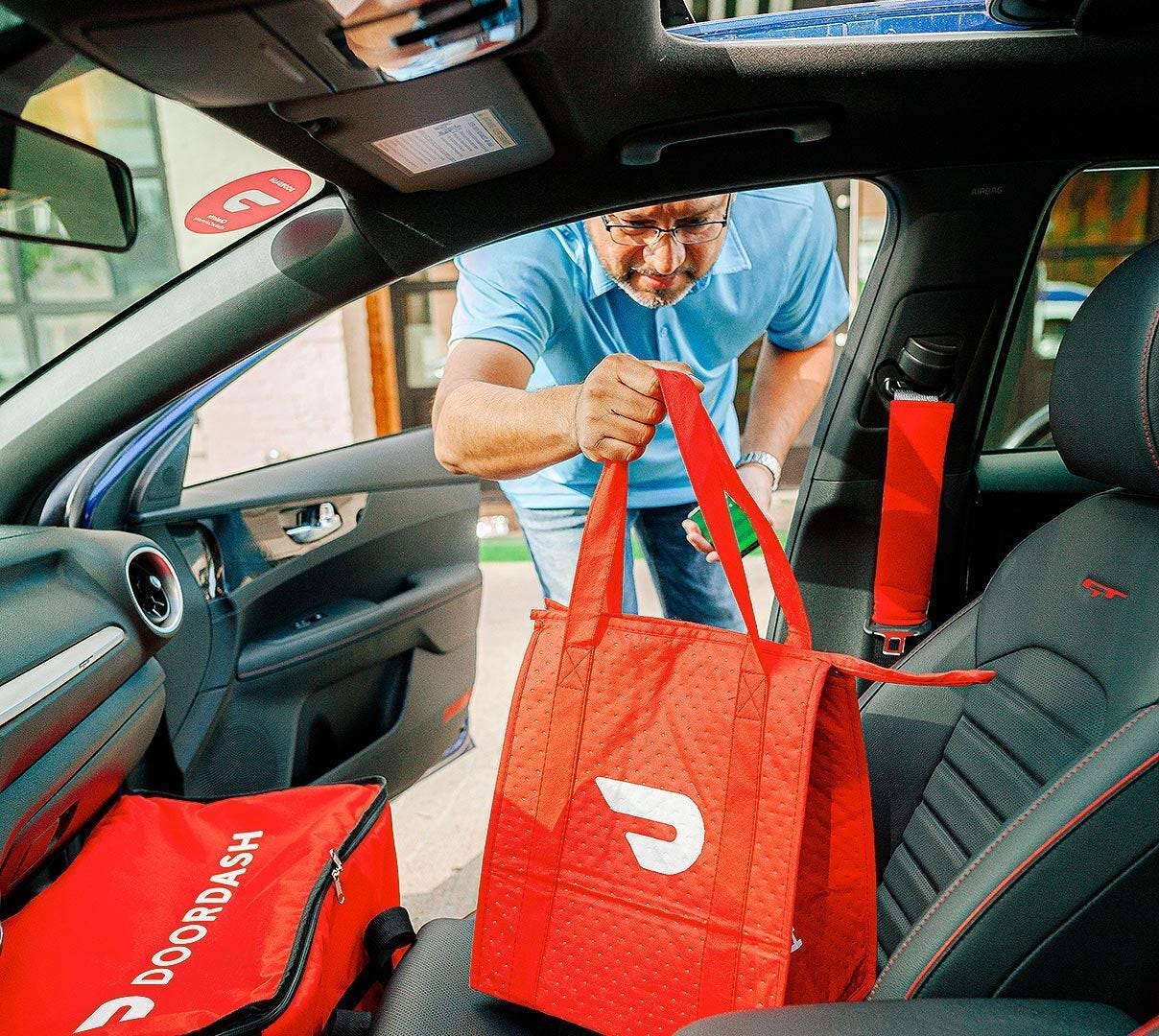
Image source: dasher.doordash.com
Expanding Beyond Food Delivery
DoorDash’s “new verticals” strategy addresses a fundamental limitation of restaurant delivery: relatively low order frequency compared to other retail categories. The company aggressively expanded into grocery delivery, partnering with major retailers including:
Kroger Partnership: In September 2025, DoorDash announced an expanded partnership adding more than 2,700 Kroger-family stores to its platform, making it the largest grocery delivery network in the United States.
Regional Grocery Partnerships: The company added six regional grocers in July 2025, expanding access to specialty and local grocery options across the country.
Retail and Convenience: DoorDash facilitates delivery from convenience stores, pharmacies, pet supply stores, and other retail categories, diversifying revenue streams and increasing customer engagement frequency.
DashMart Fulfillment Services: Launched in 2025, this service provides infrastructure for retailers to offer quick commerce without building their own delivery operations.
According to DoorDash’s Q3 2025 results, new verticals showed accelerated year-over-year growth with improving unit economics, although they remain contribution-margin negative. Management expressed confidence in the trajectory toward profitability in these categories.
Weaknesses: Challenges to Address
Persistent Profitability Pressures
Despite achieving GAAP profitability in recent quarters, DoorDash operates with relatively thin margins that remain vulnerable to external pressures. The company’s GAAP net income margin was just 1.0% of Marketplace GOV in Q3 2025, while Adjusted EBITDA margin reached 3.0%.
Several factors constrain profitability:
High Dasher Costs: Labor represents the largest operational expense, accounting for approximately 60-65% of delivery fees. As competition for drivers intensifies and regulatory pressure increases, maintaining attractive pay rates while preserving margins becomes increasingly challenging.
Customer Acquisition Costs: Marketing and promotional expenses remain substantial. DoorDash spent $576 million on sales and marketing in Q3 2025, equivalent to 2.3% of Marketplace GOV.
Price Sensitivity: Consumers demonstrate significant price sensitivity in food delivery. Excessive fees or reduced discounting can quickly erode order volume, limiting pricing power.
PROFITABILITY METRICS (Q3 2025)

Gross Profit Margin:        51.0%
Contribution Margin:        5.1% of GOV
Operating Margin:           7.5%
Net Profit Margin:          7.1% of revenue
EBITDA Margin:              3.0% of GOV
Limited International Market Penetration (Historical)
Prior to the Deliveroo acquisition, DoorDash derived the overwhelming majority of revenue from North America, particularly the United States. While the company operated international markets through Wolt, these represented a small fraction of overall business.
International markets grew slower than domestic operations in Q3 2025, with year-over-year growth in total orders decelerating slightly due to slower growth in average order frequency. However, the company achieved record unit economics in international markets during the same period.
The Deliveroo acquisition significantly addresses this weakness, but successful integration and growth in new international markets remain execution risks.
Regulatory and Legal Vulnerabilities
DoorDash faces substantial regulatory challenges across multiple jurisdictions, particularly regarding:
Worker Classification: The fundamental question of whether delivery drivers should be classified as independent contractors or employees remains contentious. While California’s Proposition 22 provided clarity in that state, legal challenges continue, and other jurisdictions may adopt different approaches.
Reclassification to employee status would dramatically increase labor costs through requirements for minimum wage, overtime, benefits, and payroll taxes. Industry estimates suggest this could increase labor costs by 20-30% or more.
Fee Caps and Price Controls: Various cities and states have implemented or proposed caps on delivery fees and commissions charged to restaurants. Seattle’s regulations, for example, prompted DoorDash to increase consumer feesto offset restricted revenue from merchant commissions.
Antitrust Concerns: DoorDash’s dominant market position attracts regulatory scrutiny. Uber filed a lawsuit in 2025 alleging anti-competitive practices, claiming DoorDash’s market dominance enables exclusionary conduct.
Data Privacy and Security: Operating a platform that collects extensive consumer, merchant, and driver data creates regulatory compliance obligations and potential liability if data breaches occur.
Regulatory Challenge
Potential Impact
Mitigation Strategy
Worker Reclassification
20-30% increase in labor costs
Legislative advocacy, operational efficiency improvements
Fee Caps
10-15% revenue reduction in affected markets
Shift fees to consumers, improved merchant value proposition
Antitrust Action
Market access restrictions, behavioral constraints
Maintain fair practices, document competitive justifications
Data Regulations
Compliance costs, operational restrictions
Enhanced security infrastructure, privacy-first design
High Operating Expenses
DoorDash’s cost structure includes substantial fixed and variable expenses that pressure margins:
Technology Development: The company spent $355 million on research and development in Q3 2025, representing 1.4% of Marketplace GOV. Management indicated plans to increase technology investment in 2026, particularly for the new global technology platform.
General and Administrative: G&A expenses reached $400 million in Q3 2025, including legal reserves and settlement costs related to regulatory matters.
Advertising and Marketing: Maintaining market share requires continuous investment in customer acquisition and brand awareness.
Management expects to invest several hundred million dollars more in new initiatives and platform development in 2026 compared to 2025, which will temporarily pressure profitability metrics.
Dependency on Third-Party Restaurants
DoorDash’s core business model relies on restaurant partners who may develop their own delivery capabilities or choose competing platforms. Large restaurant chains increasingly build proprietary delivery systems to avoid commission fees, potentially reducing DoorDash’s addressable market.
Additionally, restaurant economics remain challenging, with many operators viewing delivery platforms as necessary but margin-dilutive. This tension creates friction in merchant relationships and limits DoorDash’s ability to increase take rates without risking partner attrition.

Image source: wikipedia.org
Opportunities: Growth Vectors for 2026 and Beyond
Autonomous Delivery Technology
The introduction of Dot and the Autonomous Delivery Platform represents potentially transformative opportunities to reduce delivery costs while maintaining or improving service quality. Autonomous vehicles and robots could address several persistent challenges:
Labor Cost Reduction: Automated delivery eliminates or significantly reduces per-delivery labor costs, the largest expense category in the business model. While upfront technology investment is substantial, the marginal cost per delivery decreases dramatically at scale.
24/7 Operations: Unlike human drivers, autonomous systems can operate continuously without breaks, enabling service expansion during traditionally difficult-to-staff hours.
Consistency and Reliability: Automated systems provide predictable delivery times and service quality, enhancing customer experience.
DoorDash partnered with Serve Robotics to deploy additional autonomous delivery capacity, supplementing its own Dot robots. The company also collaborates with Wing for drone delivery in select markets.
Initial deployments began in Phoenix and are expected to expand to additional markets through 2026. While autonomous delivery currently represents a tiny fraction of total deliveries, successful scaling could fundamentally reshape unit economics.
AUTONOMOUS DELIVERY POTENTIAL IMPACT

Current Delivery Cost per Order:    $5-7
Projected Autonomous Cost per Order: $2-3
Potential Cost Reduction:            40-60%
Addressable Order Types:             Short-distance, lower-value orders
Timeline to Meaningful Scale:        2026-2028
International Market Expansion
The Deliveroo acquisition positions DoorDash for significant international growth. Combined with Wolt, the company now operates across more than 40 countries, but international markets remain substantially underpenetrated compared to the mature U.S. market.
Key international growth opportunities include:
European Markets: The Deliveroo acquisition brings established positions in the United Kingdom, France, Italy, and other European countries. Food delivery penetration in Europe trails the United States, suggesting substantial room for growth.
Asia-Pacific: Markets including Singapore, Hong Kong, Australia, and Japan offer large populations with increasing digital adoption and delivery preferences.
Middle East: Dubai, Kuwait, and other Middle Eastern cities demonstrate strong demand for premium delivery services.
Management noted that international markets achieved record unit economics in Q3 2025 while continuing to invest in growth. This combination suggests the international business is approaching a sustainable growth trajectory that can scale without requiring ongoing subsidization from domestic profits.
Grocery and Retail Expansion
Online grocery represents one of the largest opportunities in local commerce. The U.S. online food delivery market is projected to generate $353 billion in 2025, with grocery representing a substantial portion of that total.
DoorDash’s expanded grocery partnerships position the company to capture share in this high-frequency category. The Kroger partnership alone adds more than 2,700 stores, providing coverage in most U.S. metropolitan areas.
Frequency Advantage: Consumers order groceries more frequently than restaurant meals, increasing engagement and lifetime value.
Basket Size: Grocery orders typically exceed restaurant delivery in dollar value, improving unit economics on a per-order basis.
Membership Stickiness: Customers who use DoorDash for multiple categories demonstrate higher retention rates and DashPass subscription conversion.
The DashMart Fulfillment Services offering provides infrastructure for retailers to offer quick commerce without building expensive delivery networks. This B2B opportunity could generate high-margin recurring revenue while strengthening relationships with major retailers.
Retail Category
Penetration Level
Growth Opportunity
Key Partners
Grocery
Moderate
High
Kroger, regional grocers
Convenience
Moderate
High
7-Eleven, Circle K
Pharmacy
Low
Very High
CVS, Walgreens
Pet Supplies
Low
High
Petco, PetSmart
General Retail
Low
High
Various retailers
Restaurant Reservation and Dine-In Services
The pending SevenRooms acquisition enables DoorDash to participate in the full restaurant experience, not just delivery. This “Going Out” initiative creates multiple value-creation opportunities:
Extended Consumer Relationship: DoorDash becomes relevant for all dining occasions, not just delivery, increasing engagement and brand affinity.
Merchant Value Proposition: Restaurants value reservation systems, table management, and customer relationship management tools. SevenRooms’ existing relationships with high-end restaurants provide entry into a segment that historically resisted delivery platforms.
Loyalty Programs: In-store rewards and loyalty integration create reasons for consumers to choose DoorDash-partnered restaurants when dining out, generating merchant fees even on non-delivery occasions.
Data and Insights: Comprehensive dining data across delivery and dine-in enables more sophisticated merchant services, including demand forecasting, menu optimization, and targeted marketing.
This strategy mimics successful models in other markets where platforms like OpenTable demonstrated that reservation systems create sticky, high-margin SaaS revenue streams while deepening merchant relationships.
Advertising and Merchant Services Growth
DoorDash’s advertising platform has emerged as a significant growth driver, contributing to the improvement in net revenue margin from 13.5% in Q2 2025 to 13.8% in Q3 2025. Advertising revenue benefits from several favorable characteristics:
High Margins: Advertising typically generates 70-90% gross margins, substantially higher than marketplace transactions.
Network Effects: As DoorDash’s audience grows, advertising effectiveness improves, justifying higher prices and attracting more merchant advertisers.
Intent-Driven: Consumers using DoorDash demonstrate high purchase intent, making advertising particularly valuable compared to general display advertising.
Scalability: Once the advertising platform infrastructure is built, incremental revenue requires minimal additional cost.
Beyond advertising, DoorDash can expand merchant services including:
Data and Analytics: Providing restaurants insights into customer preferences, ordering patterns, and competitive dynamics.
Menu Optimization: Using AI and data science to recommend menu changes, pricing strategies, and promotional tactics.
Financial Services: Offering working capital loans, payment processing, and financial management tools to restaurant partners.
These merchant services create recurring revenue streams while increasing switching costs, as restaurants become dependent on DoorDash’s technology infrastructure for core business operations.
Membership Program Expansion
DashPass membership surpassed 18 million users in 2025, providing stable recurring revenue and higher-margin orders. Membership programs demonstrate powerful economics:
Increased Order Frequency: DashPass members order 2-3 times more frequently than non-members, as the $0 delivery fee removes friction from ordering decisions.
Higher Lifetime Value: Members demonstrate significantly lower churn rates and greater engagement across multiple categories.
Predictable Revenue: Subscription fees provide recurring revenue that smooths seasonal fluctuations and economic volatility.
Cross-Category Adoption: Members who initially joined for restaurant delivery increasingly use DashPass benefits for grocery, retail, and other categories, driving diversification.
Opportunities to enhance the membership program include:
Tiered Subscriptions: Offering premium tiers with additional benefits at higher price points.
Bundling: Partnering with other subscription services (streaming, fitness, etc.) to create joint offerings.
Loyalty Rewards: Implementing points-based systems that increase engagement and reduce churn.
Corporate Programs: Expanding DoorDash for Work subscriptions to businesses providing meal benefits for employees.
DASHPASS MEMBER ECONOMICS (ESTIMATED)

Monthly Subscription Fee:           $9.99
Average Orders per Month:           8-10
Order Value Premium:                15-20%
Incremental Annual Revenue:         $800-1,200 per member
Retention Rate:                     75-80% annually
Lifetime Value:                     $2,500-3,500
Food Delivery Market Growth
The broader food delivery market continues expanding, driven by permanent changes in consumer behavior. The global online food delivery market is expected to generate $1.40 trillion in revenue by the end of 2025, with continued growth projected through 2030.
Several secular trends support ongoing market expansion:
Demographic Shifts: Younger consumers demonstrate significantly higher adoption of food delivery compared to older generations. As Millennials and Gen Z increase their spending power, delivery penetration will naturally increase.
Urbanization: Population concentration in cities where delivery economics work best continues globally, expanding the addressable market.
Reduced Stigma: Food delivery has transitioned from a luxury or convenience for special occasions to a regular part of meal planning for many households.
Restaurant Adoption: More restaurants now view delivery as an essential channel rather than an experimental add-on, improving selection and quality on platforms.
While U.S. market penetration approaches maturity in major metropolitan areas, suburban and rural expansion plus international growth provide substantial runway for continued order volume increases.
Threats: Headwinds and Competitive Pressures
Intense Competition
DoorDash operates in a fiercely competitive market with well-funded rivals pursuing aggressive growth strategies:
Uber Eats: Leveraging its extensive driver network and global presence, Uber Eats commands approximately 23-24% U.S. market share and significantly larger international operations than DoorDash historically maintained. Uber’s diversified business model allows cross-subsidization between ride-sharing and delivery, potentially enabling sustained price competition.
Uber - SWOT Analysis Report (2026)
www.deepresearchglobal.com/p/uber-swot-analysis-report
Grubhub: While declining in market share (currently 6-8% in the U.S.), Grubhub maintains strong positions in specific markets and continues investing in technology and partnerships to reclaim relevance.
Regional and Vertical Competitors: Specialized platforms focusing on specific cuisines, meal kit delivery services, and restaurant-owned delivery cooperatives represent fragmented but collectively significant competition.
Direct Restaurant Delivery: Large chains including Domino’s, Papa John’s, and Chipotle operate proprietary delivery systems, removing high-frequency customers from third-party platforms.
Competition manifests across multiple dimensions:
Price Wars: Promotional spending and fee reductions to attract customers erode margins.
Driver Bidding: Competition for dasher capacity during peak hours increases labor costs.
Restaurant Exclusivity: Rivals may negotiate exclusive partnerships with popular restaurants, limiting DoorDash’s selection advantage.
COMPETITIVE POSITIONING (2025)

DoorDash:
- Market Share: 67-68%
- Geographic Focus: U.S.-dominant, expanding internationally
- Differentiation: Market leader, largest selection, autonomous delivery

Uber Eats:
- Market Share: 23-24%
- Geographic Focus: Global leader
- Differentiation: Ride-sharing integration, international scale

Grubhub:
- Market Share: 6-8%
- Geographic Focus: U.S. only
- Differentiation: Long-term restaurant relationships, specific market strength
Economic Sensitivity and Consumer Spending Patterns
Food delivery represents discretionary spending susceptible to economic downturns. During recessions or periods of financial stress, consumers typically:
Reduce Order Frequency: Delivery becomes a treat rather than routine convenience.
Trade Down: Shift to lower-priced restaurants or smaller order sizes.
Switch to Pickup: Choose pickup options instead of delivery to avoid fees.
Return to Home Cooking: Increase grocery shopping and meal preparation at home.
The 2025 economic environment presents mixed signals, with persistent inflation affecting consumer budgets while employment remains relatively strong. Any significant economic deterioration could meaningfully impact order volumes and basket sizes.
DoorDash’s guidance noted that consumer demand remaining relatively stable at current levels is a key assumption. Management cautioned that consumer spending in any geography could deteriorate, driving results below expectations.
Regulatory and Political Uncertainty
Beyond ongoing worker classification debates, several regulatory and political trends threaten DoorDash’s business model:
Minimum Wage Increases: Rising minimum wages affect restaurant operating costs, potentially reducing restaurant profitability and willingness to pay platform commissions. Additionally, driver pay expectations increase correspondingly.
Labor Organizing: Efforts to unionize delivery drivers could fundamentally alter the independent contractor model, increasing costs and reducing operational flexibility.
Zoning and Operating Restrictions: Local ordinances may restrict delivery operations in specific areas, limit operating hours, or impose requirements that increase costs.
Environmental Regulations: Pressure to reduce emissions from delivery vehicles could necessitate expensive transitions to electric vehicles or alternative transportation methods.
International Political Risk: Operating across 40+ countries exposes DoorDash to geopolitical instability, currency fluctuations, and varying regulatory regimes. The company specifically cited geopolitical and currency risks as heightened concerns given increasing international exposure.
Regulatory Risk
Likelihood
Potential Impact
Timeline
Worker Reclassification (Federal)
Moderate
Very High
2026-2027
Federal Fee Caps
Low
High
Unknown
International Labor Laws
High
Moderate
Ongoing
Environmental Mandates
High
Moderate
2025-2030
Data Privacy Regulations
Very High
Low-Moderate
Ongoing
Technology and Cybersecurity Risks
Operating a digital marketplace creates substantial technology-related risks:
Platform Outages: System failures disrupt service, damage customer trust, and create merchant frustration. High-profile outages can accelerate customer and restaurant churn to competitors.
Data Breaches: DoorDash stores sensitive personal and financial information for millions of consumers, drivers, and merchants. Data breaches create regulatory liability, remediation costs, and reputational damage.
Payment Fraud: The platform facilitates millions of financial transactions, creating opportunities for fraud that require constant vigilance and investment in prevention systems.
Algorithm Failures: Machine learning systems that optimize routing, pricing, and recommendations can malfunction or produce unintended consequences, degrading service quality.
Cybersecurity Attacks: Ransomware, distributed denial-of-service attacks, and other malicious actions could disrupt operations or compromise data.
Rising Operational Costs
Several cost categories face upward pressure that could compress margins:
Labor Inflation: Driver pay must remain competitive with alternative gig economy opportunities and traditional employment. As unemployment remains low, labor costs increase.
Insurance Costs: Liability insurance for millions of delivery trips represents significant expense that increases with claim frequency and severity.
Technology Investment: Maintaining competitive technology requires continuous investment. DoorDash indicated plans to increase technology spending in 2026, pressuring near-term profitability.
Real Estate: DashMart facilities and fulfillment centers require physical infrastructure with associated rental, maintenance, and utility costs.
Customer Service: As order volumes grow, customer support requirements scale correspondingly, requiring investment in personnel and systems.
Platform Disintermediation Risk
Restaurants and consumers may eventually circumvent delivery platforms through:
Direct Ordering Systems: Restaurants implement their own online ordering and delivery coordination, retaining the commissions currently paid to platforms.
Customer Habit Formation: Once consumers discover restaurants through DoorDash, they may establish direct relationships, ordering through the restaurant’s own channels for subsequent orders.
Aggregator Aggregators: New technologies might emerge that comparison-shop across multiple delivery platforms, commoditizing the service and reducing customer loyalty.
While DoorDash’s scale and network effects provide protection against disintermediation, the threat remains real, particularly for high-volume restaurant chains with resources to build proprietary solutions.
Strategic Considerations for Investors
Investment Thesis
DoorDash presents a compelling investment opportunity grounded in several key premises:
Market Leadership: The company’s dominant market share provides competitive advantages that compound over time through network effects, better unit economics, and the ability to invest more aggressively than competitors in growth initiatives.
Path to Profitability: After years of losses, DoorDash has demonstrated the business model generates positive GAAP net income while continuing to invest in growth, validating the long-term earnings potential.
Multiple Expansion Opportunities: International markets, new verticals (grocery, retail), autonomous delivery, and merchant services offer substantial growth vectors beyond the core restaurant delivery business.
Secular Tailwinds: Permanent shifts in consumer behavior toward on-demand delivery, increasing urbanization, and demographic changes favor continued market growth.
Improving Unit Economics: Each quarter demonstrates better efficiency, with contribution margins expanding and adjusted EBITDA growing faster than revenue.
Risk Factors to Monitor
Investors should closely track several key risk indicators:
Regulatory Developments: Worker classification legislation or court decisions, fee caps, and international regulatory changes could materially impact the business model.
Competitive Dynamics: Market share trends, competitive pricing moves, and new entrant threats warrant continuous monitoring.
Consumer Behavior: Order frequency, basket sizes, and category mix provide insights into demand health and economic sensitivity.
Unit Economics: Contribution margin trends, particularly in new verticals and international markets, indicate progress toward sustainable profitability.
Technology Execution: Success or failure of autonomous delivery, the new global technology platform, and other major technology initiatives will significantly influence long-term value creation.
KEY METRICS TO TRACK QUARTERLY

Growth Metrics:
- Total Orders (and year-over-year growth rate)
- Marketplace GOV (and year-over-year growth rate)
- Monthly Active Users (MAUs)
- DashPass membership growth

Profitability Metrics:
- Adjusted EBITDA and margin
- Contribution profit and margin
- GAAP net income
- Free cash flow generation

Efficiency Metrics:
- Net revenue margin
- Sales & marketing as % of GOV
- Order frequency per MAU
- New verticals unit economics
Valuation Considerations
Valuing DoorDash requires balancing current profitability against substantial growth opportunities. The company trades at a premium valuation relative to traditional retail or restaurant businesses, reflecting:
Growth Expectations: Investors anticipate continued rapid revenue growth driven by market expansion, new categories, and international scaling.
Operating Leverage: As the business scales, fixed costs should decline as a percentage of revenue, expanding margins beyond current levels.
Optionality: Autonomous delivery and other technology investments create potential for step-function improvements in unit economics that justify premium valuations.
Market Leadership: Dominant platforms often command valuation premiums due to competitive advantages and growth durability.
However, valuation risk exists if:
Growth slows more rapidly than anticipated as the U.S. market saturates
Regulatory changes materially impair the business model
Competition intensifies, preventing margin expansion
Execution challenges emerge in international markets or new initiatives
Long-Term Outlook
DoorDash’s long-term success depends on several critical execution factors:
International Integration: Successfully integrating Deliveroo, growing international markets to meaningful scale, and achieving attractive returns on the acquisition investment.
Category Expansion: Building profitable, scaled businesses in grocery, retail, and other non-restaurant categories that justify current growth investments.
Technology Leadership: Delivering on ambitious technology initiatives including autonomous delivery and the global technology platform that enable competitive advantages.
Margin Expansion: Demonstrating the ability to grow EBITDA margins beyond current levels while maintaining growth rates, proving the business model generates attractive returns at scale.
Regulatory Navigation: Managing the complex regulatory environment without compromising the core contractor-based model or incurring prohibitive compliance costs.
The company’s management team has articulated a clear philosophy: maximize long-term free cash flow per share through consistent investment in operational efficiency and new opportunities. This long-term orientation should serve shareholders well if execution matches vision.
My Final Thoughts
DoorDash enters 2026 from a position of strength, commanding a dominant market share, achieving profitability, and pursuing multiple growth vectors that could extend its leadership for years to come. The company’s strategic acquisitions, technology investments, and category expansion demonstrate ambition to become far more than a restaurant delivery platform.
However, significant challenges remain. Intense competition, regulatory uncertainty, economic sensitivity, and the need to prove out expensive new initiatives create execution risk. The company’s thin margins leave little room for error, and any meaningful setback could quickly erode investor confidence.
For investors with appropriate risk tolerance and investment horizon, DoorDash represents an opportunity to participate in the ongoing transformation of local commerce. The company’s market leadership, improving economics, and multiple growth opportunities support a constructive long-term view, though near-term volatility should be expected as the market digests the company’s substantial 2026 investment plans.
The food delivery industry has matured beyond its speculative origins, and DoorDash has emerged as the clear leader in the world’s largest market. Whether that leadership translates into sustained shareholder value creation depends on the company’s ability to execute against ambitious goals while navigating a complex competitive and regulatory environment.
The next several years will prove critical in determining whether DoorDash becomes a dominant platform in local commerce or another cautionary tale of growth-at-all-costs technology companies unable to generate sustainable returns.
Disclaimer: This analysis is for informational purposes only and should not be construed as investment advice. Investors should conduct their own due diligence and consult with financial advisors before making investment decisions.