

Fastenal Company $FAST ( ▲ 0.22% ) stands at a critical moment in its evolution as a leader in industrial distribution. The Winona, Minnesota-based company recently reported 11.7% sales growth in Q3 2025, demonstrating its ability to capture market share while navigating tariff pressures and manufacturing headwinds.
With 61.3% of total sales now flowing through digital channels and over 1,600 onsite locations embedded within customer facilities, Fastenal has transformed from a traditional branch-based distributor into a technology-enabled supply chain solutions provider.
As CEO Daniel Florness prepares to hand the reins to Jeffery Watts in July 2026, investors must assess whether this business model can sustain growth amid intensifying competition and macro uncertainty.
Table of Contents
Understanding Fastenal’s Business Model
Core Operations and Product Portfolio
Fastenal operates as a business-to-business industrial distributor serving approximately 400,000 active customers across manufacturing, construction, and maintenance industries.
The company’s product portfolio spans multiple categories designed to support operational continuity:
Fasteners and Hardware
- Bolts, nuts, screws, and rivets
- Specialty fasteners for specific applications

Safety and Personal Protective Equipment
- Protective clothing and footwear
- Safety glasses and hard hats
- Fall protection equipment

Cutting Tools and Metalworking
- Drill bits and end mills
- Taps and dies
- Abrasives and grinding wheels

Hydraulics and Pneumatics
- Hoses and fittings
- Cylinders and valves

Electrical and Welding Supplies
- Wire and cable
- Connectors and switches
- Welding equipment and consumables
Distribution Network Architecture
Fastenal operates through three primary channels that work in concert to serve customers:
Channel Type
Number of Locations
Primary Function
Growth Trajectory
Branch Locations
~1,600
Local sales and product pickup
Declining (strategic reduction)
Onsite Locations
~1,600+
Embedded customer service
Growing (300-400 net adds annually)
Distribution Centers
16 (including Magna, Utah facility)
Regional inventory hubs
Strategic expansion
The company’s shift from branches to onsites represents a fundamental transformation. Onsite locations place dedicated Fastenal personnel and inventory directly within customer facilities, creating deeper relationships and higher switching costs.
Technology Infrastructure
The company’s digital footprint revolves around three core technologies:
FASTBin Technology
Automated bins using infrared, RFID, or weight sensors track inventory levels in real-time, automatically triggering replenishment orders when quantities fall below preset thresholds.
FASTVend Machines
Industrial vending solutions dispense maintenance and repair supplies while tracking usage by employee, department, or cost center, providing granular visibility into consumption patterns.
FASTStock System
Scanned stocking locations managed by Fastenal personnel enable efficient inventory management without the capital investment of vending machines.
These Fastenal Managed Inventory (FMI) programs represented 42.5% of total sales in 2024, with the digital footprint expanding to 61.3% by Q3 2025.
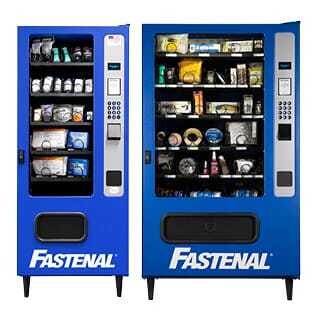
Image source: fastenal.com
Recent Financial Performance
Q3 2025 Results Analysis
Fastenal delivered strong Q3 2025 results that exceeded sales expectations while facing margin pressures from tariffs and input costs.
Metric
Q3 2025
Q3 2024
Change
Net Sales
$2.13 billion
$1.91 billion
+11.7%
Daily Sales
$32.3 million
$28.9 million
+11.7%
Gross Margin
45.3%
44.9%
+40 bps
Operating Margin
20.7%
20.3%
+40 bps
Net Income
$335.5 million
$298.0 million
+12.6%
Earnings Per Share
$0.58
$0.51
+13.7%
The company’s operating cash generation reached $386.9 million, representing 115.3% of net income, demonstrating healthy cash conversion despite inventory investments.
Revenue Growth Drivers
Sales acceleration reflects multiple factors working simultaneously. Organic growth reached double digits for three consecutive months ending in September 2025.
Growth Components (Q3 2025):
- Volume/Transaction Growth: ~7-8%
- Pricing Realization: ~3-4%
- Market Share Gains: Contributing factor
- Onsite Location Adds: 300+ annual net additions
The company’s digital initiatives contributed significantly, with digital sales growing 14% year-over-year in Q2 2025, now exceeding 60% of total business.
Geographic Performance
Region
% of Sales
Q3 2025 Growth
United States
~83.4%
+11.6%
Canada & Mexico
~13.4%
+13.1%
Rest of World
~3.2%
+14.3%
International markets, particularly Canada and Mexico, contributed $284.8 million in Q3 2025, growing faster than domestic operations due to nearshoring trends and cross-border logistics expansion initiated in 2024.
Margin Analysis
Gross margin expansion to 45.3% in Q3 2025 resulted from improved fastener product mix and operational leverage in FMI programs. However, tariff-related cost pressures required three pricing actions during Q2 2025, contributing 140 to 170 basis points of price realization.
Operating expenses as a percentage of sales declined from 24.6% to 24.6% year-over-year, with absolute spending increases offset by revenue leverage.
Capital Allocation Priorities
Fastenal maintains a disciplined capital allocation framework balancing growth investments with shareholder returns.
Initiative
2025 Allocation
Purpose
Dividends
$751.6 million (9 months)
Quarterly payments of $0.22/share
Stock Split
2-for-1 (May 2025)
Enhanced liquidity and accessibility
Inventory Investment
Increased working capital
Support FMI growth and availability
Distribution Centers
Magna, Utah facility
Regional capacity expansion
The company executed a 2-for-1 stock split effective May 22, 2025, its first split in six years, designed to make shares more accessible to retail investors.
Strengths: Competitive Advantages Driving Value
Extensive Physical and Digital Infrastructure
Fastenal’s hybrid distribution model creates a formidable competitive moat. With approximately 1,600 branch locations and 1,600+ onsite locations spanning 25 countries, the company maintains unmatched proximity to customers.
The September 2025 opening of the 1.5 million-square-foot distribution center in Magna, Utah, exemplifies the company’s commitment to infrastructure investment. This high-tech facility serves the western United States with advanced automation and inventory management capabilities.
Physical presence matters in industrial distribution. Local availability reduces customer downtime during equipment failures or production issues, creating significant value beyond product pricing alone.
Proprietary FMI Technology Platform
The company’s FMI technology suite creates significant switching costs and recurring revenue streams. In Q1 2025 alone, Fastenal recorded more than 6,400 new weighted FASTBin and FASTVend signings.
These devices generate valuable data streams on consumption patterns, enabling predictive maintenance and just-in-time inventory management that reduces customer working capital requirements.
The technology advantage extends beyond hardware. Fastenal’s digital platforms integrate EDI transactions, web-based ordering, and mobile applications, creating an omnichannel experience that drives the 61.3% digital footprint achieved in Q3 2025.
Deep Customer Relationships Through Onsite Model
The onsite program represents Fastenal’s most powerful competitive advantage. These dedicated locations place full-time Fastenal employees within customer facilities, typically earning annual revenue of $1.5 to $2.5 million per location.
Onsite personnel provide:
- Daily product delivery and restocking
- Crib management and inventory optimization
- Technical product consultation
- Emergency supply chain support
- Custom kitting and assembly services
Management targets net annual additions of 350-400 onsites medium-term, aiming to surpass 2,500 onsites globally. These locations generate higher margins and stronger customer retention than traditional branches.
Robust Financial Performance and Cash Generation
Fastenal’s financial strength provides strategic flexibility unavailable to competitors. The company demonstrates consistent profitability across economic cycles.
Financial Metric
Current Performance
Industry Context
Gross Margin
45.3%
Above industry average
Operating Margin
20.7%
Best-in-class distribution
Operating Cash Flow
115.3% of net income
Strong conversion
Return on Assets
Industry-leading
Capital efficiency
The company’s 12-year dividend growth streak with a 5-year dividend growth rate of 12.20% provides income stability valued by long-term investors.
Diversified Product Portfolio and Customer Base
Fastenal serves approximately 400,000 active customers across multiple industries, reducing concentration risk. No single customer accounts for more than a small percentage of total revenue.
Product diversification extends beyond fasteners, with safety supplies, cutting tools, and maintenance products providing growth opportunities as core fastener markets mature. This breadth enables cross-selling opportunities as onsite relationships deepen.
Experienced Management and Cultural Consistency
The planned CEO transition from Daniel Florness to Jeffery Watts effective July 16, 2026, represents orderly succession planning. Both executives have served Fastenal for nearly three decades, ensuring cultural continuity.
Florness, CEO since 2016, transformed the company’s business model toward digital and onsite solutions. Watts, currently President and Chief Sales Officer, has driven onsite expansion and FMI adoption, positioning him well to continue strategic initiatives.
Weaknesses: Challenges Requiring Strategic Attention
Dependence on Manufacturing Sector Cyclicality
Fastenal’s revenue correlates strongly with manufacturing activity, creating exposure to industrial cycles. The ISM Manufacturing PMI fell to 48.2 in November 2025, indicating contraction in U.S. manufacturing for the third consecutive month.
Manufacturing weakness directly impacts Fastenal’s core customer base. When production slows, consumption of maintenance supplies, fasteners, and tooling declines proportionally.
Economic Indicator
Current Status
Impact on Fastenal
ISM Manufacturing PMI
48.2 (contraction)
Negative demand pressure
Industrial Production
Sluggish growth
Reduced MRO spending
Capital Expenditure
Cautious sentiment
Delayed expansion projects
While Fastenal cannot eliminate cyclical exposure, its onsite model and recurring FMI revenue provide partial insulation compared to transaction-based competitors.
Tariff and Input Cost Pressures
Escalating tariffs on Chinese imports created significant challenges throughout 2025. Fastenal CEO Dan Florness described supply chain conditions as “crushingly bad” in Q3 earnings commentary.
The company implemented three pricing actions in Q2 2025, targeting 3% to 4% price realization to offset tariff impacts. However, pricing actions carry risks of volume loss to competitors or customer destocking.
Fastenal responded by redirecting imports directly into Canada and Mexico where justified, bypassing U.S. import duties. This strategy requires supply chain reconfiguration and may not fully offset cost increases.
Tariff Mitigation Strategies:
- Alternative sourcing from non-Chinese suppliers
- Direct imports to Canadian/Mexican operations
- Phased pricing increases passed to customers
- Product mix optimization toward higher-margin items
Continued tariff uncertainty complicates forecasting and margin management, particularly if trade tensions escalate in 2026.
Intense Competition from Multiple Channels
Fastenal faces competition from several angles, each presenting distinct challenges. W.W. Grainger, with $17.2 billion in revenue, dwarfs Fastenal’s scale and maintains superior brand recognition in MRO distribution.
Competitor
Revenue Scale
Key Strengths
Competitive Threat Level
W.W. Grainger
$17.2 billion
Brand, breadth, digital
High
MSC Industrial
$3.0 billion
Metalworking focus
Medium
WESCO International
$22.4 billion
Electrical distribution
Medium
HD Supply
Mid-scale
Construction markets
Medium
Amazon Business
Growing rapidly
E-commerce experience
High
Amazon Business represents an existential threat as industrial buyers embrace e-commerce convenience. Amazon’s logistics infrastructure, competitive pricing, and customer experience expertise challenge traditional distributors.
Smaller regional distributors and online specialists compete aggressively on price, particularly for commodity fastener products where differentiation proves difficult.
Limited International Diversification
Despite operating in 25 countries, Fastenal generates approximately 83.4% of revenue from U.S. operations, creating geographic concentration risk.
Canada and Mexico, representing 13.4% of sales, provide the primary international exposure. European, Asian, and other markets remain relatively underdeveloped compared to domestic operations.
This concentration limits growth optionality if U.S. manufacturing continues stagnating. International expansion requires capital investment, management attention, and patience to build brand recognition and distribution networks.
Technology Investment Requirements
Maintaining competitive digital capabilities demands continuous investment. While Fastenal’s FMI technology provides advantages, rapid technological change creates obsolescence risks.
The shift toward artificial intelligence, advanced analytics, and supply chain automation requires ongoing development spending. Competitors investing more aggressively in technology could erode Fastenal’s current advantages.
Additionally, cybersecurity threats increase as industrial supply chains become more interconnected. Protecting customer data and ensuring system reliability requires substantial investment in security infrastructure.
Customer Concentration in Specific Verticals
While Fastenal serves diverse industries, certain verticals contribute disproportionate revenue. Manufacturing, particularly automotive and heavy equipment, represents significant concentration.
Disruption in key customer industries could materially impact revenue. The automotive sector’s transition to electric vehicles, for example, may reduce fastener and maintenance product consumption as simpler powertrains require fewer parts.
Opportunities: Growth Pathways for 2026 and Beyond
Continued Onsite Location Expansion
The onsite model offers Fastenal’s most compelling growth opportunity. With approximately 1,600+ onsites currently operating and targets of 350-400 net annual additions, significant runway remains.
Management believes the addressable market can support more than 2,500 onsites globally medium-term, implying years of expansion ahead. Each new onsite typically generates $1.5 to $2.5 million annually once mature, creating substantial revenue potential.
The model’s economics prove attractive:
Onsite Location Economics:
- Average annual revenue per location: $1.5-2.5 million
- Gross margin: 45-50% (higher than branches)
- Operating margin: 25-30% (economies of scale)
- Customer retention rate: 90%+ (high switching costs)
- Payback period: 18-24 months typically
Onsites create mutually beneficial relationships. Customers reduce inventory carrying costs, minimize stockouts, and free personnel from procurement tasks. Fastenal gains recurring revenue, market share, and pricing power through embedded presence.
Digital and E-commerce Penetration
Despite reaching 61.3% digital footprint in Q3 2025, substantial opportunity remains to increase online penetration. Digital sales grew 14% year-over-year in Q2 2025, outpacing overall company growth.
Industrial e-commerce adoption accelerates as younger procurement professionals comfortable with online purchasing enter the workforce. Fastenal’s investment in digital platforms positions it to capture this shift.
The company’s omnichannel approach integrates web, mobile, EDI, and vending technology into a cohesive customer experience. Enhanced functionality including predictive analytics, automated ordering, and supply chain visibility tools can drive further digital adoption.
FMI Technology Proliferation
Fastenal’s FMI devices signed and installed exceeded previous milestones in 2025, with over 6,400 new weighted signings in Q1 alone. This installed base generates recurring revenue and valuable consumption data.
Technology
Current Penetration
Growth Potential
FASTVend Machines
High
Moderate (market saturation)
FASTBin Sensors
Medium
High (underpenetrated)
FASTStock Scanning
Medium
High (scalable solution)
FASTBin technology, using RFID and weight sensors, offers particular promise. These lower-cost solutions provide automation benefits without vending machine capital requirements, expanding addressable markets to smaller customers.
Data generated from FMI devices enables value-added services:
- Consumption analytics and reporting
- Predictive maintenance recommendations
- Inventory optimization consulting
- Automated replenishment triggers
- Cost center allocation and tracking
These services strengthen customer relationships and justify premium pricing compared to transactional competitors.
Geographic Expansion and International Growth
Canada and Mexico markets represent priority expansion targets driven by nearshoring and manufacturing foreign direct investment. These markets grew 13.1% in Q3 2025, outpacing U.S. operations.
Cross-border logistics capabilities added in 2024 support customers operating in multiple North American locations. As manufacturers relocate production closer to U.S. markets, Fastenal’s regional presence provides competitive advantages.
Beyond North America, underpenetrated international markets offer long-term potential. European industrial markets, Asian manufacturing hubs, and emerging economies provide diversification opportunities, though execution requires patient capital and localized strategies.
Product Line Extension and Private Label Development
Fastenal’s established customer relationships enable expansion into adjacent product categories. Safety equipment, cutting tools, and industrial supplies offer growth as customers consolidate suppliers.
Private label development provides margin enhancement opportunities. Fastenal-branded products capture category profit that branded manufacturers typically retain, while differentiation reduces price-based competition.
The company can leverage its distribution network and customer insights to identify underserved product needs, developing customized solutions that competitors cannot easily replicate.
Manufacturing Reshoring and Supply Chain Reconfiguration
Reshoring trends accelerating in 2025 create opportunities for Fastenal. As manufacturers relocate production to North America, they require local supply chain partners providing rapid response and inventory management.
Trade tensions and tariff uncertainties incentivize domestic production across multiple industries. Fastenal’s domestic infrastructure positions it to capture this shift, particularly in automotive, electronics, and machinery manufacturing.
Nearshoring to Mexico, where Fastenal maintains established operations, represents a particularly promising opportunity as companies seek cost-competitive alternatives to Asian manufacturing.
Strategic Acquisitions and Consolidation
The fragmented industrial distribution industry presents acquisition opportunities. Thousands of regional and local distributors lack technology platforms, scale economies, and succession plans, creating potential targets.
Fastenal’s financial strength and operational expertise enable accretive acquisitions in strategic markets or specialty product categories. Bolt-on acquisitions can accelerate onsite location additions, expand product lines, or enter new geographies faster than organic growth.
Disciplined acquisition criteria focusing on cultural fit, customer relationships, and integration capabilities can drive shareholder value without diluting returns or operational focus.
Threats: Risks That Could Impair Performance
E-commerce Disruption and Margin Compression
Amazon Business and other e-commerce platforms fundamentally challenge traditional distribution economics. Online competitors operate without physical infrastructure costs, enabling aggressive pricing on commodity products.
www.deepresearchglobal.com/p/amazon-swot-analysis

Industrial buyers increasingly expect consumer-grade digital experiences including transparent pricing, instant availability confirmation, rapid delivery, and effortless returns. Meeting these expectations requires continuous technology investment that may not generate proportional returns.
E-commerce Threat
Impact Mechanism
Risk Level
Price transparency
Reduces information asymmetry
High
Direct manufacturer sales
Disintermediation risk
Medium
Digital-native competitors
Customer experience advantage
High
Marketplace platforms
Aggregation of alternatives
Medium
Margin compression represents a persistent threat. As customers compare prices across digital platforms, pressure intensifies to reduce spreads. Fastenal’s value proposition must transcend product pricing to justify premium positions.
Manufacturing Sector Weakness and Recession Risk
Manufacturing PMI readings below 50 indicate contraction, foreshadowing potential recession. Extended manufacturing weakness would materially impact Fastenal’s revenue growth and profitability.
Economic recession triggers several negative dynamics:
Recession Impact Chain:
1. Reduced production volumes → Lower MRO consumption
2. Plant closures and layoffs → Customer loss
3. Working capital constraints → Payment delays
4. Capital expenditure cuts → Postponed projects
5. Competitive price pressure → Margin erosion
While Fastenal’s diversified customer base provides some protection, widespread industrial contraction would overwhelm diversification benefits. The company’s operating leverage, positive in growth environments, amplifies profit declines during revenue contraction.
Manufacturing revenues expected to rise only 4.4% in 2026 according to ISM surveys, suggest modest recovery expectations at best.
Competitive Pressure and Market Share Battles
Intensifying competition threatens both revenue growth and profitability. W.W. Grainger’s superior scale enables investment levels Fastenal cannot match, while Amazon’s technology expertise and logistics infrastructure create formidable challenges.
MSC Industrial Direct and other specialty distributors compete aggressively for metalworking and production customers. Regional distributors undercut pricing on commodity products, forcing Fastenal to invest in service differentiation.
Private equity-backed distributors enter markets with aggressive growth mandates and capital availability, creating temporary irrational competition that pressures pricing and customer retention.
The industrial distribution market shows modest growth with several major players reporting sluggish performance, intensifying competition for available opportunities.
Supply Chain Disruption and Input Cost Volatility
Tariff uncertainty persists as a significant threat entering 2026. Escalating trade tensions between the United States and China create unpredictable cost structures and sourcing challenges.
Beyond tariffs, global supply chain fragility remains evident:
Supply Chain Risk
Potential Impact
Mitigation Difficulty
Tariff escalation
Cost increases 10-25%
High
Freight disruptions
Delivery delays, cost spikes
Medium
Supplier failures
Product availability gaps
Medium
Port congestion
Inventory shortages
Low
Currency fluctuations
International margin pressure
Medium
Fastenal’s efforts to diversify sourcing away from China and redirect shipments through Canadian and Mexican operations partially mitigate risks, but cannot eliminate exposure completely.
Raw material price volatility, particularly steel and petroleum-derived products, creates margin unpredictability. Lag time between cost increases and pricing actions can temporarily compress profitability.
Technology Disruption and Cybersecurity Threats
As supply chains become more automated and interconnected, cybersecurity threats multiply. Fastenal’s integrated systems connecting vending machines, digital platforms, and customer networks create potential vulnerabilities.
A significant cybersecurity breach could disrupt operations, compromise customer data, damage reputation, and trigger regulatory penalties. Ransomware attacks targeting industrial companies increased substantially in recent years, requiring continuous investment in security infrastructure.
Emerging technologies including artificial intelligence, blockchain, and Internet of Things create both opportunities and threats. Competitors adopting superior technologies faster could erode Fastenal’s current advantages, requiring accelerated investment to maintain parity.
Regulatory and Environmental Compliance Costs
Expanding environmental regulations increase compliance costs across operations. ESG reporting requirements, carbon emission regulations, and sustainability mandates require systems investment and operational changes.
Fastenal’s 2025 ESG Report highlights ongoing work to improve systems and reporting capabilities. However, regulatory evolution could impose costs exceeding current budgets.
Transportation regulations, particularly environmental standards for delivery vehicles, require fleet investment. Workplace safety regulations increase training and equipment costs. Product compliance requirements expand testing and documentation obligations.
Labor Market Challenges and Wage Inflation
Despite cooling job growth, labor scarcity persists as a structural challenge. Attracting and retaining skilled personnel in industrial distribution proves difficult as younger workers gravitate toward technology and service sectors.
Fastenal’s business model depends on field personnel, delivery drivers, and technical specialists who cannot be easily automated. Wage inflation to attract talent directly pressures operating margins.
The company increased total FTE employee headcount by 674 during the twelve months ending Q3 2025, with selling and sales support personnel growing to support onsite expansion. Maintaining this growth trajectory requires competitive compensation and benefits.
Strategic Initiatives for 2026 and Beyond
Digital Transformation Acceleration
Fastenal must continue investing aggressively in digital capabilities to compete against Amazon Business and digital-native competitors. Priorities include:
Digital Investment Priorities:
- Mobile application enhancement for field personnel
- Advanced analytics and predictive ordering algorithms
- Customer self-service portal expansion
- API integration for ERP and procurement systems
- Digital marketing and e-commerce user experience
The company’s digital sales footprint of 61.3% provides a foundation, but continuous improvement remains essential. Younger procurement professionals expect seamless digital experiences comparable to consumer platforms.
Onsite Location Network Expansion
Maintaining the target of 350-400 net onsite additions annually requires disciplined execution and resource allocation. Fastenal must identify high-potential customer locations, negotiate favorable terms, and deploy personnel efficiently.
Selection criteria should emphasize customers with:
Annual MRO spending exceeding $1.5 million
Multiple shifts and continuous operations
Commitment to inventory management partnerships
Strategic importance to Fastenal’s market position
Geographic prioritization should focus on manufacturing clusters, nearshoring destinations, and markets with limited onsite penetration.
Supply Chain Diversification and Resilience
Reducing dependence on Chinese sourcing requires systematic supplier development in alternative countries. Vietnam, India, Mexico, and Eastern Europe offer potential sourcing diversity.
Fastenal’s direct importation into Canada and Mexico demonstrates tactical flexibility. Expanding this approach to additional products and markets can mitigate tariff impacts while improving delivery times.
Building strategic inventory buffers in critical categories provides protection against supply disruptions, though carrying costs must be balanced against availability risks.
Leadership Transition Management
The CEO transition to Jeffery Watts in July 2026 requires careful management to maintain strategic continuity while enabling fresh perspectives. Clear communication with investors, employees, and customers ensures confidence during the transition.
Watts’ 30-year tenure and current role as President and Chief Sales Officer provide deep institutional knowledge. His leadership of onsite expansion positions him well to accelerate this core growth initiative.
Succession planning for other key leadership positions should proceed systematically to avoid future disruptions and ensure talent development throughout the organization.
ESG and Sustainability Integration
Environmental stewardship increasingly influences customer procurement decisions and investor allocation. Fastenal’s ESG initiatives should focus on measurable outcomes including:
ESG Pillar
Strategic Focus
Investor Relevance
Environmental
Carbon emission reduction, energy efficiency
Regulatory compliance, cost savings
Social
Employee safety, diversity, community engagement
Talent attraction, reputation
Governance
Board independence, executive compensation alignment
Risk management, accountability
Developing sustainability solutions for customers, including green product identification and consumption optimization, creates competitive differentiation while supporting customer ESG goals.
Valuation Considerations for Investors
Current Financial Metrics
Fastenal’s valuation reflects premium positioning within industrial distribution, justified by superior growth rates and profitability margins.
Key Valuation Metrics (December 2025):
- Price-to-Earnings Ratio: ~33x forward
- Enterprise Value/EBITDA: Premium to peers
- Dividend Yield: ~2.1%
- Revenue Growth: 6.92% trailing twelve months
- Operating Margin: 20.7% (best-in-class)
The two-for-one stock split effective May 22, 2025, improved share liquidity and retail accessibility without changing fundamental valuation.
Growth Trajectory Analysis
Analysts project revenue growth of 8.6% through 2027, with operating margins expected to remain near 20.7%. This outlook assumes successful onsite expansion, continued digital adoption, and manufacturing sector stabilization.
Key variables influencing growth include:
Onsite net additions (350-400 annually targeted)
FMI device penetration and recurring revenue growth
Manufacturing sector recovery trajectory
Competitive dynamics and market share trends
Tariff resolution and supply chain normalization
Risk-Adjusted Return Profile
Fastenal presents a moderate-risk industrial distribution investment. The company’s competitive advantages, financial strength, and proven business model provide downside protection relative to smaller, less diversified competitors.
However, premium valuation multiples leave limited margin for disappointment. Manufacturing weakness, competitive pressure, or execution challenges could trigger multiple compression alongside earnings pressure, creating magnified downside.
Long-term investors should consider:
Secular shift toward digital distribution favoring scaled players
Onsite model creating recurring revenue and switching costs
Geographic and product diversification reducing concentration risk
Management quality and cultural consistency through leadership transition
Dividend growth track record providing income component
Peer Comparison Framework
Company
Revenue
Operating Margin
Growth Rate
Key Differentiators
Fastenal
$8.0B
20.7%
~7-9%
Onsite model, FMI technology
W.W. Grainger
$17.2B
~14-15%
~6%
Scale, brand recognition
MSC Industrial
$3.0B
~10-12%
~3-5%
Metalworking specialization
Fastenal commands premium valuation versus peers based on superior margin profile and growth trajectory. This premium appears justified by differentiated business model, though execution must continue delivering results to maintain multiple.
My Final Thoughts
Fastenal Company demonstrates competitive positioning that should generate attractive returns for patient investors willing to accept cyclical exposure and valuation volatility.
The company’s transformation from branch-based fastener distributor to technology-enabled supply chain solutions provider creates sustainable competitive advantages. Onsite locations embedded within customer facilities generate switching costs and recurring revenue that commodity distributors cannot replicate.
Digital capabilities reaching 61.3% of sales position Fastenal competitively against e-commerce threats while enabling operational efficiencies. FMI technology platforms generate valuable customer data and automated ordering that strengthen relationships.
However, investors must carefully monitor several risk factors:
Manufacturing sector health and recession risk
Tariff developments and supply chain cost inflation
Competitive intensity from Grainger, Amazon, and regional players
Technology disruption requiring continuous investment
Execution quality through CEO transition
The leadership transition from Florness to Watts in July 2026 represents a critical juncture. Smooth succession with strategic continuity supports investment confidence, while disruption or strategic drift would raise concerns.
Fastenal’s business model aligns with several long-term trends favoring the company:
Manufacturing reshoring to North America
Supply chain automation and digitalization
Outsourcing of non-core procurement functions
Inventory optimization to reduce working capital
Sustainability and ESG focus in procurement
For investors seeking industrial sector exposure through a well-managed, financially strong company executing a differentiated strategy, Fastenal merits consideration. The combination of growth potential from onsite expansion, margin stability from operational leverage, and income from dividend growth creates an attractive risk-reward profile.
Valuation requires careful consideration. Premium multiples provide limited downside protection if execution falters or macroeconomic conditions deteriorate. Investors comfortable with current pricing should focus on three to five-year holding periods, allowing strategic initiatives to drive value creation.
The coming years will test whether Fastenal’s competitive advantages prove durable against e-commerce disruption and competitive pressure. The company’s track record, management quality, and strategic positioning suggest favorable odds, though outcomes remain uncertain in a dynamic competitive environment.
Disclaimer: This analysis is for informational purposes only and should not be construed as investment advice. Investors should conduct their own due diligence and consult with financial advisors before making investment decisions.