

Dear Readers, Welcome to Deep Research Global.
Fox Corporation (FOX) just made one of its most consequential bets of the post-cord-cutting era, agreeing to swallow Roku, Inc. (ROKU) in a $22 billion cash-and-stock transaction that instantly redraws the map of American television.
The combined entity will reach more than 100 million global streaming households and vault into the third-largest position in U.S. TV viewership, sitting only behind YouTube and Disney.
The deal is a structural pivot that fuses a legacy broadcaster’s premium sports and news rights with a connected TV operating system that already sits inside the majority of U.S. broadband homes.
The question is whether the combination creates durable value, or whether it repeats the painful history of content-plus-distribution mega-mergers.
Let’s analyze everything in detail.
Recommended - Read Full Reports

Read All Reports
Disclaimer: This analysis is for informational & educational purposes only and should not be construed as investment advice. Investors should conduct their own due diligence before making investment decisions. Past performance does not guarantee future results.
What Was Actually Announced
The two companies disclosed a definitive agreement on Monday morning, with both boards voting unanimously to approve the transaction. Fox is paying $160.00 per Roku share, structured as $96.00 in cash plus 0.9693 Fox Class A shares per Roku share.
The mix translates into roughly $14.6 billion in cash and the balance in equity.
The $160 figure represents a 33.7% premium to Roku’s closing price on the Thursday before press reports surfaced about the strategic review.
DEAL SNAPSHOT (as of June 15, 2026)
- Enterprise value: ~$22 billion
- Price per Roku share: $160.00
- Cash per share: $96.00
- Stock per share: 0.9693 Fox Class A shares
- Premium to undisturbed price: 33.7%
- Post-close ownership: 73% Fox / 27% Roku
- Targeted cost synergies: ~$400 million run-rate
- Expected close: First half of calendar 2027
Roku founder Anthony Wood, who controls more than 55% of the company’s voting rights, will take a seat on the Fox board.
Both Lachlan Murdoch and Wood signaled this is not a retirement transaction for the Roku founder, with Fox describing an “ongoing role” in the combined business.
Why Fox Is Reaching for Roku Right Now
The strategic logic begins with a problem Fox cannot solve internally: it’s the only major U.S. broadcaster without a scaled streaming anchor of its own.
Disney has Disney+ and Hulu. Comcast has Peacock. Paramount has Paramount+. Fox has Tubi and the recently launched Fox One, but neither owns the operating system layer of the television itself.
That gap matters because the living room is increasingly governed by software, not just channels.
Connected TV ad spending in the United States is projected to grow 13.8% year over year in 2026, and total U.S. digital video ad spending is on track to exceed $80 billion this year alone.
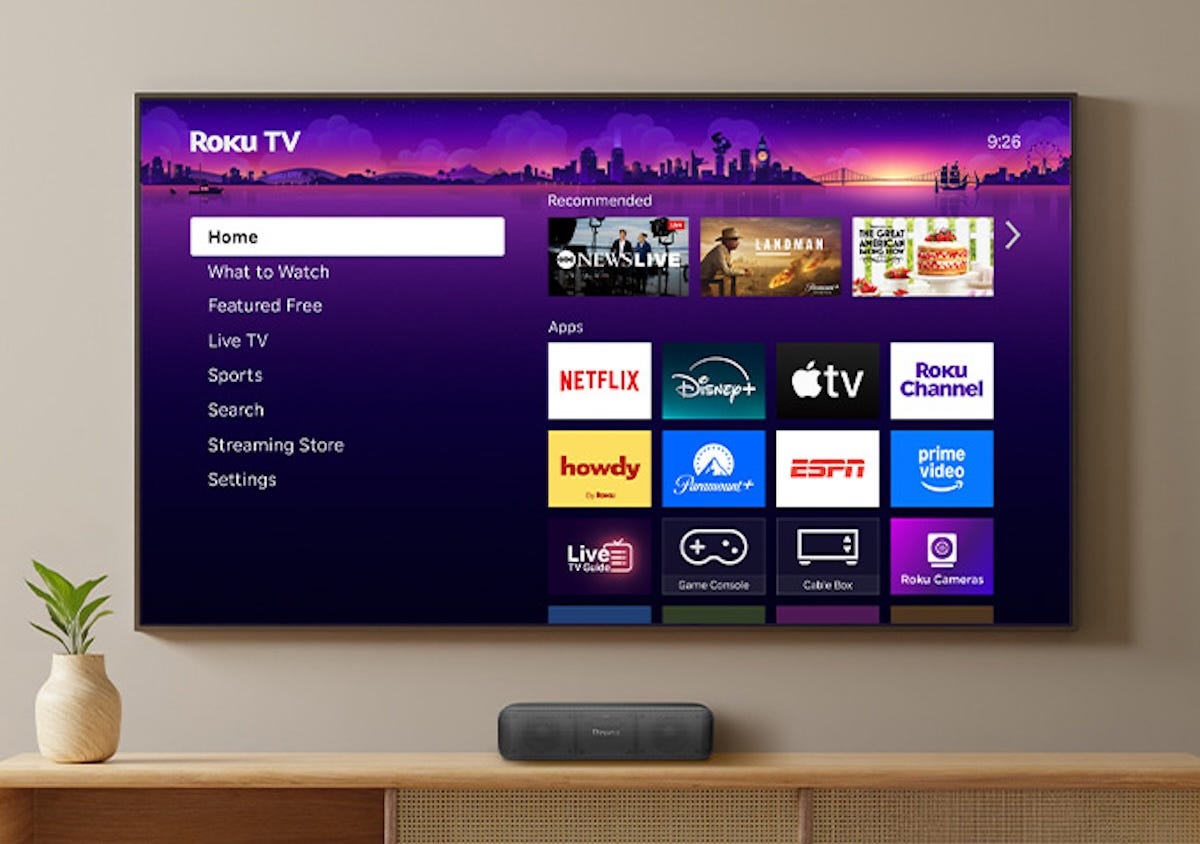
Lachlan Murdoch framed the move as the next logical step in a decade of portfolio focus.
He called it a defining moment that brings together “the most valuable live content portfolio in video consumption with the preeminent streaming platform through which America watches it.”
The second motivation is data.
Roku has direct billing relationships with more than 20 million subscribers and visibility into what gets watched on its devices, including viewing inside competing apps.
That first-party data is the missing ingredient Fox needs to build a closed-loop advertising engine around its sports and news inventory.
The third motivation is timing. Fox just rolled out its Fox One subscription service, and the J.P. Morgan team noted that “a Roku deal would fundamentally pivot the business toward digital and answer long-term concerns about a legacy in PayTV.”
The FAST Streaming Land Grab
The most underappreciated angle of this transaction sits in free ad-supported streaming television, often shortened to FAST.
Fox already owns Tubi, which crossed 100 million monthly active users in mid-2025 and reached 2.2% of total U.S. television viewing.
Roku operates The Roku Channel, which is itself one of the most-watched free streaming services in the country.
Adding the two together gives the combined company control of two of the largest FAST properties in the United States at the precise moment when price-pinched consumers are abandoning paid subscriptions for ad-supported alternatives.
FAST FOOTPRINT POST-MERGER
- Tubi: 100M+ monthly active users (Fox)
- The Roku Channel: top-five FAST property by hours
- Combined: dominant control of free ad-supported streaming
- Plan: keep The Roku Channel separate from Tubi
- Goal: maximize CTV ad inventory and audience reach
The deal basically seems like a play to control “the full stack” of streaming consolidation in 2026.
This stack control argument is the cleanest investor narrative.
The combined company would own the operating system, the discovery layer, the ad-supported services, the premium live content, and a meaningful chunk of the addressable advertising inventory.
What Roku Brings to the Table
Roku entered 2025 with 90 million streaming households and continued growing throughout the year. In its third-quarter 2025 shareholder letter, the company reported total net revenue of $1.211 billion, up 14% year over year, with platform revenue rising 17%.
Beyond the household count, Roku owns the most widely deployed smart TV operating system in the United States, Canada, and Mexico.
The company also licenses its software to TV manufacturers, which means new sets continue to ship with the Roku interface as the default home screen.
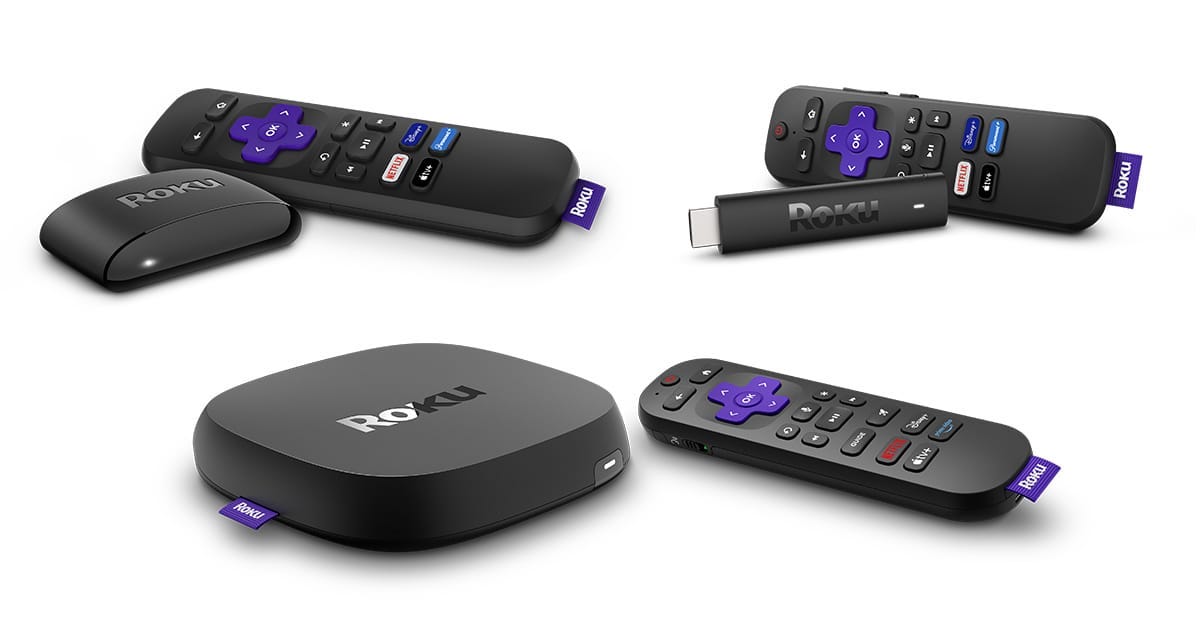
The home screen is the most valuable real estate in modern television.
Whoever controls it controls discovery, app placement, search defaults, and the ad units that surround content selection. That single asset alone justifies a strategic premium for any acquirer trying to build distribution leverage.
Anthony Wood was clear about the rationale on his side.
He said the combination is “an extraordinary opportunity to accelerate our vision, scale faster and innovate more aggressively for viewers, partners and advertisers,” and that the 33.7% premium plus continued upside through Fox stock made the deal attractive to Roku shareholders.
What Fox Brings to the Table
Fox is one of the last broadcasters with a portfolio dominated by appointment viewing.
The company holds rights to National Football League games, Major League Baseball, the FIFA World Cup, and the highest-rated cable news network in the country.
Live sports and live news are the two genres that have most resisted the audience erosion plaguing scripted entertainment.
They drive same-day viewership, they sell out advertising inventory, and they create the kind of cultural moments that streaming-only services struggle to replicate.
FOX CONTENT ASSETS ENTERING THE MERGER
- NFL broadcast rights
- MLB postseason and regular season packages
- FIFA World Cup (2026 ongoing)
- Fox News Media (top-rated U.S. cable news)
- Fox Sports
- Tubi (100M+ MAU, FAST leader)
- Fox One (direct-to-consumer subscription)
The pairing logic is that Fox brings the content people show up for, while Roku brings the screen they show up on.
In theory, that lets the combined company sell advertising more efficiently, reduce reliance on third-party platforms, and bypass the toll booths operated by Google and Apple on smartphone delivery.
How the Deal Will Be Financed
Fox is funding the cash portion of the transaction through a combination of cash on hand and roughly $12 billion in committed bridge financing from Morgan Stanley Senior Funding.
The transaction adds about $8.3 billion of debt to Fox’s balance sheet.
At closing, pro forma net leverage is expected to be approximately 2.8 times, inclusive of 50% credit for the targeted $400 million in run-rate cost synergies. Fox emphasized that it intends to preserve its investment-grade rating and continue its existing buyback and dividend program.
For Fox shareholders, the dilution and leverage profile is the central concern.
Market Reaction Was Not Kind
Fox Class A dropped nearly 17%, while Roku traded below the $160 offer price by as much as 12%, signaling skepticism that the deal will close as priced or that the equity component will hold its value through closing.
Three distinct concerns are visible in the price action.
The first is dilution. Roku shareholders will own roughly 27% of the combined company post-close, which is a meaningful share for existing Fox owners to absorb.
The second is execution risk.
Content and distribution mergers have a difficult track record. AT&T’s 2018 acquisition of Time Warner for $85 billion unwound three years later when the phone company sold its media prize to Discovery, and Fox’s own 2019 sale of most of its entertainment assets to Disney was a retreat from scope, not an embrace of it.
COMPARABLE CONTENT + DISTRIBUTION DEALS
- AT&T / Time Warner (2018): $85B, divested in 2022
- Comcast / NBCUniversal (2011): retained, mixed CTV results
- Disney / 21st Century Fox (2019): partial Fox exit
- Fox / Roku (2026): bet on FAST + first-party data
The third concern is structural.
Roku currently distributes apps from Disney, NBCUniversal, Paramount, and Netflix, all of which compete with Fox.
Those partners will now have to negotiate placement, discovery, and ad inventory with a company that is also a content rival.
The Partner Conflict Problem
The most delicate operational issue is the relationship between Fox-owned Roku and Fox’s content competitors.
Roku is supposed to be a neutral storefront. Once it sits inside Fox, every app placement decision can be read as preferential treatment.
Lachlan Murdoch addressed this directly. He acknowledged that Fox is already a partner with YouTube TV and Comcast on the distribution side, and said that dynamic “doesn’t change” because “many distributors are now also content providers.”
That answer is technically correct but commercially incomplete.
Comcast distributes content and produces it through NBCUniversal, but its set-top box is not the default operating system in tens of millions of U.S. homes. Roku is.
The Tubi-Roku Channel question is also unresolved.
Fox said publicly that The Roku Channel will be kept separate from Tubi after closing, which preserves two distinct ad-supported brands rather than collapsing them into one super-property.
Regulatory and Closing Timeline
The transaction is expected to close in the first half of calendar 2027, subject to customary closing conditions including approvals by both sets of shareholders and clearance from U.S. and certain non-U.S. regulators.
The political environment for large media mergers has shifted in 2026.
The Warner Bros. Discovery and Paramount Skydance transactions have already cleared shareholder votes, signaling that consolidation is the prevailing trend rather than the exception.
Antitrust review will focus on the vertical integration question. Regulators may probe whether a Fox-owned Roku could disadvantage rival streaming apps through interface placement, search results, or advertising terms.
The fact that The Roku Channel and Tubi will remain separate suggests the companies anticipate this scrutiny.
KEY CLOSING CONDITIONS
- Fox shareholder approval
- Roku shareholder approval
- HSR antitrust clearance (United States)
- Non-U.S. regulatory approvals
- Customary closing conditions
- Target close: First half of 2027
There is also a Murdoch-family overlay.
This is Fox’s first major acquisition since Lachlan Murdoch consolidated control of the family media empire following a settlement last year.
The deal therefore doubles as a public declaration of strategic direction under his leadership.