

Lululemon Athletica $LULU ( ▲ 2.45% ) finds itself navigating significant headwinds while simultaneously pursuing ambitious international expansion.
The athletic apparel giant recently announced CEO Calvin McDonald’s departure and reported Q3 2025 revenue of $2.6 billion, a 7% increase driven primarily by international markets.
Table of Contents
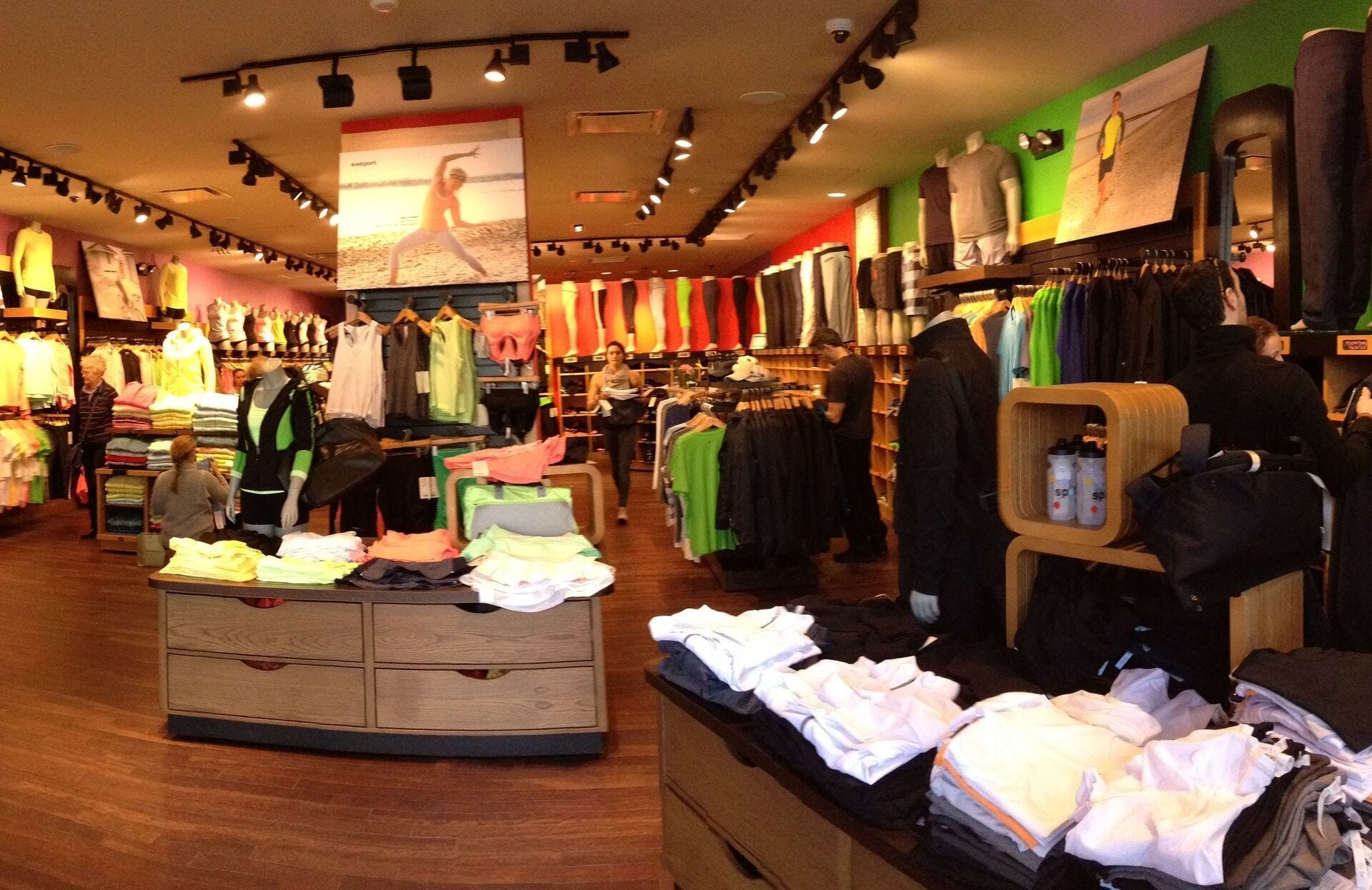
Image source: commons.wikimedia.org
Strengths: The Foundation That Built a $11 Billion Empire
Premium Brand Equity and Customer Loyalty
Lululemon has cultivated one of the most powerful brand identities in athletic apparel. The company’s brand positioning centers on technical innovation, community engagement, and lifestyle aspiration rather than purely functional sportswear.
This premium positioning translates into pricing power that few competitors can match. While rivals face margin pressure, Lululemon maintains a gross margin of 55.6% even amid tariff headwinds. The company’s ability to command prices 20-30% above mass-market alternatives reflects deep customer loyalty.
Brand Strength Metric
Performance Indicator
Gross Margin Q3 2025
55.6%
Net Margin
15.72%
Return on Equity
39.78%
Customer Repeat Purchase Rate
Industry-leading
Lululemon’s ambassador program creates emotional connections that transcend transactional relationships. Store-based fitness classes, community events, and local athlete partnerships transform retail locations into gathering spaces.
Robust Direct-to-Consumer Model
The company’s omnichannel strategy provides significant operational advantages. E-commerce represented 42% of total revenue in Q3 2025, delivering higher margins than wholesale channels.
Digital revenues grew 9% year-over-year in Q2 2025, contributing $1 billion in quarterly revenue. This direct relationship with customers provides valuable data on preferences, purchasing patterns, and product performance.
The integration of online and offline experiences allows customers to buy online and pick up in-store, return digital purchases at physical locations, and access personalized recommendations across channels. This seamless experience strengthens customer retention.
Product Innovation and Technical Excellence
Material innovation remains a core competency. Lululemon’s collaboration with ZymoChem to develop sustainable nylon alternatives demonstrates the company’s commitment to advancing fabric technology.
The Go Further capsule, launched in June 2025, showcases innovations tested at the company’s FURTHER research facility. These technical advancements in breathability, durability, and performance differentiate Lululemon from fashion-focused competitors.
The Glow Up franchise, introduced in February 2025, features new fabric innovation and waistband technology delivering the supportive fit and sculpted look customers demand.
International Growth Momentum
International markets represent Lululemon’s most compelling growth driver. Q3 2025 international revenue surged 33%, with international comparable sales climbing 18%.
China has emerged as a powerhouse. Q3 2025 revenue in mainland China grew approximately 35%, positioning the market as a critical growth engine. The brand’s resonance with Chinese consumers seeking premium lifestyle products provides runway for sustained expansion.
International Revenue Performance (Q3 2025):
- International revenue growth: +33% YoY
- China mainland growth: ~35% YoY
- International comparable sales: +18%
- Americas revenue: -2% YoY
Financial Resilience and Capital Allocation
Despite recent challenges, Lululemon maintains strong financial health. The company ended Q3 2025 with $1.0 billion in cash and an additional $593 million in available credit facility capacity.
The board’s December 2025 authorization of a $1.0 billion increase in the stock repurchase program, bringing total authorization to approximately $1.6 billion, signals confidence in long-term value creation despite near-term headwinds.
Operating margin, while compressed from prior years, remains healthy at 17.0% in Q3 2025. This profitability provides financial flexibility to invest in growth initiatives, weather economic uncertainty, and return capital to shareholders.
Weaknesses: Vulnerabilities Requiring Strategic Attention
Overreliance on North American Markets
Geographic concentration creates significant risk. Despite international growth, North America still represents approximately 67% of total sales. This dependency becomes problematic as U.S. comparable sales demonstrate weakness.
Americas revenue declined 2% in Q3 2025. Americas comparable sales fell 5%, reflecting softer consumer demand in Lululemon’s core market. This deterioration in the home market constrains overall growth momentum.
The company cannot rely solely on international expansion to offset domestic challenges. Success requires rekindling growth in North America while simultaneously building international presence.
Geographic Performance Q3 2025
Revenue Change
Comparable Sales
Americas
-2%
-5%
International
+33%
+18%
China (within International)
~35%
Strong double-digit
Margin Compression from Tariffs and Cost Inflation
Tariff impacts have materialized faster and more severely than anticipated. Gross margin contracted 290 basis pointsyear-over-year to 55.6% in Q3 2025, driven largely by tariff-related costs.
The elimination of the de minimis exemption and higher tariff rates created an estimated $240 million gross profit impact in fiscal 2025. Fourth quarter 2025 alone faces approximately 410 basis points of gross margin pressure.
While the company pursues mitigation strategies including vendor negotiations and selective pricing actions, complete offset remains elusive. Operating margin declined 350 basis points to 17.0% in Q3 2025, reflecting both gross margin pressure and deleveraging of operating expenses.
Margin Compression Timeline:
2025 Outlook: -270 bps gross margin YoY
Q3 2025 Actual: -290 bps gross margin YoY
Q4 2025 Forecast: -410 bps gross margin YoY
Full Year Impact: ~$240M gross profit drag
Product Execution Issues and Innovation Gaps
Customer and analyst commentary suggests Lululemon has become too predictable in casual wear offerings. Seasonal color variations underperform when core product architectures lack freshness.
While material innovation remains strong, competitors surpass Lululemon on design and functionality in certain categories. This represents a concerning reversal for a brand built on technical superiority.
The company acknowledges these issues. CEO Calvin McDonald stated the company is “beginning to make progress against our action plan” with impacts expected to materialize in 2026. However, product development cycles mean execution gaps create multi-quarter headwinds.
Leadership Uncertainty and Organizational Transition
Calvin McDonald’s announced departure effective January 31, 2026 creates leadership uncertainty at a critical juncture. The CEO search for a leader with “growth experience” occurs as the company navigates U.S. market weakness and operational challenges.
Interim co-CEO structure with Meghan Frank and André Maestrini provides continuity, but lacks permanence. Strategic initiatives may face delays pending permanent leadership installation.
Founder Chip Wilson’s proxy fight and nomination of three independent board candidates adds governance complexity. With a 4.27% stake, Wilson’s public criticism of company performance creates additional uncertainty.
Premium Pricing Vulnerability in Economic Downturns
Lululemon’s high price points, while justified by quality and brand cachet, create vulnerability during economic stress. As consumer spending patterns shift toward value, discretionary premium purchases face pressure.
The rise of middle-class consumption downgrading in North America impacts Lululemon’s core customer base. When household budgets tighten, $100+ leggings become harder to justify versus $50 alternatives.
This premium positioning limits addressable market size. While aspirational appeal drives brand strength, it simultaneously constrains customer acquisition among price-sensitive consumers.
Opportunities: Growth Vectors for the Next Chapter
Aggressive International Expansion Through Franchising
Lululemon’s announcement of entry into six new markets in 2026 marks the largest single-year expansion in company history. Greece, Austria, Poland, Hungary, Romania, and India represent significant untapped potential.
The franchise partnership model reduces capital intensity while enabling rapid geographic expansion. Partnership with Arion Retail Group for five European markets and Tata CLiQ for India provides local expertise and operational infrastructure.
This strategic pivot toward franchising allows Lululemon to scale internationally without proportional capital deployment. Current plans call for 10-15% of 2025 store openings to utilize franchise structures.
2026 Market Entry Details
Partner
Region
Greece, Austria, Poland, Hungary, Romania
Arion Retail Group
EMEA
India
Tata CLiQ
Asia Pacific
Total New Markets
6
Record expansion year

Continued China Market Penetration
China represents Lululemon’s single greatest opportunity. The 46% growth in China during Q3 2025 demonstrates brand momentum with affluent Chinese consumers.
China’s expanding middle class, growing fitness culture, and preference for premium international brands create favorable tailwinds. Lululemon has opened over 100 stores on the Chinese mainland, but penetration remains low relative to market potential.
The company’s Power of Three x2 strategy targets quadrupling international revenue, with China as the primary driver. Management forecasts China comparable sales growth of 11.5% as the market becomes increasingly critical to overall performance.
Men’s Category Expansion
Men’s apparel remains significantly underpenetrated. The category grew 6% year-over-year in Q2 fiscal 2025, outpacing women’s growth and demonstrating category vitality.
Men’s represents approximately 25% of U.S. sales but has substantial runway for expansion. Male consumers increasingly adopt athleisure and performance apparel for daily wear, creating favorable category dynamics.
Product expansion in men’s golf, tennis, running, and training categories builds relevance beyond yoga roots. The men’s business benefits from lower competitive intensity compared to women’s athleisure, where Lululemon faces fierce competition from Alo, Vuori, and others.
Men's Category Performance:
Q1 2025: +8% growth (outpaced women's)
Q2 2025: +6% growth
Current U.S. penetration: ~25%
Opportunity: Expand share of men's athleisure market
Footwear Category Development
Footwear represents an $85+ billion global athletic category where Lululemon maintains minimal presence. The company’s entrance provides significant whitespace opportunity.
Running and training footwear align with Lululemon’s brand positioning. Technical innovation in cushioning, stability, and materials can differentiate offerings in a crowded but large market.
However, footwear success requires sustained investment, distinct competencies in product development and supply chain, and patience to build category credibility. Nike and Adidas dominate with decades of expertise and infrastructure.
Sustainability as Competitive Differentiator
Sustainability initiatives provide brand differentiation and operational improvement. The 10-year collaboration with Samsara Eco to source recycled raw materials supports circular economy goals.
Lululemon exceeded its 2025 target for recycled polyester, achieving 77% recycled content versus a 75% goal. This demonstrates technical capability to scale sustainable materials.
The Impact Agenda 2030 sets ambitious targets including 50% renewable electricity among core suppliers by 2030. Meeting these goals enhances brand reputation among environmentally conscious consumers.
Digital Ecosystem and Personalization
E-commerce growth provides opportunities for enhanced personalization, expanded digital services, and deeper customer relationships. AI-powered fit recommendations, virtual try-on capabilities, and predictive inventory management can improve conversion and satisfaction.
The company’s member program creates a foundation for personalized engagement. Expanding digital services, potentially including connected fitness content, training programs, or wellness platforms, could increase customer lifetime value and competitive differentiation.
Threats: External Pressures Testing Resilience
Intensifying Competition from Emerging Brands
Alo Yoga and Vuori have gained significant mindshare and market share among core Lululemon demographics. Both brands offer comparable quality at competitive pricing with fresh aesthetics.
Alo has built a strong celebrity following and social media presence, particularly with younger consumers. Vuori has expanded rapidly in men’s and mixed-gender casual athletic wear. Both competitors operate efficient digital-first modelsreducing overhead costs.
Traditional sportswear giants Nike and Adidas, while stumbling recently, possess vast resources and distribution networks. As these companies refocus on core performance categories, they represent perpetual competitive threats.
Athleisure Market Share (U.S.)
Approximate Share
Lululemon
Dominant premium position
Athleta
4.4%
Fabletics
4.4%
Vuori
2.9%
Alo Yoga
1.3% (rapidly growing)
This comprehensive SWOT analysis examines the internal and external factors shaping Nike’s future.
www.deepresearchglobal.com/p/nike-swot-analysis
Macroeconomic Headwinds and Consumer Spending Weakness
Economic uncertainty weighs on discretionary spending. As consumer sentiment weakens, premium athleisure faces disproportionate pressure compared to necessity categories.
Rising inflation, higher interest rates, and uncertain employment conditions constrain household budgets. When consumers feel financial stress, $128 leggings become harder to justify regardless of quality.
The phenomenon of middle-class consumption downgrading particularly impacts Lululemon’s sweet spot. This demographic shift away from premium discretionary spending creates sustained headwinds.
Tariff Escalation and Supply Chain Disruption
Trade policy remains volatile. Current tariff structures already impact gross margins by 200-270 basis points in 2025, with potential for further deterioration if policy changes.
Lululemon’s reliance on South Asian and Southeast Asian suppliers creates exposure to geopolitical tensions, trade restrictions, and regulatory changes. Diversifying the supplier base requires time and capital investment.
The elimination of the de minimis exemption for small-package imports disrupts fulfillment models and increases costs for direct-to-consumer shipments. This structural change particularly impacts cross-border e-commerce.
Tariff Impact Summary:
- 2025 Gross Margin Impact: 270 bps YoY
- Q4 2025 Gross Margin Pressure: 410 bps
- Total Estimated Cost: $240M (2025)
- Key Drivers: Higher tariffs + de minimis elimination
- Mitigation: Vendor negotiations, selective price increases
Brand Perception Risks and Social Media Volatility
Social media amplifies both positive and negative brand sentiment. Product quality issues, perceived missteps in marketing or social positioning, or controversies involving leadership can rapidly damage brand equity.
Past incidents like the 2013 see-through pants recall demonstrate vulnerability to product failures. In today’s social media environment, such issues spread faster and persist longer in public consciousness.
Younger consumer cohorts demonstrate lower brand loyalty and higher willingness to switch to competitors offering fresh aesthetics or compelling value propositions. Maintaining cultural relevance with evolving consumer preferences requires constant innovation.
Sustainability Target Shortfalls and Greenwashing Concerns
Lululemon’s acknowledgment it will not meet its 2025 target for 50% reduction in single-use plastic intensity creates credibility concerns. Falling short on public environmental commitments invites criticism.
A 2025 lawsuit alleged deceptive environmental marketing claims. While outcomes remain pending, such legal challenges threaten brand reputation and create financial exposure.
Consumers increasingly scrutinize sustainability claims. Failure to deliver on environmental commitments risks accusations of greenwashing, potentially alienating environmentally conscious customers who comprise a key demographic.
Strategic Imperatives for 2026 and Beyond
Revitalize North American Core Business
Priority one involves reinvigorating U.S. comparable sales growth. Product innovation accelerating beyond seasonal color variations, improved merchandising, and enhanced store experiences can re-engage core customers.
The company’s action plan, with impacts expected in 2026, must deliver measurable improvement. Continued Americas weakness would force more aggressive pricing or promotional activity, further pressuring margins.
Scale International Profitably
International expansion through franchising provides a capital-efficient growth model. Successful partner selection and operational support will determine whether new market entries create sustainable revenue streams or become distractions.
China requires continued investment and localization. Maintaining 30%+ growth rates as the business scales demands operational excellence and cultural adaptation.
Manage Margin Compression Actively
Gross margin recovery requires multi-pronged mitigation. Vendor negotiations to secure better input costs, supply chain diversification to reduce tariff exposure, and selective pricing increases where brand equity supports premium capture all play roles.
Operating leverage through scaled international business can partially offset gross margin pressure. Digital revenue growth at higher margins also provides mix benefits.
Execute Leadership Transition Smoothly
Identifying, recruiting, and onboarding the right permanent CEO shapes Lululemon’s trajectory for the next decade. The board must balance internal continuity with external perspective and proven growth leadership experience.
Managing founder influence productively while maintaining governance independence will require diplomatic skill. Chip Wilson’s public activism could become constructive engagement or destructive distraction depending on how stakeholders navigate the dynamic.
Financial Outlook and Investor Considerations
For fiscal 2025, Lululemon expects net revenue of $10.962-$11.047 billion, representing 4% growth, or 5-6% excluding the 53rd week of 2024. Diluted earnings per share guidance of $12.92-$13.02 reflects margin compression.
The company’s financial health score of 3.06 out of 5 indicates stable but not exceptional financial positioning. Cash generation remains strong, providing flexibility to invest in growth while returning capital to shareholders.
Fiscal 2025 Guidance:
Revenue: $10.962B - $11.047B (+4% reported, +5-6% ex-53rd week)
EPS: $12.92 - $13.02
Tax Rate: ~30%
Tariff Impact: ~$210M reduction in operating income
Valuation considerations include:
Revenue Growth: International expansion offsets domestic weakness, but blended growth rates decelerate from historic mid-teens levels to mid-single digits.
Margin Trajectory: Near-term compression from tariffs and cost inflation contrasts with longer-term operating leverage potential from international scaling.
Competitive Position: Premium brand equity provides defensibility but faces erosion from emerging competition and product execution gaps.
Capital Allocation: Share buybacks at current valuations could prove accretive if operational turnaround materializes. Alternatively, they could destroy value if business fundamentals continue deteriorating.
My Final Thoughts
Lululemon possesses formidable strengths, including premium brand equity, robust direct-to-consumer operations, and explosive international momentum.
Yet vulnerabilities have emerged. Domestic market weakness, margin compression from tariffs, product execution gaps, and leadership uncertainty create legitimate concerns. The competitive landscape has intensified as emerging brands capture mindshare.
For investors, the central question becomes whether international growth and operational improvements can offset North American headwinds and cost pressures. The 35% China growth rate provides optimism, but sustainability of that performance at scale remains unproven.
The 2026 outlook hinges on execution across multiple dimensions: successful CEO transition, North American product revitalization, international expansion through franchising, and margin recovery through supply chain optimization. No single initiative drives success; all must deliver.
Risk-reward dynamics have shifted. The stock’s 45% decline in 2025 reflects market recognition of challenges. However, valuation compression could present opportunity if the company demonstrates stabilization in core markets and sustained international momentum.
Investors should monitor several key indicators: Americas comparable sales trends, gross margin trajectory net of mitigation efforts, international growth sustainability, and permanent CEO selection. These metrics will determine whether Lululemon emerges stronger from its current challenges or faces a prolonged period of market share erosion and multiple compression.
The company’s $1.6 billion in share repurchase authorization signals board confidence, but actions speak louder than authorizations. Watch for actual capital deployment and management commentary on strategic priorities under permanent leadership.
Lululemon built a remarkable brand over two decades. The next chapter requires rekindling innovation, expanding geographic reach, and navigating external pressures while preserving the premium positioning that drives customer loyalty and profitability.
Disclaimer: This analysis is for informational purposes only and should not be construed as investment advice. Investors should conduct their own due diligence and consult with financial advisors before making investment decisions.