

When Dutch semiconductor giant NXP Semiconductors $NXPI ( ▲ 5.95% ) reported third-quarter 2025 revenue of $3.17 billion while simultaneously announcing plant closures and strategic acquisitions, it crystallized the dual reality facing one of the world’s largest automotive chip suppliers.
The company stands at a defining moment where established market dominance must navigate industry transformation, geopolitical complexity, and evolving customer demands.
As 2026 approaches, investors examining NXP’s trajectory need clarity on how the company’s competitive positioning translates into sustainable value creation amid semiconductor industry volatility.
Table of Contents
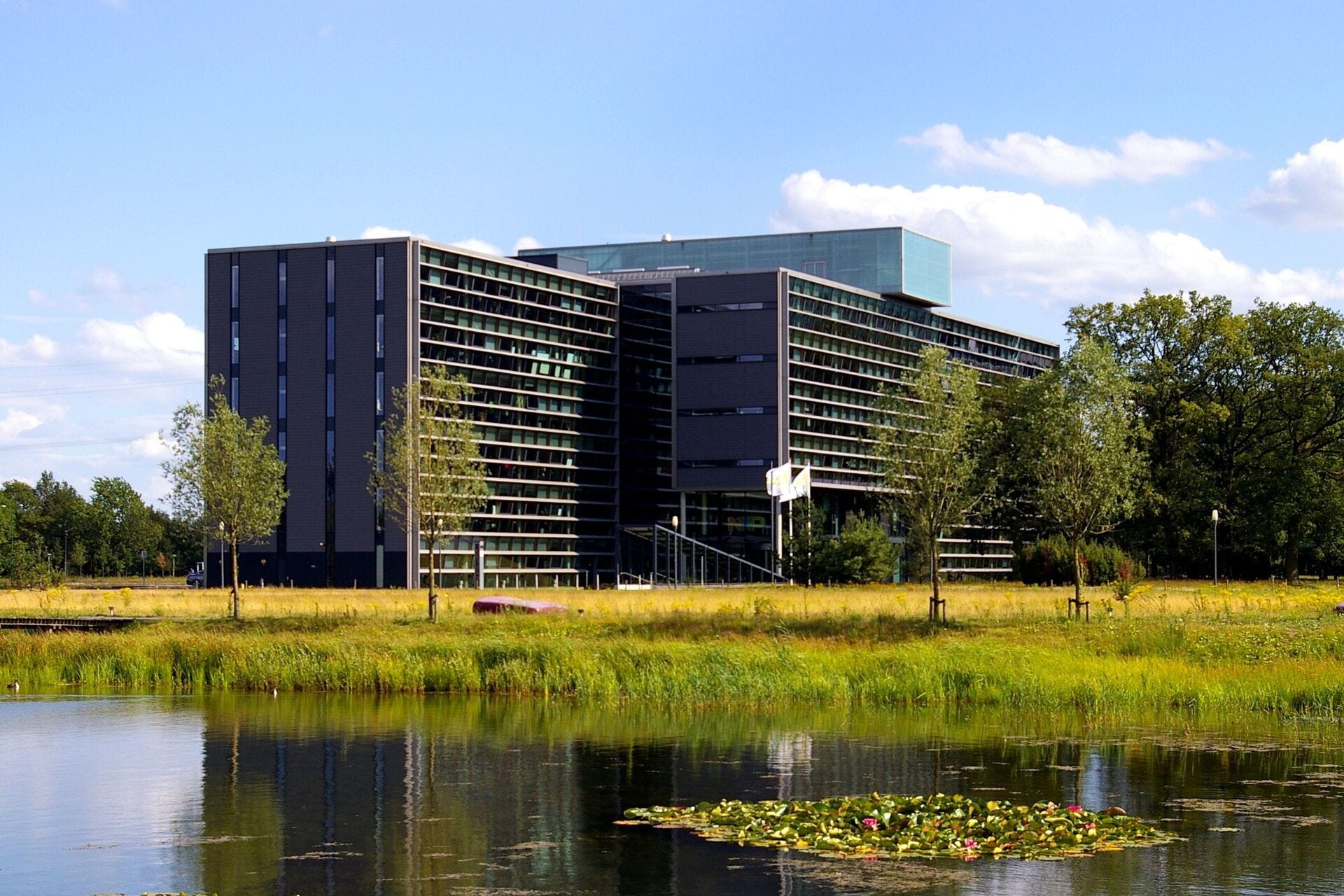
Image source: wikimedia.org
Strengths: Fortress Market Positions and Deep Technical Moats
Automotive Semiconductor Leadership
NXP commands approximately 10.5% of the global automotive semiconductor market, positioning it as one of the top three suppliers alongside Infineon and STMicroelectronics. This leadership extends across critical categories.
In automotive microcontrollers (MCUs), NXP holds a dominant 32% market share. These chips serve as the “brains” of vehicle systems, controlling everything from powertrain operations to advanced driver assistance systems (ADAS).
The company’s automotive franchise generated $1.84 billion in Q3 2025 revenue, representing 58% of total company sales, according to NXP’s earnings report.
Automotive Segment
Market Share
Key Applications
Microcontrollers (MCUs)
32%
Powertrain control, body electronics, safety systems
Overall Automotive Semiconductors
10.5%
Comprehensive vehicle electronics
Automotive Processing
19%
Domain controllers, zonal architectures
Software-Defined Vehicle (SDV) Growth Engine
NXP’s SDV franchise demonstrates exceptional growth trajectory. Revenue expanded from $500 million in 2021 to $1 billion in 2024, with projections to reach $2 billion by 2027.
This doubling every two to three years reflects the fundamental shift in automotive architecture. Modern vehicles increasingly resemble computers on wheels, requiring sophisticated processors and networking solutions that NXP specializes in providing.
The June 2025 acquisition of TTTech Auto strengthens NXP’s position in safety-critical systems and software platforms for autonomous driving. The October 2025 acquisition of Aviva Links for $243 million adds crucial high-speed connectivity capabilities for next-generation vehicle architectures.
Secure Connectivity Dominance
Beyond automotive, NXP maintains formidable positions in secure connectivity markets. The company holds over 50% market share in RFID tags and labels, dominating applications in retail, logistics, and asset tracking.
In near-field communication (NFC) technology, NXP leads with solutions powering contactless payments, digital identity, and IoT authentication. The company has shipped billions of NFC integrated circuits since pioneering the technology.
This secure connectivity expertise creates multiple revenue streams across mobile devices, IoT applications, and industrial systems.
Image source: nxp.com
Financial Resilience and Profitability
NXP demonstrates strong financial discipline despite cyclical headwinds. Q3 2025 results showed:
Revenue: $3.17 billion (down 2% year-over-year, up 8% sequentially)
Non-GAAP Gross Margin: 57.0%
Non-GAAP Operating Margin: 33.8%
Free Cash Flow: $509 million
The company’s non-GAAP gross margin of 57% reflects pricing power and differentiated product portfolio. Operating margins exceeding 33% demonstrate operational excellence.
NXP returned $310 million to shareholders in Q3 2025 through dividends ($256 million) and buybacks ($54 million), representing 61% of free cash flow. The board approved a Q4 2025 dividend of $1.014 per share, maintaining consistent capital returns despite industry softness.
Financial Metric
Q3 2025
Q2 2025
Q3 2024
Revenue
$3.17B
$2.93B
$3.25B
Non-GAAP Gross Margin
57.0%
56.5%
58.2%
Non-GAAP Operating Margin
33.8%
32.0%
35.5%
Free Cash Flow
$509M
$696M
$593M
Research and Development Investment
NXP invests approximately 16% of revenue in R&D annually, focusing on intellectual property creation and next-generation products. In January 2025, the company secured a €1 billion loan from the European Investment Bank specifically to advance R&D and innovation efforts.
Recent innovations include the May 2025 launch of third-generation S32R47 imaging radar processors for autonomous driving. The July 2025 introduction of the BMx7318/7518 battery cell controller family targets electric vehicle and energy storage applications with both automotive (ASIL C) and industrial (SIL 2) safety certifications.
This sustained R&D commitment maintains technology leadership in processing, connectivity, and security - NXP’s core competencies.
Diversified Manufacturing Strategy
NXP employs a hybrid manufacturing model combining owned fabrication facilities with foundry partnerships. This approach balances supply chain control with manufacturing flexibility.
The company operates fabs in Netherlands, Germany, Singapore, and the United States, manufacturing products requiring specialized processes. For advanced logic nodes, NXP partners with leading foundries including TSMC, securing access to cutting-edge 5nm technology for next-generation automotive processors.
This dual approach mitigates single-source dependencies while maintaining cost competitiveness.
TSMC - SWOT Analysis Report (2026)
www.deepresearchglobal.com/p/tsmc-swot-analysis-report

Weaknesses: Structural Vulnerabilities and Strategic Constraints
Automotive Revenue Concentration Risk
With 58% of Q3 2025 revenue derived from automotive applications, NXP faces significant exposure to automotive market cyclicality. When vehicle production slows or inventories build, NXP feels immediate impact.
The company experienced this vulnerability throughout 2025. Annual revenue declined from $13.28 billion in 2023 to $12.61 billion in 2024, primarily due to automotive market softness, according to Macrotrends data.
NXP Revenue Trajectory:
2023: $13.28 billion
2024: $12.61 billion (-5.0%)
TTM Q3 2025: $12.05 billion (-6.8% year-over-year)
While automotive semiconductor content per vehicle continues rising with electrification and automation, near-term demand fluctuations create revenue volatility that diversified semiconductor companies better withstand.
Geographic Revenue Exposure to China
China represents approximately 33% of NXP’s total revenue, creating substantial geopolitical risk. Tightening U.S. export controls on semiconductor technology to China could materially impact sales.
The October 2025 Nexperia crisis illustrates these risks. When Dutch authorities froze operations of Chinese-owned Nexperia (a former NXP subsidiary), China imposed retaliatory export restrictions, disrupting global automotive supply chains.
NXP’s “China-for-China” strategy attempts mitigation by localizing production and supply chains for the Chinese market. However, this approach requires significant investment and doesn’t eliminate regulatory risks.
Geographic Risk
Impact Level
Mitigation Status
China Revenue Exposure
High (33% of revenue)
Partial (China-for-China strategy)
Export Control Risk
High
Limited options
Supply Chain Disruption
Medium-High
Ongoing diversification
Margin Compression from Cyclical Pressures
NXP’s margins have contracted from peak levels. Non-GAAP gross margin declined from 58.2% in Q3 2024 to 57.0% in Q3 2025, according to company filings.
Non-GAAP operating margin fell more significantly, from 35.5% to 33.8% over the same period. While still robust relative to industry averages, the downward trajectory reflects competitive pricing pressure and manufacturing underutilization during cyclical downturns.
The semiconductor industry’s price competition in mature processes intensified in 2025, pressuring margins for companies heavily exposed to automotive and industrial markets where these processes dominate.
Failed 5G Power Amplifier Business
NXP’s December 2025 decision to exit the 5G radio power market and close its Arizona GaN fab represents a strategic setback. The ECHO fab, opened in 2020 to manufacture gallium nitride (GaN) power amplifiers for 5G infrastructure, will shut down by 2027.
The company cited “worsening conditions in 5G and no outlook for recovery” as justification. Slower-than-expected 5G deployment globally, particularly by telecommunications equipment manufacturers, resulted in insufficient demand to sustain the business.
This exit demonstrates misallocation of capital - the Arizona facility required substantial investment but failed to achieve commercial viability within its five-year operational window. The closure affects employment and signals NXP’s retreat from an adjacent growth market.
Supply Chain Dependencies
Despite hybrid manufacturing, NXP faces moderate-to-elevated supplier dependency risks. Approximately 37% of supply chain value concentrates in geographically constrained regions, creating potential bottleneck vulnerabilities.
Advanced packaging, specialty materials, and certain manufacturing equipment come from limited source suppliers. The 2025 NXP shortage affecting automotive and industrial customers illustrated how production constraints quickly cascade through the supply chain, extending lead times for critical components.
Limited Presence in AI Acceleration Market
While NXP acquired Kinara in October 2025 to add neural processing units (NPUs) for edge AI applications, the company lacks meaningful exposure to the data center AI acceleration market driving extraordinary growth for competitors like NVIDIA and AMD.
NXP’s AI strategy focuses on automotive and industrial edge computing rather than cloud-based training and inference. This positioning may prove correct long-term as edge AI proliferates, but near-term growth rates cannot match hyperscale AI infrastructure buildout.
Opportunities: Structural Tailwinds and Strategic Initiatives
Electric Vehicle Semiconductor Content Expansion
Electric vehicles require significantly more semiconductor content than internal combustion vehicles. Each EV contains an estimated $1,500-$2,000 in semiconductor value versus $600-$800 for traditional vehicles, according to industry research.
The global EV semiconductor market is projected to reach $52.6 billion by 2034, growing at 9.2% annually, per Straits Research. NXP’s strong position in battery management systems, power electronics, and vehicle networking positions the company to capture disproportionate value from EV proliferation.
Key EV opportunities include:
• Battery Management Systems (BMS): NXP's BMx7318/7518 family supports high-voltage EV battery packs with up to 18 cells per IC

• Power Electronics: Silicon carbide (SiC) and GaN inverters for electric drivetrains

• Vehicle Networking: High-speed automotive ethernet and SerDes solutions for distributed architectures

• Secure Charging Infrastructure: Authentication and secure communication for charging systems
As global EV adoption accelerates beyond the current 15% new vehicle market share, NXP’s automotive content per vehicle should grow substantially.
Advanced Driver Assistance Systems (ADAS) Proliferation
ADAS penetration in new vehicles continues expanding, driven by safety regulations and consumer demand. Technologies including adaptive cruise control, automated emergency braking, lane keeping assistance, and parking automation are becoming standard equipment.
The automotive semiconductor market is projected to grow at 11.4% annually through 2030, with ADAS representing a primary growth driver. NXP’s radar processors, vehicle networking solutions, and automotive processors directly benefit from this trend.
The company’s third-generation S32R47 imaging radar processor supports high-resolution 4D imaging radar essential for Level 2+ and Level 3 automated driving functions. As vehicles incorporate multiple radar sensors alongside cameras and lidar, per-vehicle semiconductor content rises accordingly.
ADAS Technology
NXP Product Family
Growth Driver
Imaging Radar
S32R47 processors
4D high-resolution sensing
Domain Controllers
S32 automotive processors
Centralized compute architecture
Sensor Fusion
Automotive MCUs + AI accelerators
Multi-sensor integration
V2X Communication
Secure vehicle networking
Infrastructure connectivity
Industrial and IoT Market Recovery
NXP’s Industrial & IoT segment showed 6% sequential growth in Q3 2025, reaching $579 million in quarterly revenue. While this represents only 18% of total company revenue, the segment demonstrates recovery after prolonged weakness.
The global IoT semiconductor market continues expanding as industrial automation, smart buildings, and connected infrastructure deployments accelerate. NXP’s secure microcontrollers, edge AI processors (enhanced by Kinara acquisition), and wireless connectivity solutions address multiple IoT application categories.
Specific growth opportunities include:
Industrial Automation: Factory automation, robotics, and predictive maintenance systems requiring real-time processing and secure connectivity
Smart Metering: Energy, water, and utility metering infrastructure replacing legacy systems with connected intelligent devices
Building Automation: HVAC, lighting, access control, and energy management systems incorporating AI-driven optimization
Asset Tracking: RFID and NFC solutions for supply chain visibility, inventory management, and anti-counterfeiting
Software and Services Revenue Expansion
NXP’s SDV strategy extends beyond silicon to encompass software, middleware, and professional services. This business model evolution enables recurring revenue streams and higher customer lifetime value.
The TTTech Auto acquisition brings safety-certified real-time operating systems and middleware platforms that complement NXP’s automotive processors. By offering complete hardware-software solutions, NXP can capture more value per vehicle and deepen customer relationships.
The broader software-defined vehicle market is projected to reach $250 billion by 2033, growing at 30-34% annually. NXP’s positioning across processing, networking, and security enables participation across multiple SDV value pools.
Market Share Gains from Competitive Disruption
The semiconductor industry experiences periodic disruption creating market share opportunities. Infineon, NXP, and STMicroelectronics face rising competition from both geographic challengers (particularly Asian suppliers) and new entrants.
However, NXP’s established customer relationships, proven automotive quality, and functional safety certifications create switching barriers. When competitors experience execution challenges, supply chain disruptions, or quality issues, NXP can capture displaced business.
The company’s hybrid manufacturing model and diversified supplier network provide relative stability advantage during industry turbulence.
Semiconductor Market Cyclical Recovery
After two years of declining automotive semiconductor demand, industry forecasts point toward recovery starting in late 2025 and accelerating through 2026. The World Semiconductor Trade Statistics (WSTS) projects global semiconductor market growth exceeding 26% in 2026, reaching $975 billion.
While AI-driven data center demand drives much of this growth, automotive and industrial markets are expected to stabilize and gradually improve. As automotive OEMs and suppliers normalize inventory levels and production rates, semiconductor demand should recover proportionally.
NXP management adopted a more conservative channel inventory approach entering late 2025, positioning the company to avoid inventory corrections that plagued the industry in 2023-2024.
Threats: External Challenges and Competitive Pressures
Intensifying Competition Across Market Segments
NXP faces aggressive competition in virtually every market segment. In automotive semiconductors, competitors include:
Infineon Technologies: Market leader with 13% automotive semiconductor share, strong power semiconductor and microcontroller portfolios
STMicroelectronics: 10.2% market share, comprehensive automotive product range, including SiC power devices
Texas Instruments: Dominant analog and embedded processing supplier with extensive automotive design wins
Qualcomm: Expanding aggressively into automotive connectivity, infotainment, and advanced driver assistance
NVIDIA: Targeting autonomous driving compute platforms, potential to disrupt traditional automotive semiconductor hierarchy
The competitive intensity extends to pricing pressure. As automotive semiconductor market matures, pricing power diminishes for established players facing low-cost alternatives for less-differentiated products.
Competitor
Key Strengths
Competitive Threat Level
Infineon
Power semiconductors, manufacturing scale
High
STMicroelectronics
Diversified portfolio, vertical integration
High
Qualcomm
Connectivity expertise, software platforms
Medium-High
Texas Instruments
Analog dominance, manufacturing efficiency
Medium
Texas Instruments - SWOT Analysis (2026)
www.deepresearchglobal.com/p/texas-instruments-swot-analysis

Qualcomm - SWOT Analysis Report (2026)
www.deepresearchglobal.com/p/qualcomm-swot-analysis-report
www.deepresearchglobal.com/p/nvidia-swot-analysis

Geopolitical Technology Restrictions
U.S.-China technology tensions create substantial uncertainty for NXP’s business. The company’s 33% revenue exposure to China makes it vulnerable to several scenarios:
Export Control Expansion: Additional restrictions on semiconductor technology exports to Chinese customers could directly limit NXP’s addressable market
Retaliation Measures: Chinese government responses to Western technology restrictions may target European and American semiconductor suppliers
Forced Localization: Requirements to manufacture or design products within China to serve Chinese customers could force costly restructuring
Technology Transfer Pressure: Demands to share intellectual property or form joint ventures with Chinese entities as market access conditions
The Nexperia incident in October 2025 demonstrated how quickly geopolitical tensions can disrupt operations. The Dutch government’s freeze of Nexperia assets and China’s retaliatory export restrictions created immediate supply chain chaos affecting global automotive production.
NXP’s Dutch headquarters and substantial U.S. operations place it squarely in the crosshairs of potential technology decoupling between Western nations and China.
Automotive Production Cyclicality
Despite long-term growth drivers, automotive semiconductor demand remains cyclical. Economic recessions, consumer confidence deterioration, or financing cost increases can rapidly depress vehicle sales, cascading through the supply chain to semiconductor suppliers.
The 2025 automotive market experienced softer-than-expected demand across multiple regions. Global light vehicle production growth disappointed forecasts as economic uncertainty, high interest rates, and affordability concerns weighed on consumer purchases.
NXP’s 58% automotive revenue concentration amplifies exposure to these cyclical swings. When automotive customers adjust production schedules or work through inventory, NXP faces immediate order reductions and pricing pressure.
Technology Disruption and Platform Shifts
The semiconductor industry experiences periodic technology transitions that can disrupt established market leaders. Several potential shifts threaten NXP’s current positioning:
Software-Defined Everything: As vehicles and industrial systems become software-centric, value may shift from silicon toward software platforms and algorithms. Companies with stronger software capabilities could capture greater value share, potentially commoditizing hardware.
Chiplet and Heterogeneous Integration: Emerging chiplet architectures and advanced packaging techniques enable more modular, customizable semiconductor solutions. This trend could reduce barriers to entry and enable new competition from fabless design specialists.
Open Source Hardware: Movements toward open instruction set architectures (like RISC-V) and open standards could reduce differentiation based on proprietary architectures, intensifying price competition.
Edge AI Acceleration: Rapid advances in neural network inference hardware may disrupt traditional MCU and processor architectures. Companies leading AI accelerator development could displace established automotive processor suppliers.
NXP’s acquisitions of TTTech Auto, Aviva Links, and Kinara demonstrate recognition of these threats and attempts to adapt. However, execution risk remains substantial.
Supply Chain Fragility and Component Shortages
The 2021-2023 global semiconductor shortage exposed supply chain fragility. While conditions have normalized, structural vulnerabilities persist:
Manufacturing Capacity Constraints: Leading-edge fab capacity remains concentrated geographically (Taiwan, South Korea) and limited in availability
Specialty Materials Dependencies: Critical manufacturing materials (ultra-pure chemicals, specialty gases, photoresists) have limited supplier options
Equipment Lead Times: Semiconductor manufacturing equipment often requires 12-18 month lead times, limiting rapid capacity expansion
Geopolitical Concentration: Taiwan’s dominant position in advanced manufacturing creates single-point-of-failure risk
Future supply-demand mismatches could recreate shortage conditions, disadvantaging companies without diverse manufacturing options and long-term supply agreements.
Margin Pressure from Manufacturing Costs
Semiconductor manufacturing requires relentless capital investment. Leading-edge fabs cost $15-$20 billion to construct and outfit. Even mature process fabs require hundreds of millions in capital expenditures for maintenance and upgrades.
These capital intensity requirements create margin pressure when capacity utilization declines during cyclical downturns. Fixed manufacturing costs must be absorbed across fewer units, compressing margins unless pricing power compensates.
NXP’s hybrid manufacturing model mitigates this pressure somewhat by shifting volume to foundry partners during weak demand periods. However, foundry pricing has become less flexible as consolidation reduces supplier options.
Talent Competition and Technical Expertise Retention
Semiconductor design and manufacturing require scarce technical expertise. Competition for engineers with expertise in advanced process technologies, automotive functional safety, AI/ML algorithms, and specialized domains intensifies as the industry expands.
NXP’s geographic footprint across 30+ countries provides talent access advantages. However, compensation pressure from better-funded competitors (particularly AI-focused companies offering equity upside) creates retention challenges for critical engineering talent.
The company’s investment of over $1 billion in India to double R&D efforts demonstrates recognition that talent access requires global diversification and continuous investment.
Strategic Imperatives for 2026 and Beyond
Geographic Revenue Diversification
NXP must systematically reduce China revenue concentration below 25% of total revenue over the next three years. This requires accelerating growth in North America, Europe, and other Asia-Pacific markets while maintaining absolute revenue levels in China.
Strategies include increasing design win activity with North American and European automotive OEMs, expanding industrial and IoT customer base outside China, and developing products specifically targeting regional requirements and standards.
Software and Services Revenue Expansion
Transitioning from pure-play semiconductor supplier to solutions provider offering hardware-software-services bundles enables higher margins, recurring revenue, and deeper customer lock-in. NXP should target software and services representing 15-20% of automotive revenue by 2028.
The TTTech Auto integration provides foundational software platforms. Expanding professional services, safety certification support, and cloud-connected device management SaaS offerings can diversify revenue streams beyond silicon sales.
Edge AI Leadership
The Kinara acquisition provides NPU technology for edge AI applications. NXP must rapidly integrate these capabilities across automotive, industrial, and IoT product lines while developing comprehensive AI development tools and reference designs.
Establishing leadership in automotive edge AI inference - distinct from cloud-based training - positions NXP for the next computing platform shift without competing directly against hyperscale AI infrastructure players.
Manufacturing Resilience Enhancement
Accelerating supply chain diversification and manufacturing regionalization mitigates geopolitical and concentration risks. NXP should expand regional manufacturing partnerships in North America and Europe, establish backup supplier relationships for critical materials and equipment, and increase inventory buffers for strategic products.
The “China-for-China” strategy should be replicated as “Region-for-Region” globally, establishing localized supply chains serving regional demand with reduced long-distance dependencies.
Market Share Expansion in Industrial IoT
With automotive representing 58% of revenue, achieving better balance requires accelerating industrial and IoT growth. NXP should target industrial and IoT revenue reaching 30% of total by 2028, up from current 18%.
This requires focused investments in industrial automation solutions, expansion of edge computing and secure connectivity portfolios, and potentially strategic acquisitions adding industrial domain expertise and customer relationships.
Investment Considerations
Financial Outlook
Analysts project NXP revenue recovering to $13.2-$13.8 billion for fiscal 2026, representing 5-9% growth from 2025 levels. This recovery assumes automotive market stabilization, industrial IoT growth acceleration, and contribution from recent acquisitions.
Non-GAAP earnings per share estimates for fiscal 2026 range between $11.37 and $12.40, according to Visible Alpha consensus, compared to fiscal 2025 estimates of $9.86 to $10.22.
Key Metrics - Fiscal Year Estimates:
                    FY 2025E        FY 2026E
Revenue:            $12.5B          $13.5B (+8%)
Non-GAAP EPS:       $10.00          $12.00 (+20%)
Free Cash Flow:     $2.0B           $2.5B (+25%)
Valuation Framework
NXP trades at premium multiples relative to diversified semiconductor peers but discounts compared to high-growth automotive semiconductor specialists. This positioning reflects market recognition of automotive exposure risks alongside appreciation for market leadership positions.
Long-term value creation depends on successfully navigating the automotive cycle, capturing SDV opportunity, maintaining technological leadership, and managing geopolitical challenges. Execution against these priorities should drive earnings growth acceleration beyond 2026.
Risk-Reward Assessment
Bull Case: Automotive semiconductor content growth accelerates with EV and ADAS adoption, SDV revenue reaches $2 billion by 2027 as planned, industrial IoT recovers strongly, and geopolitical tensions ease. NXP gains market share through superior execution. Scenario supports sustained 10-15% annual earnings growth.
Base Case: Automotive market recovers moderately through 2026-2027, SDV grows but faces competition pressure, industrial IoT grows mid-single-digits, geopolitical challenges persist but remain manageable. NXP maintains market positions with 6-9% annual earnings growth.
Bear Case: Automotive recession materializes in 2026, China restrictions intensify materially impacting revenue, technology transitions favor competitors, margin compression accelerates. Scenario results in flat-to-declining earnings through 2027.
Investors should assess which scenario probability weighting aligns with their risk tolerance and conviction level regarding automotive semiconductor market trajectory and NXP’s competitive positioning.
My Final Thoughts
NXP Semiconductors enters 2026 possessing formidable competitive strengths: automotive market leadership, differentiated technology positions, and strong financial performance despite cyclical headwinds.
The company’s exposure to transformative automotive trends including electrification, autonomy, and software-defined architectures creates substantial long-term value potential.
However, meaningful challenges temper this optimism.
Heavy automotive revenue concentration creates cyclical volatility exposure. Significant China revenue dependence poses geopolitical risk. Intensifying competition across all segments pressures pricing power and market share. The failed 5G power amplifier business demonstrates strategic execution risk.
The critical question for investors centers on whether NXP’s established market positions and technology leadership translate into sustained profitable growth as the semiconductor content per vehicle expands dramatically.
The company’s ability to capture disproportionate value from automotive transformation while successfully diversifying revenue sources will determine long-term investment outcomes.
Those with conviction in automotive semiconductor structural growth and confidence in NXP’s execution capabilities may find the current risk-reward compelling.
Investors seeking lower cyclicality or concerned about geopolitical risks should weigh alternatives.
Disclaimer: This analysis is for informational purposes only and should not be construed as investment advice. Investors should conduct their own due diligence and consult with financial advisors before making investment decisions.