

PACCAR Inc. $PCAR ( ▲ 3.15% ) stands at a defining moment in the commercial vehicle industry as it navigates through one of the longest downcycles on record.
The manufacturer behind iconic brands Kenworth, Peterbilt, and DAF Trucks delivered net income of $590.0 million in Q3 2025, compared to $972.1 million in the same period last year, reflecting the challenging market conditions that continue to reshape the heavy-duty truck sector.
For investors assessing PACCAR’s trajectory into 2026 and beyond, understanding the company’s strategic positioning becomes paramount. With over 90% of its U.S.-sold trucks manufactured domestically, PACCAR demonstrates operational resilience amid new tariff policies, while its aftermarket parts division continues setting revenue records despite truck delivery declines.
Table of Contents
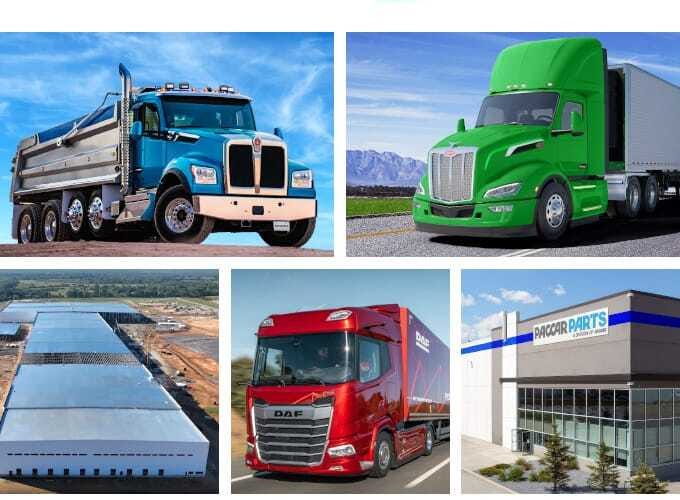
Image source: paccar.com
Strengths: Diversified Revenue Model and Market Leadership
Premier Brand Portfolio with Dominant Market Share
PACCAR’s 30.3% market share in the U.S. and Canada Class 8 truck market through its Kenworth and Peterbilt brands represents a commanding position that few competitors can match. This dominance translates directly to pricing power and customer loyalty.
The company’s market position varies by geographic segment:
Region
Brand
Market Share
Key Achievement
North America
Kenworth & Peterbilt
30.3%
Industry-leading market position
Europe
DAF Trucks
~17%
Fleet Truck of the Year 2025
South America
DAF Brasil & Kenworth
10%
Expanding to 12% target
Global
Combined
Strong position
2,200+ dealer locations worldwide
The DAF XF truck earned recognition as “Fleet Truck of the Year” at the Motor Transport Awards in London, with judges noting 7-8% higher fuel efficiency compared to competitors. This type of industry validation reinforces PACCAR’s reputation for engineering excellence and operational efficiency.
PACCAR Parts: The Profit Engine
PACCAR Parts represents perhaps the company’s most valuable strategic asset. The division achieved record revenues of $1.72 billion in Q3 2025, generating pretax income of $410.0 million. This performance underscores the recession-resistant nature of aftermarket parts.
The parts business demonstrates remarkable consistency:
Nine-Month 2025 Performance:
- Revenues: $5.14 billion (up from $5.00 billion in 2024)
- Pretax Income: $1.25 billion
- Gross Margin: 29.5%
PACCAR operates 20 global parts distribution centers spanning over 3.9 million square feet, supporting more than 2,000 DAF, Kenworth, and Peterbilt locations and 350 TRP stores. The company plans to open a new 180,000 sq. ft. distribution center in Calgary, Canada, next year, signaling continued investment in this high-margin segment.
What makes PACCAR Parts particularly valuable for investors is its countercyclical characteristics. When new truck sales decline, the existing fleet ages, increasing demand for replacement parts and maintenance services.
Financial Services: Enabling Customer Success
PACCAR Financial Services (PFS) earned pretax income of $126.2 million in Q3 2025, up from $106.5 million in Q3 2024. The division manages a portfolio of 229,000 trucks and trailers with total assets of $23.02 billion.
PFS’s strength lies in its integrated approach:
Financial Services Highlights:
- A+/A1 Credit Ratings
- $2.37 billion in medium-term notes issued (9-month 2025)
- Operations in 26 countries across 4 continents
- PacLease fleet: 39,000 vehicles
The improving used truck market benefits PFS, as stronger residual values reduce credit risk and enhance lease profitability. PFS plans to open a used truck center in Warsaw, Poland, expanding its European presence and creating additional revenue opportunities from the secondary market.
Domestic Manufacturing Advantage
PACCAR produces over 90% of its U.S.-sold trucks in Texas, Ohio, and Washington. This domestic manufacturing footprint provides significant advantages as new Section 232 tariffs impose 25% duties on imported medium- and heavy-duty vehicles and parts beginning November 2025.
The company’s manufacturing network includes:
Location
Focus
Strategic Value
Denton, Texas
Kenworth Assembly
Proximity to Southern U.S. customers
Chillicothe, Ohio
Kenworth Assembly
Central distribution access
Renton, Washington
Kenworth & Peterbilt
West Coast market coverage
Columbus, Mississippi
PACCAR Engines & Components
Vertical integration
Eindhoven, Netherlands
DAF Trucks
European market leadership
Ponta Grossa, Brazil
DAF Brasil
South American expansion
This geographic diversification insulates PACCAR from regional economic shocks while allowing the company to serve customers efficiently across multiple time zones and regulatory environments.
Strong Balance Sheet and Capital Allocation
PACCAR maintains a fortress balance sheet that enables continued investment through industry cycles. The company generated $3.27 billion in operating cash flow during the first nine months of 2025.
Capital allocation priorities demonstrate disciplined management:
2025 Investment Plan:
- Capital Expenditures: $750-$775 million
- R&D Expenses: $450-$465 million
- Regular Dividends: Approximately 50% of net income
- Extra Dividend: $1.40 per share (December 2025)
PACCAR’s dividend strategy reflects confidence in long-term cash generation. The company declared an extra cash dividend of $1.40 per share in December 2025, supplementing its regular quarterly dividend of $0.33 per share. Over the past decade, dividend yield has averaged 3.9%, providing investors with consistent income while the company continues investing in future technologies.
Weaknesses: Cyclicality and Market Dependencies
Exposure to Economic Cycles
PACCAR’s truck manufacturing business remains highly cyclical, as evidenced by the current downturn. Q3 2025 revenues of $6.67 billion compared to $8.24 billion in Q3 2024 represents a 19.1% year-over-year decline.
Truck delivery volumes tell the story:
Period
U.S. & Canada
Europe
Other
Total
Q3 2025
17,100
10,100
4,700
31,900
Q3 2024
25,900
10,000
9,000
44,900
Change
-34.0%
+1.0%
-47.8%
-29.0%
The trucking industry exits 2025 after experiencing one of the longest and most challenging downcycles on record. Weak freight demand, excess capacity, and cautious investment by carriers have created sustained pressure on new truck orders.
For investors, this cyclicality means PACCAR’s earnings can fluctuate significantly. The company’s EPS is expected to decline 36.6% in fiscal 2025 to $5.01, down from $7.90 in 2024.
Freight Market Sensitivity
PACCAR’s fortunes are directly tied to freight volumes and carrier profitability. Industry analysts warn that market uncertainty will follow trucking into 2026, with potential for layoffs, cautious investment, and unresolved legal challenges to delay recovery.
The freight market faces multiple headwinds:
Freight Market Challenges:
- Overcapacity in for-hire sector
- Weak spot rates throughout 2025
- Low carrier profitability
- Private fleets absorbing volumes
ACT Research projects that 2026 heavy-duty truck demand will face continued pressure from these factors, potentially limiting PACCAR’s volume recovery even as some economic indicators improve.
European Legal Settlement Burden
PACCAR recorded a $350.0 million pretax charge ($264.5 million after-tax) in Q1 2025 related to civil litigation in Europe stemming from the European Commission’s 2016 settlement. This follows a previous $600.0 million charge in Q1 2023.
While the company has settled with the majority of claimants, ongoing appeals and legal proceedings create uncertainty. These charges, though characterized as non-recurring, have materially impacted reported earnings and represent a significant cash outflow that could have otherwise been deployed for growth initiatives or returned to shareholders.
Geographic Concentration Risks
Despite global operations, PACCAR derives substantial revenue from North America, where U.S. and Canada revenues totaled $13.36 billion in the first nine months of 2025, representing 61.8% of total consolidated revenues.
Nine-month revenue breakdown:
Region
Revenue (Billions)
Percentage
United States & Canada
$13.36
61.8%
Europe
$4.92
22.7%
Other
$3.35
15.5%
Total
$21.62
100.0%
This concentration exposes PACCAR to U.S.-specific economic conditions, regulatory changes, and competitive dynamics. Any significant downturn in the North American economy would disproportionately impact the company’s overall performance.
Opportunities: Technology Leadership and Market Expansion
Electric and Alternative Powertrains
PACCAR’s investments in electrification position the company well for the transition to zero-emission vehicles. The company’s battery joint venture, Amplify Cell Technologies, is constructing a 2.6 million sq. ft. battery factory in Byhalia, Mississippi, targeting battery cell production start in 2028.
The company’s electric vehicle strategy includes multiple platforms:
PACCAR Electric Vehicle Portfolio:
- Kenworth T680E (Class 8 long-haul)
- Peterbilt 579EV (Class 8 long-haul)
- Medium-duty electric trucks (recently launched)
- Hydrogen fuel cell collaborations with Toyota
Kenworth and Peterbilt launched new medium-duty battery-electric trucks in December 2025 built on PACCAR’s ePowertrain platform. These vehicles target urban delivery, refuse collection, and regional distribution applications where electric powertrains offer compelling total cost of ownership advantages.
The PACCAR-Toyota hydrogen fuel cell partnership has expanded to include commercialization of zero-emission Kenworth T680 and Peterbilt 579 models. This dual approach to electrification—both battery-electric and hydrogen fuel cell—provides flexibility as infrastructure and customer preferences develop.
Autonomous Trucking Partnership with Aurora
PACCAR’s strategic partnership with Aurora Innovation positions the company at the forefront of autonomous vehicle development. Aurora began commercial operations with fully driverless PACCAR trucks in Texas in May 2025, hauling freight between Dallas and Houston.
While Aurora temporarily reintroduced safety drivers in response to PACCAR’s concerns, the company remains committed to deploying hundreds of driverless trucks by mid-2026. For PACCAR, this partnership offers:
Opportunity
Strategic Benefit
Early Market Entry
First-mover advantage in autonomous trucking
Technology Integration
Aurora Driver system designed for PACCAR platforms
Fleet Customer Access
Demonstrations with major carriers like FedEx
Revenue Diversification
Potential licensing and technology fees
Autonomous trucking addresses the persistent driver shortage, estimated at 60,000-80,000 drivers in 2025. As the technology matures and regulatory frameworks develop, PACCAR’s early investment positions the company to capture significant value from this transformation.
International Market Expansion
PACCAR’s DAF Brasil operation achieved 10% market share in the Brazilian above 16-tonne truck market, with plans to reach a medium-term target of 12%. The South American market is projected at 95,000-105,000 units in 2025 and similar volumes in 2026.
Brazil expansion highlights:
DAF Brasil Growth Strategy:
- Market Share: 10% (targeting 12%)
- Factory Location: Ponta Grossa
- Expansion: 65,000 sq. ft. capacity addition
- Export Markets: Chile, Colombia
- Production: 10,600 trucks (2024)
The company is expanding its Ponta Grossa facility by 65,000 sq. ft. to increase capacity and enhance engine production capabilities. This investment demonstrates confidence in South American demand growth and positions PACCAR to serve the broader Latin American market.
Beyond South America, PACCAR operates through its global network of 2,200 dealer locations in more than 100 countries. Opportunities exist to increase market penetration in Asia, Africa, and other developing regions where infrastructure investment drives commercial vehicle demand.
Digital Services and Connected Vehicles
PACCAR is leveraging artificial intelligence to reduce operational costs and enhance performance. The company’s predictive analytics technology utilizes AI to forecast vehicle service parameters, improving uptime for customers.
Digital service offerings create recurring revenue opportunities:
Service Category
Customer Benefit
PACCAR Revenue Opportunity
Managed Dealer Inventory
Reduced parts downtime
Parts sales optimization
Connected Truck Data
Predictive maintenance
Service contract revenue
Fleet Services
Comprehensive support
Bundled service packages
Telematics Integration
Operational efficiency
Data subscription fees
As trucks become increasingly connected, PACCAR can monetize the data and insights generated by its installed base. With hundreds of thousands of trucks on the road, the potential scale of these digital services represents a meaningful opportunity to supplement traditional manufacturing and parts revenue.
Vocational and Specialty Segments
PACCAR launched the Kenworth T880S in 2025, targeting heavy-haul, logging, and other high-horsepower applications. The truck features a set-forward front axle configuration with up to 605 hp and 2,050 lb.-ft. of torque.
Vocational applications offer attractive characteristics:
Vocational Market Advantages:
- Higher specification levels (premium pricing)
- Specialized engineering requirements
- Less price-sensitive customers
- Longer replacement cycles
- Strong parts and service opportunities
The vocational segment shows resilience even during economic downturns, as construction, energy, and infrastructure projects continue. PACCAR’s engineering capabilities and brand reputation position it well to capture share in these profitable niches.
Threats: Regulatory Pressures and Competitive Intensity
Stringent Emissions Regulations
The regulatory environment for commercial vehicles continues tightening. The EPA’s 2027 NOx rule will move forward despite industry requests for delays, requiring substantial investments in emissions control technology.
California’s regulations pose additional challenges:
California Emissions Requirements:
- Advanced Clean Trucks (ACT) Rule
- Zero-Emission Powertrain (ZEP) Certification
- Omnibus Rule for low NOx standards
- Truck and Bus Regulation (2010+ engines required)
CARB approved amendments to provide flexibility while maintaining emissions reductions, but the fundamental trend toward zero-emission vehicles continues. By 2026, California mandates that zero-emission vehicles constitute 35% of new truck sales for certain manufacturers.
For PACCAR, compliance requires significant R&D investment. The company plans to invest $450-$500 million in R&D in 2026, much of it directed toward clean diesel and alternative powertrains. These investments pressure margins in the near term, even as they position the company for long-term competitiveness.
Intense Competition from Established Players
PACCAR faces formidable competition from well-capitalized rivals. The North American heavy-duty truck market includes strong competitors with significant resources:
Competitor
Parent Company
Key Brands
Competitive Advantages
Freightliner/Western Star
Daimler Truck
Multiple brands
Global scale, technology leadership
Volvo/Mack
Volvo Group
Volvo, Mack
Swedish engineering, integrated components
International
Traton Group (VW)
International
Established dealer network
Daimler Truck and Volvo Group both invest heavily in electric and autonomous technologies. Daimler participates in the same Amplify Cell Technologies battery venture as PACCAR, ensuring competitive parity in battery supply. Volvo has its own autonomous vehicle partnership with Aurora, creating similar strategic options.
In Europe, DAF competes against Scania, Mercedes-Benz, and MAN, all with strong brand loyalty and comprehensive service networks. The competitive intensity limits pricing power and requires continuous innovation to maintain market position.
Technology Disruption Risks
While PACCAR invests in electric and autonomous technologies, execution risks remain. The transition to new powertrains requires:
Technology Transition Challenges:
- Massive capital requirements
- Unproven business models
- Infrastructure dependencies
- Customer adoption uncertainty
- Residual value risks
Battery supply constraints, charging infrastructure limitations, and uncertain residual values all pose risks to PACCAR’s electric vehicle strategy. The Amplify battery factory timeline targets 2028 for production start—any delays would impact electric truck availability and competitiveness.
Autonomous technology faces regulatory hurdles and public acceptance challenges. While Aurora plans hundreds of driverless trucks by late 2026, the path from small-scale pilots to mass deployment remains uncertain.
Supply Chain and Input Cost Pressures
Commercial truck manufacturing requires complex supply chains spanning electronics, steel, aluminum, tires, and specialized components. Recent years have demonstrated supply chain vulnerabilities.
Cost pressures include:
Input Category
Recent Trends
Impact on PACCAR
Steel & Aluminum
Tariff exposure
Higher material costs
Semiconductors
Periodic shortages
Production disruptions
Labor
Wage inflation
Increased manufacturing costs
Logistics
Elevated freight rates
Distribution cost pressure
The industry’s average cost of operating a truck was $2.260 per mile in 2024. Rising input costs pressure PACCAR’s manufacturing margins and increase the total cost of ownership for customers, potentially reducing demand.
Section 232 tariffs on imported truck parts at 25% create additional cost pressures for components sourced internationally. While PACCAR’s domestic manufacturing mitigates some exposure, no truck manufacturer operates entirely within a single country’s supply chain.
Macroeconomic Sensitivity
Heavy-duty truck demand correlates strongly with GDP growth, industrial production, and freight volumes. Economic slowdowns directly impact PACCAR’s order book.
The company faces multiple macroeconomic risks:
Economic Risk Factors:
- Potential recession in 2026
- Interest rate uncertainty
- Inflation pressures on customers
- Consumer spending trends
- Manufacturing activity levels
Industry forecasts suggest the truckload market began tightening in mid-2025 as capacity exits caught up with demand. However, equilibrium is only expected by late 2025 or early 2026. Any deviation from expected freight demand recovery would impact PACCAR’s volume assumptions.
For investors, these macroeconomic sensitivities create earnings volatility. PACCAR’s cyclical nature means strong performance during expansions but significant pressure during contractions.
Strategic Implications for 2026 and Beyond
Market Outlook and Volume Projections
PACCAR projects the U.S. and Canada Class 8 market at 230,000-270,000 vehicles in 2026, up from 230,000-245,000 in 2025. European registrations are expected at 270,000-300,000 trucks in the above 16-tonne segment.
Market projections by region:
Market
2025 Estimate
2026 Estimate
Key Drivers
U.S. & Canada Class 8
230,000-245,000
230,000-270,000
Modest recovery expected
Europe >16-tonne
275,000-295,000
270,000-300,000
Stable to slight improvement
South America >16-tonne
95,000-105,000
95,000-105,000
Consistent demand
These projections suggest a gradual recovery rather than a sharp rebound. PACCAR’s 30.3% North American market share would translate to approximately 69,000-81,000 unit deliveries in 2026 at these industry volumes, representing potential upside from 2025 levels.
Financial Performance Expectations
Analysts expect PACCAR’s EPS to recover to $5.51 in fiscal 2026, representing nearly 10% growth from the $5.01 projected for 2025. This recovery assumes:
2026 Recovery Assumptions:
- Modest truck volume increase
- Continued PACCAR Parts strength
- Stable gross margins
- No additional one-time charges
- Improved Financial Services performance
The company’s strong balance sheet supports continued dividend payments and strategic investments. Cash generated from operations of $3.27 billion in the first nine months of 2025 provides financial flexibility to navigate the current cycle while preparing for long-term growth.
Investment Priorities
PACCAR’s capital allocation reflects balanced priorities between returning cash to shareholders and investing for the future. The company plans to invest $725-$775 million in capital projects in 2026.
Key investment areas include:
2026 Investment Priorities:
- Next-generation powertrains (diesel and alternative)
- Manufacturing capacity optimization
- Parts distribution center expansion
- Advanced driver assistance systems
- Connected vehicle services
- Battery factory development
The $35 million engine remanufacturing facility in Columbus, Mississippi, opening in 2026, demonstrates commitment to circular economy principles and creates additional aftermarket revenue opportunities.
Competitive Positioning
PACCAR’s competitive position heading into 2026 reflects both strengths and challenges. The company’s premium positioning allows it to maintain pricing discipline during downturns, but also makes it vulnerable to customers trading down to lower-cost alternatives.
Competitive advantages:
Factor
PACCAR Position
Implication
Brand Value
Strong (Kenworth, Peterbilt, DAF)
Pricing power, customer loyalty
Manufacturing Footprint
Diversified, 90% U.S. domestic
Tariff protection, flexibility
Parts Business
Industry-leading scale
Stable, high-margin revenue
Financial Strength
Fortress balance sheet
Investment capacity, resilience
Technology Partnerships
Aurora, Toyota
Access to cutting-edge tech
The company’s domestic manufacturing advantage becomes increasingly valuable as trade policy favors U.S. production. With approximately 90% of U.S.-delivered trucks produced domestically, PACCAR avoids much of the tariff burden affecting competitors with higher import content.
My Final Thoughts
PACCAR Inc. navigates a complex environment characterized by cyclical headwinds, regulatory transitions, and technological disruption. The company’s diversified business model, spanning premium truck manufacturing, high-margin parts distribution, and integrated financial services, provides resilience during difficult periods.
For investors evaluating PACCAR heading into 2026, several factors deserve consideration:
The company’s 30.3% North American market share and record-setting PACCAR Parts revenues demonstrate competitive strength even amid challenging conditions. The $1.40 extra dividend declared in December 2025 reflects management’s confidence in long-term cash generation capabilities.
However, the 36.6% expected EPS decline in fiscal 2025 and continued freight market weakness create near-term headwinds. The transition to electric and autonomous vehicles requires substantial capital investment with uncertain returns, while intensifying emissions regulations pressure margins across the industry.
PACCAR’s domestic manufacturing footprint, strong balance sheet, and strategic technology partnerships position the company to emerge from the current downcycle in a strong competitive position. As freight markets gradually recover in 2026 and beyond, PACCAR’s operational leverage should drive meaningful earnings growth from current depressed levels.
The company’s 10-year average dividend yield of 3.9% provides income while investors await a cyclical recovery.
Combined with undervaluation suggested by DCF analysis, PACCAR presents a compelling case for long-term investors willing to accept cyclical volatility in exchange for exposure to a well-managed industry leader positioned for the transportation sector’s technological transformation.
Disclaimer: This analysis is for informational purposes only and should not be construed as investment advice. Investors should conduct their own due diligence and consult with financial advisors before making investment decisions.