

Welcome to Deep Research Global - The institutional-grade investment analysis newsletter, built exclusively for savvy investors.
As a paid member you get access to:
Daily - Deep-dive fundamental analysis reports & investment insights
Weekly - Earnings analysis of key releases
One subscription. Unlock full archive - 100s of stock/company analysis reports (updated regularly)
In case you missed it, here are the latest “fundamental analysis” reports:
List of All Reports - Check It Out
Executive TL;DR
Philip Morris International (PM) just posted its first ever $11+ billion quarter, with Q2 2026 net revenues of $11.2 billion and adjusted diluted EPS of $2.20, both crossing thresholds the company had never touched before, and management raised the low end of cigarette volume guidance from a 3% drop to something closer to 2–3%.
ZYN in the U.S. slowed a lot faster than the bull thesis wanted, growing pouches only 1.8% in Q2, but PMI is doubling down with fresh SKUs (ZYN ULTRA, extra flavors) and a first-ever FDA Modified Risk Tobacco Product nod for 20 pouch variants on June 30, 2026.
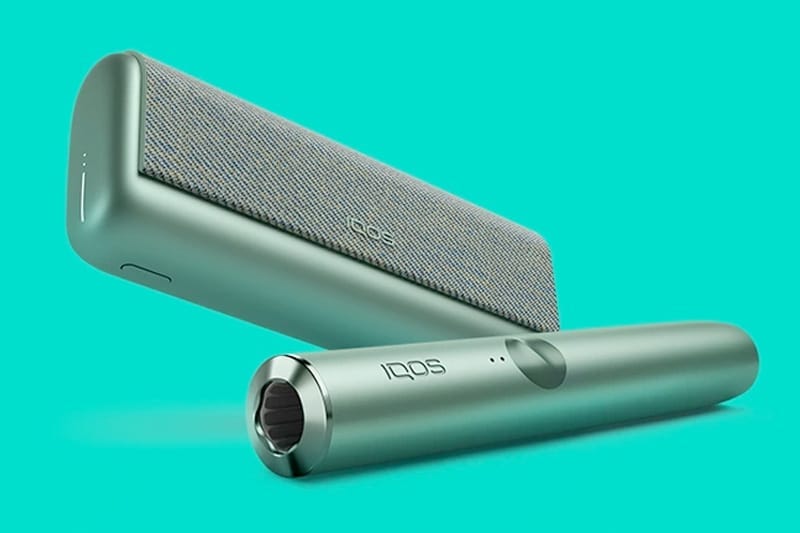
IQOS is now the biggest engine at the company, with heated-tobacco unit shipments at 41.8 billion sticks in Q2 (up 7.6%), and the FDA is still holding the ILUMA marketing order in review while U.S. rollouts in Austin and Fort Lauderdale run on older-generation hardware.
Full-year adjusted diluted EPS guidance was trimmed to $8.26 to $8.41 from the prior $8.36 to $8.51 (a currency call, not an operational one), and PMI still targets net leverage close to 2.0x adjusted EBITDA by year-end 2026.
Recommended - Read Full Reports

Read All Reports
Table of Contents
Executive TL;DR
Introduction
Philip Morris International Company Profile: Key Facts Snapshot
The PM Investment Thesis
PMI Business Model Overview
PMI Revenue Analysis
Latest Quarterly Earnings & Guidance
Margins, Earnings Quality & the EPS Trajectory
Cash Flow Mechanics
Balance Sheet Health
PMI Segment-by-Segment Teardown
Product-Level Deep Dive
Major PMI Competitors
PMI Strategic Context
PMI Valuation Framework
Bull, Base, and Bear Case Scenarios
Key Risks
Catalysts to Watch
The ESG and Reputation Overlay
The Emerging Markets Angle
Comparing 2026 to 2019 (Because Context Matters)
Analyst Price Targets
My Final Thoughts
Official Sources & Data
Disclaimer: This analysis is for informational & educational purposes only and should not be construed as investment advice. Investors should conduct their own due diligence before making investment decisions. Past performance does not guarantee future results.
Introduction
If you had told a portfolio manager in 2018 that Marlboro would eventually be the second-largest product Philip Morris International (PM) sells, they would have laughed.
And yet, that’s exactly what happened this year… the smoke-free portfolio (IQOS, ZYN, VEEV, and a growing wellness sleeve called Aspeya) has swallowed roughly 42% of net revenues, and the trajectory keeps bending upward.
Except the story is not a straight line anymore, which is the whole reason this report exists.
Q1 was ugly in the U.S. because ZYN had an inventory hangover from 2025. Q2 came back strong on the international book but the U.S. business posted a mild revenue decline. Investors are trying to figure out whether the smoke-free story has hit its awkward teenage years or whether the second half of 2026 puts it back on the college track.
There’s also the currency drag, an RBH impairment charge tied to the Canadian affiliate, and a corporate restructuring that split the company into PMI International, PMI U.S., and the Aspeya wellness unit as of January 1, 2026.
Let’s breakdown everything that matters.
Philip Morris International Company Profile: Key Facts Snapshot
Philip Morris International Inc. trades on the New York Stock Exchange under the ticker PM and is headquartered in Stamford, Connecticut, with operational headquarters in Lausanne, Switzerland.
The company was carved out of Altria in 2008 and has since been rebuilt around a “smoke-free” transformation thesis.
Jacek Olczak runs the whole thing as Group CEO. Emmanuel Babeau is CFO. Frederic de Wilde was named CEO of the newly created PMI International business unit effective January 1, 2026 during the organizational restructure.
Ticker:            PM (NYSE, Euronext Paris)
Legal HQ:          Stamford, Connecticut
Operations HQ:     Lausanne, Switzerland
Group CEO:         Jacek Olczak
CFO:               Emmanuel Babeau
Fiscal Year End:   December 31
Reporting Segs:    PMI International, PMI U.S., Aspeya (effective Jan 1, 2026)
Employees (2024):  ~82,000
FY2025 Revenue:    ~$38 billion range
Dividend:          $1.47/share quarterly (as of 2026)
Dividend Streak:   17 consecutive years of increases
Some quick history matters here. PMI acquired Swedish Match in 2022 for roughly $16 billion, and that single transaction is what turned ZYN into a household name in the United States. Before that, ZYN was a Swedish-heritage niche product. Now it is the reason U.S. gas stations reorganized their counter displays.
PMI also owns the IQOS heated-tobacco ecosystem in full (they bought back the U.S. commercialization rights from Altria in 2022, and full rights kicked in on April 30, 2024). The wellness arm was rebranded Aspeya in early 2025 and now serves as the standalone consumer-health platform.
The PM Investment Thesis
The Core Bet
The whole thesis, if you strip everything else away, is that PMI is turning a shrinking, cash-generative cigarette machine into a growing, still-cash-generative next-gen nicotine machine. And they are doing it faster than any of their peers.
That sentence sounds simple. Executing it is not.
The company is now aiming to have more than two-thirds of net revenues come from smoke-free by 2030. As of Q1 2026, they were sitting at 43% of net revenues, and Q2 held approximately 42%. Which… yes, that’s technically a small step back quarter over quarter, but the drop is math, not deterioration (ZYN Q1 was so weak that combustibles got a bigger denominator share by default).
Why Investors Care in 2026
The interesting bit for a U.S.-based investor is that PMI does not really compete inside the U.S. cigarette market. That’s Altria’s turf.
PMI’s cigarette business runs internationally, and they have been able to raise prices consistently even as sticks-per-year decline. Their Q2 2026 combustibles pricing variance was +10.0%, which is a huge number for a “declining” business.
Meanwhile the smoke-free portfolio is where the growth actually lives. IQOS crossed a symbolic threshold in early 2024 when the leading heated tobacco product surpassed Marlboro in net revenue for the first time. It’s just… the reality now.
The Long-Duration Angle
There is also the “34 million” number. That’s how many adult smokers were using IQOS as of June 30, 2025, per PMI’s own disclosures. The internal ambition is to hit 40 million by 2030. Not a wild stretch given the current trajectory.
Smoke-Free Net Revenue Share (approx.):
2019   ~19%
2022   ~30%
2024   ~40%
Q1 2026   43%
Q2 2026   ~42%
2030 target   >66%
The delta between “where we are” and “where management wants to be” is the whole thesis in one table. If they get there, the multiple should re-rate. If they stall, it doesn’t.
But There’s Nuance
Which is fine. Nothing’s ever clean. ZYN’s U.S. slowdown is real. Rivals are showing up. The FDA has been sitting on IQOS ILUMA authorization longer than anyone expected.
So while the direction of travel is clear, the tempo has been… choppy. Investors need to be OK with that.
PMI Business Model Overview: How the Money Actually Moves
The Basic Machine
PMI is a nicotine-first consumer packaged goods company. They design a product (a cigarette stick, a heated tobacco unit, a pouch, a vape pod), manufacture it at scale in factories mostly outside the U.S. (Switzerland, Italy, Poland, Kentucky for pouches, etc.), and distribute through convenience stores, tobacconists, and specialty channels globally.
Revenue is a function of volume (units sold) multiplied by price per unit. Both matter. Price has been a consistent lever for combustibles (raising prices even as volume drops). Volume is the lever for smoke-free.
Around 76% of the company’s Q2 2026 volume came from cigarettes (156.9 billion sticks). But nearly half of gross profit came from smoke-free products, which tells you everything about margin mix.
Manufacturing Footprint
PMI runs roughly 40 factories worldwide. IQOS heated-tobacco units are consumables (they buy a device once, buy the sticks forever).
Which is the same razor-and-blade model that made Gillette a giant. VEEV pods work the same way. ZYN is a straight consumable, no device needed.
Product Category      | Approx Q2'26 Volume     | Trend
----------------------|-------------------------|----------
Cigarettes            | 156.9 billion sticks    | +1.1%
Heated Tobacco Units  | 41.8 billion sticks     | +7.6%
Oral Nicotine (all)   | 5.1 billion pouches     | -1.2%
E-vapor (VEEV)        | 1.3 billion units       | +55.1%
Distribution and Route to Market
Roughly 180 markets. That’s the footprint.
In some markets PMI sells directly. In others they partner with local distributors.
The U.S. business is smaller than most people assume, only around $850–900 million per quarter, but that’s growing fast and is where the ZYN + IQOS story lives for a domestic investor.
Where Cash Comes From
Cigarettes still fund the transformation. That’s the honest read.
The combustible portfolio kicks off consistent gross margin in the 65–70% range and PMI takes those dollars and reinvests them into smoke-free R&D, manufacturing capacity (ZYN plants in the U.S. cost real money), and marketing.