

Ross Stores $ROST ( ▲ 0.43% ) just wrapped up 2025 with remarkable momentum. The off-price retail giant completed its ambitious expansion of 90 new stores while beating earnings expectations in Q3 2025.
But for investors, past performance only tells part of the story. As we transition into 2026, understanding Ross Stores’ strategic positioning becomes crucial for assessing its long-term value proposition in an increasingly competitive retail environment.
Table of Contents
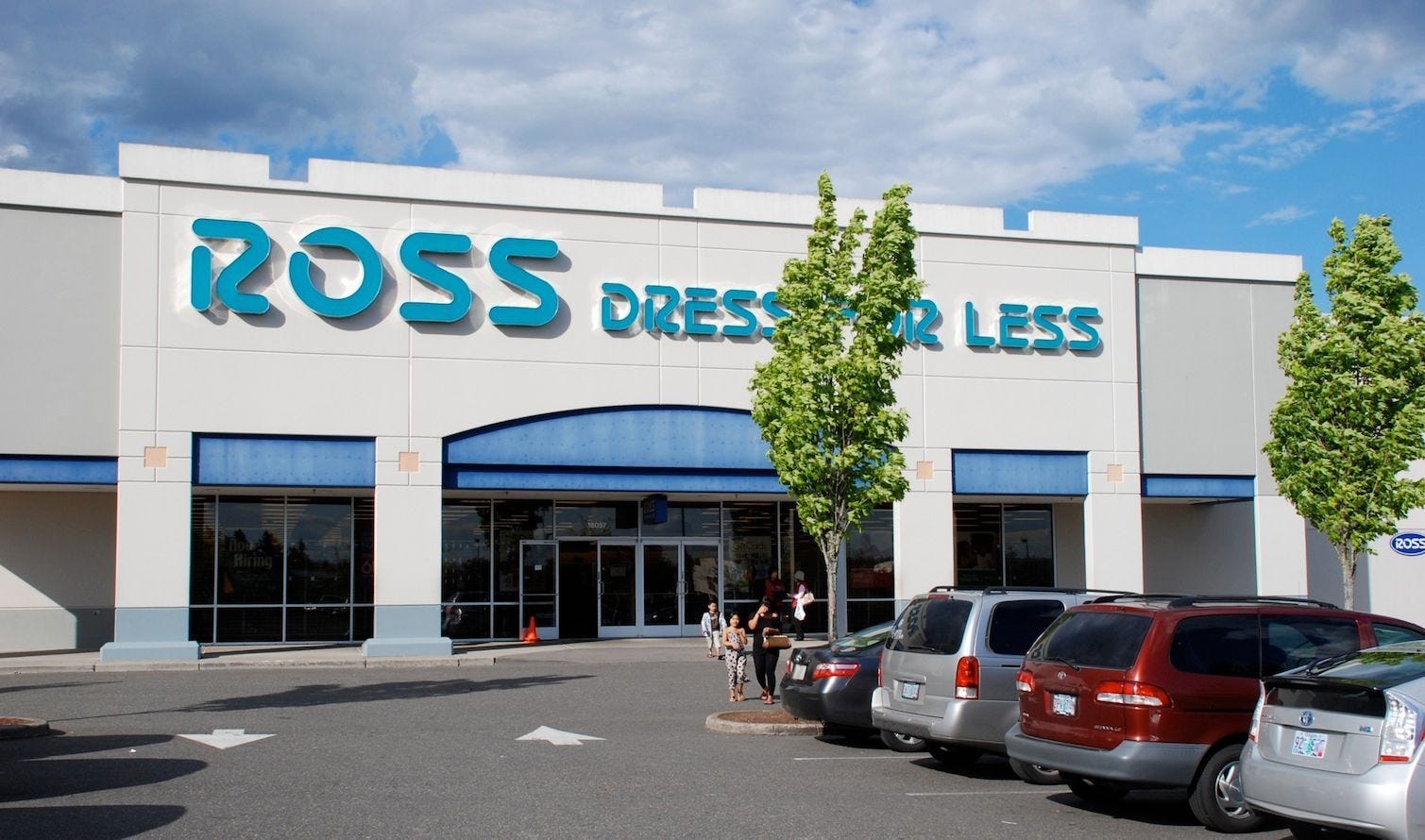
Image source: commons.wikimedia.org
Understanding Ross Stores’ Business Model
Ross Stores operates 2,273 locations across the United States as of October 2025. The company runs two distinct retail banners: Ross Dress for Less and dd’s DISCOUNTS.
The core business model centers on off-price retailing. This means purchasing branded merchandise at significant discounts and passing savings to consumers.
Key Business Metrics (2025)
Performance
Annual Revenue
$21.1 billion
Q3 2025 Sales Growth
10% year-over-year
Comparable Store Sales (Q3)
+7%
Total Store Count
2,273 locations
New Stores Opened (Fiscal 2025)
90 locations
Ross Stores’ revenue reached $22.027 billion for the twelve months ending October 31, 2025, representing a 3.71% increase year-over-year. For the nine months ended November 1, 2025, earnings per share were $4.61 on net earnings of $1.5 billion.
The company’s treasure hunt shopping experience differentiates it from traditional retailers. Merchandise changes frequently, creating urgency and excitement for customers seeking branded goods at 20-60% off department store prices.
Strengths: The Foundation of Competitive Advantage
Proven Off-Price Retail Model
Ross Stores holds approximately 8.28% of the off-price retail market in Q1 2025. While this trails TJX Companies’ 21.36%, Ross maintains the second-largest market position in this segment.
The off-price model demonstrates structural resilience. Operating margins of 11.6% in Q3 2025 reflect efficient cost management despite external pressures.
Profitability Metrics
Q3 2025
Operating Margin
11.6%
Net Profit Margin
~9.9%
Earnings Per Share
$1.58
Extensive Vendor Relationships
Ross Stores maintains relationships with over 8,000 vendors. This vast network provides consistent access to branded merchandise at below-wholesale prices.
The company’s buying power stems from its scale. Over 800 merchants continuously source opportunistic inventory from manufacturers with excess production, canceled orders, or seasonal overstock.
These relationships create a sustainable competitive advantage. Vendors depend on off-price retailers like Ross to clear inventory quickly without damaging their brand positioning at full-price retailers.
Strategic Store Expansion
The company completed 90 new store openings in fiscal 2025, including 36 Ross Dress for Less and four dd’s DISCOUNTS locations in September and October alone. This aggressive expansion occurred while many traditional retailers shuttered stores.
Ross targets a long-term goal of 2,900 Ross Dress for Less locations and 700 dd’s DISCOUNTS stores. With current operations at 2,273 locations, significant runway for growth remains.
CURRENT STORE FOOTPRINT:
- Ross Dress for Less: ~2,100 locations
- dd's DISCOUNTS: ~173 locations
- Total: 2,273 stores

LONG-TERM TARGETS:
- Ross Dress for Less: 2,900 locations
- dd's DISCOUNTS: 700 locations
- Total: 3,600 stores

EXPANSION POTENTIAL: ~1,327 additional stores
Efficient Supply Chain Operations
Ross Stores’ supply chain enables rapid inventory turnover. The company’s distribution network stocks stores quickly, maintaining fresh merchandise flows that keep the treasure hunt experience alive.
Data-driven site selection minimizes expansion risk. The company analyzes demographics, competitive positioning, and real estate economics before committing to new locations.
Strong Financial Performance
Ross Stores demonstrated resilience throughout 2025. Q3 2025 revenue reached $5.6 billion, exceeding analyst expectations of $5.42 billion by 3.47%.
The company raised its full-year 2025 EPS guidance to $6.38-$6.46, up from previous expectations of $6.08-$6.21. This guidance includes a 16-cent negative impact from tariffs, demonstrating the underlying business strength.
Q3 2025 Performance vs. Expectations
Actual
Expected
Beat/Miss
Earnings Per Share
$1.58
$1.41
+12.06%
Revenue
$5.60B
$5.42B
+3.47%
Comparable Store Sales
+7%
~+5%
Beat
Consumer Behavior Alignment
Discount retailers are thriving as consumers across income brackets switch to off-price formats. Even affluent shoppers increasingly seek value, benefiting Ross Stores’ positioning.
The physical treasure hunt experience provides immunity from e-commerce disruption. Foot traffic to off-price retailers grew in Q1 2025, with the sector demonstrating consistent customer attraction.
Weaknesses: Constraints on Growth and Performance
Limited E-Commerce Presence
Ross Stores operates no e-commerce platform. This brick-and-mortar-only strategy contrasts sharply with retail trends.
While the treasure hunt model translates poorly online, the absence of digital channels limits market reach. Younger consumers expect seamless omnichannel experiences that Ross cannot provide.
E-Commerce Strategy Comparison
Ross Stores
TJX Companies
Burlington
Online Shopping Platform
None
Yes (limited)
Yes
Mobile App
Store locator only
Rewards integration
Full shopping
Digital Marketing
Limited
Extensive
Moderate
Tariff Exposure and Margin Pressure
Tariff costs impacted Ross Stores’ profitability in 2025. The company expects approximately 22-25 cents per share impact from announced trade policies for fiscal 2025.
Q2 2025 operating margins decreased 95 basis points to 11.5% compared to the prior year, primarily reflecting tariff-related costs. For the full year 2025, Ross expects a tariff impact of $72-82 million.
Ross even considered raising prices to offset tariff effects. Any price increases risk undermining the value proposition central to the off-price model.
Supply Chain Vulnerabilities
The opportunistic buying model creates merchandise unpredictability. Ross cannot guarantee specific brands or items will be available, which some consumers find frustrating.
Supply chain disruptions can significantly affect Ross Stores’ ability to maintain its core value proposition. Global logistics challenges, vendor financial instability, or geopolitical tensions threaten merchandise flows.
Market Share Gap Behind TJX
TJX Companies commanded 21.36% of the off-price market in Q1 2025, versus Ross Stores’ 8.28%. This substantial gap reflects TJX’s superior scale, brand portfolio, and market penetration.
TJX’s multiple banners (T.J. Maxx, Marshalls, HomeGoods, HomeSense, Sierra) provide diversification Ross lacks. The concentrated business model increases competitive vulnerability.
OFF-PRICE RETAIL MARKET SHARE (Q1 2025):
━━━━━━━━━━━━━━━━━━━━━━━━━━━━━━━━━━━━━━━
TJX Companies:     21.36% ████████████████████████
Ross Stores:        8.28% █████████
Burlington:         4.20% █████
Others:            66.16% ████████████████████████████████████████████████████████
Geographic Concentration Risk
Ross Stores operates exclusively in the United States. This domestic-only footprint eliminates international diversification benefits that competitors enjoy.
Economic downturns or regional challenges disproportionately impact Ross. The company cannot offset weak U.S. performance with strong international markets.
Opportunities: Pathways for Value Creation
Continued Physical Retail Expansion
Ross Stores plans to reach at least 2,900 Ross Dress for Less and 700 dd’s DISCOUNTS locations. This represents roughly 1,327 additional stores from current levels.
The company is expanding in Michigan, New Jersey, and New York while simultaneously boosting its presence in Sunbelt states. This geographic diversification reduces regional concentration risk.
Foot traffic data shows off-price retailers attracting customers in 2025. Burlington saw visits grow by 6.5% year-over-year in Q1 2025. T.J. Maxx and Marshalls posted increases as well.
Expansion Opportunity Analysis
Details
Current Store Count
2,273 locations
Long-term Target
3,600 locations
Remaining Growth Potential
~58% increase
Geographic Focus
Sunbelt + Northeast expansion
Format Mix
80% Ross, 20% dd’s DISCOUNTS
Growing Value-Conscious Consumer Base
Consumer spending patterns increasingly favor discount retailers. Across income groups, shoppers are switching to off-price formats and seeking private label alternatives.
The shift toward value isn’t temporary. Gen Z consumers cut overall spending by 13% between January and April 2025, demonstrating permanent behavioral changes toward value-seeking.
This demographic shift benefits Ross Stores’ positioning. The company attracts both budget-constrained consumers and affluent shoppers seeking smart value.
Market Share Gains from Department Store Decline
Traditional department stores continue struggling. As these retailers close locations or file bankruptcy, Ross Stores captures displaced customers and real estate opportunities.
Ross leveraged former Rite Aid locations for strategic store openings in 2025. This approach accelerates expansion while minimizing real estate development costs.
Department store declines create vendor opportunities. As full-price retailers order less inventory, manufacturers have more excess merchandise available for off-price channels.
Enhanced dd’s DISCOUNTS Growth
The dd’s DISCOUNTS banner targets more value-conscious demographics with even deeper discounts. This format operates in markets where Ross Dress for Less might face constraints.
Current operations at approximately 173 dd’s DISCOUNTS stores leave substantial room toward the 700-location target. This represents a roughly 305% growth opportunity for this banner alone.
dd’s DISCOUNTS serves neighborhoods with different competitive dynamics, providing market diversification beyond Ross Dress for Less.
Opportunistic Inventory Acquisition
Global supply chain dynamics create opportunities for opportunistic buying. Manufacturers with excess inventory, canceled orders, or financial pressure provide consistent merchandise sources.
The 2025-2026 retail environment emphasizes the physical treasure hunt experience. Consumers seek the thrill of discovering branded merchandise at exceptional values.
Ross Stores’ established vendor relationships position it to capitalize on inventory availability as other retailers struggle.
Technology and Operational Efficiency
While Ross avoids e-commerce, opportunities exist for technology investment in supply chain management, inventory optimization, and data analytics.
Enhanced forecasting systems could improve merchandise allocation across stores. Better data utilization might identify expansion opportunities and optimize assortment planning.
Store-level technology improvements could enhance the customer experience without requiring e-commerce infrastructure. Self-checkout, mobile payment integration, and digital loyalty programs remain viable options.
Threats: Risks to Sustained Performance
Intensifying Off-Price Competition
TJX Companies maintains significant competitive advantages over Ross Stores. With 21.36% market share versus Ross’s 8.28%, TJX’s scale provides superior buying power and operational efficiency.
Burlington Stores has positioned itself as a serious competitor, with 6.6% year-over-year customer visit growth in Q3 2025. This aggressive growth threatens Ross’s market position.
Competitive Landscape Analysis
Market Share (Q1 2025)
Recent Performance
TJX Companies
21.36%
Strong growth, multiple banners
Ross Stores
8.28%
Solid expansion, margin pressure
Burlington Stores
4.20%
Aggressive growth, 6.6% visit increase
Other Players
66.16%
Fragmented competition
The off-price sector is becoming crowded. New entrants and existing players expanding aggressively create intensifying competition for both customers and inventory.
Ongoing Trade Policy Uncertainty
Tariff costs persist as a major concern. Ross Stores expects ongoing impact from trade policies, with the full extent remaining uncertain.
Any escalation in trade tensions could further strain margins. The company has limited ability to pass costs to price-sensitive customers without undermining its value proposition.
Trade policy unpredictability makes long-term planning difficult. Ross cannot accurately forecast merchandise costs or availability under changing tariff regimes.
Macroeconomic Pressure and Consumer Spending
While discount retailers benefit from value-seeking behavior, severe economic downturns affect all retail. Consumer spending retrenchment would pressure sales even at off-price retailers.
Rising inflation concerns could reduce discretionary spending. Even value retailers face challenges when consumers cut back on apparel and home goods purchases.
Interest rate environments affect consumer financing availability and spending capacity. Economic headwinds create uncertainty for retail expansion plans.
Real Estate and Labor Cost Inflation
Physical retail expansion requires favorable real estate economics. Rising property costs and construction expenses could constrain store opening economics.
Labor markets remain tight in many regions. Wage inflation pressures operating margins, particularly for a labor-intensive retail operation.
The company must balance expansion speed with profitability. Overly aggressive growth in unfavorable cost environments could damage long-term financial performance.
E-Commerce Competitive Pressure
While Ross Stores avoids direct e-commerce competition through its treasure hunt model, online retailers pressure the entire sector. Amazon and other e-tailers continually improve their value propositions.
www.deepresearchglobal.com/p/amazon-swot-analysis
Younger consumers particularly expect seamless digital experiences. Ross’s brick-and-mortar-only approach may limit appeal to digitally-native demographics.
Competitors developing hybrid models (limited online shopping combined with in-store treasure hunt experiences) could capture customers Ross misses.
Execution Risk in Rapid Expansion
Overexpansion risks include supply chain strain and diluted brand equity. Opening 90 stores annually requires flawless execution across real estate, staffing, and merchandise allocation.
New markets may prove less profitable than established territories. Geographic expansion into regions with different competitive dynamics creates uncertainty.
Store cannibalization becomes a risk as density increases. New locations might simply redistribute existing sales rather than generating incremental revenue.
Strategic Positioning for 2026 and Beyond
Balancing Growth and Profitability
Ross Stores faces a critical balancing act. Aggressive store expansion drives top-line growth but risks margin pressure from higher operating costs.
The company must maintain merchandise quality and value perception while managing tariff impacts. Any deterioration in the customer value proposition would threaten long-term positioning.
Key Strategic Priorities for 2026
Implementation Approach
Maintain Operating Margins
Cost discipline, efficient expansion
Store Growth
80-90 annual openings toward 3,600 target
Vendor Relationships
Strengthen 8,000+ vendor network
Tariff Management
Strategic sourcing, selective pricing
Customer Experience
Fresh inventory, treasure hunt model
Competitive Positioning Against TJX
Closing the gap with TJX Companies requires sustained execution excellence. Ross must leverage its second-place position to negotiate favorable vendor terms while maintaining operational efficiency.
The company cannot match TJX’s scale but can excel in specific markets and demographics. Focused geographic expansion and dd’s DISCOUNTS growth provide differentiation paths.
Capital Allocation Priorities
Ross Stores must allocate capital between store expansion, distribution infrastructure, and shareholder returns. The balance determines long-term value creation potential.
Store investments require disciplined ROI analysis. Each new location must meet profitability thresholds while contributing to competitive market presence.
Infrastructure investments in supply chain and technology support expansion scalability. These enable efficient operations as the store base grows toward 3,600 locations.
Adapting to Shifting Consumer Behavior
Understanding generational differences becomes critical. Gen Z spending patterns differ from older demographics, requiring adapted approaches.
The treasure hunt experience must evolve to remain compelling. Fresh merchandise, appealing store environments, and convenient locations drive sustained traffic.
While maintaining a no-e-commerce stance, Ross can enhance digital touchpoints. Store locators, inventory alerts, and promotional communications provide engagement without full e-commerce infrastructure.
Financial Outlook and Investment Considerations
Revenue Growth Trajectory
Ross Stores projects mid-single-digit comparable store sales growth through 2026. New store openings add incremental revenue beyond comparable store performance.
Reaching 3,600 locations from current 2,273 represents roughly 58% unit growth. Even with some cannibalization, this expansion provides substantial revenue runway.
Revenue Growth Drivers (2026-2028)
Estimated Contribution
Comparable Store Sales
3-5% annually
New Store Openings
80-90 stores/year
Total Revenue Growth
5-7% annually
Market Share Gains
Opportunistic from department store decline
Margin Management Challenges
Maintaining 11.5-11.6% operating margins requires continuous focus. Tariff pressures, labor costs, and expansion expenses all challenge profitability.
The company must offset cost headwinds through operational leverage. Scale benefits from growing store base should improve purchasing power and distribution efficiency.
Capital Structure and Returns
Ross Stores maintains a relatively conservative balance sheet. This financial flexibility supports expansion plans while providing resilience against economic uncertainty.
The company must balance reinvestment in growth with shareholder returns. Dividend payments and potential share buybacks compete with store expansion capital requirements.
Valuation Considerations for Investors
Ross Stores’ valuation depends on sustained execution of its expansion strategy. The market must believe in the company’s ability to reach 3,600 locations profitably.
Multiple factors influence appropriate valuation levels: comparable store sales trends, margin trajectory, competitive positioning, and macroeconomic conditions.
Investors should monitor quarterly comparable store sales performance, new store productivity, and operating margin trends as key health indicators.
Industry Context and Sector Trends
Off-Price Retail Sector Dynamics
The off-price retail sector mirrors post-2008 recovery patterns. Consumers became permanently more price-conscious following the Great Recession.
The 2025-2026 environment includes heavy emphasis on physical treasure hunt experiences. This provides structural protection against e-commerce disruption.
However, the sector is maturing. Growth opportunities remain but require disciplined execution as competition intensifies.
Broader Retail Transformation
Traditional retail continues restructuring. Department stores close locations while off-price and discount formats expand.
This sector rotation creates opportunities for well-positioned players like Ross Stores. Market share gains from declining competitors provide growth beyond general market expansion.
Real estate availability from closing retailers reduces expansion costs. Ross can acquire established locations with existing infrastructure and traffic patterns.
Consumer Spending Patterns
Holiday 2025 data reveals bifurcated consumer behavior. Affluent shoppers drive luxury growth while budget-conscious consumers seek deals.
Ross Stores benefits from both segments. Value-oriented affluent consumers visit for smart shopping, while budget-constrained households depend on deep discounts.
This broad demographic appeal provides resilience across economic cycles. The value proposition remains compelling whether consumers feel wealthy or pressured.
My Final Thoughts
Ross Stores enters 2026 with momentum but faces meaningful headwinds. The company’s Q3 2025 performance demonstrates operational strength, yet tariff pressures and intensifying competition demand vigilant management.
The expansion runway to 3,600 locations provides a clear growth path. However, execution risks increase with each new market entry and store opening.
For investors, Ross Stores represents a disciplined way to participate in the structural shift toward value retail. The company avoids the capital intensity and risk of e-commerce investments while capitalizing on physical retail strengths.
The competitive moat stems from vendor relationships and operational expertise, not from barriers impossible to replicate. This requires continuous improvement to maintain positioning.
Tariff uncertainty remains the wildcard. Management’s ability to navigate trade policy changes without sacrificing value perception determines medium-term margin trajectory.
The absence of international operations and e-commerce provides both risk and benefit. Geographic and channel concentration creates vulnerability but also maintains strategic focus on core competencies.
Ross Stores’ success through 2026 and beyond depends on sustaining comparable store sales momentum while efficiently scaling toward long-term unit targets. The company has demonstrated this capability historically, but future performance faces tougher tests as competition intensifies and easy growth opportunities diminish.
Disclaimer: This analysis is for informational purposes only and should not be construed as investment advice. Investors should conduct their own due diligence and consult with financial advisors before making investment decisions.