

Dear Readers, Welcome to Deep Research Global.
Let’s analyze the topic in detail.
SpaceX has finally pulled back the curtain. The IPO day for highly anticipated SPCX is tomorrow (June 12).
After two decades operating as a privately held rocket and satellite empire, Elon Musk’s Space Exploration Technologies Corp. filed its S-1 prospectus with the U.S. SEC on May 20, 2026, ahead of a Nasdaq debut targeted at an $1.77 trillion valuation.
The numbers are simultaneously dazzling and unsettling.
Revenue of $18.7 billion in 2025 is paired with a net loss of $4.9 billion and a first-quarter 2026 loss of $4.3 billion. Starlink crossed 12 million subscribers, yet monthly average revenue per user (ARPU) has fallen sharply.
Inside this report you will find an in-depth walk through the bull thesis, the bear thesis, the competitive map, and the strategic catalysts that should shape the 2026 to 2028 stretch.
If you have been waiting for one place to see SpaceX’s true risk and reward profile before the IPO settles, this is it.
Read on.
Recommended - Read Full Reports


Read All Reports
Disclaimer: This analysis is for informational & educational purposes only and should not be construed as investment advice. Investors should conduct their own due diligence before making investment decisions. Past performance does not guarantee future results.
The Company at a Glance Before We Dig In
SpaceX is now four overlapping businesses welded into a single corporate entity.
The first is the launch business, anchored by Falcon 9, Falcon Heavy, and Dragon.
The second is Starlink, the low-earth-orbit (LEO) broadband network.
The third is Starshield, the national-security variant of Starlink.
The fourth, is an internal AI segment that absorbed $12.7 billion of capital expenditure in 2025.
The launch business is profitable and dominant. The Starlink business is the growth engine. The Starshield business carries the deepest moat. The AI segment is the wild card, currently sitting on a $6.4 billion 2025 operating loss.
SpaceX 2025 Snapshot (per S-1 disclosures)
- Revenue: $18.7B (up roughly 33% YoY)
- Net loss: $4.9B (vs. ~$0.8B profit in 2024)
- Capex: $20.7B (with $12.7B in the AI segment)
- Starlink subs (Feb 2026): ~10M; (latest): ~12M
- 2025 Falcon family launches: 165 (annual record)
- IPO valuation target: ~$1.77 trillion
The split between hardware empire and software-style cash burn is the central tension every investor must resolve.
Bull Case: Why the Optimists Are Writing the Bigger Checks
1. Launch Dominance That Has No Real Peer
In calendar year 2025, the Falcon family completed 165 orbital launches, the highest single-year tally ever produced by any launch provider. For context, that single fleet flew more missions than the rest of the global launch industry combined.
Falcon 9 has now achieved a 99.5%+ success rate across nearly 650 flights, a reliability profile that government and commercial customers cannot find anywhere else.
Booster reuse, fairing recovery, and droneship logistics are now operational engineering, not experimental theater.
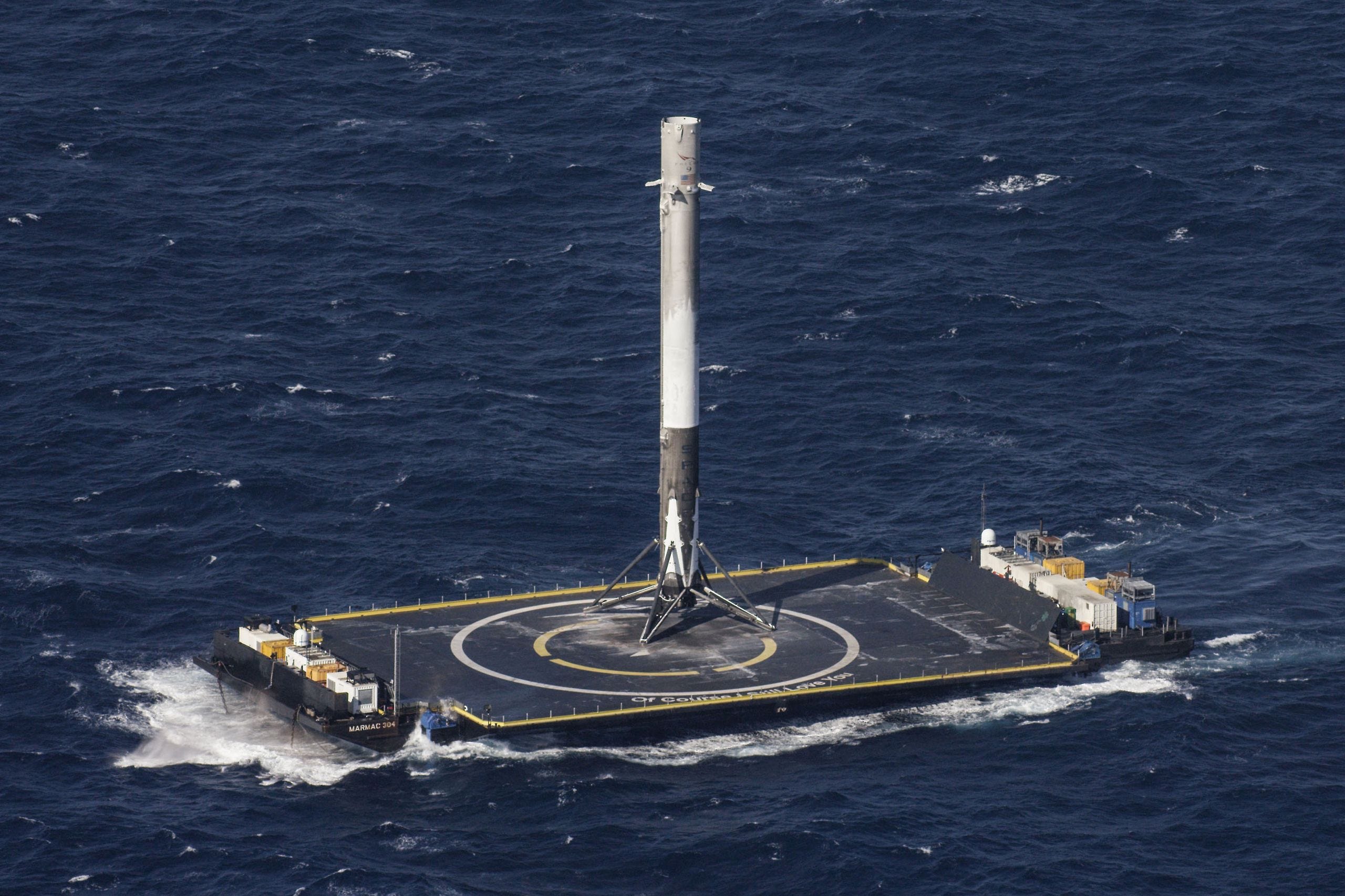
This dominance is reinforced by procurement decisions.
Under NSSL Phase 3 Lane 1, SpaceX has captured every task order issued so far, including a $739 million sweep of nine national-security missions for the Space Development Agency and the National Reconnaissance Office.
Under Phase 3 Lane 2, SpaceX shares an award pool with Blue Origin and United Launch Alliance for approximately 54 missions running from 2027 to roughly 2032.
SpaceX is expected to receive the largest share of those task orders given its current operational cadence.
Launch position summary
- 2025 Falcon launches: 165 (industry record)
- Cumulative Falcon successes: 646 of 649 (~99.54%)
- NSSL Phase 3 Lane 1: SpaceX has captured all task orders to date
- Phase 3 Lane 2: SpaceX, ULA, Blue Origin share ~54-mission pool
- Crew Dragon: only U.S. crewed orbital transport in active service
The reliability moat