

Verisk Analytics $VRSK ( ▼ 0.62% ) stands as a dominant force in the insurance data analytics sector, but the company faces both unprecedented opportunities and mounting pressures as it navigates an industry undergoing rapid transformation.
With AI reshaping the insurance ecosystem and climate-related losses surging to historic levels, Verisk’s strategic positioning over the next several years will determine whether it maintains its leadership or succumbs to emerging competitive threats.
The company reported third-quarter 2025 revenue of $768 million, representing 5.9% growth, yet simultaneously lowered its full-year revenue guidance to between $3.05 billion and $3.08 billion.
This cautious outlook reflects both operational headwinds and strategic recalibration following major acquisitions, including the pending $2.35 billion purchase of AccuLynx.
Table of Contents

Image source: verisk.com
Strengths: The Data Fortress That Defines an Industry
Unmatched Data Assets and Industry Entrenchment
Verisk’s most formidable strength lies in its unparalleled insurance data repository, accumulated over decades of serving the property and casualty insurance sector.
The company processes information from thousands of insurance carriers, creating network effects that become more valuable as participation increases. This data moat proves extraordinarily difficult for competitors to replicate.
According to market analysis, Verisk commanded a 22.92% market share in the Cloud Computing & Data Analytics sector as of Q1 2025. This dominant position stems from proprietary datasets covering claims histories, loss costs, fraud patterns, and catastrophe modeling that insurers depend upon for accurate risk assessment.
Data Asset Category
Business Impact
Competitive Advantage
Claims histories
Foundation for loss cost calculations
Decades of proprietary information unavailable elsewhere
Catastrophe models
Risk quantification for extreme events
Continuously validated against actual events
Fraud detection patterns
Reduces insurer losses
Machine learning algorithms trained on vast datasets
Forms and rating rules
Regulatory compliance support
State-by-state expertise across all jurisdictions
Subscription Revenue Model Provides Financial Stability
Verisk’s business model demonstrates remarkable resilience through economic cycles.
Subscription revenue represented 83% of total revenue in Q1 2025, with subscription growth reaching 8.7% in Q3 2025. This recurring revenue structure provides predictable cash flows that support consistent investment in product development and strategic acquisitions.
The subscription model creates switching costs for clients, as insurers integrate Verisk’s solutions deeply into their underwriting and claims workflows. Replacing these systems requires substantial time, expense, and operational disruption, creating powerful customer retention dynamics.
Strong Cash Flow Generation and Capital Allocation
The company’s financial performance demonstrates robust cash generation capabilities.
Free cash flow increased 39.6% to $336 million in Q3 2025, while net cash provided by operating activities grew 36.2% to $404 million. This cash generation supports Verisk’s capital allocation strategy of pursuing strategic acquisitions, returning capital to shareholders through dividends and buybacks, and investing in technology infrastructure.
The company maintained a net margin of 30.42% and return on equity of 425.42%, reflecting exceptional profitability. Adjusted EBITDA margins expanded to 55.8%, demonstrating operating leverage as revenue growth outpaces expense growth.
Financial Strength Metrics (Q3 2025):
- Free Cash Flow: $336.1 million (up 39.6%)
- Adjusted EBITDA Margin: 55.8%
- Return on Equity: 425.42%
- Net Margin: 30.42%
- Share Repurchase Activity: $100 million in Q3
Leadership in Catastrophe Modeling and Extreme Event Analytics
Verisk’s catastrophe modeling capabilities represent decades of scientific research and model development.
The company released its 2025 Global Modeled Catastrophe Losses report, estimating global average annual losses at $152 billion, a 25% increase compared to 2024 estimates. This leadership position in catastrophe risk assessment proves increasingly valuable as climate change drives more frequent and severe weather events.
On July 24, 2025, Verisk’s Wildfire model became the first catastrophe model to successfully complete evaluation by regulatory authorities. This milestone demonstrates the scientific rigor and reliability that differentiates Verisk’s modeling capabilities from competitors.
Accelerating AI and Generative AI Capabilities
Verisk has aggressively integrated artificial intelligence across its product portfolio.
In September 2025, the company launched XactAI, a suite of AI-powered capabilities designed to streamline property claims processing. XactAI includes automated photo labeling, note summarization, transcription summaries, and AI-driven expense categorization, all built with human oversight as a core design principle.
The company also introduced a Commercial GenAI Underwriting Assistant in September 2025, which automates workflows, ingests complex datasets, and delivers real-time risk appetite insights.
According to Verisk’s 2025 State of the Industry Survey, 69% of respondents believe AI and generative AI will have the most significant impact on the insurance industry over the next five years.
AI Solution
Launch Date
Target Segment
Key Capabilities
XactAI
September 2025
Property Claims
Photo labeling, note summarization, transcription
Commercial GenAI Assistant
September 2025
Commercial Underwriting
Workflow automation, data ingestion, risk assessment
Discovery Navigator
2025
Multiple Segments
Enhanced data discovery and analysis
Weaknesses: Structural Vulnerabilities in a Changing Market
Heavy Concentration in Insurance Industry Creates Vulnerability
Verisk’s revenue concentration within the insurance sector represents a significant structural weakness.
While this specialization has enabled deep domain expertise, it also means the company’s fortunes are tightly coupled to insurance industry dynamics. Any prolonged downturn in insurance premium growth, consolidation reducing the number of carriers, or shifts in how insurers procure analytics services could materially impact Verisk’s growth trajectory.
The company’s two business segments, Underwriting and Claims, both serve the insurance ecosystem exclusively. This lack of diversification means macroeconomic factors affecting insurers, such as investment portfolio losses or regulatory changes limiting premium increases, directly flow through to Verisk’s performance.
Revenue Growth Deceleration and Guidance Reduction
Verisk’s organic revenue growth has shown concerning deceleration patterns.
After achieving 7.9% organic constant currency growth in Q1 2025, growth slowed to 5.5% in Q3 2025. The company revised its 2025 revenue guidance downward from $3.09-3.13 billion to $3.05-3.08 billion, below the consensus analyst estimate of $3.12 billion.
CFO Elizabeth Mann attributed approximately 1% of the growth slowdown to “a historically low level of severe weather events” in Q3, highlighting how weather volatility can impact the Claims segment. This weather dependency creates unpredictable quarterly revenue patterns that complicate financial forecasting.
Organic Revenue Growth Trajectory:
Q1 2025: 7.9% (OCC basis)
Q2 2025: 7.9% (OCC basis)
Q3 2025: 5.5% (OCC basis)

Underwriting Segment Q3: 5.8% growth
Claims Segment Q3: 5.0% growth
Integration Risks from Major Acquisitions
Verisk’s aggressive acquisition strategy introduces execution and integration risks.
The pending $2.35 billion acquisition of AccuLynx has encountered regulatory scrutiny, with both companies receiving a Second Request from the Federal Trade Commission in October 2025. Such regulatory delays increase integration costs and create strategic uncertainty.
Beyond AccuLynx, Verisk acquired SuranceBay for $162.5 million and Nasdaq Risk Modelling for Catastrophes in 2025. Successfully integrating these acquisitions while maintaining organic growth requires exceptional execution capabilities.
Limited Geographic Diversification
While Verisk operates in more than 20 countries, its revenue remains heavily concentrated in the United States.
This geographic concentration exposes the company to regulatory changes, economic conditions, and competitive dynamics within a single market. International operations represented only a small portion of total revenue, limiting growth opportunities in faster-growing emerging insurance markets.
Competitors with more balanced geographic portfolios can better absorb regional downturns and capitalize on growth in diverse markets.
Rising Interest Expenses Pressure Profitability
The company’s debt-funded acquisition strategy has increased interest expense burdens.
Net interest expense rose to $42.2 million in Q3 2025 from $32.1 million in Q3 2024, a 31.5% increase. With debt facilities totaling approximately $2 billion supporting the AccuLynx acquisition and $700 million in senior notes issued in August 2025, interest expenses will continue pressuring margins unless offset by accelerated revenue growth.
Opportunities: Capitalizing on Industry Transformation
Explosive Growth in Insurance Analytics Market
The insurance analytics market presents substantial expansion opportunities.
The U.S. insurance analytics market generated $3.55 billion in revenue in 2024 and is projected to reach $7.57 billion by 2030, according to industry analyses. While Verisk should avoid relying on projections from less reliable sources, multiple independent assessments indicate strong double-digit growth ahead.
This market expansion is driven by insurers’ urgent need to improve underwriting profitability, detect fraud more effectively, and enhance operational efficiency through automation. Verisk’s comprehensive product portfolio positions it to capture disproportionate share of this growth.
Market Driver
Impact on Verisk
Addressable Opportunity
AI adoption acceleration
Increased demand for AI-powered solutions
XactAI and GenAI Assistant uptake
Climate risk quantification
Greater catastrophe model usage
Expansion in extreme event solutions
Fraud detection needs
Anti-fraud solution deployment
Claims analytics growth
Regulatory compliance
Forms, rules, and rating services
Underwriting segment expansion
Expansion into Adjacent Verticals
Verisk’s data analytics capabilities are transferable to industries beyond insurance.
The company has begun exploring life insurance and annuities through the SuranceBay acquisition. Healthcare, financial services, and government risk management represent additional sectors where Verisk’s expertise in data analytics, fraud detection, and risk modeling could create value.
Entering adjacent verticals would reduce industry concentration risk while leveraging existing technological infrastructure and analytical capabilities. The key challenge involves adapting insurance-specific solutions to different regulatory environments and business models.
Strategic Ecosystem Expansion Through Partnerships
Verisk is building a more integrated ecosystem connecting insurers, contractors, and technology providers.
Partnerships with One Inc and OneClick Code strengthen Verisk’s integrated platform capabilities. The AccuLynx acquisition, once completed, will extend Verisk’s reach into the contractor ecosystem, creating a network connecting property damage assessment, claims processing, and repair execution.
These ecosystem plays increase switching costs and create additional revenue opportunities through transaction fees, workflow automation, and data insights generated from ecosystem interactions.
Climate Change Driving Catastrophe Modeling Demand
Accelerating climate change is fundamentally reshaping insurance risk assessment.
Verisk estimated industry insured losses from Hurricane Beryl at $2-3 billion in July 2025. The company’s report showing 25% growth in modeled catastrophe losses demonstrates how climate volatility is driving unprecedented demand for sophisticated risk modeling.
Insurers and reinsurers increasingly rely on catastrophe models to price policies, manage portfolio risk, and meet regulatory capital requirements. Verisk’s continuous model enhancements, validated against real-world events, position it as an indispensable partner as the frequency and severity of extreme events increase.
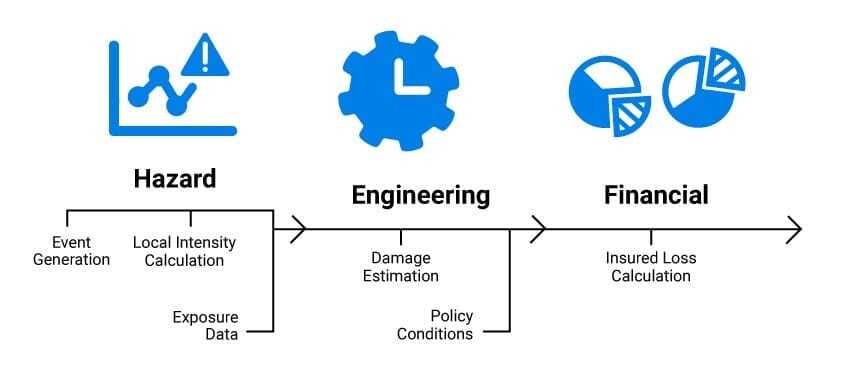
Image source: verisk.com
Digital Transformation and Cloud Migration
The insurance industry’s ongoing digital transformation creates opportunities for cloud-based solutions.
Legacy insurers are migrating from on-premise systems to cloud infrastructure, creating demand for SaaS-based analytics and underwriting platforms. Verisk’s cloud-native solutions, including the Commercial GenAI Underwriting Assistant and XactAI, align with this industry shift.
Cloud deployment reduces implementation timelines, lowers upfront costs for insurers, and enables Verisk to update solutions continuously without customer intervention. This model also generates higher-margin recurring revenue compared to traditional software licensing.
Generative AI Creating New Product Categories
Generative AI technology is enabling product categories that were previously impossible.
The 69% of insurance industry respondents who believe AI will significantly impact the industry over the next five years represent a massive addressable market for AI-powered solutions. Early movers in embedding trusted, enterprise-grade AI capabilities will capture disproportionate value.
Verisk’s approach of combining generative AI with proprietary datasets and human oversight addresses insurers’ concerns about AI reliability and regulatory compliance. This responsible AI framework could become an industry standard, further entrenching Verisk’s position.
Threats: Navigating an Increasingly Complex Risk Environment
Intensifying Competition from Technology Giants and Specialized Players
Verisk faces mounting competitive pressure from multiple directions.
Within the insurance analytics sector, LexisNexis, CoreLogic, and Willis Towers Watson compete directly in various product categories. These competitors are also investing aggressively in AI capabilities and expanding their data assets through acquisitions and partnerships.
More concerning is potential entry by technology giants with vast computational resources and AI expertise.
Companies like Microsoft, Google, and Amazon possess cloud infrastructure, machine learning capabilities, and capital that could rapidly challenge Verisk’s dominance if they targeted insurance analytics seriously.
Competitor Type
Competitive Threat
Verisk’s Defensive Moat
Traditional analytics firms
Established client relationships
Proprietary data and embedded workflows
InsurTech startups
Innovation and agility
Scale, validation, and breadth
Technology giants
Resources and AI capabilities
Domain expertise and regulatory knowledge
Consulting firms
Enterprise relationships
Product depth and continuous data updates
Microsoft SWOT Analysis (2025)
www.deepresearchglobal.com/p/microsoft-swot-analysis

www.deepresearchglobal.com/p/alphabet-swot-analysis
www.deepresearchglobal.com/p/amazon-swot-analysis
Data Privacy and Cybersecurity Risks
Verisk’s business model depends entirely on maintaining trust in its data handling practices.
Increasing data privacy regulations, including state-level legislation across the United States, create compliance burdens and potential liability. Data privacy has become an important focus for state legislatures and a growing source of potential liability for companies handling sensitive information.
Any significant data breach or privacy violation could result in regulatory penalties, litigation, client defections, and reputational damage that would be extraordinarily difficult to repair. The company’s massive data repositories make it an attractive target for sophisticated cyberattacks.
Regulatory Scrutiny and Antitrust Concerns
Verisk’s market dominance invites regulatory attention.
The FTC’s Second Request regarding the AccuLynx acquisition demonstrates heightened scrutiny of Verisk’s acquisition strategy. Previously, the FTC challenged Verisk’s proposed $650 million acquisition of EagleView Technology Corporation, alleging it would create a virtual monopoly in rooftop aerial measurement products.
Future acquisitions may face more extensive review, and regulators could potentially seek to limit Verisk’s data collection practices or mandate data sharing with competitors. Such interventions would fundamentally alter the company’s competitive advantages.
Economic Downturns Impacting Insurance Industry
Macroeconomic weakness directly impacts insurance carrier profitability and spending.
During economic downturns, insurance premium growth typically slows as businesses reduce coverage and consumers seek lower-cost policies. Carrier profitability suffers from investment portfolio losses and increased loss ratios, leading to reduced spending on analytics and technology solutions.
While Verisk’s subscription model provides some insulation, renewals can be delayed or canceled, and new product adoption slows when insurers focus on cost reduction rather than innovation.
Technology Disruption and Legacy System Replacement
Emerging technologies could disrupt Verisk’s established business model.
Advances in open-source analytics, decentralized data marketplaces, and industry consortiums could reduce dependence on proprietary data providers. If insurers successfully collaborate to create shared data resources, Verisk’s data moat would erode.
Additionally, the rapid pace of AI advancement means Verisk must continuously invest to maintain technological leadership. A failure to keep pace with AI innovation could allow nimbler competitors to offer superior solutions, even with smaller data sets.
Climate Change Creating Modeling Uncertainty
Ironically, climate change presents both opportunity and threat.
As weather patterns become more extreme and unpredictable, historical data becomes less reliable for forecasting future losses. Catastrophe models built on historical patterns may fail to accurately predict emerging risk distributions, potentially leading to significant model errors.
Any high-profile modeling failure where Verisk’s predictions materially diverge from actual losses could damage credibility and prompt insurers to diversify their modeling vendors. The company must continuously update models to reflect changing climate realities while managing the inherent uncertainty in projecting unprecedented conditions.
Strategic Priorities for 2026 and Beyond
Accelerate AI Integration Across Product Portfolio
Verisk must embed AI capabilities throughout its solution set, not just in flagship products.
The success of XactAI and the Commercial GenAI Assistant should be replicated across other offerings, creating a comprehensive AI-powered platform that delivers measurable productivity gains and accuracy improvements. Quantifying the ROI of AI features will prove essential for driving adoption.
The company should also explore how AI can enhance internal operations, from customer support to model development, creating efficiency gains that support margin expansion.
Diversify Revenue Streams Beyond Core Insurance
Strategic expansion into adjacent markets reduces concentration risk.
Life insurance and annuities represent a logical starting point through SuranceBay. Healthcare payer analytics, pension fund risk management, and corporate insurance procurement represent additional opportunities where Verisk’s capabilities apply.
Each new vertical requires substantial upfront investment in customization and market development, but successful diversification would stabilize revenue growth and create new vectors for expansion.
Strengthen Global Presence
International expansion remains underdeveloped relative to opportunity.
Emerging insurance markets in Asia, Latin America, and Africa are growing faster than developed markets. While these regions present execution challenges including different regulatory frameworks and data availability limitations, establishing positions now could yield substantial long-term returns.
Acquisitions of regional analytics providers could accelerate international expansion while providing local expertise and client relationships.
Build Defensive Moats Through Ecosystem Lock-In
Creating a tightly integrated ecosystem increases switching costs beyond data alone.
The vision of connecting insurers, contractors, policyholders, and service providers through Verisk platforms could create network effects that make the company’s solutions indispensable. Successful execution of this strategy requires not only technology integration but also change management across diverse stakeholder groups.
Invest Aggressively in Catastrophe Modeling Innovation
Climate change ensures catastrophe modeling will remain critical for decades.
Verisk should maintain its leadership through continuous investment in model refinement, incorporation of climate science advances, and expansion to cover emerging perils. The company’s successful regulatory approval of its wildfire model demonstrates the value of this investment.
Partnerships with academic institutions, climate scientists, and government agencies could accelerate model development while building credibility with regulators and clients.
My Final Thoughts
Verisk Analytics occupies an enviable position at the intersection of insurance industry necessity and technological transformation. The company’s proprietary data assets, embedded client relationships, and subscription-based revenue model create formidable competitive advantages that will not easily erode.
However, the path forward demands more than defending existing positions.
Verisk must simultaneously integrate transformative AI capabilities, expand beyond its core insurance focus, navigate regulatory scrutiny, and continuously enhance its models to address climate-driven uncertainty. The margin for execution missteps has narrowed considerably.
For investors, Verisk represents a strategic bet on data assets retaining value in an AI-dominated future.
The company’s success integrating generative AI while maintaining its proprietary data advantages will determine whether it strengthens its moat or gradually loses differentiation as AI capabilities democratize across competitors.
The significant capital deployed on acquisitions must generate returns that justify the execution risk and balance sheet pressure they create.
The next three years will prove pivotal. Insurers confronting unprecedented catastrophe losses and profitability pressures need Verisk’s solutions more than ever.
Whether the company captures this moment of maximum relevance or watches nimbler competitors steal share will depend on execution excellence across strategy, technology, and client engagement.
The fundamentals support optimism, but complacency remains the greatest threat to continued dominance.
Disclaimer: This analysis is for informational purposes only and should not be construed as investment advice. Investors should conduct their own due diligence and consult with financial advisors before making investment decisions.