

Vertex Pharmaceuticals Incorporated $VRTX ( ▼ 0.03% ) has been a distinctive player with a strong foundation in specialized therapeutics and an ambitious pipeline extending into multiple disease areas.
For investors evaluating opportunities in the biotechnology sector, understanding Vertex’s strategic position requires a thorough examination of its internal capabilities, external opportunities, and the challenges that may shape its trajectory through 2026 and beyond.
Table of Contents
Understanding Vertex Pharmaceuticals: Company Overview
Vertex Pharmaceuticals Incorporated operates as a global biotechnology company investing in scientific innovation to create transformative medicines for people with serious diseases.
Founded in 1989 with global headquarters in Boston and international headquarters in London, the company has established research and development sites and commercial offices across North America, Europe, Australia, Latin America, and the Middle East.
As of the third quarter of 2025, Vertex reported total revenues of $3.08 billion, representing an 11% increase compared to the same period in 2024. The company refined its full year 2025 revenue guidance to $11.9 to $12.0 billion, reflecting continued growth across its product portfolio and multiple ongoing launches.
With approximately $12.0 billion in cash, cash equivalents, and marketable securities, Vertex maintains a robust financial foundation to support its extensive research and development initiatives.
Strengths: Foundational Advantages Driving Competitive Position
Dominant Leadership in Cystic Fibrosis Treatment
Vertex’s most significant strength lies in its unparalleled dominance in the cystic fibrosis treatment market. After more than 20 years of dedicated research, the company has developed CFTR modulators that can treat nearly 95 percent of all people living with CF in core markets, with approvals for patients as young as one month old.
CF Product Portfolio Performance (Q3 2025)
Revenue
Key Markets
TRIKAFTA/KAFTRIO
$2.65 billion
U.S., Europe, International
ALYFTREK (next-generation)
$247 million
U.S., UK, EU, Canada, New Zealand, Switzerland
Other CF products (KALYDECO, ORKAMBI, SYMDEKO/SYMKEVI)
$157 million
Various markets
The launch of ALYFTREK, approved by the European Commission and Health Canada in July 2025, represents a strategic advancement. This next-generation therapy has demonstrated greater reductions in sweat chloride compared to TRIKAFTA in Phase 3 trials, suggesting potential for even greater improvements in patient outcomes. The U.S. launch is progressing well across all eligible patient groups, while launches outside the U.S. are showing strong momentum in multiple markets.
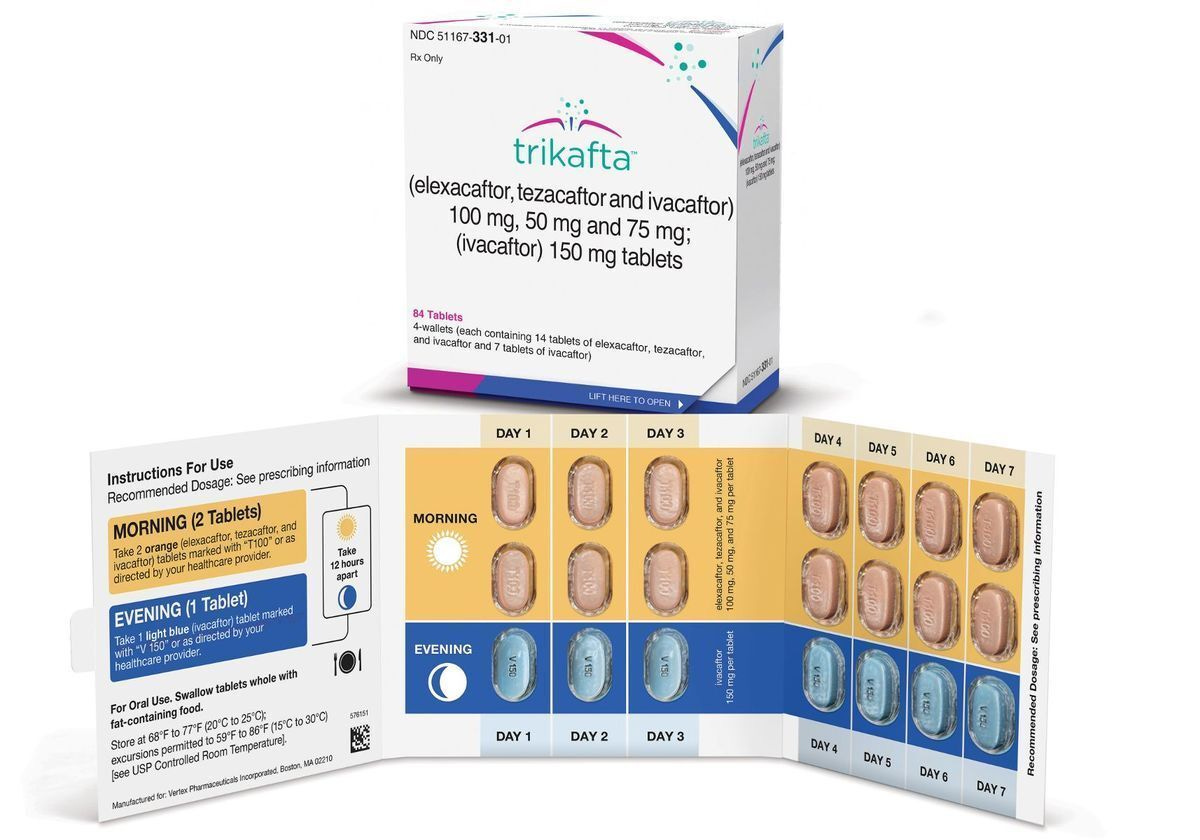
Image source: the-scientist.com
Pioneering Gene Therapy Success with CASGEVY
Vertex’s collaboration with CRISPR Therapeutics resulted in CASGEVY, the first CRISPR/Cas9 gene-edited cell therapy approved in the United States for treating severe sickle cell disease (SCD) and transfusion-dependent beta thalassemia (TDT). This groundbreaking therapy received FDA approval in December 2023, marking a historic milestone in medical science.
CASGEVY is now approved in multiple regions including the U.S., Great Britain, the EU, Saudi Arabia, Bahrain, Qatar, Canada, Switzerland, and the United Arab Emirates. The therapy has demonstrated the ability to reduce or eliminate vaso-occlusive crises for SCD patients and transfusion requirements for TDT patients. Through September 30, 2025, approximately 165 people with SCD or TDT have had their first cell collection for CASGEVY, with 39 people having received infusions.
The eligible patient population across approved countries exceeds 60,000, including approximately 37,000 in North America and Europe and more than 23,000 in the Middle East. Reimbursement agreements are expanding, with Italy announced in September 2025, representing the largest population of people with TDT in Europe.
First-in-Class Non-Opioid Pain Treatment
The January 2025 FDA approval of JOURNAVX (suzetrigine) represents the first new non-opioid analgesic class for acute pain in over 20 years. This oral, selective NaV1.8 pain signal inhibitor addresses a substantial unmet need given the ongoing opioid crisis.
Since becoming available at pharmacies in early March 2025, more than 300,000 prescriptions for JOURNAVX have been written and filled across hospital and retail settings. As of mid-October 2025, more than 170 million individuals have covered access to JOURNAVX, representing over half of U.S. covered lives. Approximately 90 of Vertex’s targeted 150 large healthcare systems and more than 750 individual hospitals have added JOURNAVX to formularies, protocols, or order sets.
Robust Financial Performance and Resources
Vertex’s financial strength provides a critical foundation for its research and development ambitions. The company’s Q3 2025 financial results demonstrate consistent growth and profitability:
Financial Metric
Q3 2025
Q3 2024
Change
Total Revenue
$3.08 billion
$2.77 billion
+11%
GAAP Net Income
$1.08 billion
$1.05 billion
+4%
Non-GAAP Net Income
$1.24 billion
$1.14 billion
+8%
Cash & Marketable Securities
$12.0 billion
$11.2 billion (Dec 2024)
+7%
The company generates approximately $3.3 billion in free cash flow annually, which analysts expect to climb steadily as its cystic fibrosis franchise expands and new therapies launch. This financial position enables Vertex to invest substantially in R&D while also returning value to shareholders through share repurchase programs.
Expansive and Diversified Clinical Pipeline
Vertex has strategically diversified beyond cystic fibrosis into multiple therapeutic areas with significant unmet medical needs. The company currently has five programs in pivotal development:
Type 1 Diabetes
Zimislecel (formerly VX-880), a stem cell-derived, fully differentiated islet cell therapy, has completed enrollment in its Phase 1/2/3 study. The therapy has received Regenerative Medicine Advanced Therapy (RMAT) and Fast Track designations from the FDA, along with Priority Medicines (PRIME) designation from the European Medicines Agency.
IgA Nephropathy and Kidney Diseases
Povetacicept, a dual inhibitor of BAFF and APRIL cytokines, has received Breakthrough Therapy Designation and a rolling BLA review from the FDA. Vertex completed enrollment of the interim analysis cohort for potential accelerated approval and is on track to submit the first module of the IgAN BLA to the FDA before the end of 2025. The company recently initiated a Phase 2/3 pivotal study in primary membranous nephropathy (pMN), where the FDA granted Fast Track designation.
APOL1-Mediated Kidney Disease
In September 2025, Vertex completed enrollment in the interim analysis cohort of the AMPLITUDE Phase 2/3 trial of inaxaplin, pioneering a new class of oral, small molecule inhibitors that targets the underlying cause of this genetic kidney disease.
Scientific Excellence and Innovation Capabilities
Vertex scientists were awarded the 2025 Lasker~DeBakey Clinical Medical Research Award for pioneering discoveries in cystic fibrosis, one of medicine’s most prestigious honors. This recognition validates the company’s scientific approach and expertise in translating basic research into transformative therapies.
The company’s research platform spans multiple modalities including small molecules, biologics, gene editing, cell therapies, and oligonucleotides, providing flexibility to address diverse disease mechanisms.
Weaknesses: Internal Challenges Requiring Strategic Attention
Heavy Revenue Concentration in Cystic Fibrosis
Despite diversification efforts, Vertex remains significantly dependent on its cystic fibrosis franchise. In the nine months ended September 30, 2025, CF products generated $8.78 billion out of total product revenues of $8.78 billion, representing over 93% of total revenues when excluding newer product contributions.
This concentration creates vulnerability if CF market dynamics shift due to:
Risk Factors for CF Revenue Concentration:
- Patent expiration timelines (TRIKAFTA main U.S. patent expires 2037)
- Potential competitive entry
- Pricing pressures from payers
- Market saturation as patient penetration increases
- Regulatory changes affecting reimbursement
While ALYFTREK provides a newer generation option with patent protection extending to 2039, the fundamental dependence on a single disease area limits the company’s resilience against market disruptions.
Complex and Capital-Intensive Cell Therapy Manufacturing
CASGEVY’s manufacturing process presents substantial operational challenges. As an ex vivo, autologous cell therapy, each treatment requires:
Patient cell collection through apheresis
Shipment to specialized manufacturing facilities
CRISPR/Cas9 gene editing of the patient’s own cells
Quality testing and validation
Cryopreservation and return shipment
Patient conditioning and infusion
This complexity limits treatment capacity and creates logistical barriers to widespread adoption. Through Q3 2025, only 39 patients had received CASGEVY infusions globally since launch, despite 165 having completed cell collection. The therapy’s pricing at approximately $2.2 million per treatment creates additional access challenges, even with reimbursement agreements.
Pipeline Execution Risks and Development Setbacks
Several pipeline programs face execution challenges that could impact commercialization timelines:
Type 1 Diabetes Program Delays
Vertex announced in March 2025 that it had temporarily postponed completion of dosing in the zimislecel study pending an internal manufacturing analysis. While enrollment has been completed, any extended delays could allow competitors to advance their own islet cell therapy programs.
Pain Program Challenges
While JOURNAVX gained approval for acute pain, the Phase 3 program evaluating suzetrigine for diabetic peripheral neuropathy (DPN), a form of peripheral neuropathic pain, is still enrolling and won’t complete until the end of 2026. Success in chronic pain indications is not guaranteed and faces different regulatory standards than acute pain.
Early-Stage Program Uncertainties
Multiple programs remain in early clinical stages, including VX-670 for myotonic dystrophy type 1, VX-407 for autosomal dominant polycystic kidney disease, and VX-522 for CF patients who cannot benefit from CFTR modulators. These programs carry typical early-stage development risks.
Limited Geographic Diversification
While Vertex has international operations, revenue generation remains heavily concentrated in developed markets, particularly the United States. In Q3 2025, U.S. revenue was $1.98 billion (64% of total), while outside the U.S. revenue was $1.10 billion (36%).
This geographic concentration creates exposure to U.S.-specific regulatory, reimbursement, and pricing dynamics. Expansion into emerging markets faces barriers including:
Complex regulatory approval pathways
Limited healthcare infrastructure for specialized therapies
Lower pricing and reimbursement levels
Competition from lower-cost alternatives
Elevated Operating Expense Growth
Vertex’s combined GAAP R&D, AIPR&D, and SG&A expenses increased to $1.9 billion in Q3 2025 from $1.7 billion in Q3 2024, driven by increased R&D investment across multiple mid- and late-stage programs and commercial investment supporting new launches. The company revised full year 2025 guidance for combined expenses to $5.65 to $5.8 billion (GAAP) and $5.0 to $5.1 billion (non-GAAP), up from previous guidance.
While these investments support growth, they pressure margins and require successful commercialization of new products to justify the spending increases.
Opportunities: External Factors Enabling Growth
Expanding Addressable Patient Populations
Vertex’s opportunity to treat younger CF patients continues to expand. In October 2025, the company completed the pivotal study of TRIKAFTA in children 12 months to under 24 months of age, with data showing the treatment was safe, well-tolerated, and resulted in rapid, robust sweat chloride reduction. Vertex expects to submit for approval with global regulators in the first half of 2026.
Similarly, enrollment was recently completed in the global study of ALYFTREK in children 2 to 5 years of age, with results expected in the first half of 2026. These label expansions would:
Benefits of Younger Patient Treatment:
+ Increase lifetime value per patient
+ Enable earlier disease intervention
+ Improve long-term patient outcomes
+ Expand eligible patient pool
+ Extend competitive advantages
+ Create higher barriers to competitive entry
For CASGEVY, Vertex has completed enrollment of children 5 to 11 years of age with SCD or TDT in two global Phase 3 studies and is on track to complete dosing in Q4 2025, with emerging data to be presented at the American Society of Hematology annual meeting in December 2025.
Multiple Near-Term Regulatory Catalysts
Vertex has positioned itself for several potential regulatory approvals that could drive significant value creation:
Program
Indication
Expected Milestone
Patient Population
Povetacicept
IgA Nephropathy
BLA first module submission by end of 2025; potential accelerated approval H1 2026
~150,000 U.S. patients
Inaxaplin
APOL1-Mediated Kidney Disease
Interim analysis completion; potential accelerated approval filing
~100,000 at-risk individuals
TRIKAFTA
CF (12-24 months)
Regulatory submission H1 2026
Expands CF addressable population
ALYFTREK
CF (2-5 years)
Data readout H1 2026
Further expands CF market
The FDA’s Breakthrough Therapy Designation for povetacicept in IgAN and subsequent rolling BLA review signal strong regulatory alignment. If approved, povetacicept would address a significant unmet need, as IgAN is the most common primary glomerular disease worldwide and a leading cause of kidney failure.
Strategic Positioning in High-Value Rare Disease Markets
Vertex’s focus on rare and serious diseases with limited treatment options positions the company to command premium pricing and face less price-based competition. This strategic positioning offers several advantages:
Market Dynamics Favoring Rare Disease Focus:
Higher willingness-to-pay from payers for transformative therapies
Orphan drug designations providing regulatory and commercial benefits
Limited competition in many target indications
Faster regulatory pathways (accelerated approval, breakthrough designation)
Strong patient advocacy support
Less vulnerability to generic competition
The company’s APOL1 program exemplifies this approach. APOL1-mediated kidney disease disproportionately affects individuals of recent African ancestry, representing a genetically defined patient population with significant unmet need and no current targeted therapies.
Portfolio Approach Enabling Multiple Commercial Success Paths
Unlike companies dependent on single assets, Vertex’s multi-program pipeline creates multiple pathways to commercial success. The company takes a portfolio approach within disease areas, advancing multiple assets or mechanisms simultaneously.
For example, in pain:
JOURNAVX approved for acute pain
Suzetrigine advancing in Phase 3 for peripheral neuropathic pain
VX-993 in Phase 2 for painful diabetic peripheral neuropathy
Preclinical NaV1.7 inhibitors for additional pain indications
In Type 1 Diabetes:
Zimislecel (fully differentiated islets) in pivotal development
Research programs for improved immunosuppression
Gene editing approaches
Novel immunoprotection/encapsulation methods
This portfolio approach increases the probability that at least one asset in each therapeutic area will succeed, reducing binary risk.
Growing Acceptance of Gene and Cell Therapies
The broader healthcare ecosystem is becoming more receptive to gene and cell therapies, which benefits Vertex’s CASGEVY program and future cell therapy efforts:
Infrastructure Development:
Hospitals establishing specialized cell therapy programs
Payers developing coverage frameworks for one-time curative therapies
Manufacturing capacity expanding across the industry
Patient awareness and acceptance increasing
Clinical expertise growing among healthcare providers
The approval of CASGEVY and competing therapies validates the treatment modality and helps establish reimbursement precedents that will benefit future gene-edited therapies. As the infrastructure matures, Vertex’s cell therapy platform could be applied to additional disease areas beyond SCD and TDT.
Potential for Strategic Business Development
With $12.0 billion in cash and marketable securities as of September 30, 2025, Vertex possesses substantial financial resources for strategic acquisitions or partnerships. The company has demonstrated willingness to pursue external innovation, as evidenced by its $4.9 billion acquisition of Alpine Immune Sciences in 2024, which brought the povetacicept program into Vertex’s portfolio.
Potential business development opportunities include:
Acquiring complementary pipeline assets in existing therapeutic areas
Licensing technologies that enhance drug delivery or efficacy
Partnering for geographic expansion in markets where Vertex lacks infrastructure
Accessing novel platforms or modalities
Acquiring early-stage companies with innovative science
Threats: External Challenges to Strategic Execution
Intensifying Competitive Dynamics Across Key Markets
While Vertex has enjoyed relative competitive insulation in cystic fibrosis, potential competition exists from multiple angles:
CF Market Competition:
Several companies have attempted to develop competing CFTR modulators, though none has succeeded to date. Sionna Therapeutics recently acquired AbbVie’s CF programs and is attempting to develop them, though significant scientific and clinical hurdles remain. Additionally, emerging therapeutic approaches including:
mRNA therapies (Vertex’s own VX-522 and potential competitors)
Gene editing approaches targeting CFTR
Novel small molecules with different mechanisms
Gene Therapy Competition:
In the SCD/TDT space, bluebird bio’s Lyfgenia (approved alongside CASGEVY) and other gene therapies in development create competitive pressure. Different approaches including:
Lentiviral vector-based therapies
Alternative gene editing platforms
Autologous vs. allogeneic approaches
Pain Market Competition:
The non-opioid pain market is attracting substantial interest. Multiple companies are developing:
Alternative sodium channel inhibitors
Other novel mechanisms for pain management
Reformulations of existing molecules
Combination therapies
Competitive Threat
Source
Impact Timeline
Risk Level
CF small molecules
Sionna, others
2028+
Low-Medium
CF gene therapies
Multiple developers
2027+
Medium
SCD/TDT gene therapies
bluebird bio, others
Current
Medium
NaV inhibitors for pain
Multiple pharma
2026+
Medium-High
IgAN therapies
Calliditas, Novartis, others
Current
High
Pricing and Reimbursement Pressures
The pharmaceutical industry faces mounting pressure on drug pricing from multiple stakeholders. Healthcare systems are tightening constraints on drug prices globally, with particularly intense scrutiny on high-cost therapies.
U.S. Market Pressures:
Inflation Reduction Act provisions enabling Medicare drug price negotiations
Increased scrutiny from commercial payers
Growing use of restrictive formularies and prior authorization
Consumer advocacy demanding lower out-of-pocket costs
Political pressure from both parties for drug pricing reform
International Market Challenges:
European health technology assessment (HTA) bodies demanding greater evidence
Reference pricing systems limiting premium pricing
Government budget constraints limiting coverage
Increasing use of managed entry agreements
Pressure for international reference pricing
For Vertex specifically, CASGEVY’s $2.2 million price point and JOURNAVX’s premium pricing face particular scrutiny. While the company has secured some reimbursement agreements, negotiations remain ongoing in many markets, and unfavorable terms could significantly impact commercial potential.
Patent Expiration and Loss of Exclusivity Concerns
TRIKAFTA’s main U.S. patent expires in 2037, approximately 12 years from now. While ALYFTREK extends patent protection to 2039, the eventual loss of exclusivity for Vertex’s CF franchise represents a significant long-term threat.
Patent expiration typically triggers:
Generic competition reducing revenues by 70-90%
Accelerated market share erosion
Pricing pressure on branded products
Reduced profitability and cash flow
Need for new revenue sources
Vertex must successfully commercialize multiple non-CF programs well before 2037 to replace the inevitable CF revenue decline. This creates urgency around pipeline execution and diversification.
Clinical Development and Regulatory Risks
Vertex’s pipeline programs face typical biopharmaceutical development risks:
Clinical Trial Risks:
Efficacy endpoints may not be met in pivotal trials
Safety signals could emerge requiring program modifications or termination
Enrollment challenges could delay timelines
Competitive trial results could raise efficacy benchmarks
Manufacturing issues could impact product quality
Regulatory Risks:
FDA or other regulators may not grant approvals despite positive data
Additional studies may be required before approval
Label restrictions could limit commercial potential
Post-marketing requirements could impose ongoing obligations
Accelerated approvals may not convert to full approvals
The temporary pause in zimislecel dosing for manufacturing analysis exemplifies how unexpected issues can disrupt development timelines. For a company with Vertex’s valuation, successful pipeline execution is critical to justifying investor expectations.
Manufacturing and Supply Chain Vulnerabilities
Vertex’s products involve complex manufacturing processes, particularly for cell and gene therapies. Potential vulnerabilities include:
Manufacturing Risks:
Single-site dependencies creating concentration risk
Quality control failures leading to batch rejections
Capacity constraints limiting patient access
Technology transfer challenges for new facilities
Skilled workforce shortages
Supply Chain Risks:
Dependence on specialized suppliers for critical materials
Geopolitical tensions affecting international supply chains
Raw material shortages or quality issues
Logistics challenges for temperature-sensitive products
Regulatory compliance across multiple jurisdictions
The cell therapy manufacturing process for CASGEVY requires specialized facilities, equipment, and expertise that cannot be rapidly scaled or replicated. Any manufacturing disruption could significantly impact patient access and revenue.
Evolving Healthcare Policy and Regulatory Environment
Changes in healthcare policy and regulation could materially affect Vertex’s business:
U.S. Policy Risks:
Expansion of government negotiation authority under IRA
Potential elimination of accelerated approval pathway
Changes to orphan drug benefits or exclusivity
Modifications to patent law affecting biopharmaceuticals
Shifts in FDA leadership and regulatory philosophy
International Policy Risks:
European Pharmaceutical Strategy affecting pricing and market access
Brexit-related regulatory divergence creating complexity
Emerging market pricing controls limiting profitability
Data exclusivity changes affecting competitive protection
Health technology assessment becoming more restrictive
The political environment in major markets remains dynamic, with ongoing debates about drug pricing, healthcare access, and pharmaceutical innovation. Vertex must navigate this uncertainty while maintaining its innovation focus.
Strategic Recommendations for Investors
For investors evaluating Vertex Pharmaceuticals, several key considerations emerge from this SWOT analysis:
Investment Strengths to Monitor
Near-Term Catalysts:
Vertex has multiple potential value-creating events in 2026, including regulatory submissions for povetacicept in IgAN, potential accelerated approval for inaxaplin in AMKD, and label expansions for CF therapies in younger patients. These catalysts could drive meaningful stock appreciation if successful.
Financial Strength:
The company’s strong cash position ($12 billion) and robust free cash flow generation ($3.3 billion annually) provide flexibility for both organic investment and potential acquisitions while supporting shareholder returns.
Competitive Positioning:
Vertex’s CF franchise remains well-protected, with ALYFTREK extending the competitive moat and limited credible near-term competition. The company’s first-mover advantages in gene-edited therapies and NaV1.8 inhibition provide additional differentiation.
Key Risks Requiring Attention
Diversification Imperative:
Investors should closely monitor progress in non-CF programs, as successful diversification beyond CF is essential for long-term value creation. The company’s heavy dependence on CF revenues creates vulnerability if market dynamics shift unexpectedly.
Execution Capabilities:
Vertex’s ability to successfully commercialize CASGEVY, JOURNAVX, and future launches will be critical. Early indicators of adoption challenges or manufacturing constraints should be carefully evaluated.
Pipeline Productivity:
The company’s elevated R&D spending must translate into successful product approvals. Any pattern of clinical failures or regulatory setbacks would raise questions about R&D productivity and strategy.
Valuation Considerations
When evaluating Vertex’s valuation, investors should consider:
CF Franchise Sustainability: How long can Vertex maintain pricing and market share dominance in CF?
New Product Contribution: What revenue contribution from CASGEVY, JOURNAVX, and pipeline products is appropriate to model?
Pipeline Probability-Weighting: What success probabilities should be assigned to key development programs?
Operating Margin Trajectory: Will operating margins expand as new products scale, or will elevated R&D persist?
Competitive Threats: How should potential future competition be valued and timed?
The company’s guidance for 2025 revenues of $11.9 to $12.0 billion and the projection to exceed $12 billion by 2026 provide baseline assumptions, but investors must assess whether the pipeline can sustain growth beyond these near-term targets.
My Final Thoughts: A Pivotal Transition Period
Vertex Pharmaceuticals has successfully built an exceptional franchise in cystic fibrosis, generating substantial cash flows and establishing scientific credibility. Its expansion into gene therapy with CASGEVY and non-opioid pain treatment with JOURNAVX demonstrates the capability to innovate beyond its core franchise.
The strengths are substantial: scientific excellence, financial resources, regulatory expertise, and multiple shots on goal across the pipeline. The company’s leadership in CF provides a strong foundation and cash generation engine to fund diversification efforts.
However, the challenges are equally significant. Vertex must successfully execute on multiple fronts simultaneously: scaling new product launches, advancing a complex clinical pipeline, managing manufacturing complexity, and navigating an increasingly difficult pricing and reimbursement environment. The company’s heavy dependence on CF requires successful creation of new revenue streams well before patent expiration begins impacting the franchise in the mid-2030s.
For investors, Vertex represents a company in transition from rare disease specialist to diversified biopharmaceutical company. The next two to three years will be critical in determining whether this transition succeeds. Key indicators to monitor include:
Commercial traction for CASGEVY and JOURNAVX beyond initial launch enthusiasm
Clinical results from late-stage pipeline programs, particularly in kidney diseases
Successful regulatory approvals for new indications and patient populations
Ability to maintain CF pricing and market share while launching next-generation products
Strategic use of capital for business development and shareholder returns
Investors must weigh Vertex’s proven execution capabilities in CF against the uncertainties inherent in building a diversified, multi-franchise pharmaceutical business. Those with conviction in Vertex’s scientific platform and execution capabilities may view current challenges as opportunities, while more risk-averse investors may prefer to wait for clearer evidence of successful diversification before increasing exposure.
As Vertex progresses through 2026 and beyond, its ability to navigate these strategic crosscurrents will determine whether it joins the ranks of leading global pharmaceutical companies or remains primarily a cystic fibrosis specialist with ancillary franchises.
The substantial resources, scientific talent, and regulatory expertise are in place. Successful execution will determine the outcome.
Disclaimer: This analysis is for informational purposes only and should not be construed as investment advice. Investors should conduct their own due diligence and consult with financial advisors before making investment decisions.