

ASML Holding N.V., $ASML ( ▼ 1.89% ) a Dutch company, has achieved what few corporations can claim: an absolute monopoly in a critical technology segment.
For investors seeking exposure to the semiconductor value chain, understanding ASML’s strategic position through our comprehensive SWOT analysis provides essential insights into the company’s long-term investment potential.
Table of Contents
Understanding ASML’s Market Position
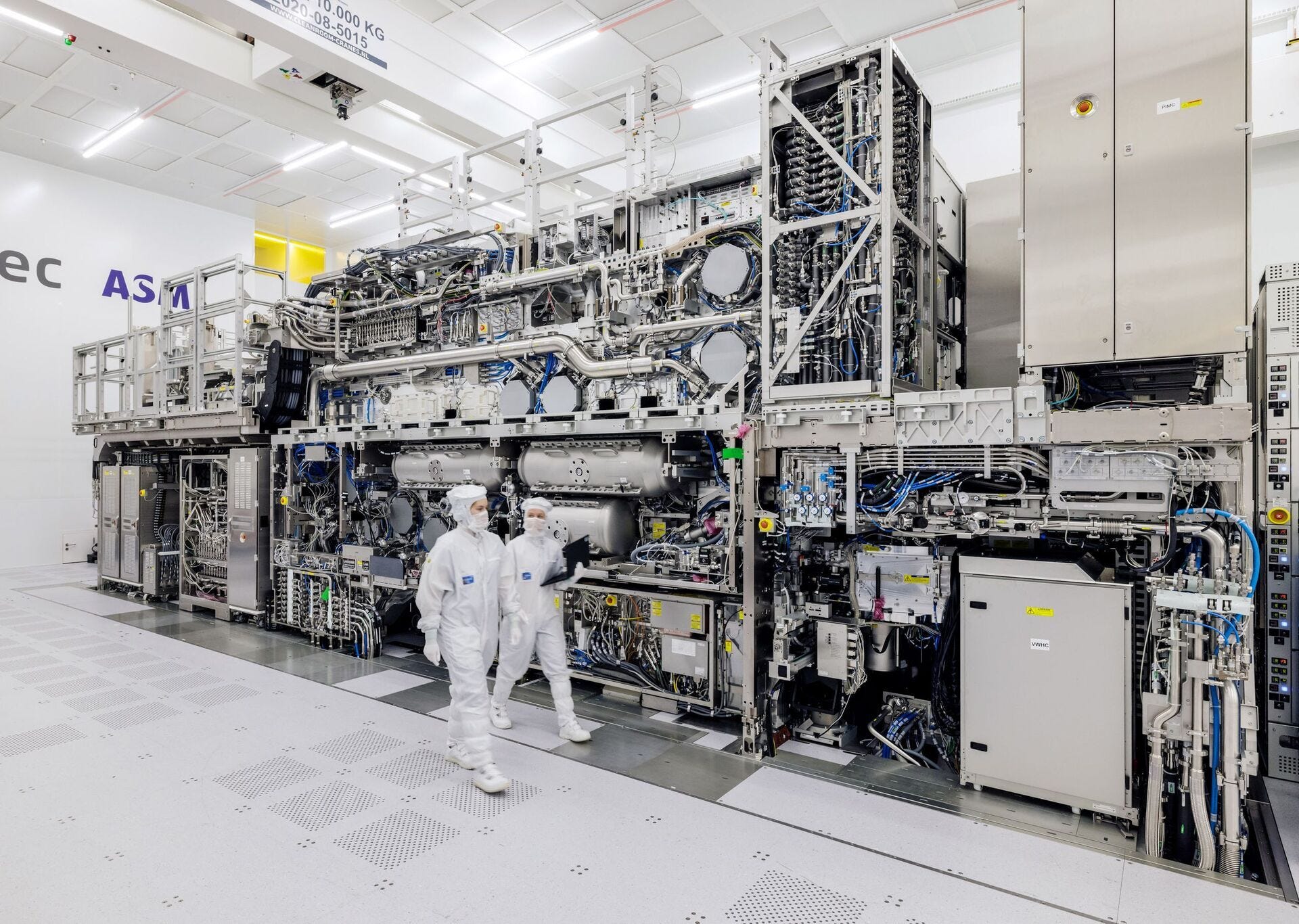
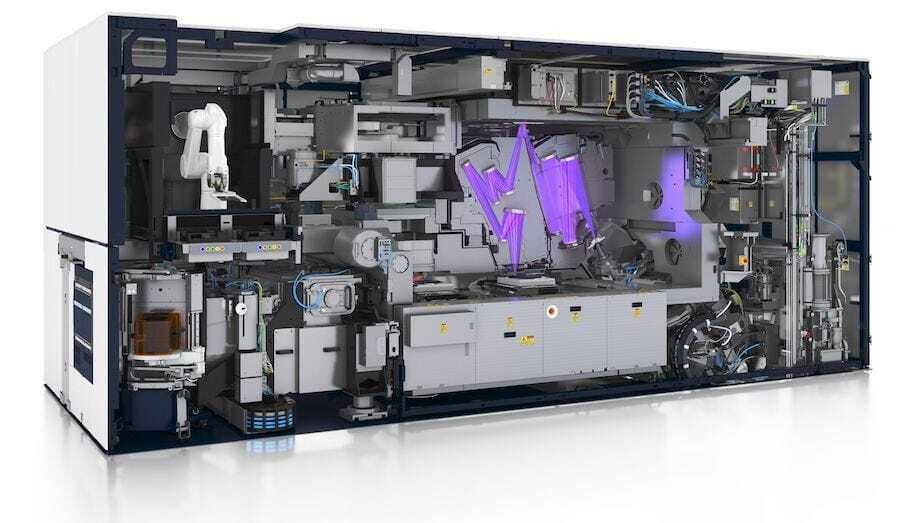
ASML operates as the sole global supplier of extreme ultraviolet (EUV) lithography systems, manufacturing machines that cost between $200 million to $400 million each.
These systems are indispensable for producing the most advanced semiconductor chips that power everything from smartphones to data centers. The company’s Q3 2025 financial results demonstrated resilience with total net sales of €7.5 billion and net income of €2.1 billion, maintaining a gross margin of 51.6%.
As the semiconductor market approaches the $1 trillion milestone projected for 2026, ASML’s strategic importance continues to intensify. The company expects total net sales growth of approximately 15% for full-year 2025, with management projecting revenues between €44 billion and €60 billion by 2030.
ASML Q3 2025 Financial Snapshot
=================================
Total Net Sales: €7.5 billion
Net Income: €2.1 billion
Gross Margin: 51.6%
EUV System Sales: €2.1 billion
Total Bookings: €5.4 billion
EUV Orders: €3.6 billion
Strengths: The Foundation of Dominance
Absolute EUV Monopoly
ASML’s most formidable strength lies in its complete monopoly of EUV lithography technology. The company holds 100% market share in this critical segment, with no competitors capable of producing equivalent systems. This position results from decades of research, billions in R&D investment, and complex intellectual property that creates insurmountable barriers to entry.
The company’s EUV machines use mirrors instead of lenses to reflect extreme ultraviolet light with wavelengths of just 13.5 nanometers. This precision enables chipmakers to etch circuit patterns at scales previously thought impossible. In Q3 2025 alone, EUV orders reached €3.6 billion, significantly exceeding analyst expectations of €2.22 billion.
Technology Leadership in High-NA EUV
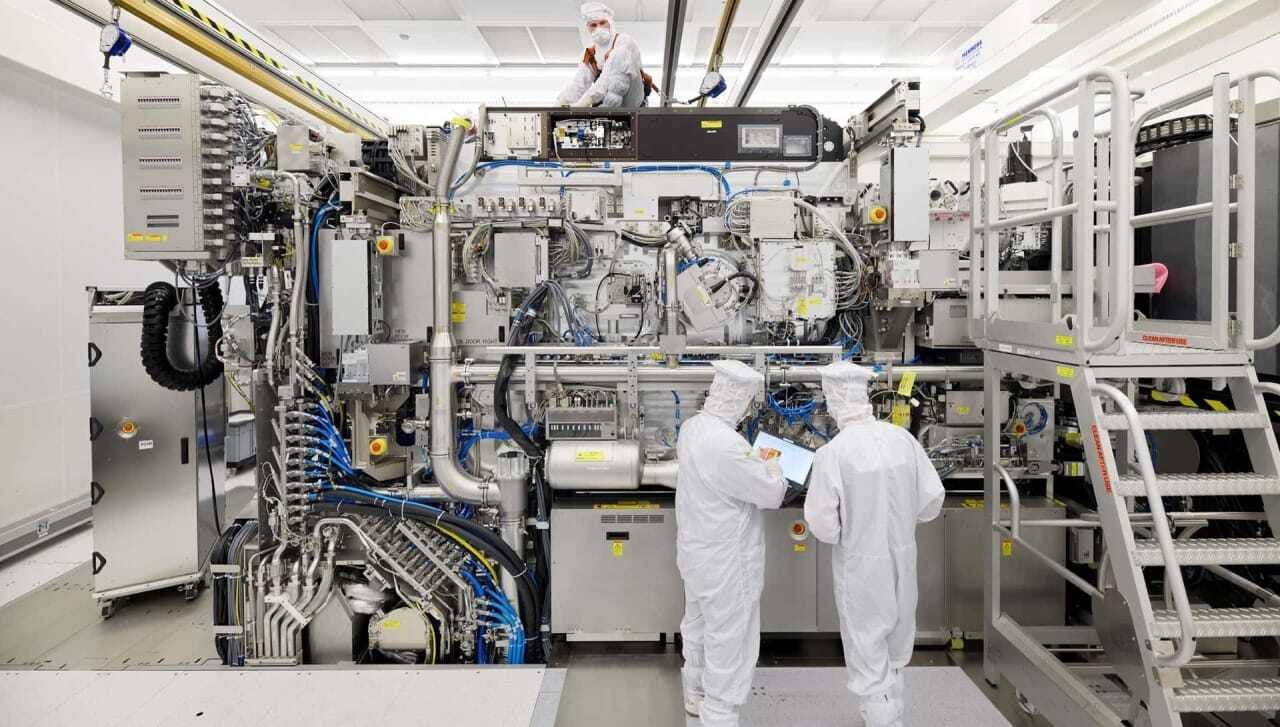
ASML’s next-generation High Numerical Aperture (High-NA) EUV systems represent another technological leap. These $400 million machines can pattern circuits approximately 1.7 times finer than current EUV tools. Intel became the first customer to receive High-NA systems, with Samsung ordering two units for deployment by mid-2026 for their 2nm foundry production.
TSMC, the world’s largest contract chipmaker, has also secured High-NA systems for 1.4nm chip development. ASML expects to ship three High-NA machines in 2026, with broader adoption anticipated as manufacturing processes advance toward angstrom-scale nodes.
Technology Generation
Capabilities
Customer Adoption
Timeline
Standard EUV
Sub-7nm production
TSMC, Samsung, Intel
Current production
High-NA EUV
Sub-2nm production, 1.7x finer patterns
Intel (deployed), Samsung (2026), TSMC (testing)
2025-2027
Future Hyper-NA
Sub-1nm theoretical
Research phase
Post-2030
Massive R&D Investment
ASML maintains its technological edge through extraordinary research and development spending. The company invested over €3 billion in R&D during 2024, making it the largest R&D investor in the Netherlands. For 2025, quarterly R&D costs are expected to reach approximately €1.2 billion, totaling nearly €5 billion annually.
This sustained investment enables ASML to maintain its technological lead over potential competitors. The company collaborates with research institutions, including partnerships with Mistral AI announced in September 2025 to embed artificial intelligence across its holistic portfolio, increasing system performance and customer process yield.
Robust Financial Performance and Backlog
ASML’s financial metrics reflect the strength of its market position. The company reported €7.74 billion in Q1 2025 revenue, representing a 46% increase year-over-year. Net income surged 92% to €2.36 billion in the same period. The profit margin expanded from 23% to 30%, driven by higher revenue and improved operational efficiency.
The company maintains a substantial order backlog of approximately €33 billion, providing multi-year revenue visibility. This backlog includes orders from all major chipmakers, with strong demand across both Logic and Memory segments. In Q3 2025, Logic accounted for 65% of net system sales, while Memory contributed 35%.
ASML Revenue Trajectory
=======================
2024: ~€28 billion
2025E: ~€32 billion (15% growth)
2030E: €44-60 billion target range

Gross Margin Outlook
====================
2025: ~52%
2030: 56-60% target range
Strategic Customer Relationships
ASML’s customer base consists exclusively of the world’s most advanced semiconductor manufacturers. The company’s three largest customers (TSMC, Samsung, and Intel) collectively invested €1.4 billion in ASML’s Customer Co-Investment Program for Innovation in 2012. This strategic alignment has created deep partnerships extending beyond traditional vendor relationships.
Intel - SWOT Analysis Report (2026)
www.deepresearchglobal.com/p/intel-swot-analysis-report
These customers depend entirely on ASML’s machines for their most advanced manufacturing nodes. TSMC, which controls over 50% of global foundry capacity, relies on ASML’s EUV systems for its 7nm, 5nm, 3nm, and future 2nm production. This customer concentration, while presenting risks, also demonstrates the irreplaceable nature of ASML’s technology.
Advanced Packaging Expansion
ASML recently shipped its first product serving Advanced Packaging: the TWINSCAN XT:260, an i-line scanneroffering up to 4x productivity improvement compared to existing solutions. This expansion into 3D integration and advanced packaging addresses growing demand for heterogeneous integration, where different chip types are combined in single packages.
The advanced packaging market is experiencing rapid growth as chipmakers seek alternatives to traditional scaling. This diversification provides ASML with additional revenue streams beyond traditional lithography.
Weaknesses: Vulnerabilities in Dominance
Extreme Customer Concentration
ASML faces significant business risk through its concentration on a handful of customers. The top three customers (TSMC, Samsung, Intel) account for the majority of EUV system orders. If any major customer reduces capital expenditure or delays facility construction, ASML’s revenue could experience substantial volatility.
During Q2 2025 earnings, ASML warned about potential 2026 growth challenges, citing customer hesitation regarding factory construction timing amid tariff uncertainty. This customer concentration creates quarterly revenue fluctuations that can impact investor confidence.
Geographic and Geopolitical Exposure
ASML’s operations face unique geopolitical pressures. The company generates significant revenue from China, with Q3 2025 sales representing 42% of quarterly revenue from Chinese customers. However, management warned that China sales in 2026 are expected to decline significantly compared to the strong performance in 2024 and 2025.
The Netherlands-based company operates under complex export control regimes. Updated U.S. export restrictions implemented in December 2024 further limit ASML’s ability to sell advanced DUV (Deep Ultraviolet) systems to Chinese customers. While management stated these restrictions fall within the company’s 2025 outlook, ongoing geopolitical tensions create long-term uncertainty.
Region
2025 Sales Contribution
Key Risks
Outlook 2026
China
25-42% of quarterly sales
Export restrictions, local competition development
Significant decline expected
Taiwan (TSMC)
~35% estimated
Cross-strait tensions, U.S.-China relations
Stable to growing
South Korea
~20% estimated
Memory market cyclicality
Stable with High-NA adoption
United States
~15% estimated
Intel foundry challenges
Growing with government incentives
Europe
~5% estimated
Limited fab construction
Limited growth
Complex Supply Chain Dependencies
ASML assembles extraordinarily complex machines containing over 100,000 components sourced from approximately 5,000 suppliers globally. Critical components include:
Optics systems from Zeiss SMT: The German company provides the ultra-precise mirror systems essential for EUV functionality
Light sources from Cymer (ASML subsidiary): Generates the 13.5nm wavelength EUV light
Rare earth elements from China: Essential for various optical and magnetic components
In October 2025, China implemented export controls on rare earth elements, including holmium, critical for ASML’s manufacturing. While ASML’s CFO stated the company maintains sufficient stockpiles due to long lead times, this incident highlighted supply chain vulnerability. Any disruption in this complex ecosystem could delay system deliveries and impact revenue recognition.
Limited Production Capacity
ASML’s EUV production capacity remains constrained by the extreme complexity of manufacturing these systems. Each machine requires 12 to 18 months to construct and contains precision components that few suppliers can produce. The company shipped 67 new lithography systems in Q3 2025, with annual EUV shipment capacity estimated at approximately 60 to 80 units.
This production bottleneck limits ASML’s ability to capitalize on peak demand periods. During the current AI-driven demand surge, some customers face extended delivery times. Expanding production capacity requires massive capital investment in specialized facilities and workforce development, constraining ASML’s ability to rapidly scale output.
High Product Cost and Customer Capital Intensity
EUV systems priced at $200 million, with High-NA systems reaching $400 million, create significant capital allocation challenges for customers. Only the most financially robust semiconductor manufacturers can afford these investments. This pricing structure, while supporting ASML’s margins, limits the potential customer base and makes demand sensitive to customer financial health and semiconductor industry cycles.
Customers must justify these massive expenditures through sufficient production volume and pricing power in their end markets. During semiconductor downturns, capital equipment purchases typically face the sharpest reductions, creating cyclical revenue pressures for ASML.
Opportunities: Pathways to Expanded Growth
Artificial Intelligence Semiconductor Demand
The global AI chip market is experiencing explosive growth, with projections suggesting AI chips will account for over $150 billion in semiconductor revenue in 2025. Training large language models and inference workloads require cutting-edge semiconductors manufactured using ASML’s most advanced lithography systems.
Major cloud providers (Amazon, Microsoft, Google, Meta) are investing hundreds of billions in AI infrastructure. These investments translate into massive orders for AI chips from NVIDIA, AMD, and custom silicon designers, who in turn drive demand for foundry capacity at TSMC and Samsung. This creates a direct demand multiplier for ASML’s EUV systems.
www.deepresearchglobal.com/p/nvidia-swot-analysis

www.deepresearchglobal.com/p/amd-swot-analysis
The AI opportunity extends beyond training chips. Edge AI deployment, autonomous vehicles, robotics, and AI-enabled consumer devices all require advanced semiconductors. This broad-based adoption provides sustained long-term demand that supports ASML’s revenue growth trajectory.
AI Semiconductor Value Chain Impact on ASML
===========================================
Cloud Hyperscalers → AI Chip Designers (NVIDIA, AMD, etc.)
     ↓
Foundries (TSMC, Samsung, Intel) → Capital Equipment Orders
     ↓
ASML EUV System Demand → High-Margin Revenue Growth

Estimated Impact: 20-30% of ASML's long-term revenue
growth attributable to AI-driven semiconductor demand
www.deepresearchglobal.com/p/amazon-swot-analysis

Microsoft SWOT Analysis (2025)
www.deepresearchglobal.com/p/microsoft-swot-analysis

www.deepresearchglobal.com/p/alphabet-swot-analysis

www.deepresearchglobal.com/p/meta-swot-analysis

Memory Market Recovery
The memory semiconductor segment (DRAM and NAND) represents a substantial opportunity for ASML. After experiencing cyclical weakness in 2023-2024, the memory market is recovering driven by AI server requirements for high-bandwidth memory (HBM) and expanding data center storage needs.
SK Hynix, a leading memory manufacturer, has placed significant orders for ASML’s High-NA EUV systems, with reports indicating up to 20 units ordered for future capacity. Memory manufacturers are adopting EUV lithography for advanced DRAM production, creating a new growth avenue for ASML beyond Logic chips.
The transition to DDR5 memory and next-generation LPDDR6 (expected in 2026) drives memory manufacturers to invest in advanced lithography capability. ASML expects memory spending to increase substantially in 2026, providing revenue diversification beyond Logic-focused customers.
Geographic Expansion: United States and Europe
Government initiatives to establish domestic semiconductor manufacturing create significant opportunities for ASML. The U.S. CHIPS Act allocated $52 billion to support American semiconductor manufacturing. Intel, TSMC (Arizona), and Samsung (Texas) are constructing major fabrication facilities that will require ASML’s lithography systems.
Intel’s ambitious foundry strategy includes operating six High-NA EUV systems by 2027, positioning the company at the forefront of angstrom-era manufacturing. The company’s D1X facility in Oregon already houses High-NA systems for 14A process development.
European initiatives, including the European Chips Act targeting 20% of global semiconductor manufacturing capacity by 2030, will require substantial equipment investments. While Europe currently represents a smaller portion of ASML’s revenue, government-supported manufacturing expansion could accelerate regional growth.
Geographic Expansion Initiative
Investment Scale
Timeline
ASML Opportunity
Intel U.S. Expansion
$100+ billion
2024-2030
Multiple High-NA and EUV systems
TSMC Arizona
$40 billion
2024-2028
Advanced node EUV systems
Samsung Texas
$17 billion
2024-2027
EUV and High-NA systems
European Chips Act
€43 billion total
2024-2030
Broader EUV adoption
Advanced Packaging and Heterogeneous Integration
The semiconductor industry increasingly adopts chiplet architectures and advanced packaging techniques as alternatives to traditional Moore’s Law scaling. ASML’s expansion into advanced packaging equipment positions the company to capture this growing market segment.
The TWINSCAN XT:260 i-line scanner addresses redistribution layer (RDL) lithography, interposer manufacturing, and other advanced packaging applications. As heterogeneous integration becomes standard for high-performance computing, ASML can leverage its precision lithography expertise in this adjacent market.
Advanced packaging market projections suggest double-digit growth through 2030, driven by AI chips, high-bandwidth memory integration, and complex system-in-package designs. This represents a multi-billion-dollar opportunity for ASML’s Installed Base Management and new product categories.
Sustainability and Energy Efficiency
ASML has committed to achieving greenhouse gas neutrality across its value chain by 2040. This commitment resonates with environmentally conscious investors and aligns with customer sustainability objectives.
Future lithography systems that improve energy efficiency while maintaining or enhancing performance could command premium pricing. ASML’s R&D efforts include developing more energy-efficient EUV light sources and optimizing system-level power consumption. As semiconductor manufacturing electricity costs rise, energy-efficient equipment becomes increasingly valuable, creating differentiation opportunities.
Threats: Challenges to Market Leadership
Intensifying Geopolitical Tensions
ASML operates at the center of U.S.-China technology competition. The company faces escalating pressure from multiple governments attempting to control semiconductor technology flows. Updated U.S. export restrictions implemented in late 2024 prohibit ASML from selling even certain DUV systems to Chinese customers, beyond the existing EUV export ban.
These restrictions force ASML to navigate complex compliance requirements while potentially sacrificing significant revenue. China represented over 40% of ASML’s Q3 2025 revenue, but management expects 2026 China sales to decline sharply. If geopolitical tensions escalate further, ASML could face complete China market exclusion, eliminating billions in annual revenue.
The company’s CEO acknowledged that geopolitical pressure will continue regardless of political changes in the U.S., suggesting these challenges represent a structural rather than temporary threat.
Chinese Technology Self-Sufficiency Efforts
China has prioritized semiconductor self-sufficiency as a national strategic objective. Shanghai Micro Electronics Equipment (SMEE), China’s domestic lithography equipment manufacturer, receives substantial government support to develop indigenous alternatives to ASML’s systems.
While SMEE currently lags ASML by approximately 15-20 years in technological capability, concentrated government investment could accelerate development. China has demonstrated capability in other technology sectors to close gaps through sustained funding, talent acquisition, and parallel development paths.
Additionally, Chinese researchers are exploring alternative lithography approaches, including nanoimprint lithography and alternative wavelength technologies, that could potentially bypass traditional EUV architecture. While these remain experimental, they represent long-term competitive threats if commercialized successfully.
Semiconductor Industry Cyclicality
The semiconductor industry experiences pronounced cyclical fluctuations driven by end-market demand, inventory dynamics, and capacity utilization. ASML’s revenue closely tracks industry capital expenditure, creating inherent business cyclicality.
During the 2023 semiconductor downturn, ASML faced reduced orders from memory manufacturers experiencing oversupply. The company’s October 2024 guidance reduction triggered a 16% single-day stock decline, demonstrating investor sensitivity to cyclical signals.
Future semiconductor downturns could compress ASML’s revenue and margins, particularly if multiple customer segments face simultaneous weakness. The company’s high operating leverage means revenue declines flow disproportionately to profitability.
Alternative Technology Paradigms
Emerging computing paradigms could potentially reduce long-term dependence on advanced silicon lithography. Photonic computing, quantum computing, and neuromorphic architectures represent fundamentally different approaches to information processing that may not require the same lithographic precision.
While these technologies remain years from mainstream commercialization, their potential disruption cannot be dismissed. If quantum computing achieves practical scalability for certain workload categories, demand for cutting-edge silicon chips could moderate. Similarly, successful photonic computing commercialization could bypass traditional semiconductor manufacturing constraints.
These threats remain speculative and distant, but investors must monitor technological discontinuities that could fundamentally alter semiconductor industry dynamics.
Customer Financial Health and Consolidation
ASML’s customer concentration means its financial performance depends heavily on customer financial health. Intel’s recent struggles with foundry competitiveness and market share losses create uncertainty about its long-term capital expenditure capacity. If Intel reduces or delays foundry investments, ASML would lose a major High-NA customer.
Similarly, potential industry consolidation could reduce the customer base further. Merger and acquisition activity in the semiconductor industry might decrease the number of independent chipmakers requiring leading-edge lithography capability.
Customer financial distress could also delay payment terms or require vendor financing, impacting ASML’s working capital and cash flow dynamics.
Regulatory and Antitrust Scrutiny
ASML’s monopoly position, while currently reflecting technological achievement rather than anticompetitive behavior, could attract regulatory scrutiny. European and U.S. antitrust authorities increasingly examine dominant technology companies, particularly those affecting critical infrastructure.
Potential regulatory interventions could include forced technology licensing, pricing constraints, or requirements to support competitor development. While unlikely given ASML’s unique technological position, such regulatory risks cannot be entirely discounted.
Strategic Implications for Investors
Investment Thesis Evaluation
ASML presents a compelling but nuanced investment opportunity for those seeking semiconductor exposure. The company’s absolute monopoly in EUV lithography, combined with structural AI-driven demand, supports a bullish long-term outlook. The €44-60 billion revenue target by 2030 implies 8-14% compound annual growth from current levels, with gross margins expanding to 56-60%.
However, investors must weigh this growth potential against genuine risks. Geopolitical tensions, customer concentration, and cyclical volatility create meaningful downside scenarios. The expected 2026 China revenue decline demonstrates how quickly geopolitical factors can impact financial performance.
Bull Case Scenario (2026-2030)
===============================
- AI adoption exceeds expectations
- Memory market recovery accelerates
- Geographic diversification succeeds
- High-NA adoption proceeds rapidly
- China tensions stabilize

Revenue CAGR: 12-15%
2030 Revenue: €55-60 billion
Gross Margin: 58-60%

Base Case Scenario (2026-2030)
==============================
- Steady AI growth
- Moderate memory recovery
- Controlled geopolitical impact
- Standard High-NA adoption

Revenue CAGR: 9-11%
2030 Revenue: €48-52 billion
Gross Margin: 54-56%

Bear Case Scenario (2026-2030)
==============================
- Semiconductor downturn
- Escalating China restrictions
- Customer capex reduction
- Technology disruption emergence

Revenue CAGR: 4-6%
2030 Revenue: €40-44 billion
Gross Margin: 50-52%
Valuation Considerations
ASML’s stock has delivered a 45% year-to-date return in 2025, reflecting strong AI-driven sentiment. Following this rally, valuation metrics have expanded, raising questions about future return potential.
The company trades at premium multiples relative to the broader semiconductor equipment sector, reflecting its unique competitive position. However, investors should evaluate whether current valuations adequately account for geopolitical risks and cyclical vulnerabilities.
Free cash flow generation provides a critical metric for valuation assessment. ASML has demonstrated strong cash generation, with free cash flow expected to reach approximately €14.7 billion by 2029. This supports shareholder returns through dividends and share buybacks, though the current €12 billion buyback program will not complete within the originally planned 2022-2025 timeframe.
Portfolio Positioning
For investors building semiconductor portfolio exposure, ASML offers distinct characteristics compared to other sector participants:
Compared to foundries (TSMC, Samsung): ASML provides equipment vendor leverage rather than direct manufacturing exposure. This creates different risk-return dynamics, with potentially lower cyclical volatility but unique geopolitical sensitivities.
Compared to chip designers (NVIDIA, AMD): ASML offers more diversified end-market exposure since its customers serve multiple semiconductor categories. However, it lacks the direct AI computing exposure that drives designer valuations.
Compared to other equipment makers (Applied Materials, Lam Research): ASML’s monopoly provides stronger pricing power and competitive positioning, but creates higher geopolitical risk concentration.
Thoughtful portfolio construction might include ASML alongside complementary semiconductor holdings to balance these distinct risk factors.
Risk Mitigation Strategies
Investors considering ASML positions should evaluate several risk mitigation approaches:
Position sizing: Given geopolitical uncertainties, limiting ASML to a modest portfolio allocation (3-7% for focused technology portfolios) provides exposure while constraining downside risk.
Timeline alignment: ASML’s investment case strengthens over longer time horizons (5+ years) as AI adoption and geographic diversification progress. Short-term holders face higher cyclical and geopolitical volatility.
Monitoring indicators: Key metrics to track include China revenue percentage, customer capex guidance, EUV order trends, and geopolitical policy developments. Significant adverse changes in these areas warrant position reassessment.
Diversification: Combining ASML with other semiconductor value chain participants (foundries, designers, materials suppliers) reduces company-specific risk while maintaining sector exposure.
Outlook for 2026 and Beyond
Near-Term Expectations (2026)
ASML management stated they do not expect 2026 total net sales to fall below 2025 levels, though specific guidance will be provided in January 2026. This cautious framing suggests modest growth expectations, reflecting anticipated China revenue decline partially offset by strength in other regions.
The company expects a “very strong” Q4 2025, with quarterly net sales between €9.2 billion and €9.8 billion. This implies full-year 2025 revenue approaching €32-33 billion, representing approximately 15% growth from 2024.
For 2026, investors should anticipate:
Continued AI-driven Logic segment strength
Recovering Memory segment orders
Significantly reduced China contribution (potentially falling to 15-20% from 40%+)
Initial High-NA system deployments at Samsung and additional Intel installations
Gross margins in the 52-54% range
Medium-Term Trajectory (2027-2030)
The period from 2027 to 2030 represents ASML’s most critical strategic phase. Success in executing several initiatives will determine whether the company achieves its ambitious €44-60 billion revenue target:
High-NA adoption acceleration: Broader customer adoption of High-NA systems beyond Intel and Samsung will be crucial. TSMC’s decision on High-NA timing significantly impacts revenue trajectory, given the foundry’s dominant market position.
Geographic diversification: Success of U.S. and European semiconductor manufacturing initiatives will reduce dependence on Asian customers and provide geopolitical risk mitigation.
Memory market normalization: Recovery of memory manufacturer capital spending to historical norms would provide substantial revenue contribution, particularly as memory makers adopt EUV for advanced DRAM.
Adjacent market penetration: Growth in advanced packaging, mature node lithography, and other equipment categories beyond core EUV systems will determine ASML’s ability to expand total addressable market.
The semiconductor industry is projected to reach $975.4 billion in 2026 and approach $1 trillion by 2027, with 9% average annual growth through 2030. ASML’s growth should exceed industry rates given increasing lithographic intensity (more lithography steps per chip) and rising system values.
Year
Estimated Revenue (€B)
Key Drivers
Major Risks
2026
33-35
Strong Q4 2025, stable ex-China
China decline, cyclical risks
2027
37-40
High-NA ramp, memory recovery
Customer capex timing
2028
42-46
Geographic expansion, AI growth
Technology disruption, geopolitics
2029
46-52
Broad High-NA adoption
Market saturation, competition
2030
48-60
Full portfolio maturity
Cyclical downturn, policy changes
Long-Term Competitive Positioning
ASML’s long-term competitive position appears robust absent extraordinary geopolitical or technological disruption. The company’s three-decade investment in EUV technology, combined with continuous innovation toward High-NA and future Hyper-NA systems, creates barriers that existing competitors cannot surmount.
Canon and Nikon, ASML’s nearest competitors, remain focused on legacy DUV systems and alternative technologies like nanoimprint lithography. While Canon’s nanoimprint approach shows promise for specific applications, it does not threaten ASML’s EUV monopoly for leading-edge semiconductor manufacturing.
Chinese efforts to develop indigenous lithography capability, while strategically concerning, face enormous technical hurdles. ASML’s technology represents cumulative knowledge from thousands of engineers over decades, embedded in complex intellectual property and manufacturing know-how that cannot be rapidly replicated.
The most significant long-term threat involves technological paradigm shifts that could reduce dependence on advanced silicon lithography. However, even optimistic scenarios for quantum or photonic computing suggest these technologies will complement rather than replace silicon semiconductors for the foreseeable future.
My Final Thoughts: Navigating Opportunity and Risk
ASML Holding N.V. occupies an extraordinary position in the global technology ecosystem. As the sole provider of EUV lithography systems, the company controls a critical bottleneck in advanced semiconductor manufacturing. This monopoly, combined with structural growth drivers from artificial intelligence and digital transformation, creates compelling long-term investment potential.
The company’s financial strength, technological leadership, and customer relationships provide a formidable competitive moat. Revenue visibility through substantial backlog, expanding gross margins, and strong free cash flow generation support shareholder value creation through 2030 and beyond.
However, investors must carefully weigh these strengths against genuine vulnerabilities. Geopolitical tensions create real downside risks, particularly regarding China exposure. Customer concentration, supply chain dependencies, and semiconductor industry cyclicality introduce volatility that requires careful position management.
For investors with appropriate risk tolerance and investment horizons, ASML represents a strategic way to gain exposure to semiconductor industry growth without betting on specific chip designers or foundries. The company’s position as the “picks and shovels” provider to the AI revolution offers diversified exposure across multiple end markets and applications.
As with any investment, success requires understanding not just the opportunities but also the risks, monitoring key indicators, and maintaining appropriate position sizing relative to overall portfolio objectives. ASML’s unique strategic position demands equally thoughtful investment analysis.
Disclaimer: This analysis is for informational purposes only and should not be construed as investment advice. Investors should conduct their own due diligence and consult with financial advisors before making investment decisions.