

Dear Investor, Welcome to Deep Research Global.
Executive TL;DR
Palantir (PLTR) posted an extraordinary Q2 FY2026, with revenue expanding 93% year-over-year to $1.935 billion, and U.S. commercial revenue soaring 149% year-over-year to $764 million.
Management raised full-year 2026 revenue guidance to a range of $8.150 to $8.158 billion, representing 82% growth, and adjusted free cash flow guidance to $4.5 to $4.7 billion.
GAAP net income reached $1.062 billion at a 55% net margin, while the Rule of 40 score climbed to an unprecedented 155%.
Shares still trade at a triple-digit multiple, with a trailing P/E near 178x as of August 13, 2026, meaning execution risk and multiple compression remain the two dominant threats to holders.
Recommended Reports

List of All Reports - Check It Out
Table of Contents
Executive TL;DR
Introduction
Palantir Company Profile: Key Facts Snapshot
Palantir Investment Thesis
The AI Adoption Cycle Has Broken Palantir’s Way
A Widening Moat Around Ontology And Operations
Cash Generation Now Funds The Growth
Government Revenue Is Reaccelerating, Not Fading
The Reindustrialization Overlay
Palantir Business Model Overview
Software Platforms Are The Product
The Forward-Deployed Engineering Model
Bootcamps As A Land Motion
Contract Structure And Bookings
Pricing Power And Contract Duration
Palantir Revenue Analysis
Total Revenue Trajectory
U.S. Commercial Is Now The Primary Growth Engine
U.S. Government Revenue Reacceleration
International Revenue Is The Underweighted Segment
Revenue Mix Is Rebalancing Toward Commercial
Revenue Recognition And The Billings Signal
Q2 FY2026 Earnings Report: In-Depth Analysis
Top Line, Bottom Line, And Margins
Guidance Was Materially Raised
Earnings Quality
EPS Trajectory And Guidance Compounding
Cash Flow Mechanics
Balance Sheet Health
Operating Expense Discipline
Palantir Segment-by-Segment Teardown
Gotham: The Defense And Intelligence Platform
Foundry: The Commercial Data Operations Layer
AIP: The Artificial Intelligence Platform
Apollo: The Continuous Delivery Backbone
Warp Speed: The Manufacturing Operating System
Segment Interlock
Major Palantir Competitors
Palantir vs. Databricks
Palantir vs. Snowflake
Palantir vs. C3.ai
Palantir vs. Microsoft Fabric And Azure AI
Palantir vs. Amazon Web Services And Bedrock
Palantir vs. Traditional Defense Services Primes
Palantir Strategic Context
The Enterprise AI Sovereignty Thesis
The Reindustrialization Narrative
The GE Aerospace Partnership And Aviation
The AIPCon Cadence
Government Trust As An Underappreciated Asset
Ecosystem Development And Partner Leverage
The Educational And Talent Flywheel
Palantir Valuation Framework Analysis
The Multiple Question
Discounted Cash Flow Framework
The Rule Of 40 Anchor
Relative Valuation
The Free Cash Flow Yield Framework
Enterprise Value To Sales Discipline
Scenario Analysis For Valuation
Bull, Base, And Bear Case Scenarios
Bull Case
Base Case
Bear Case
Probability-Weighted View
Key Risks For Palantir
Catalysts To Watch
Governance, Ownership, And Capital Structure
Share Class Structure
Institutional Ownership
Capital Allocation Framework
Insider Ownership Alignment
Long-Term Growth Drivers For 2027 And Beyond
Latest Analyst Price Targets
My Final Thoughts
Official Sources And Data
Disclaimer: This analysis is for informational & educational purposes only and should not be construed as investment advice. Investors should conduct their own due diligence before making investment decisions. Past performance does not guarantee future results.
Introduction
Something rare is happening inside Palantir Technologies (PLTR).
A software company that spent much of its post-listing life fighting the label of “government contractor” is now compounding U.S. commercial revenue faster than most private startups, and doing so with a 62% adjusted operating margin.
The AI adoption curve that Palantir predicted in 2023 has arrived, and the fixed-price, forward-deployed engineering model the market once mocked is producing the largest software growth print of any Rule of 40 company in the S&P 500.
If you own PLTR today, the core question now is whether the price you are paying assumes perfection, and how much room is left for surprise. Every incremental point of growth now has to justify a valuation that already discounts several years of best-case execution.
This report provides an in-depth fundamental analysis of the business model, segment-by-segment revenue trajectory, Q2 FY2026 print, the competitive landscape, valuation framework, specific catalysts and risks that will shape the stock for the remainder of 2026 & more.
The stakes for holders of PLTR right now are unusually high.
The company has crossed from a story stock into an execution stock, and how it manages the next several quarters will define the shape of returns for the balance of this decade.
Let’s get into it all.
Palantir Company Profile: Key Facts Snapshot
Palantir Technologies is one of the most recognized data and artificial intelligence software vendors in the West, and one of the most polarizing.
The company was co-founded in 2003 by Peter Thiel, Alex Karp, Stephen Cohen, Joe Lonsdale, and Nathan Gettings, and it made its public debut through a direct listing on the New York Stock Exchange on September 30, 2020.
The corporate headquarters sits in Denver, Colorado, and the company classifies itself as a builder of software platforms that integrate an organization’s data, decisions, and operations.
The founding team’s original bet was that intelligence-grade software could be productized for the enterprise. Two decades later, that bet has been vindicated in a way that is hard to overstate.
The same platform lineage that started as a counterterrorism tool now powers manufacturing lines, aircraft maintenance operations, hospital networks, and NATO warfighting infrastructure.
Company: Palantir Technologies Inc.
Ticker: PLTR
Exchange: Nasdaq (moved from NYSE in 2024)
Founded: 2003
IPO: September 30, 2020 (direct listing)
CEO: Alexander C. Karp
President: Stephen A. Cohen
Executive Chairman: Peter Thiel
Headquarters: Denver, Colorado
Employees (as disclosed in latest filings): ~4,000+
Primary platforms: Gotham, Foundry, Apollo, AIP, Warp Speed
Reporting segments: Government, Commercial
The company reports two operating segments, Government and Commercial, and it discloses U.S. versus international performance on a geographic basis. That geographic disclosure has become material because U.S. revenue growth has now decoupled from international revenue growth by a wide gap.
Palantir has been a member of the S&P 500 since September 2024, an inclusion that broadened its passive-flow ownership base considerably.
The founders retain substantial voting influence through the company’s tri-class share structure, which reserves majority voting power for the founders through Class F super-voting stock. This structure is central to how Palantir communicates strategic patience to shareholders, and it’s one reason management has been willing to invest through the AI cycle rather than optimize for short-term margins.
Culturally, Palantir sits at the intersection of Silicon Valley engineering and Washington national security.
The company is unusually vocal in public policy debates, and its executive team frequently comments on geopolitics, defense, and industrial competitiveness in ways most peers avoid.
Whether one views this as an advantage or a liability, it shapes both customer selection and investor perception.
Palantir Investment Thesis
The AI Adoption Cycle Has Broken Palantir’s Way
For much of 2023 and early 2024, the debate around Palantir centered on whether large language models and generic copilots would commoditize its ontology-centric platform.
Two years later, the opposite has happened.
Enterprises that experimented with pilot chatbots have discovered that meaningful AI value shows up only when models are wired directly into operational data, actions, and permissions.
That’s the exact problem Palantir’s Artificial Intelligence Platform, better known as AIP, was built to solve. The 149% year-over-year growth in U.S. commercial revenue in Q2 FY2026 is the clearest data point yet that customers are willing to pay for that wiring at premium prices.
The commoditization thesis assumed that any competent enterprise could build AI applications on top of foundation model APIs.
What actually happened is more interesting. Enterprises found that stitching together permissions, lineage, model orchestration, and workflow execution against sensitive data is an engineering problem that takes years to solve internally.
Palantir has been solving that problem for two decades.
A Widening Moat Around Ontology And Operations
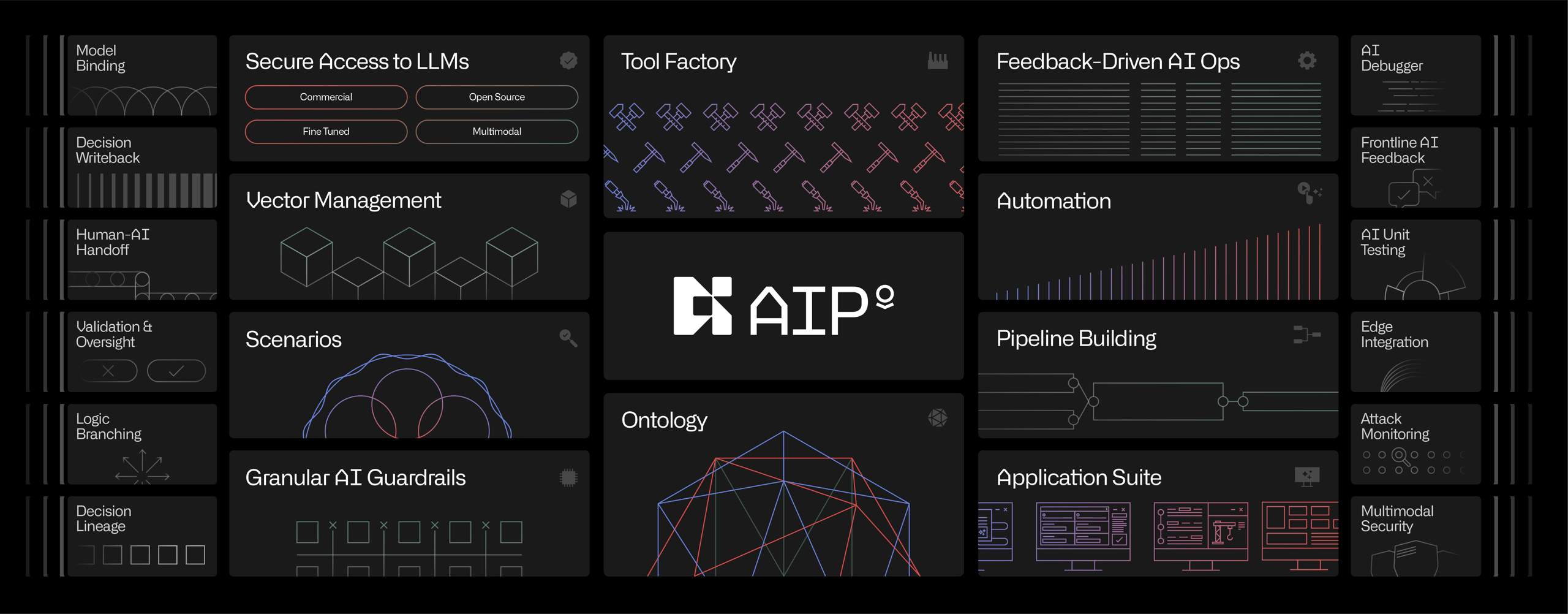
The investment thesis rests on the argument that ontology, the semantic layer that describes what an object is and what actions can be taken on it, is expensive to build and even more expensive to migrate away from.
Once a manufacturer or a defense customer has modeled tens of thousands of physical objects, workflows, and permissions into Palantir’s Foundry and AIP, switching costs become extreme.
That’s why net dollar retention hit 157% in Q2. Existing customers are not just renewing, but dramatically expanding usage after they see production outcomes.
The moat compounds in a specific way.
Each new use case a customer builds on top of the Ontology reduces the marginal cost of the next use case. That’s the reverse of most enterprise software, where new modules require new integration work.
In Palantir’s case, integration is done once at the ontology layer and reused indefinitely.
Q2 FY2026 Investment Thesis Anchors
- Revenue growth: 93% Y/Y
- U.S. commercial growth: 149% Y/Y
- Net dollar retention: 157%
- Adjusted operating margin: 62%
- Rule of 40 score: 155%
- Adjusted free cash flow margin: 63%
- Customer count (U.S. commercial): 653 (+35% Y/Y)Cash Generation Now Funds The Growth
A growth investor’s classic worry is that revenue expansion is subsidized by cash burn.
Palantir has flipped that pattern.
Cash from operations in Q2 was $1.216 billion, essentially in line with adjusted free cash flow of $1.220 billion. The balance sheet holds roughly $9.2 billion in cash, cash equivalents, and short-term U.S. Treasury securities, giving the company a very long strategic runway and considerable optionality on M&A or capital return.
The importance of this cash accumulation is easy to underestimate.
Software peers at similar growth rates in the past frequently had to raise capital or dilute shareholders to sustain their momentum.
Palantir is doing the opposite. It’s generating enough cash to fund all growth investment internally, hold a substantial Treasury position, and still print a rising net income line.
Government Revenue Is Reaccelerating, Not Fading
For years the concern was that federal budget cycles would cap the Gotham business at low single-digit growth.
Q2 refuted that framing.
U.S. government revenue grew 90% year-over-year to $809 million, driven by AI-native military systems adoption and expansion of programs like Maven, TITAN, and Warp Speed manufacturing.
Together, U.S. commercial and U.S. government now represent an accelerating dual engine, and both engines are compounding faster than international revenue, which the company acknowledges is progressing more slowly.
The reacceleration in government is arguably more strategically important than the commercial explosion.
It signals that the U.S. defense enterprise is not treating Palantir as one vendor among many. It’s instead treating Palantir’s software as strategic infrastructure.
That shift in procurement psychology is what makes the government segment feel like a long-duration compounder rather than a mature, budget-capped business.
The Reindustrialization Overlay
A newer element of the investment thesis is Palantir’s positioning at the center of the American reindustrialization narrative.
The Warp Speed platform is being adopted by prime contractors, hypersonics manufacturers, autonomous systems companies, and directed-energy weapons makers as their default manufacturing operating system.
If the United States genuinely reshores defense manufacturing over the next decade, Palantir’s Warp Speed customer roster becomes the software layer beneath that new industrial base.
That’s a genuinely new addressable market, and I believe it’s not yet fully reflected in analyst forecast models.
Palantir Business Model Overview
Software Platforms Are The Product
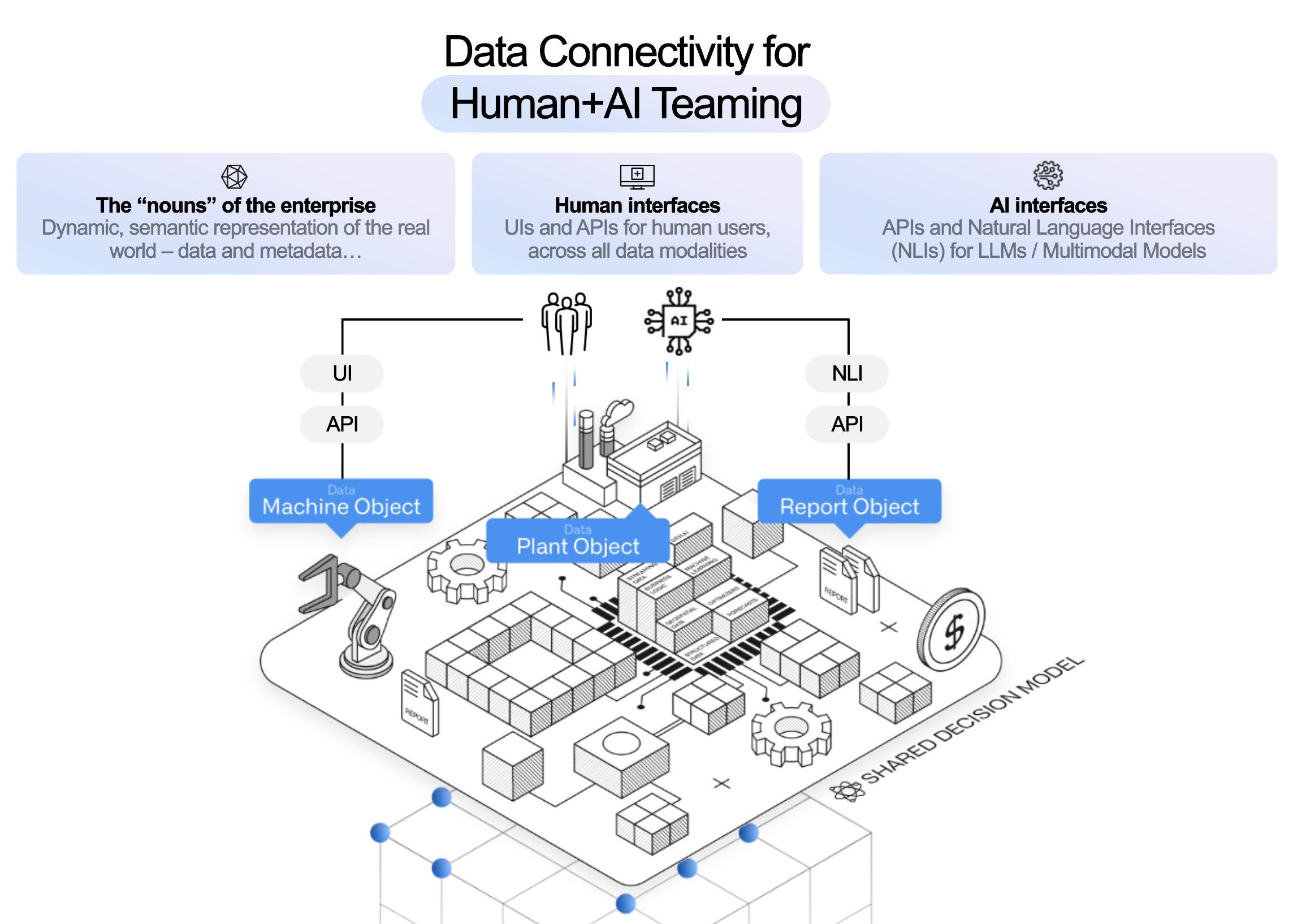
Palantir sells access to a family of enterprise software platforms.
The oldest, Gotham, was designed for intelligence, defense, and law enforcement customers. Foundry generalized the same ontology-driven approach for commercial industries, and Apollo is the continuous delivery layer that ships updates into classified and commercial environments alike.
AIP layers large language model orchestration on top of the ontology, and Warp Speed extends the platform into the specific domain of manufacturing execution.
The platforms are increasingly sold as an integrated stack, and the revenue model is a mix of term license, subscription, and services.
The revenue model has evolved deliberately over time.
In the early Gotham era, contracts were largely fixed-price professional services engagements bundled with software.
Today the mix skews strongly toward multi-year term licenses and subscription components, with services attached primarily during initial deployment.
That evolution has two direct financial consequences.
First, gross margins have expanded meaningfully as the services-to-software ratio has flipped.
Second, revenue predictability has improved, which is one of the reasons remaining performance obligations have become such a useful forward indicator.
The Forward-Deployed Engineering Model
Palantir’s field organization is unusual.
Instead of a traditional pre-sales and post-sales split, the company deploys forward-deployed engineers, or FDEs, who embed with customers to configure the platform against real operational problems.
This model was widely criticized in Palantir’s early public years as being labor-intensive and hard to scale.
The current data suggests the opposite conclusion. With 62% adjusted operating margins in Q2 FY2026, the FDE model appears to have crossed a scale threshold where automation and reusable templates finally offset the human cost.
Several structural changes explain the shift.
AIP-driven automation has reduced the average FDE hours required per deployment. Reusable ontology templates for industries like aviation, energy, and defense have collapsed the initial modeling phase.
And AIP Bootcamps have moved much of the discovery work upstream, allowing FDEs to focus on the parts of the problem that create the most customer value.
Bootcamps As A Land Motion
The most important go-to-market innovation of the past three years has been the AIP Bootcamp.
Palantir invites prospective customers to a compressed five-day sprint that ends with a working AI use case built on their own data.
Palantir Land Motion (simplified)
1. AIP Bootcamp (days)
2. Pilot production deployment (weeks)
3. Enterprise-wide license (quarter)
4. Multi-year expansion into new departments (year+)
Bootcamps compress the traditional multi-quarter enterprise sales cycle into weeks, and they are directly credited by management with the sharp inflection in U.S. commercial customer count, which reached 653 in Q2, up 35% year-over-year.
The Bootcamp motion has a second, less obvious benefit. It preselects for customers with real production problems and internal AI ambition, filtering out organizations that are only doing early exploration.
That preselection is a big reason average deal sizes have expanded even as customer count has grown.
Contract Structure And Bookings
The company also discloses total contract value, or TCV, and remaining performance obligations, known as RPO. In Q2 FY2026, closed TCV came in at $3.373 billion, up 49% year-over-year, and U.S. commercial TCV alone set a record at $2.132 billion. Total remaining performance obligations grew to $4.90 billion, an increase of 103% year-over-year.
That bookings profile is a leading indicator for the coming quarters and provides visibility that most software peers cannot match at this growth rate.
An important nuance in the bookings profile is the mix between short-term RPO and long-term RPO.
Short-term RPO of roughly $2.09 billion at quarter-end represents the portion of contracted revenue expected to convert within twelve months. That figure alone signals a strong second half of 2026 and provides the underlying support for the raised full-year guidance.
Pricing Power And Contract Duration
A less visible but important element of Palantir’s business model is its pricing power.
Because the platform sits at the intersection of AI, data, and operations, and because switching costs are high, Palantir has been able to raise prices on renewals without losing customers.
Contract durations have also lengthened as the platform has moved from tactical deployments to enterprise standards.
Multi-year contracts of three, five, or even ten years are increasingly common with government and large enterprise customers, providing structural visibility that few peers can match.