

Japanese electronics manufacturer, Rohm Semiconductor, is navigating through an era defined by AI proliferation, electric vehicle acceleration, and intensifying geopolitical complexities.
The company’s recent partnership with Tata Electronics signals its commitment to expanding manufacturing capabilities, while its fourth-generation silicon carbide technology positions it as a formidable player in the power semiconductor arena.
Table of Contents
Company Overview and Financial Snapshot
Rohm Co., Ltd., headquartered in Kyoto, Japan, has established itself as a specialized semiconductor manufacturer with approximately 23,000 employees worldwide.
The fiscal year 2025 presented challenges for the company. Revenue reached ¥448.5 billion, reflecting market softness across several segments. According to financial reports, the company faced headwinds from subdued consumer electronics demand and inventory adjustments across the semiconductor supply chain.
However, analysts project a recovery trajectory for fiscal 2026. S&P Global Market Intelligence anticipates sales growth of 3.1% year-over-year, reaching ¥462 billion as semiconductor demand revitalizes across automotive and industrial sectors.
Financial Metric
FY2024
FY2025
FY2026 (Projected)
Revenue
¥467.78 billion
¥448.5 billion
¥462 billion
Year-over-Year Change
-7.9%
-4.1%
+3.1%
Market Capitalization
–
$5.17 billion
–
The company’s product portfolio spans discrete semiconductors, integrated circuits, optical devices, and modules. Power devices, particularly silicon carbide solutions, represent a strategic growth area where Rohm has invested substantial capital and technological resources.
Strengths: Technological Leadership and Strategic Positioning
Silicon Carbide Technology Dominance
Rohm’s most significant competitive advantage lies in its silicon carbide capabilities.
The company pioneered the commercialization of SiC power devices and maintains vertical integration across the entire value chain. This includes substrate production, epitaxial growth, device fabrication, and module assembly.
The fourth-generation SiC MOSFETs deliver industry-leading performance characteristics. These devices achieve lower on-resistance while simultaneously improving short-circuit withstand time. For electric vehicle inverters, this translates to enhanced efficiency, extended driving range, and improved thermal management.
Technical Specifications of 4th Gen SiC MOSFETs:
- Voltage ratings: 650V to 1700V
- Superior thermal conductivity vs. silicon
- Reduced switching losses by 30-40%
- Operating temperatures exceeding 200°C
- Enhanced reliability for automotive applications
Rohm operates 8-inch SiC substrate production facilities in Miyazaki Prefecture, Japan. The company began domestic SiC wafer production in 2024, significantly expanding capacity to meet growing demand from automotive manufacturers.
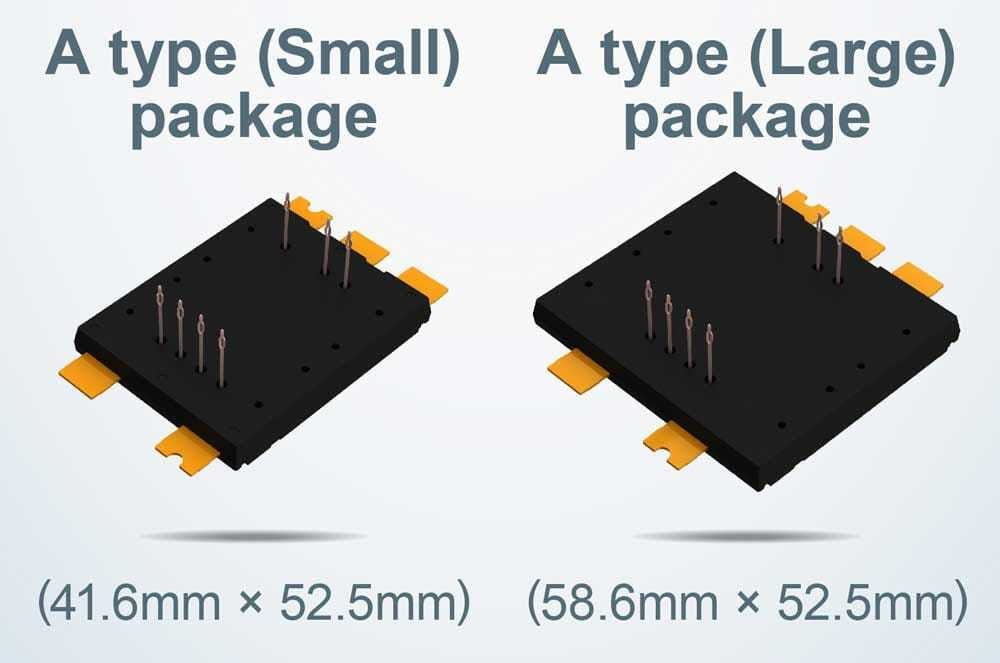
Image source: rohm.com
Strategic Automotive Partnerships
Rohm has secured long-term supply agreements with multiple tier-one automotive suppliers and original equipment manufacturers.
The company formed a $1 billion supply partnership with Vitesco Technologies for SiC power semiconductors targeting electric vehicle powertrains. Vitesco’s advanced inverters incorporating Rohm SiC chips have been adopted by two major customers for EV applications.
Additional strategic collaborations include:
Partner
Focus Area
Announced
Geely Automobile Group
SiC power devices for EVs
September 2021
Mazda Motor Corporation
GaN-based e-axle inverters
April 2025
TSMC
Gallium nitride co-development
December 2024
Denso Corporation
Analog ICs for electrification
May 2025
Valeo
Next-gen power electronics
November 2024
These partnerships provide revenue visibility and strengthen Rohm’s position in the automotive semiconductor value chain. The Denso joint venture agreement focuses on enhancing device lineups supporting vehicle electrification and advanced driver assistance systems.
Manufacturing Capabilities and Quality Systems
Rohm maintains a diversified global manufacturing footprint spanning Japan, Malaysia, Thailand, the Philippines, and China.
The company operates 11 production sites with specialized capabilities. The Apollo plant expansion increased SiC power semiconductor capacity substantially. Meanwhile, ROHM-Wako Electronics in Malaysia completed a RM910 million facility expansion in Kelantan to support growing demand.
Rohm’s quality management systems emphasize flexibility alongside reliability. The company developed flexible production lines enabling high-mix, low-volume production without compromising quality standards. This capability proves particularly valuable in automotive applications where stringent reliability requirements meet diverse customer specifications.
Comprehensive Product Portfolio
Beyond power devices, Rohm offers an extensive product catalog addressing multiple market segments.
The company produces resistors, capacitors, LEDs, laser diodes, optical sensors, wireless communication modules, and thermal printheads. This diversification provides cushioning against cyclical downturns affecting specific product categories.
For Industrial IoT applications, Rohm supplies low-power accelerometers, wireless modules, and ultra-low quiescent current DC/DC converters. These products target smart logistics, predictive maintenance, and environmental monitoring systems where energy efficiency and compact form factors are paramount.
Weaknesses: Scale and Market Position Challenges
Limited Market Share in Critical Segments
Despite technological capabilities, Rohm faces significant scale disadvantages against larger competitors.
In the silicon carbide market, Rohm ranks outside the top three suppliers. According to industry analysis, STMicroelectronics commanded 36.5% market share in 2022, followed by Infineon at 17.9%, Wolfspeed at 16.3%, and Onsemi at 11.6%. Rohm trails these established leaders in both revenue and production volumes.
This scale gap creates multiple challenges:
Scale Disadvantage Impacts:
• Higher per-unit manufacturing costs
• Reduced pricing power in negotiations
• Limited R&D budget relative to competitors
• Smaller customer support infrastructure
• Constrained marketing resources
The automotive semiconductor market demonstrates similar dynamics. Infineon Technologies leads globally with over $8 billion in automotive revenue, closely followed by NXP and STMicroelectronics. Rohm’s automotive semiconductor revenue represents a fraction of these industry leaders.
Financial Performance Volatility
Rohm experienced its first annual loss in 12 years during fiscal 2024.
The company posted a consolidated net loss of ¥50 billion ($337 million) for the fiscal year ending March 2025. This resulted from weakened EV demand, inventory adjustments, and production inefficiencies.
Revenue declined 7.9% year-over-year in fiscal 2024, followed by an additional 4.1% decrease in fiscal 2025. While analysts project recovery beginning in fiscal 2026, this multi-year revenue contraction raises concerns about competitive positioning and market share erosion.
Financial Challenge
Impact
Revenue decline
Reduced operating leverage
Operating losses
Constrained investment capacity
Margin compression
Price competition pressures
R&D spending limits
Technology development delays
The semiconductor industry’s capital-intensive nature demands sustained investment in manufacturing equipment, process development, and next-generation technologies. Extended periods of financial underperformance can impair a company’s ability to maintain technological parity with better-capitalized competitors.
Geographic Revenue Concentration
Rohm derives substantial revenue from Asian markets, particularly China and Japan.
This concentration creates vulnerability to regional economic cycles, regulatory changes, and geopolitical tensions. Chinese market exposure proves particularly challenging given ongoing US-China technology restrictions and potential supply chain disruptions.
The company’s limited presence in North American and European markets constrains growth opportunities. Many automotive OEMs and industrial customers prefer suppliers with local engineering support, applications assistance, and responsive service capabilities.
Product Commoditization Risks
Certain product categories within Rohm’s portfolio face intensifying commoditization pressures.
Standard resistors, capacitors, and discrete semiconductors compete primarily on price and availability. Chinese manufacturers with lower cost structures increasingly capture market share in these segments.
While Rohm emphasizes high-reliability automotive-grade and industrial-grade components, pricing power remains constrained. Customers increasingly demand cost reductions regardless of quality premiums, compressing margins across commodity product lines.
Opportunities: Market Expansion and Technology Evolution
Electric Vehicle Market Proliferation
The global transition to electrified transportation represents Rohm’s most significant growth opportunity.
Electric vehicles require substantially more semiconductor content compared to internal combustion engine vehicles. Power semiconductors for inverters, onboard chargers, and DC-DC converters constitute a major portion of this increase.
The automotive semiconductor market continues expanding rapidly. Industry projections indicate sustained double-digit growth through 2030 as EV adoption accelerates across major automotive markets.
EV Power Semiconductor Applications:
Main Inverter: 400V to 800V systems
- SiC MOSFETs replacing IGBTs
- Efficiency gains of 3-5%
- Extended driving range benefits

Onboard Charger (OBC): 3.3kW to 22kW
- SiC diodes and MOSFETs
- Reduced charging time
- Compact, lightweight designs

DC-DC Converter: 400V to 12V/48V
- Bidirectional power flow
- High conversion efficiency
- Robust thermal performance
Rohm’s SiC technology aligns perfectly with automotive electrification requirements. The company’s partnerships with major automotive suppliers position it to capture a meaningful share of this expanding market.
Gallium Nitride Technology Development
Gallium nitride represents the next frontier in power semiconductor technology.
GaN devices offer advantages over silicon carbide in specific applications. These include higher switching frequencies, smaller form factors, and potentially lower costs for certain voltage ranges.
Rohm’s strategic partnership with TSMC for GaN power device development provides access to world-class manufacturing expertise. The collaboration focuses on electric vehicle applications, complementing Rohm’s existing SiC offerings.
The GaN power devices market is projected to grow from $480 million in 2025 to $2.3 billion by 2032. Consumer electronics, mobile charging, and automotive applications drive this expansion.
Rohm and Mazda are jointly developing automotive components using GaN power semiconductors for next-generation e-axle systems. This collaboration could yield proprietary technologies differentiating Rohm from competitors.
Industrial and Infrastructure Digitalization
Industrial IoT and smart infrastructure deployment create substantial opportunities for semiconductor suppliers.
Factory automation, predictive maintenance systems, environmental monitoring networks, and smart building applications require sensors, microcontrollers, wireless connectivity, and power management devices. Rohm’s comprehensive product portfolio addresses these requirements.
Renewable energy infrastructure represents another high-growth segment. Solar inverters, wind turbine power converters, and energy storage systems utilize advanced power semiconductors. SiC devices’ superior efficiency and thermal performance make them well-suited for these demanding applications.
Industrial Application Opportunities:
Factory Automation
- Motion control systems
- Robotics power electronics
- Industrial networking equipment

Renewable Energy
- Solar inverter efficiency optimization
- Wind turbine power conversion
- Grid-tied energy storage systems

Smart Infrastructure
- LED lighting control
- Building automation
- Environmental monitoring sensors
Indian Semiconductor Ecosystem Participation
The partnership with Tata Electronics enables Rohm to participate in India’s rapidly developing semiconductor ecosystem.
India’s government has committed substantial incentives to establish domestic semiconductor manufacturing capabilities. The “Designed in India, Manufactured in India” initiative aligns with Rohm’s strategy to diversify production and access growing Indian automotive and industrial markets.
The collaboration focuses initially on assembling and testing automotive-grade MOSFETs designed in India. Future phases may include co-development of advanced packaging technologies and expansion into additional product categories.
This partnership provides multiple strategic benefits:
Benefit Category
Strategic Advantage
Market access
Entry to India’s expanding automotive sector
Cost optimization
Competitive labor and operational costs
Supply chain resilience
Geographic diversification
Government support
Access to semiconductor incentives
Local presence
Proximity to growing customer base
Artificial Intelligence Infrastructure Build-Out
The AI revolution drives unprecedented demand for data center infrastructure and edge computing capabilities.
Power semiconductors play a crucial role in data center power distribution, server power supplies, and AI accelerator cooling systems. Rohm’s power management ICs and SiC devices address efficiency requirements for these power-hungry applications.
Recent reports indicate Rohm is partnering with Nvidia to expand power semiconductor applications in AI infrastructure. While details remain limited, this collaboration could provide access to the rapidly expanding AI hardware ecosystem.
Threats: Competition and Macro Headwinds
Intensifying Competitive Pressures
The power semiconductor market grows increasingly competitive as established players expand capacity and new entrants emerge.
STMicroelectronics, Infineon, Onsemi, and Wolfspeed possess substantial scale advantages. These companies invest billions annually in capacity expansion, technology development, and customer acquisition.
onsemi (ON Semiconductor) - SWOT Analysis Report (2026)
www.deepresearchglobal.com/p/onsemi-swot-analysis-report
Chinese semiconductor manufacturers represent an emerging competitive threat. Companies like BASiC Semiconductor aggressively target domestic automotive customers with competitive pricing. Industry observers note that Chinese suppliers are gaining market share in SiC MOSFETs for EV inverters.
Competitive Threat Assessment:
Western Competitors:
- Superior scale and financial resources
- Established customer relationships
- Comprehensive product portfolios
- Strong brand recognition

Chinese Competitors:
- Aggressive pricing strategies
- Government subsidies and support
- Domestic market prioritization
- Rapid capacity expansion
The competitive intensity limits pricing power and compresses margins across the industry. Companies must continuously invest in next-generation technologies while managing current product line profitability.
Geopolitical Tensions and Trade Restrictions
US-China technology tensions create substantial uncertainty for global semiconductor companies.
Export controls restrict Chinese access to advanced semiconductor manufacturing equipment and certain chip designs. These restrictions could disrupt supply chains, limit market access, or force costly reorganization of manufacturing networks.
Semiconductor industry analysis highlights risks from tariffs, export controls, and potential supply chain decoupling. China’s December 2024 export restrictions on critical materials like gallium and germanium further complicate the situation.
Japanese semiconductor companies face particular challenges navigating relationships with both American and Chinese markets. Government pressure to align with US technology restrictions may conflict with commercial interests in maintaining Chinese customer relationships.
Geopolitical Risk
Potential Impact
Export controls
Market access restrictions
Tariffs
Cost structure changes
Supply chain disruption
Material availability constraints
Technology restrictions
R&D collaboration limitations
Forced decoupling
Customer relationship complications
Cyclical Demand Volatility
The semiconductor industry remains inherently cyclical despite structural growth drivers.
Periods of overcapacity and inventory corrections regularly impact revenue and profitability. The industry experienced such a correction through 2024-2025, contributing to Rohm’s financial challenges.
Electric vehicle demand fluctuations represent a specific concern. Slower-than-expected EV adoption, economic recession, or policy changes could substantially reduce semiconductor demand from automotive customers.
Consumer electronics cycles also affect Rohm’s business. Smartphones, tablets, laptops, and home appliances incorporate Rohm components. Discretionary spending reductions during economic downturns directly impact these product categories.
Technology Transition Risks
The semiconductor industry’s rapid technology evolution creates both opportunities and risks.
Investments in current-generation technologies may become obsolete if competitors successfully commercialize superior alternatives. For example, GaN devices could displace SiC in certain applications, or entirely new material systems might emerge.
The transition from 6-inch to 8-inch SiC wafers requires substantial capital investment. Companies that fail to execute these transitions effectively risk being competitively disadvantaged. Rohm’s capacity expansion must proceed according to plan to maintain technological competitiveness.
Technology Transition Challenges:
Manufacturing Process Evolution
- 6-inch to 8-inch wafer transition
- Yield optimization requirements
- Equipment acquisition and qualification
- Process transfer complexities

Next-Generation Materials
- Beyond SiC and GaN developments
- Diamond semiconductor research
- Gallium oxide exploration
- Competitive technology emergence
Supply Chain Vulnerabilities
Semiconductor manufacturing depends on complex global supply chains with multiple points of potential disruption.
Raw material availability, specialty gases, manufacturing equipment, and packaging materials all require reliable suppliers. Disruptions to any element can constrain production and impact customer deliveries.
Recent experience demonstrated supply chain fragility. COVID-19 pandemic disruptions, shipping container shortages, and logistics challenges created widespread shortages. Geopolitical tensions add additional risk layers to already complex supply networks.
Rohm’s integrated report identifies supply chain risks, including soaring material prices, procurement restrictions, and compliance challenges. The company works to diversify suppliers and maintain multiple production sites, but complete risk elimination remains impossible.
Strategic Imperatives for Sustained Competitiveness
Based on this SWOT analysis, several strategic imperatives emerge for Rohm Semiconductor:
Accelerate Capacity Expansion in Growth Markets
Rohm must aggressively expand SiC and GaN production capacity to meet automotive demand. The 8-inch wafer transition represents a critical capability that competitors are also pursuing. Delays or execution missteps would prove competitively damaging.
Deepen Strategic Customer Relationships
Long-term supply agreements with automotive OEMs and tier-one suppliers provide revenue visibility and competitive protection. Rohm should prioritize joint development programs, co-innovation initiatives, and customer-specific technologies that increase switching costs.
Optimize Product Portfolio Mix
The company should strategically de-emphasize commodity products facing intense price competition. Capital and engineering resources should concentrate on differentiated technologies where Rohm possesses competitive advantages.
Enhance Geographic Diversification
Expanding manufacturing presence in India, Southeast Asia, and potentially North America reduces geopolitical risk and improves customer proximity. The Tata Electronics partnership represents a positive step that should inform future geographic strategy.
Invest Selectively in Adjacent Technologies
GaN development, advanced packaging capabilities, and system-level solutions represent logical adjacencies to core power semiconductor competencies. Selective investments in these areas can drive differentiation and margin improvement.
My Final Thoughts
Rohm Semiconductor navigates a complex strategic environment in 2026 and beyond.
The company possesses genuine technological strengths in silicon carbide and maintains valuable automotive relationships. These assets position Rohm to participate meaningfully in electric vehicle growth and industrial digitalization.
However, scale limitations and recent financial underperformance create legitimate concerns. Larger, better-capitalized competitors possess advantages that cannot be quickly overcome. Sustained execution excellence across manufacturing, technology development, and customer acquisition is essential for competitive viability.
For investors evaluating Rohm, several questions merit careful consideration.
Can the company return to consistent profitability while simultaneously funding necessary capacity expansion?
Will strategic partnerships translate to substantial revenue growth and margin improvement?
How effectively can Rohm compete against larger rivals with superior resources?
The answers to these questions will emerge over the coming years as electric vehicle adoption accelerates and semiconductor industry dynamics evolve.
Rohm’s success requires capitalizing on clear technological advantages while addressing scale and execution challenges. The opportunity exists, but realizing it demands flawless strategic implementation.
Disclaimer: This analysis is for informational purposes only and should not be construed as investment advice. Investors should conduct their own due diligence and consult with financial advisors before making investment decisions.