- Deep Research Global
- Posts
- Samsung Electronics - SWOT Analysis Report (2026)
Samsung Electronics - SWOT Analysis Report (2026)
Samsung Electronics, the South Korean conglomerate, which has maintained its position as a global technology powerhouse for decades, faces both unprecedented opportunities and challenges in 2026.
For investors seeking to understand Samsung’s strategic positioning, our comprehensive SWOT analysis examines the company as it charts its course through an increasingly complex technological and geopolitical environment.
Table of Contents
Understanding Samsung’s Current Position in Late 2025
Samsung Electronics reported robust financial performance in the third quarter of 2025, with consolidated revenue reaching KRW 86.1 trillion, representing a 15.4% increase compared to the previous quarter. More significantly, operating profit surged to KRW 12.2 trillion, demonstrating the company’s ability to capitalize on the artificial intelligence boom that has swept through the semiconductor industry.
The company’s stock performance has been equally impressive, with shares gaining approximately 34% over a three-month period and surging roughly 101% year-to-date through late 2025. This remarkable performance reflects investor confidence in Samsung’s strategic positioning within the AI infrastructure ecosystem and its ability to execute on its transformation initiatives.
However, beneath these encouraging numbers lie significant operational challenges that Samsung must address to maintain its competitive edge. The company faces intense competition from specialized players in key segments, particularly in high-bandwidth memory (HBM) chips where SK Hynix has captured significant market share, and in contract manufacturing where TSMC continues to dominate advanced node production.
Strengths: The Foundation of Samsung’s Global Dominance
Unparalleled Vertical Integration and Manufacturing Scale
Samsung’s greatest competitive advantage lies in its extraordinary vertical integration across the technology value chain. Few companies in the world can match Samsung’s ability to design, manufacture, and sell products spanning semiconductors, displays, consumer electronics, and home appliances. This integration creates multiple synergies that competitors struggle to replicate.
The company operates one of the world’s largest semiconductor manufacturing ecosystems, with fabrication facilities across South Korea, the United States, and other strategic locations. Samsung has committed to investing approximately KRW 171 trillion in its System LSI and Foundry businesses through 2030, underscoring its commitment to maintaining technological leadership in advanced chip manufacturing.
Samsung's Vertical Integration Advantages
─────────────────────────────────────────
• Design Capabilities: In-house development of Exynos processors, custom AI accelerators, and specialized chips
• Manufacturing Control: Complete ownership of fab facilities
enables rapid iteration and quality optimization
• Component Sourcing: Internal production of displays, memory,
storage, and other key components reduces supply chain risks
• Cost Efficiency: Eliminates middleman margins and enables
economies of scale across business units
• Innovation Speed: Direct feedback loops between design,
manufacturing, and market teams accelerate product development
This vertical integration provides Samsung with unique flexibility during supply chain disruptions and enables the company to optimize costs in ways that pure-play manufacturers or fabless semiconductor companies cannot achieve. When component shortages affect the industry, Samsung can prioritize internal needs while also serving external customers, creating a strategic buffer that enhances business resilience.
Dominant Position in Memory and Display Technologies
Samsung maintains commanding market positions in several critical technology segments. In DRAM memory, Samsung remains the global leader, though SK Hynix has recently closed the gap in specific high-value segments like HBM. Samsung’s memory business achieved record-high quarterly revenues in Q3 2025, driven by strong demand for AI memory solutions.
In display technology, Samsung Display holds the leading position with an estimated 41% revenue share in the global OLED market for 2025. The company’s advanced display technologies power premium smartphones from multiple manufacturers, including Apple’s iPhone lineup, demonstrating Samsung’s ability to supply even its fiercest competitors when technological superiority warrants it.
Business Segment | Market Position | Key Competitive Advantages |
|---|---|---|
DRAM Memory | First (global leader) | Manufacturing scale, process technology leadership |
OLED Displays | First (41% market share) | Patent portfolio, yield rates, tandem OLED for automotive |
Foldable Phones | First (64% market share in Q3 2025) | Early market entry, manufacturing expertise, Z series ecosystem |
Consumer Electronics | Top 3 globally | Brand recognition, distribution network, innovation |
Innovation Leadership and Research & Development Investment
Samsung’s commitment to innovation remains unwavering, with the company investing a record 18 trillion won in research and development during the first half of 2025. This substantial investment supports Samsung’s position as one of the world’s most prolific patent generators, with the company holding approximately 270,000 global patents across diverse technology domains.
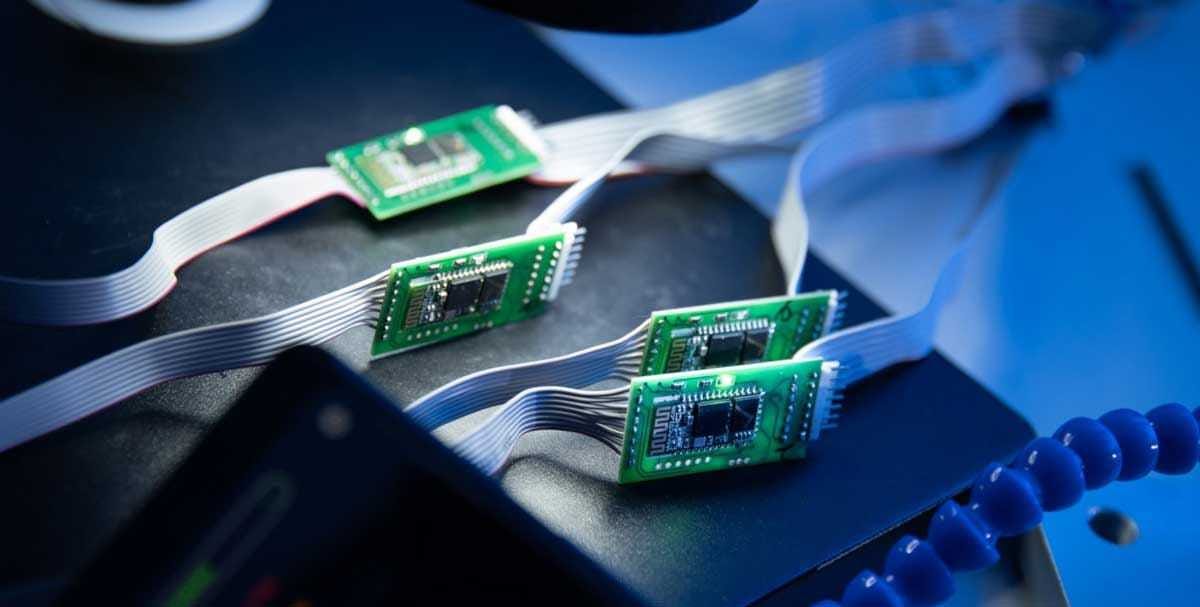
The company reached a key milestone with its new semiconductor R&D complex, NRD-K, which began operations in 2025. Samsung plans to invest about KRW 20 trillion in this facility by 2030, creating a world-class environment for developing next-generation chip technologies, including advanced packaging, 2nm process nodes, and beyond.
Samsung’s innovation extends beyond semiconductors. The company recently introduced the Galaxy Z TriFold, the industry’s first commercially viable triple-folding smartphone, demonstrating continued leadership in foldable device technology. This innovation positions Samsung to capture premium segments of the smartphone market where differentiation and technological advancement command significant price premiums.
Strong Brand Value and Global Recognition
Samsung’s brand strength provides significant competitive advantages in consumer markets. The company topped YouGov’s Best Global Brands 2025 rankings, reflecting strong consumer perception across global markets. Interbrand values Samsung’s brand at approximately $90 billion, ranking it fifth globally for the sixth consecutive year.
This brand equity translates directly into business value through several mechanisms.
First, strong brand recognition reduces customer acquisition costs in consumer segments, as buyers actively seek Samsung products.
Second, brand strength enables premium pricing for flagship products, particularly in developed markets where consumers associate the Samsung name with quality and innovation.
Third, the brand facilitates business-to-business relationships in the component supply business, where Samsung’s reputation for technological excellence opens doors with major customers.
Samsung’s brand strength proved particularly valuable during the company’s push into the U.S. market, where it gained 8 percentage points of market share in Q2 2025, rising from 23% to 31%, while Apple’s share declined from 56% to 49%. This shift demonstrates Samsung’s ability to compete effectively even against brands with historically dominant positions in specific markets.
Diversified Business Portfolio Providing Stability
Unlike many technology companies focused on a single product category or market segment, Samsung operates across multiple business divisions that provide earnings diversification and cross-selling opportunities. This diversification creates resilience during downturns in specific segments.
Samsung's Business Segment Breakdown (Q3 2025)
───────────────────────────────────────────────
Semiconductors
├─ Device Solutions Division
│ ├─ Memory Business: DRAM, NAND flash, HBM
│ └─ System LSI: Mobile processors, image sensors
└─ Foundry: Contract chip manufacturing
Mobile & Consumer Electronics
├─ Mobile Experience (MX): Smartphones, tablets, wearables
├─ Visual Display: TVs, monitors, digital signage
└─ Digital Appliances: Refrigerators, washers, air conditioners
Components
├─ Samsung Display: OLED, LCD panels
└─ Samsung SDI: Batteries, energy solutions
This diversification proved valuable in 2025 when Samsung’s semiconductor business faced challenges in specific segments like foundry operations, while strong performance in premium smartphones and home appliances helped maintain overall company profitability. The Visual Display Business achieved solid sales growth of premium products, including Neo QLED and OLED TVs in Q3 2025, offsetting headwinds in other divisions.
Weaknesses: Vulnerabilities in Samsung’s Armor
Persistent Foundry Business Struggles and Yield Challenges
Samsung’s contract chip manufacturing business, Samsung Foundry, has emerged as a significant weak point in the company’s otherwise strong portfolio. Despite massive investments in advanced manufacturing nodes, the foundry division has struggled to achieve competitive yield rates, particularly in cutting-edge process technologies.
Image source: samsung.com
Samsung’s 3nm process yields have reportedly remained below 50%, significantly trailing TSMC’s yields, which exceed 90% on comparable nodes. This yield gap translates directly into higher costs per chip and reduced attractiveness to potential customers who must balance cost, performance, and reliability when selecting a foundry partner.
The yield challenges have real business consequences. Samsung reportedly slashed foundry investment by over 50% for 2025, acknowledging that continuing to pour capital into a struggling business with limited customer traction represents poor capital allocation. The foundry and chip design divisions collectively lost 3.18 trillion won ($2.4 billion) in 2023, highlighting the scale of the challenge.
Process Node | Samsung Yield Rate | TSMC Yield Rate | Impact on Competitiveness |
|---|---|---|---|
3nm | ~50% (estimated) | >90% | Significantly disadvantaged in cost structure |
2nm | 55-60% (improving) | Not yet in mass production | Narrowing gap but still behind |
5nm/4nm | Competitive | Industry leading | Lost major customers despite adequate yields |
The yield problems stem from multiple factors, including design complexity, manufacturing process challenges, and organizational issues within Samsung’s semiconductor division.
Unlike TSMC, which focuses exclusively on contract manufacturing and has optimized every aspect of its operations for external customers, Samsung’s foundry business must compete for resources and attention with the company’s internal memory and system LSI divisions.
Losing Ground in High-Bandwidth Memory (HBM) Race
Perhaps Samsung’s most strategically concerning weakness in late 2025 is its lagging position in the high-bandwidth memory market, which has become critical for AI infrastructure. SK Hynix, Samsung’s smaller South Korean rival, has captured approximately 64% of the global HBM market in Q2 2025, while Samsung’s share has fallen to just 15%, with Micron holding the remaining 21%.
This represents a dramatic reversal from just a year earlier when Samsung held a 38% market share. More troubling for investors, SK Hynix has secured the most valuable customer relationships in this space, supplying HBM to NVIDIA for its AI accelerators, which dominate the data center AI market with over 80% market share.
HBM Market Share Evolution (2024-2025)
───────────────────────────────────────
Q2 2024:
SK Hynix: 57%
Samsung: 38%
Micron: 5%
Q2 2025:
SK Hynix: 64% ↑
Samsung: 15% ↓ (Critical loss of market position)
Micron: 21% ↑
Key Development: SK Hynix became NVIDIA's primary HBM supplier,
while Samsung struggled with HBM3E qualification
Samsung’s HBM challenges stem from both technical and strategic factors. The company was slower than SK Hynix to recognize the strategic importance of HBM for AI applications, focusing instead on traditional DRAM markets where volume was historically higher.
When Samsung did pivot to HBM development, technical challenges with HBM3E production delayed qualification with major customers, allowing SK Hynix to establish strong relationships that will be difficult to displace.
The financial impact is substantial. SK Hynix surpassed Samsung as the world’s biggest memory chip supplier for the first time ever in Q2 2025, with $15.1 billion in sales. This represents not just lost revenue for Samsung, but lost participation in the highest-growth, highest-margin segment of the memory market.
Declining China Market Position
Samsung’s once-dominant position in China has eroded dramatically over the past several years, creating a significant geographic weakness in the company’s business model. In the smartphone market, Samsung’s share in China is expected to remain below 2% in 2025, a catastrophic decline from the company’s position as market leader in the early 2010s.
The decline extends beyond smartphones. Chinese consumers increasingly prefer domestic brands across multiple categories, driven by nationalism, competitive pricing, and genuine technological improvements from Chinese manufacturers. Companies like Huawei, Xiaomi, Oppo, and Vivo have built extensive distribution networks, invested heavily in R&D, and developed products specifically tailored to Chinese consumer preferences.
Samsung’s difficulties in China create multiple problems beyond lost revenue. China represents the world’s largest consumer electronics market, so weak positioning means missing both current sales and future growth opportunities.
Additionally, the company loses valuable market feedback and innovation insights that come from participating actively in such a dynamic market. Chinese companies learn and adapt faster because they compete in a hypercompetitive domestic environment, while Samsung increasingly operates outside this crucible of innovation.
In the foldable phone segment, where Samsung pioneered the category and maintains global leadership, Huawei has captured 48% of global shipments in the first half of 2025, with Samsung holding only 20%. This dramatic shift demonstrates how quickly Chinese competitors can develop competitive products and leverage their domestic market advantage to achieve global scale.
Organizational Complexity and Decision-Making Speed
As one of the world’s largest technology conglomerates, Samsung faces challenges inherent to organizational scale. The company’s multiple business units sometimes operate with different priorities, creating coordination challenges and slowing decision-making processes that require cross-divisional alignment.
Industry observers have noted that Samsung’s foundry business struggles partly because it must compete for resources and executive attention with the memory business, which generates significantly higher revenues and profits. This organizational dynamic makes it difficult to provide the foundry business with the sustained focus and resources it needs to catch up with TSMC.
Samsung’s organizational structure also affects its ability to respond quickly to market shifts. When SK Hynix recognized the strategic importance of HBM for AI applications, it was able to pivot its entire organization quickly because of its smaller size and clearer focus. Samsung, with its diverse portfolio and complex organizational matrix, moved more slowly, allowing SK Hynix to establish market leadership in this critical segment.
Opportunities: Pathways for Future Growth
AI Revolution Driving Semiconductor Demand
The artificial intelligence revolution represents the most significant growth opportunity for Samsung across multiple business lines. AI infrastructure requires massive amounts of memory, advanced processors, high-speed interconnects, and energy-efficient data center components, all areas where Samsung has established capabilities or can develop competitive offerings.
The memory market is experiencing a sustained boom driven by AI, with industry leader SK Hynix forecasting tight supply conditions lasting through 2028. This extended demand cycle creates opportunities for Samsung to capture increasing value from its memory business as prices remain elevated due to supply constraints.
Samsung’s partnership with NVIDIA to build an AI Factory powered by more than 50,000 NVIDIA GPUs represents a strategic opportunity to leverage AI capabilities for improving semiconductor manufacturing processes. The AI factory will help optimize production, improve yields, and accelerate development of next-generation processes.
Beyond infrastructure, Samsung has opportunities to integrate AI capabilities throughout its product portfolio. The company showcased its Home AI vision at CES 2025, introducing AI-powered home appliances that can learn user preferences and optimize operations automatically. This positions Samsung to capture value as consumers upgrade to AI-enabled devices across their homes.
AI Opportunity Area | Samsung’s Current Position | Growth Potential Through 2026 |
|---|---|---|
HBM Memory for AI | Catching up (15% share) | Significant if HBM4 qualification succeeds |
AI Smartphones | Leadership with Galaxy S25 AI features | Premium device sales driven by on-device AI |
AI Data Center Components | Established supplier | Growing demand for enterprise DRAM, SSD |
AI-Powered Appliances | Early market leader | Expanding smart home ecosystem adoption |
AI Manufacturing Tools | Developing with NVIDIA | Improved yields and operational efficiency |
Recovery in Foundry Business with Strategic Wins
While Samsung’s foundry business has struggled, several developments in late 2025 suggest potential for recovery in 2026 and beyond. The company is reportedly nearing a 2nm foundry deal with AMD, with a decision possible in early 2026. Securing AMD as a customer would validate Samsung’s 2nm process technology and provide a significant anchor tenant to drive volume production.
Samsung’s 2nm yield rates have improved to an estimated 55-60%, demonstrating progress in addressing the manufacturing challenges that plagued earlier nodes. While still below TSMC’s yield rates, this improvement trajectory suggests Samsung may be narrowing the gap.
External factors may also help Samsung’s foundry business. TSMC faces capacity constraints and geopolitical risks associated with its Taiwan concentration, creating opportunities for Samsung to position itself as a secondary source for customers seeking supply chain diversification. Major technology companies increasingly recognize the risks of single-source dependencies, particularly for advanced chips, making Samsung’s geographic diversification a potential competitive advantage.
The company’s Texas fabrication facility, which is receiving substantial investment, positions Samsung to serve U.S. customers who face increasing pressure to source critical components domestically. Government incentives through programs like the CHIPS Act improve the economics of domestic manufacturing, potentially helping Samsung’s U.S. foundry operations achieve profitability faster than would occur in a purely market-driven scenario.
Samsung’s leadership in foldable smartphones provides a significant opportunity to capture premium market segments where the company can command higher margins than in traditional smartphone categories. The company recaptured 64% market share in the global foldable market in Q3 2025, driven by strong demand for the Galaxy Z Fold 7.
The introduction of the Galaxy Z TriFold in December 2025 positions Samsung to address new use cases that traditional book-style foldables cannot serve effectively. The triple-folding design unfolds to a 10-inch screen, offering tablet-like productivity in a pocketable form factor. While the device commands a premium price, it differentiates Samsung from competitors and attracts technology enthusiasts willing to pay for cutting-edge innovation.
Industry forecasts project the foldable smartphone market to grow 30% year-over-year in 2026, reaching approximately 27 million units according to IDC. Samsung’s early mover advantage, manufacturing expertise, and brand strength position the company to capture a disproportionate share of this growth, particularly in the premium segments where margins are highest.
Samsung Foldable Strategy Through 2026
───────────────────────────────────────
Product Tiers:
├─ Ultra-Premium: Z TriFold (tablet replacement)
├─ Premium: Z Fold 7 (productivity-focused)
├─ Accessible Premium: Z Flip 7 (style-focused)
└─ Entry Premium: Z Flip 7 FE (market expansion)
Geographic Focus:
• Developed Markets: Emphasize productivity and innovation
• Asian Markets: Compete directly with Huawei, Xiaomi
• North America: Leverage carrier partnerships and brand strength
Technology Differentiation:
• Display durability improvements
• Thinner form factors with larger batteries
• Enhanced multitasking with Galaxy AI integration
• Improved camera systems competitive with flagship slabs
The foldable opportunity extends beyond just selling devices. Samsung can leverage its foldable expertise to strengthen relationships with component customers, as the company supplies foldable displays to other manufacturers. This creates a win-win scenario where Samsung benefits whether consumers buy Samsung-branded foldables or competitor devices using Samsung display technology.
Smart Home and IoT Ecosystem Expansion
Samsung’s diversified product portfolio creates unique opportunities to build an integrated smart home ecosystem that competitors with narrower product ranges cannot match. The company’s Home AI vision unveiled at CES 2025 positions Samsung to capture value as consumers adopt connected devices throughout their homes.
Samsung produces smartphones, tablets, TVs, refrigerators, washing machines, air conditioners, vacuum cleaners, and numerous other connected devices, all of which can communicate through the SmartThings platform. This breadth enables experiences that no single-category competitor can deliver.
For example, your Samsung refrigerator can notify your smartphone when you’re low on specific items, your TV can adjust viewing settings based on ambient light detected by your smart lights, and your washing machine can coordinate with your dryer to optimize energy consumption.
Image source: techcrunch.com
The home appliance business achieved strong performance in 2025, with Samsung celebrating 40 years of appliance innovation at IFA 2025. The company introduced its 2025 Bespoke AI appliance lineup featuring AI-powered features that personalize user experiences and optimize operations based on usage patterns.
Samsung’s ecosystem strategy creates customer lock-in effects that drive long-term value. Once a consumer invests in multiple Samsung devices that work seamlessly together, switching to competing products becomes significantly more costly and complex. This ecosystem stickiness translates into higher customer lifetime value and more predictable recurring revenue streams from services and accessories.
Geographic Diversification and Manufacturing Expansion
Samsung’s global manufacturing footprint provides opportunities to navigate geopolitical tensions and serve regional markets more effectively. The company operates significant facilities across South Korea, Vietnam, India, and the United States, with ongoing expansion in strategic locations.
The U.S. market represents a particular opportunity as government policies increasingly favor domestic manufacturing for critical technologies. Samsung’s substantial investments in Texas position the company to benefit from CHIPS Act incentives while strengthening relationships with American customers who face pressure to diversify away from Taiwan-dependent supply chains.
In India, Samsung operates extensive manufacturing facilities that serve both the domestic market and export markets. India’s growing middle class and the government’s production-linked incentive schemes create favorable conditions for increased investment. Samsung India Electronics’ revenue grew by over 11% to Rs 1.11 lakh crore in the fiscal year ended March 31, 2025.
Threats: Challenges on the Horizon
Intensifying Competition Across All Business Segments
Samsung faces formidable competitors in every major business segment, with competitive intensity increasing rather than decreasing as global technology battles reshape industry structures.
In semiconductors, TSMC maintains a commanding lead in foundry services with superior yields, customer relationships, and manufacturing scale. Intel, despite its own challenges, continues investing heavily in advanced manufacturing with ambitions to regain process leadership by 2026. In memory, SK Hynix has demonstrated the ability to move faster than Samsung in strategic segments like HBM, raising questions about Samsung’s agility.
In smartphones, Apple is projected to overtake Samsung in annual shipments in 2025 for the first time since 2011. Chinese manufacturers Xiaomi, Oppo, Vivo, and others continue taking market share in Asia and expanding globally with competitive products at attractive price points.
Competitive Threat | Primary Competitors | Impact on Samsung | Mitigation Strategy |
|---|---|---|---|
Foundry Services | TSMC, Intel | Lost customers, underutilized capacity | 2nm process improvements, strategic customer wins |
HBM Memory | SK Hynix, Micron | Lower margins, smaller market share | HBM4 development, NVIDIA qualification |
Smartphones | Apple, Chinese brands | Volume decline, margin pressure | Foldables, premium positioning, AI features |
OLED Displays | LG Display, BOE | Margin compression | Advanced technologies, automotive focus |
Home Appliances | LG, Chinese manufacturers | Regional market share losses | AI integration, premium features |
The competitive threats extend beyond direct product competition. Technology platforms increasingly shape consumer behavior, and Samsung does not control any dominant platform.
Apple’s iOS ecosystem creates strong customer retention, while Google’s Android platform enables numerous competitors.
In AI, companies like OpenAI, Anthropic, and Google are developing foundation models that could become new platforms, potentially reducing Samsung’s influence in the technology stack.
Geopolitical Tensions and Supply Chain Vulnerabilities
Samsung’s global operations expose the company to increasing geopolitical risks as tensions between the United States and China persist, and as other regional conflicts create supply chain uncertainties.
U.S. export controls on advanced AI chips to China directly impact Samsung’s semiconductor business, reducing addressable markets and creating compliance complexities. China represents a significant market for memory chips and other components, so restrictions on technology transfers and sales create meaningful revenue headwinds.
Samsung’s concentrated manufacturing in South Korea creates geographic risks. Approximately 70% of Samsung’s semiconductor production occurs in South Korea, largely in facilities located relatively close to North Korea. While the region has remained stable for decades, any escalation of tensions on the Korean Peninsula would create severe disruptions to global technology supply chains given Samsung’s central role.
The company’s Taiwan Strait risks differ from TSMC’s but still matter. Samsung sources materials, equipment, and components from Taiwan-based suppliers, so any conflict affecting Taiwan would ripple through Samsung’s supply chains even though Samsung’s own manufacturing occurs primarily outside Taiwan.
Geopolitical Risk Matrix for Samsung (2026)
────────────────────────────────────────────
U.S.-China Technology Decoupling
├─ Export controls on advanced chips
├─ Market access restrictions
├─ Supply chain bifurcation pressures
└─ Forced technology choices by customers
Korean Peninsula Tensions
├─ Manufacturing concentration risks
├─ Potential for regional instability
└─ Impacts on workforce and operations
Taiwan Strait Tensions
├─ Supplier disruption risks
├─ Semiconductor equipment constraints
└─ Customer hedging behaviors
India-China Border Disputes
├─ Market access complexities
├─ Regulatory compliance burdens
└─ Manufacturing location decisions
Samsung’s strategy sessions in December 2025 reportedly focused on global supply chain strategies amid uncertainties caused by U.S.-China trade tensions. The company recognizes these risks and is working to develop mitigation strategies, but the fundamental exposure remains substantial given Samsung’s global footprint and integrated supply chains.
Rapid Technological Change and Platform Shifts
The technology industry experiences periodic platform shifts that can dramatically alter competitive dynamics. Samsung thrived during the smartphone revolution but must navigate new platform transitions that could be equally disruptive.
Artificial intelligence represents the most significant platform shift currently underway. While Samsung is participating in the AI revolution, the company does not control key AI technologies or platforms. Major breakthroughs in AI models, inference efficiency, or training methodologies could shift value to different parts of the technology stack, potentially reducing demand for Samsung’s current product mix.
Extended reality (XR) devices, including virtual reality headsets and augmented reality glasses, represent another potential platform shift. Apple, Meta, and other competitors are investing heavily in XR technologies that could eventually supplement or replace smartphones as primary computing devices. Samsung has XR capabilities but appears to be taking a more cautious approach than some competitors, creating risks that the company could fall behind if XR adoption accelerates.
Quantum computing, while still in early stages, represents a longer-term platform threat. If quantum computers achieve practical utility for certain workloads within the next 5-10 years, they could disrupt semiconductor markets by creating new performance benchmarks and potentially reducing demand for certain types of classical computing infrastructure. Samsung has quantum computing research programs but is not among the clear leaders in the field.
Margin Pressure from Commoditization and Overcapacity
Cyclicality remains an inherent characteristic of the semiconductor industry, and Samsung’s heavy exposure to memory chips makes the company vulnerable to downturns when supply exceeds demand.
Memory chip prices fluctuate dramatically based on supply-demand balance, and the industry historically experiences boom-bust cycles as manufacturers collectively add too much capacity during good times, leading to oversupply and price crashes. Samsung’s large fixed cost base makes the company vulnerable to margin compression during downturns.
The smartphone market has matured in developed economies, with replacement cycles extending as devices become more durable and incremental improvements become less compelling for many consumers. This maturation creates volume growth challenges that pressure Samsung to either gain market share from competitors or expand into higher-margin segments like foldables to maintain revenue growth.
Display technology faces similar pressures. As OLED technology matures and Chinese competitors like BOE increase production capacity, the premium pricing that Samsung commands for displays may face downward pressure. Samsung Display’s dominant market position provides some insulation, but the company cannot escape industry-wide trends toward commoditization in mature display technologies.
Regulatory Pressures and Antitrust Scrutiny
As one of the world’s largest technology companies, Samsung faces increasing regulatory scrutiny across multiple jurisdictions. Antitrust authorities examine Samsung’s business practices, particularly regarding potential self-preferencing of its own components in Samsung-branded devices and its relationships with suppliers and distributors.
Environmental regulations continue tightening globally, requiring substantial investments in sustainable manufacturing, product recycling, and energy efficiency. Samsung’s commitment to achieving net zero scope 1 and 2 emissions represents a major undertaking that will require significant capital investments and operational changes.
Labor regulations and worker rights concerns have periodically created challenges for Samsung, particularly in manufacturing facilities across Asia. The company must balance cost competitiveness with compliance with evolving labor standards and public expectations regarding worker treatment.
Strategic Imperatives for Samsung Through 2026
Based on this comprehensive SWOT analysis, several strategic imperatives emerge for Samsung as the company navigates the complex environment of 2026 and beyond.
First, Samsung must decisively address its foundry business challenges. The company faces a stark choice between making a truly substantial commitment to catching up with TSMC through focused investment and organizational reforms, or acknowledging that foundry services at the cutting edge may not represent a viable business for Samsung and shifting resources to areas where the company has stronger competitive positions. Half-measures will continue producing the unsatisfactory results of recent years.
Second, the HBM memory battle requires emergency-level attention. Losing leadership in the highest-growth, highest-margin memory segment to a smaller domestic competitor represents both a strategic and cultural failure. Samsung must accelerate HBM4 development, prioritize qualification with key customers like NVIDIA and AMD, and potentially acquire specialized talent from competitors to close the capability gap quickly.
Third, Samsung should lean more aggressively into its differentiated positions. The foldable phone leadership, the integrated smart home ecosystem, and the display technology advantages all represent areas where Samsung faces less intense competition and commands premium pricing. Shifting resources toward these differentiated positions makes more strategic sense than fighting commodity battles in maturing segments.
Fourth, geographic diversification must accelerate to manage geopolitical risks. Samsung’s Korea concentration creates too much exposure to regional risks, while growth opportunities in markets like India, Southeast Asia, and potentially even the United States warrant increased manufacturing investment despite higher costs compared to Korean operations.
Fifth, Samsung needs a clearer AI strategy that defines where the company will compete and where it will partner. Samsung cannot build every component of the AI stack, so identifying the most defensible positions and establishing strong partnerships for other layers will determine the company’s success in capturing AI-driven growth.
My Final Thoughts
Samsung Electronics stands at a complex inflection point as we enter 2026. The company possesses extraordinary strengths, including world-class manufacturing capabilities, diversified revenue streams, strong brand equity, and positions in critical technology markets. These strengths provide a solid foundation and create significant barriers to entry that protect Samsung’s core businesses.
However, the challenges facing Samsung are equally substantial. Competitive threats intensify across every business segment, with specialized competitors often moving faster than Samsung can respond. Geopolitical tensions create genuine risks to operations and markets. Technological platform shifts could alter industry structures in ways that reduce Samsung’s influence. Internal execution challenges, particularly in foundry operations and HBM memory, raise questions about organizational effectiveness.
The company’s track record of navigating previous industry transitions provides some confidence, as does its financial strength and willingness to invest heavily in strategic priorities.
The most likely outcome for 2026 and beyond involves continued strong performance in memory chips as AI demand drives sustained high prices, selective wins in foundry services as the company improves yields and wins strategic customers, market share maintenance in smartphones through premium positioning and foldable leadership, and steady growth in the integrated device ecosystem as smart home adoption increases.
However, investors should expect continued volatility as Samsung fights competitive battles across multiple fronts, navigates geopolitical complexities, and works to improve execution in challenged business units. The company’s diversified portfolio means that weakness in one area can be offset by strength in others, providing more stability than would exist for a less diversified technology company.
Samsung’s enormous scale provides both advantages and disadvantages. Scale enables investments that smaller competitors cannot match, creates purchasing power with suppliers, and allows Samsung to weather downturns that would be fatal for smaller companies. But scale also creates organizational complexity, slower decision-making, and challenges maintaining focus on emerging opportunities amid the demands of managing multiple large established businesses.
As Samsung’s leadership convenes strategic meetings to shape 2026 priorities, the decisions made in coming months will significantly influence the company’s trajectory through the remainder of this decade. The technology industry rewards companies that identify platform shifts early and commit resources decisively, while punishing those that spread investments too thinly or miss major transitions.
Samsung has the resources, capabilities, and strategic options to thrive through 2026 and beyond. Whether the company executes effectively will determine if Samsung strengthens its position among global technology leaders or faces a more challenging period of transition as industry structures evolve.
For investors with appropriate risk tolerance and time horizons, Samsung’s combination of established strengths and future opportunities may warrant serious consideration, while remaining mindful of the substantial challenges that accompany any investment in technology companies operating at a global scale.
Disclaimer: This analysis is for informational purposes only and should not be construed as investment advice. Investors should conduct their own due diligence and consult with financial advisors before making investment decisions.

Reply