

South Korean memory giant SK Hynix Inc. has emerged from years of cyclical volatility to capture an unprecedented position in the global memory market, particularly in high-bandwidth memory (HBM) products that power next-generation AI systems.
The company’s third quarter 2025 performance marked a watershed moment in its 42-year history. SK Hynix reported record revenues of 24.45 trillion Korean won (approximately $17.13 billion), with operating profit exceeding 11.38 trillion won for the first time and a remarkable net margin of 52%.
This performance reflects not merely cyclical recovery but fundamental shifts in memory demand patterns driven by AI infrastructure buildouts across global data centers.
Table of Contents
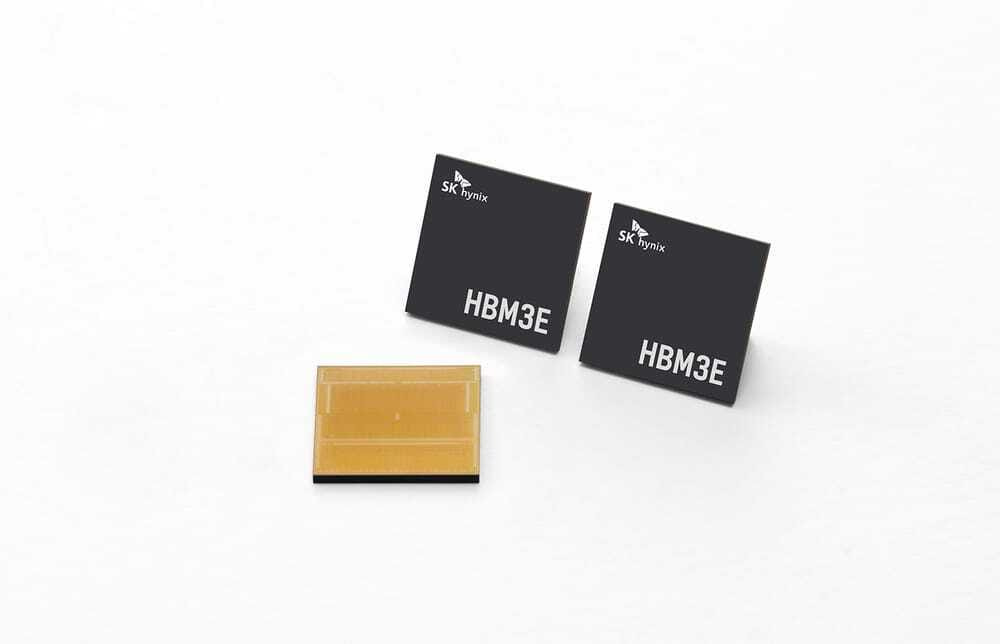
Image source: news.skhynix.com
Understanding SK Hynix’s Market Position
Before examining the company’s strategic assessment, investors must understand SK Hynix’s evolution within the global semiconductor ecosystem. The company operates primarily in two segments: DRAM (Dynamic Random Access Memory) and NAND flash memory. As of the third quarter 2025, DRAM accounted for approximately 78% of total revenue, with NAND representing 20% and the remainder from CMOS image sensors and other products.
The company’s competitive standing transformed dramatically in 2025. According to industry analysis, SK Hynix overtook Samsung Electronics for the first time in 33 years to claim 36.3% of the global DRAM market share versus Samsung’s 32.7%. More significantly, SK Hynix commands a dominant 62-64% share of the HBM market as of Q2 2025, far ahead of competitors Micron (21%) and Samsung (15-17%).
SK HYNIX FINANCIAL SNAPSHOT (Q3 2025)

Revenue:                 KRW 24,448.9 billion ($17.13 billion)
Year-over-Year Growth:   39%
Quarter-over-Quarter:    10%

Operating Profit:        KRW 11,383.4 billion ($8.02 billion)
Operating Margin:        47%
Year-over-Year Growth:   62%

Net Income:              KRW 12,597.5 billion ($8.80 billion)
Net Margin:              52%

Cash Position:           KRW 27.9 trillion
Interest-Bearing Debt:   KRW 24.1 trillion
Net Cash Position:       KRW 3.8 trillion
The global semiconductor market context also matters significantly. World Semiconductor Trade Statistics (WSTS) forecasts the overall semiconductor market to reach $772 billion in 2025 (up 22.5% year-over-year) and approach $975 billion in 2026 (up more than 25%). Within this growth, the memory segment specifically is expected to reach $294.8 billion in 2026, representing 39.4% growth over 2025 levels.
Strengths: Building Unassailable Competitive Advantages
Dominant HBM Market Leadership
SK Hynix’s most formidable strength lies in its commanding position within the high-bandwidth memory market, which represents the fastest-growing and highest-margin segment of the memory industry. The company’s early strategic commitment to HBM development has created what analysts describe as a multi-year lead over competitors.
HBM Market Share Evolution
Q2 2024
Q2 2025
Q3 2025
SK Hynix
57%
64%
62%
Samsung Electronics
38%
15%
17%
Micron Technology
5%
21%
21%
Source: Counterpoint Research
The company achieved several technological milestones that reinforce this leadership. In September 2025, SK Hynix completed development of HBM4, the industry’s most advanced high-bandwidth memory generation, and began mass production ahead of schedule.
HBM4 supports industry-leading speeds and fully meets the performance requirements of key customers, including NVIDIA, which has deployed SK Hynix’s HBM3E memory in its H200 and B200 AI accelerators.
www.deepresearchglobal.com/p/nvidia-swot-analysis

The strategic significance of this leadership extends beyond current market share. HBM products command price premiums of 3-5x over standard DRAM while requiring similar manufacturing capacity, driving substantially higher profitability.
SK Hynix reported that HBM market growth is expected to exceed 30% annually through 2030, creating a sustained high-margin revenue stream.
Strategic Partnership with Industry Leaders
The company has cultivated deep technical and commercial relationships with dominant AI infrastructure providers. The most critical partnership involves NVIDIA, which accounts for a substantial portion of HBM demand. In October 2025, NVIDIA and SK Group announced an expanded collaboration to build an AI factory featuring more than 50,000 NVIDIA GPUs, while deepening their partnership on memory solutions for future GPU generations.
These relationships create significant barriers for competitors. The qualification process for HBM products with major customers requires 12-18 months of rigorous testing and validation. Once approved, switching costs become substantial due to the deep integration between memory architecture and AI accelerator designs. Recent reports indicate that SK Hynix has secured all customer demand for DRAM and NAND products through 2026, demonstrating the strength of these commercial relationships.
Advanced Process Technology Leadership
SK Hynix maintains technological advantages across multiple dimensions of memory manufacturing. The company has successfully transitioned to its 1c nanometer process technology, the sixth generation of 10-nanometer class DRAM, which provides superior density and power efficiency. Production volume using 1c technology is planned to increase eight-fold in 2026, enabling the company to flexibly meet customer requirements across server, mobile, and graphics applications.
In NAND flash memory, SK Hynix produces the world’s highest 321-layer TLC (triple-level cell) and QLC (quad-level cell) products, offering competitive advantages in density and cost-effectiveness for enterprise SSD applications. The company’s technological prowess extends to packaging innovations, with proprietary techniques for stacking 12-high HBM modules that are 40% thinner than previous 8-high configurations.
Robust Financial Position and Cash Generation
The company’s transformation from net debt to net cash position of 3.8 trillion won marks a significant financial milestone. Cash and cash equivalents reached 27.9 trillion won at the end of Q3 2025, increasing by 10.9 trillion won from the previous quarter. This robust balance sheet provides strategic flexibility for capacity expansion, technology development, and potential market share gains during periods when competitors face financial constraints.
SK HYNIX FINANCIAL STRENGTH INDICATORS

Cash Generation (Q3 2025):
Operating Cash Flow:        KRW 13.2 trillion
Free Cash Flow:             Strong positive (post-capex)

Profitability Metrics:
Operating Margin:           47% (Q3 2025)
Net Margin:                 52% (Q3 2025)
EBITDA Margin:              Estimated 50%+

Balance Sheet (Q3 2025):
Total Cash:                 KRW 27.9 trillion
Interest-Bearing Debt:      KRW 24.1 trillion
Net Cash:                   KRW 3.8 trillion
Debt-to-Equity:             Declining trend

Credit Rating:
Fitch Rating:               BBB (Stable to Positive Outlook)
Credit rating agency Fitch revised SK Hynix’s outlook to positive from stable in August 2025, citing strengthened financial metrics and sustained profitability. S&P Global also highlighted SK Hynix as a key beneficiary of AI-driven memory demand with improving credit fundamentals.
Manufacturing Scale and Capacity Expansion
SK Hynix operates world-class fabrication facilities across South Korea and internationally. The company’s manufacturing footprint includes major DRAM fabs in Icheon and Cheongju, South Korea, with NAND operations in Wuxi, China. The company recently completed construction of its M15X fabrication facility in Cheongju ahead of schedule, with equipment installation beginning in late 2025. This facility focuses specifically on HBM production and next-generation DRAM technologies.
The massive Yongin semiconductor cluster project represents the company’s long-term manufacturing strategy. SK Hynix plans to invest an astronomical 600 trillion won (approximately $420 billion) through 2047 to build four fabrication facilities, each equivalent in size to six M15X fabs. The first Yongin fab is expected to begin operations in 2027, focusing on next-generation memory solutions for AI and advanced computing applications.
Manufacturing Capacity Expansion Timeline
Facility
Location
Focus
Timeline
M15X
Cheongju
South Korea
HBM, Advanced DRAM
Equipment installation 2025, Production ramp 2026
Yongin Fab 1
Yongin Cluster
South Korea
Next-gen AI Memory
Construction ongoing, Operations from 2027
Yongin Fab 2-4
Yongin Cluster
South Korea
Future Technology
Phased development through 2047
Diversified Product Portfolio
While HBM captures headlines, SK Hynix maintains strong positions across the memory spectrum. The company’s DDR5 server DRAM products, particularly high-capacity 128GB modules and beyond, experienced shipment volumes more than doubling quarter-over-quarter in Q3 2025. This diversification provides revenue stability as AI workloads increasingly require not only HBM for accelerators but also substantial amounts of conventional DRAM for CPU-attached memory in AI servers.
In enterprise storage, the company’s eSSD (enterprise solid-state drives) products command price premiums due to superior performance and reliability characteristics. The portion of AI server eSSD in total NAND revenue expanded significantly through 2025, contributing to improved profitability in the NAND segment despite broader industry pricing pressures.
Weaknesses: Addressing Structural Vulnerabilities
Cyclicality and Historical Volatility
Despite recent exceptional performance, SK Hynix remains exposed to the semiconductor memory industry’s inherent cyclicality. The company experienced significant losses during the 2022-2023 memory downturn, with multiple quarters of negative operating profits before the AI-driven recovery began in late 2024. Historical patterns show that memory prices and profitability can decline rapidly when supply-demand imbalances emerge.
Goldman Sachs analysts flagged potential downside risks to SK Hynix’s 2025 earnings in mid-2025, projecting a possible 19% drop in operating profit in 2026 compared to market expectations, citing concerns about HBM pricing sustainability. While these projections have not materialized, they highlight persistent investor concerns about cyclical exposure.
HISTORICAL CYCLICALITY INDICATORS

Memory Price Cycles (Historical):
Peak-to-Trough Declines:    Frequently 50-70%
Recovery Timeframes:        Typically 18-24 months
Cycle Drivers:              Supply additions, demand shocks

SK Hynix Historical Volatility:
2022-2023 Downturn:         Multiple quarters of losses
2024-2025 Recovery:         Record profitability
Cycle Amplitude:            Higher than industry average
Customer Concentration Risk
SK Hynix’s heavy dependence on a small number of large customers, particularly NVIDIA for HBM products, creates concentration risk. While NVIDIA’s AI accelerator dominance provides strong near-term demand visibility, any shift in NVIDIA’s competitive position, product roadmap changes, or customer diversification strategies could significantly impact SK Hynix’s revenue and profitability.
The broader customer base also shows concentration in major cloud service providers (Amazon Web Services, Microsoft Azure, Google Cloud) and original equipment manufacturers. Industry sources suggest that the top five customers may account for more than 60% of HBM revenue, elevating the impact of any single customer’s purchasing decisions or financial difficulties.
www.deepresearchglobal.com/p/amazon-swot-analysis

Microsoft SWOT Analysis (2025)
www.deepresearchglobal.com/p/microsoft-swot-analysis
www.deepresearchglobal.com/p/alphabet-swot-analysis

Geopolitical and China Exposure
SK Hynix operates significant manufacturing capacity in China, with NAND production facilities in Wuxi representing approximately 40-50% of the company’s total NAND output. The United States government revoked export control waivers in August 2025 that previously allowed SK Hynix to import advanced chipmaking equipment to Chinese facilities without individual licenses. This policy change creates operational uncertainties and potential capacity constraints for NAND operations.
The company faces a complex dilemma regarding its China operations. Selling or closing the Wuxi facility would reduce geopolitical risk but eliminate substantial production capacity during a period of strong demand. Maintaining operations under tighter export controls limits technology upgrades and creates long-term competitiveness concerns. SK Hynix executives indicated the company may consider selling the Chinese fab if Washington’s export controls become too restrictive, though no immediate action has been announced.
Geopolitical Risk Assessment
Risk Factor
Impact Level
Current Status
US Export Controls
Equipment imports to China
High
Waiver revoked, license required
Technology Transfer Restrictions
Process upgrades in China
Medium-High
Limits on advanced technology
China-Taiwan Tensions
Supply chain disruption
Medium
Monitoring situation
South Korea-China Relations
Trade relations
Medium
Generally stable
Capital Intensity and Investment Requirements
Memory semiconductor manufacturing requires extraordinarily high capital expenditures to maintain competitive technology positions and adequate capacity. SK Hynix plans to increase capital spending significantly to approximately 29-34 trillion won in 2025-2026, up from initial targets of 22 trillion won, representing roughly 30-35% of sales on a three-year moving average.
This capital intensity creates several challenges. First, it limits financial flexibility for dividends, share buybacks, or non-organic growth opportunities. Second, it pressures the company to maintain high utilization rates and pricing to generate adequate returns on massive investments. Third, it increases vulnerability during downturns when capital-intensive competitors may struggle to maintain spending levels, potentially leading to future capacity shortages.
Limited Geographic Diversification
Unlike some competitors establishing meaningful manufacturing presence in the United States or Europe to diversify geopolitical risk, SK Hynix’s production facilities remain concentrated in South Korea and China. While the company participates in discussions about potential U.S. facilities, no concrete plans have materialized comparable to Samsung’s Texas expansion or Micron’s substantial U.S. investments.
This geographic concentration exposes the company to Korean Peninsula-specific risks, including potential conflicts, natural disasters, or localized supply chain disruptions. It also limits SK Hynix’s ability to benefit from government subsidies and incentives offered by the U.S. CHIPS Act or European Union semiconductor support programs.
Opportunities: Capitalizing on Structural Market Shifts
AI-Driven Memory Demand Expansion
The artificial intelligence revolution represents the most significant structural demand driver for SK Hynix in decades. AI training and inference workloads consume memory at rates far exceeding traditional computing applications. Large language models with hundreds of billions or trillions of parameters require massive amounts of high-bandwidth memory, with each next-generation AI accelerator demanding progressively more HBM capacity.
Market analysts project the AI memory market will grow approximately 30% annually through 2030. SK Hynix expects DRAM demand to rise more than 20% year-over-year in 2026 following high-teen growth in 2025, with NAND demand also showing robust growth. Critically, this demand shows different characteristics than previous cycles, with multiple independent drivers including cloud AI services, edge AI deployment, autonomous vehicles, and AI-enhanced consumer devices.
AI MEMORY DEMAND DRIVERS (2026 AND BEYOND)

Training Infrastructure:
Large Language Models:      Growing model complexity
Multimodal AI Systems:      Video, image, audio processing
Scientific Computing:       Drug discovery, climate modeling

Inference Deployment:
Cloud Services:             ChatGPT, Gemini, Claude scale-out
Edge AI:                    Smartphones, IoT devices
Autonomous Systems:         Vehicles, robotics

Content per AI Server:
HBM per GPU:                36-96GB (current generation)
HBM per GPU:                144-192GB (next generation)
Server DRAM:                1-2TB per AI server
Enterprise SSD:             10-30TB per AI server
The shift from AI training to inference workloads creates additional opportunities. While training concentrates memory demand in relatively fewer but extremely powerful systems, inference deployment across broader infrastructure increases the total addressable market for both HBM and conventional DRAM. SK Hynix executives noted that inference-driven workloads are expanding demand across their entire memory portfolio.
Technology Leadership in HBM4 and Beyond
SK Hynix’s early mover advantage in HBM4 development positions the company to capture disproportionate value during the next product transition. HBM4 began mass production in late 2025, with shipments to NVIDIA starting in Q4 2025 for integration into the Rubin GPU platform expected in 2026. Reports indicate NVIDIA requested accelerated HBM4 delivery timelines, potentially six months ahead of original schedules, demonstrating urgent customer demand.
HBM4 technology offers substantial performance improvements over HBM3E, with bandwidth exceeding 2TB/s per stack compared to HBM3E’s 1.2TB/s. This performance leap enables more powerful AI accelerators and justifies premium pricing. The complexity of HBM4 manufacturing, particularly the advanced packaging techniques required, creates higher barriers to entry that benefit established leaders like SK Hynix.
Beyond HBM4, the company actively develops future memory technologies including processing-in-memory (PIM) concepts that integrate computational capabilities directly into memory chips. Samsung and SK Hynix are advancing PIM-enabled memory to address AI inference bottlenecks, potentially opening entirely new high-margin product categories.
Market Share Gains and Competitive Advantages
SK Hynix’s technological lead and capacity expansions create opportunities to gain market share from competitors facing qualification delays or production challenges. Samsung Electronics, despite its resources, has struggled with HBM qualification at major customers, with its market share declining from 38% in Q2 2024 to 15-17% in Q2 2025. While Samsung will undoubtedly improve its position, SK Hynix’s head start provides sustained advantages.
Samsung Electronics - SWOT Analysis Report (2026)
www.deepresearchglobal.com/p/samsung-electronics-swot-analysis-report
Micron Technology, the third major competitor, entered HBM production later than Korean rivals and currently holds approximately 21% market share. While Micron secured important customer qualifications with NVIDIA and others in 2025, capacity constraints limit near-term share gains. This competitive dynamic allows SK Hynix to maintain premium pricing while securing long-term supply agreements with key customers.
Micron - SWOT Analysis Report (2026)
www.deepresearchglobal.com/p/micron-swot-analysis-report
Competitive Positioning Factors
SK Hynix
Samsung
Micron
HBM Market Share (Q2 2025)
62-64%
15-17%
21%
HBM Technology Generation
HBM4 in production
HBM3E, HBM4 development
HBM3E, HBM4 development
NVIDIA Qualification Status
Primary supplier
Working towards qualification
Qualified, ramping volume
Production Capacity
Expanding (M15X, Yongin)
Significant capacity
Moderate capacity
Technology Differentiation
12-high stacking, advanced packaging
Competitive features
Competitive features
Expansion into Adjacent AI Infrastructure
SK Hynix’s partnership discussions with NVIDIA extend beyond traditional memory supply into collaborative development of AI-optimized storage solutions. The companies reportedly plan to introduce an “AI SSD” by 2027, purpose-built for AI training and inference workloads. These specialized storage devices could command substantial premiums over commodity SSDs while leveraging SK Hynix’s NAND technology and system-level expertise.
The convergence of memory and storage in AI systems creates cross-selling opportunities. Customers purchasing HBM for GPUs also require massive amounts of server DRAM, enterprise SSDs, and potentially specialized acceleration memory. SK Hynix’s comprehensive product portfolio positions it as a strategic partner capable of addressing multiple memory hierarchy requirements, potentially leading to deeper customer relationships and greater wallet share.
Pricing Power and Margin Expansion
The tight supply-demand balance in HBM markets provides SK Hynix with substantial pricing power through 2026 and potentially beyond. The company sold its entire 2026 production capacity by late 2025, including all DRAM, HBM, and NAND output. This unprecedented demand visibility enables the company to negotiate favorable pricing terms and maintain high utilization rates.
Industry forecasts suggest memory supply constraints may persist through 2028, particularly for advanced products like HBM and high-capacity DDR5. If this scenario materializes, SK Hynix could sustain operating margins in the 40-50% range significantly longer than typical memory cycles, during which margins often compress to low single digits during downturns.
Strategic M&A and Partnership Opportunities
SK Hynix’s strengthened balance sheet and positive cash flow generation create optionality for strategic acquisitions or partnerships. Potential targets could include specialty memory companies, fabless semiconductor firms developing AI-optimized architectures, or technology licensing opportunities that accelerate roadmap execution. The company previously acquired Intel’s NAND business (now Solidigm), demonstrating willingness to pursue transformative transactions.
Partnerships with automotive manufacturers, edge AI platform providers, or emerging AI infrastructure companies could diversify SK Hynix’s customer base and application exposure. The automotive sector particularly represents a long-term growth opportunity as vehicles incorporate increasing amounts of memory for advanced driver assistance systems and autonomous driving capabilities.
Threats: Navigating an Uncertain Future
Intensifying Competition and Technology Catch-up
While SK Hynix currently leads HBM markets, deep-pocketed competitors are investing heavily to close technology gaps. Samsung Electronics, with vast financial resources and vertical integration advantages, is unlikely to accept its current #3 position permanently. The company is aggressively developing HBM4 technology and could leverage its foundry expertise to develop differentiated solutions.
Chinese memory manufacturers, while currently restricted by export controls, continue advancing capabilities. Companies like ChangXin Memory Technologies (CXMT) have demonstrated rapid progress in conventional DRAM technology and may eventually threaten lower-end market segments.
While advanced HBM production remains beyond Chinese capabilities today, underestimating long-term competitive threats from China has proven costly for many semiconductor companies historically.
COMPETITIVE THREAT ASSESSMENT

Near-Term Threats (2026-2027):
- Samsung HBM qualification success
- Micron capacity expansions
- Pricing pressure from increasing supply

Medium-Term Threats (2028-2030):
- Chinese DRAM advancement
- New entrants in specialty memory
- Alternative memory technologies

Long-Term Threats (Beyond 2030):
- Disruptive memory architectures
- Integration of memory with processing
- Quantum or neuromorphic computing shifts
Cyclical Downturn Risks
Despite structural AI demand drivers, the memory industry’s cyclical nature creates persistent downturn risks. If multiple competitors simultaneously expand HBM capacity based on current strong demand signals, oversupply conditions could emerge by 2027-2028. Historical memory cycles demonstrate that industry participants consistently overbuild capacity during upturn periods, creating subsequent downturns.
AI infrastructure buildout could also decelerate if expected returns on investment fail to materialize, if economic recession reduces corporate technology spending, or if breakthrough efficiency improvements reduce memory intensity per AI workload. The unprecedented concentration of AI investment in a small number of hyperscale cloud providers creates tail risks if any major customer significantly reduces spending.
Geopolitical Escalation
Intensifying U.S.-China technology competition poses significant risks to SK Hynix’s business model. Further tightening of export controls could force the company to idle or sell its Wuxi NAND facility, reducing production capacity during a supply-constrained period. Retaliatory Chinese actions against South Korean companies could include market access restrictions, regulatory challenges, or punitive measures against SK Hynix’s local operations.
The Taiwan situation represents an additional geopolitical wild card. While SK Hynix has no direct manufacturing presence in Taiwan, a military conflict would devastate global semiconductor supply chains given Taiwan’s central role. The resulting economic disruption would likely crater memory demand across all sectors, creating severe cyclical pressures.
Potential scenarios involving Korean Peninsula tensions, including North Korean provocations or broader regional instability, could directly threaten SK Hynix’s South Korean manufacturing facilities or create supply chain disruptions. While these scenarios have low probability, their potential impact would be catastrophic.
Geopolitical Risk Scenarios
Probability
Potential Impact
Mitigation Strategies
Further U.S.-China restrictions
Medium-High
Moderate-High
Geographic diversification, technology isolation
China retaliation measures
Medium
Moderate
Political engagement, operational flexibility
Taiwan Strait conflict
Low
Extreme
Business continuity planning, inventory buffers
Korean Peninsula crisis
Low-Medium
Severe
Facility hardening, alternative supply arrangements
Technology Disruption and Alternative Approaches
Emerging memory technologies could potentially disrupt conventional DRAM and NAND markets. Magnetoresistive RAM (MRAM), resistive RAM (ReRAM), phase-change memory (PCM), and other novel approaches offer theoretical advantages in speed, endurance, or power consumption. While none currently threaten mainstream markets, breakthrough developments could render existing manufacturing investments obsolete.
The integration of memory and processing, including concepts like computing-in-memory or near-memory computing, could fundamentally alter system architectures and reduce demand for standalone memory chips. Major processor manufacturers including Intel, AMD, and ARM-based system designers continuously explore alternatives to traditional memory hierarchies.
Customer Diversification by Major Accounts
SK Hynix’s largest customers have strong incentives to avoid dependence on a single memory supplier. NVIDIA, despite its current reliance on SK Hynix for HBM, actively qualifies alternative sources to ensure supply security and maintain pricing leverage. Samsung and Micron are working intensively to secure larger shares of NVIDIA’s HBM requirements for future product generations.
Cloud service providers similarly pursue multi-vendor strategies for all critical components. As HBM production capacity increases across the industry, customers will gain leverage to negotiate more favorable pricing and terms. The exceptional margins SK Hynix currently enjoys on HBM products may therefore prove transient even if overall demand remains strong.
Execution Risks on Massive Capital Programs
SK Hynix’s ambitious capacity expansion plans, particularly the 600 trillion won Yongin project, carry substantial execution risks. Delays in construction, equipment delivery bottlenecks, yield challenges on new process technologies, or cost overruns could undermine projected returns on investment. The company’s ability to recruit and retain the thousands of highly skilled engineers required for these facilities in a tight labor market represents another challenge.
The sheer scale of planned investments also creates financial risks if market conditions deteriorate before new capacity becomes productive. Unlike equipment-intensive sectors where assets can be redeployed, semiconductor fabs have limited alternative uses and represent mostly sunk costs if demand fails to materialize as expected.
Regulatory and Antitrust Concerns
SK Hynix’s dominant market share in HBM and leading position in overall DRAM markets could attract antitrust scrutiny from regulators in key markets including the United States, European Union, or China. Memory industry participants have faced allegations of price collusion in previous cycles, resulting in substantial fines. High margins during tight supply conditions often trigger regulatory investigations.
Export control regulations continue evolving, with potential for new restrictions on semiconductor technology transfer or sales to specific countries or customers. Compliance requirements create administrative burdens and could limit SK Hynix’s ability to serve certain markets or customers.
Strategic Implications for Investors
SK Hynix presents a complex investment profile characterized by extraordinary near-term opportunities tempered by structural vulnerabilities and cyclical risks. The company has successfully positioned itself at the nexus of the artificial intelligence revolution, capturing dominant market share in the fastest-growing and highest-margin memory segment. Record profitability, sold-out production capacity through 2026, and improving financial strength demonstrate successful execution of long-term strategic plans.
However, investors must recognize that current conditions represent an exceptional peak in the memory cycle rather than a sustainable baseline. The company’s valuation of approximately 7x forward price-to-earnings, significantly below peers like Micron at 12x, reflects market recognition of both cyclical and geopolitical risks. This discount provides a margin of safety but also signals genuine concerns about sustainability and volatility.
INVESTOR CONSIDERATIONS

Bull Case Factors:
- Sustained AI memory demand through 2028+
- HBM4 technology leadership and margin expansion
- Market share gains as competitors struggle
- Longer-than-typical upcycle duration
- Strategic partnership depth with NVIDIA

Bear Case Factors:
- Cyclical overcapacity by 2027-2028
- Geopolitical disruption to China operations
- Customer diversification reducing pricing power
- Competition catching up in HBM technology
- Macroeconomic slowdown impacting AI spending

Risk Management Strategies:
- Position sizing appropriate to volatility tolerance
- Monitoring capacity additions across industry
- Tracking customer qualification announcements
- Following geopolitical developments closely
- Diversification across semiconductor exposures
The memory industry’s cyclicality means that exceptional periods of profitability inevitably give way to downturns. Investors should evaluate SK Hynix with recognition that 47% operating margins are unlikely to persist indefinitely. The critical questions concern duration rather than whether a downturn will occur. If AI demand sustains elevated memory consumption for three to five years before supply catches up, SK Hynix could generate substantial shareholder value. Conversely, if oversupply conditions emerge by late 2026 or 2027, current valuations may prove insufficient buffers.
Geopolitical risks deserve particular attention. The company’s China exposure, while currently managed, could become untenable if U.S.-China relations deteriorate further. Any scenario requiring exit from Chinese operations would involve substantial capacity loss and transition costs. The concentration of manufacturing in South Korea, while leveraging Korea’s semiconductor ecosystem, leaves the company vulnerable to region-specific disruptions.
My Final Thoughts
For investors with appropriate risk tolerance seeking exposure to the AI infrastructure buildout, SK Hynix offers compelling opportunities within a diversified semiconductor portfolio. The company’s HBM leadership, strong customer relationships, and robust near-term demand visibility provide upside potential through 2026 and potentially 2027. The current valuation discount to peers offers some downside protection if industry conditions normalize more quickly than bulls anticipate.
However, investors should approach SK Hynix as a cyclical growth investment rather than a defensive holding.
Position sizing should account for the potential for significant volatility, and the investment should be continually reassessed as new information emerges about capacity additions, competitive dynamics, and demand sustainability. Monitoring quarterly earnings reports for signs of pricing pressure, inventory accumulation at customers, or slowing order patterns provides early indicators of cycle transitions.
The following framework may help investors evaluate their positions over time:
Monitoring Framework
Positive Indicators
Warning Signs
Demand Signals
Continued capacity sold-out, extended lead times
Inventory accumulation, order cancellations
Pricing Trends
Stable or increasing ASPs, maintained margins
Price erosion, promotional activity
Competitive Position
Market share stability, technology leadership
Samsung/Micron qualification successes, share loss
Financial Health
Strong cash generation, debt reduction
Rising debt levels, negative free cash flow
Geopolitical Environment
Stable or improving relations
Export control tightening, retaliation threats
Technology Roadmap
On-time product launches, yield improvements
Delays, yield issues, competitor leapfrogs
SK Hynix’s transformation from perennial underperformer to market leader in the AI era represents one of the semiconductor industry’s remarkable turnarounds. The company’s success in anticipating and capturing the HBM opportunity demonstrates strategic foresight and execution capabilities.
Whether these advantages prove durable through future cycles will determine long-term investment outcomes. For investors who understand and accept the inherent volatility of memory semiconductors, SK Hynix offers a high-quality exposure to one of technology’s most significant secular trends.
The company’s ability to navigate the complex intersection of technological leadership, geopolitical tensions, financial discipline, and cyclical market dynamics will define its trajectory over the coming years.
As of late 2025, SK Hynix stands well-positioned to capitalize on extraordinary market opportunities while facing genuine challenges that demand continuous strategic attention and operational excellence.
Disclaimer: This analysis is for informational purposes only and should not be construed as investment advice. Investors should conduct their own due diligence and consult with financial advisors before making investment decisions.