

The biopharmaceutical sector continues to demonstrate resilience and innovation as companies navigate complex challenges ranging from patent expirations to evolving regulatory requirements.
Gilead Sciences, Inc., $GILD ( ▼ 0.65% ) a leading innovator in the treatment of life-threatening diseases, stands at a critical juncture as it positions itself for sustained growth beyond 2026.
This comprehensive analysis examines the company’s strategic position through a detailed SWOT framework, providing investors with essential insights into the opportunities and challenges that lie ahead.
Table of Contents

Image source: investors.gilead.com
Also Read:
www.deepresearchglobal.com/p/pfizer-swot-analysis
Amgen - SWOT Analysis Report (2026)
www.deepresearchglobal.com/p/amgen-swot-analysis-report
www.deepresearchglobal.com/p/eli-lilly-swot-analysis
Intuitive Surgical - SWOT Analysis Report (2026)
www.deepresearchglobal.com/p/intuitive-surgical-swot-analysis-report
Company Overview and Recent Performance
Gilead Sciences, headquartered in Foster City, California, has established itself as a powerhouse in the biopharmaceutical industry with a focus on virology, oncology, and inflammation.
As of the third quarter of 2025, the company reported total revenues of $7.8 billion, representing a 3% increase compared to the same period in 2024. More importantly, product sales excluding Veklury (remdesivir) grew 4% to $7.1 billion, demonstrating the underlying strength of the company’s core therapeutic areas.
The company’s financial performance reflects a strategic transformation underway, with CEO Daniel O’Day emphasizing that Gilead possesses “the strongest clinical pipeline in Gilead’s history, and no major loss of exclusivity expected until 2036.” This statement carries significant weight for investors evaluating the company’s long-term growth trajectory.
Financial Metric
Q3 2025
Q3 2024
Change
Total Revenues
$7.8 billion
$7.5 billion
+3%
Product Sales
$7.3 billion
$7.5 billion
-2%
Product Sales (ex-Veklury)
$7.1 billion
$6.8 billion
+4%
Diluted EPS
$2.43
$1.00
+143%
Operating Cash Flow
$4.1 billion
N/A
N/A
Strengths: Commanding Market Position and Innovation Leadership
HIV Portfolio Dominance
Gilead’s most significant strength lies in its commanding position within the HIV treatment market. The company’s HIV product sales reached $5.3 billion in Q3 2025, representing a 4% increase year-over-year. At the heart of this success is Biktarvy, which has achieved an unprecedented market share of 52% among antiretroviral treatments.
Biktarvy’s sales increased 6% to $3.7 billion in Q3 2025, while Descovy demonstrated even more impressive growth with a 20% increase to $701 million during the same period.
This dominance is particularly noteworthy given the competitive intensity of the HIV treatment space, where ViiV Healthcare and other players continue to introduce rival therapies.
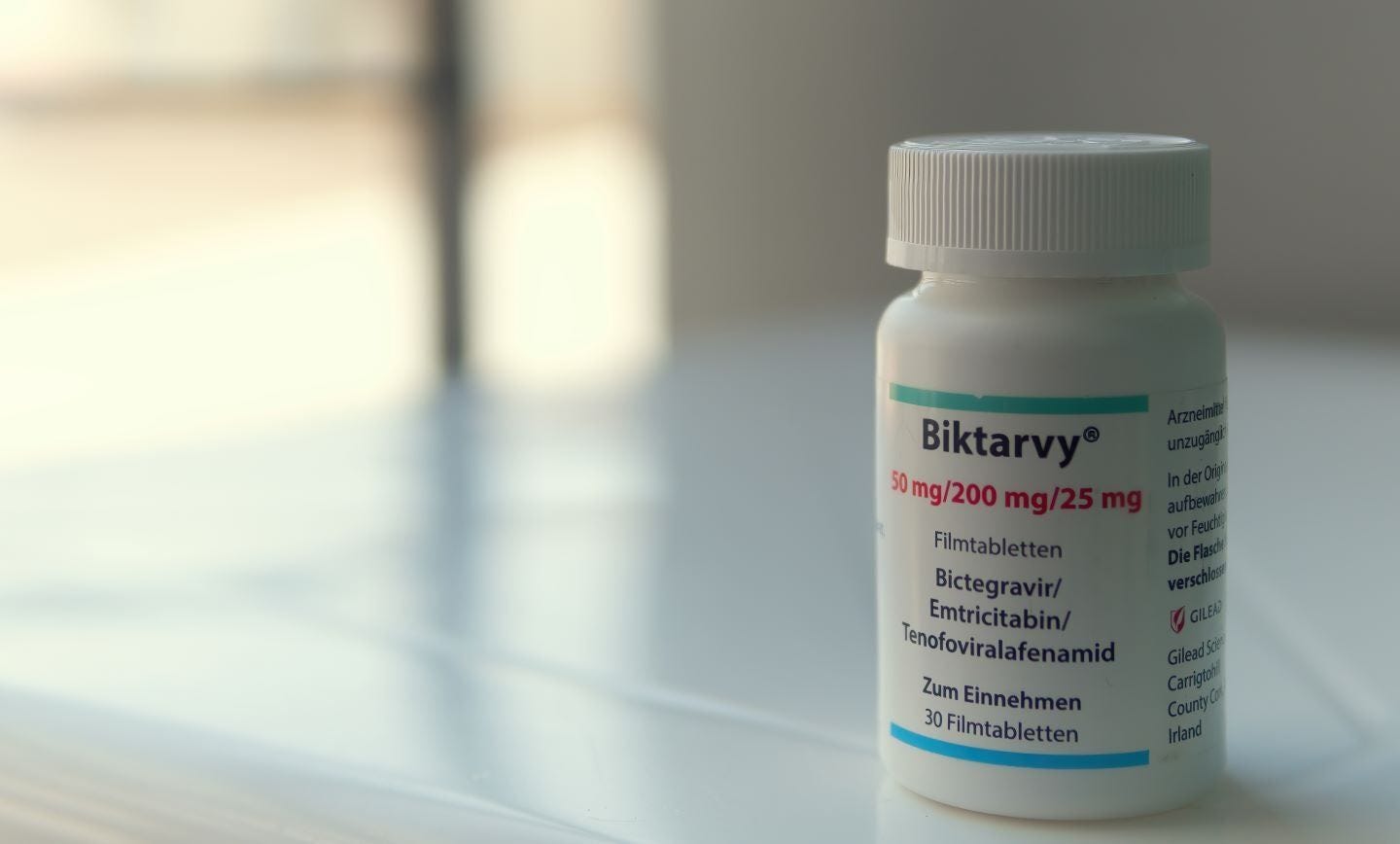
Image source: pharmaceutical-technology.com
The global HIV drugs market is projected to expand substantially, with estimates suggesting growth from $36.25 billion in 2025 to $52.95 billion by 2034, representing a compound annual growth rate of 4.3%. Gilead’s strong positioning within this expanding market provides a robust foundation for sustained revenue generation.
Revolutionary HIV Prevention Innovation
On June 18, 2025, Gilead achieved a groundbreaking milestone with the FDA approval of Yeztugo (lenacapavir), the first and only HIV prevention option offering six months of protection with a single injection. This approval, based on the PURPOSE 1 and PURPOSE 2 trials, represents a paradigm shift in HIV prevention strategies.
The clinical data supporting lenacapavir’s approval demonstrated remarkable efficacy. In the PURPOSE 1 trial conducted among cisgender women in South Africa and Uganda, lenacapavir showed 99.9% effectiveness in preventing HIV infections. Analysts project that Yeztugo could reach peak sales of $4.5 billion, potentially transforming Gilead’s revenue profile.
The CDC has issued strong recommendations for the use of twice-yearly injectable lenacapavir for HIV pre-exposure prophylaxis (PrEP), further validating the drug’s clinical value and supporting its market adoption.
Product
Q3 2025 Sales
Q3 2024 Sales
Growth Rate
Biktarvy
$3.7 billion
$3.5 billion
+6%
Descovy
$701 million
$584 million
+20%
Yeztugo (Lenacapavir)
Launch phase
N/A
New product
Expanding Oncology Portfolio
Beyond HIV, Gilead has built a formidable oncology platform anchored by Trodelvy (sacituzumab govitecan-hziy), which generated $357 million in Q3 2025, representing 7% growth year-over-year. The drug’s potential expanded significantly following the presentation of Phase 3 ASCENT-03 data at the 2025 European Society for Medical Oncology (ESMO) Congress.
The ASCENT-03 study demonstrated that Trodelvy reduced the risk of disease progression or death by 38% compared to chemotherapy as first-line therapy in patients with metastatic triple-negative breast cancer who are not candidates for PD-1/PD-L1 checkpoint inhibitors. This represents a significant expansion opportunity beyond the drug’s current late-line indications.
Gilead’s cell therapy portfolio, led by Yescarta (axicabtagene ciloleucel) and Tecartus, continues to demonstrate long-term clinical value. Recent data presented at the 2025 American Society of Hematology (ASH) meeting showed that Yescarta is the only CAR T-cell therapy to demonstrate durable response and long-term survival after five years in patients with relapsed/refractory non-Hodgkin lymphomas.
Extended Patent Protection and Financial Stability
One of Gilead’s most compelling strengths for investors is its extended patent protection timeline. The company announced settlement agreements with generic manufacturers Lupin Ltd., Cipla Ltd., and Laurus Labs Ltd., extending Biktarvy’s patent exclusivity until April 1, 2036, more than two years beyond previous projections. This extension is particularly significant given that Biktarvy generated approximately $13.42 billion in sales in 2024.
The company maintains a solid financial foundation with $9.4 billion in cash, cash equivalents, and marketable debt securities as of September 30, 2025. During Q3 2025 alone, Gilead generated $4.1 billion in operating cash flow, demonstrating strong operational efficiency.
Financial Highlights (Q3 2025):
- Non-GAAP Diluted EPS: $2.47 (vs. $2.02 in Q3 2024)
- Operating Margin: 42.8% (vs. 11.8% in Q3 2024)
- Non-GAAP Operating Margin: 50.5%
- Effective Tax Rate: 16.2%
- Dividend per Share: $0.79 (quarterly)
- Share Buybacks: $435 million in Q3 2025
Strategic Manufacturing Investment
Gilead has committed to a substantial $32 billion investment in U.S. manufacturing and research and development through 2030. This investment includes the groundbreaking of a new Pharmaceutical Development and Manufacturing Technical Development Center in Foster City, California, which is expected to create more than 3,000 direct and indirect jobs by 2028.
This commitment to domestic manufacturing enhances supply chain resilience and positions Gilead to capitalize on potential policy incentives favoring domestic pharmaceutical production.
Weaknesses: Challenges and Competitive Pressures
Cell Therapy Headwinds
While Gilead’s CAR T-cell therapy platform represents cutting-edge innovation, the segment faces significant competitive pressure. Cell therapy product sales decreased 11% to $432 million in Q3 2025 compared to the same period in 2024, reflecting ongoing competitive headwinds from multiple approved CAR T-cell therapies in the market.
Yescarta sales declined 10% to $349 million, while Tecartus sales fell 15% to $83 million year-over-year. These declines stem from increased competition from alternative CAR T therapies, including products from Bristol Myers Squibb, Novartis, and other innovators entering this space.
Cell Therapy Product
Q3 2025
Q3 2024
Change
Yescarta
$349M
$388M
-10%
Tecartus
$83M
$98M
-15%
Total Cell Therapy
$432M
$486M
-11%
Veklury Revenue Volatility
Gilead’s COVID-19 treatment Veklury (remdesivir) continues to experience substantial revenue volatility. Sales decreased 60% to $277 million in Q3 2025 compared to the same period in 2024, primarily driven by lower rates of COVID-19-related hospitalizations. While this decline was anticipated, it represents a significant headwind to overall revenue growth.
The company’s full-year 2025 guidance projects Veklury revenues of approximately $1.0 billion, down from $1.46 billion in 2024. This dependence on pandemic-related demand creates unpredictability in financial forecasting.
Regulatory Challenges and Clinical Holds

Image source: cellandgene.com
Gilead encountered regulatory setbacks in 2025, most notably the FDA’s clinical hold on trials testing combination treatments of GS-1720 and GS-4182 for HIV infection. The FDA placed this hold on June 10, 2025, citing safety concerns that required further evaluation.
These regulatory hurdles can delay product development timelines and increase research and development costs. The ability to resolve FDA concerns and lift clinical holds remains uncertain, potentially impacting the company’s pipeline progression.
Legal and Compliance Risks
On July 15, 2025, a coalition of attorneys general secured $202 million from Gilead for running an illegal kickback scheme to promote its HIV medications. This settlement, while resolving the matter, highlights ongoing legal and compliance risks that can result in significant financial penalties and reputational damage.
Such legal challenges can divert management attention and resources away from core business operations and innovation efforts.
Pricing Pressure and Market Access Challenges
The pharmaceutical industry faces increasing pricing pressure from government agencies, insurance companies, and advocacy groups. For lenacapavir, despite its breakthrough status, UNAIDS urged Gilead to reduce the price to ensure broader access, particularly in low- and middle-income countries.
The Inflation Reduction Act’s drug pricing provisions add another layer of complexity, potentially impacting margins on Medicare-covered medications. Gilead’s guidance acknowledges these pressures, noting that a larger-than-anticipated shift in payer mix toward more highly discounted segments could affect revenues.
Opportunities: Growth Catalysts and Market Expansion
HIV Prevention Market Transformation
The HIV prevention market presents extraordinary growth potential for Gilead. In the United States alone, the company aims to expand the PrEP market from approximately 400,000 people to more than 1 million by the mid-2030s. Globally, approximately 1.3 million new HIV infections occur annually, representing a vast addressable market for prevention therapies.
Gilead’s global access strategy for lenacapavir includes partnerships with PEPFAR and the Global Fund to deliver the treatment to up to two million people over three years in primarily low- and lower-middle-income countries. This approach balances commercial opportunity with public health impact, potentially enhancing the company’s reputation while building long-term market presence.
HIV Prevention Market Metrics
Current
Projected (2030s)
U.S. PrEP Users
~400,000
>1,000,000
Global New Infections (Annual)
1.3 million
Target: Reduction
Lenacapavir Peak Sales Estimate
Launch phase
$4.5 billion
Oncology Pipeline Advancement
Gilead’s oncology pipeline holds substantial promise for revenue diversification and growth. The positive ASCENT-03 data positions Trodelvy for potential first-line approval in metastatic triple-negative breast cancer, which could significantly expand the drug’s market opportunity. Triple-negative breast cancer accounts for approximately 15% of all breast cancers and has historically been difficult to treat.
Beyond breast cancer, Trodelvy is being evaluated in multiple solid tumor types, including bladder cancer, small cell lung cancer, and endometrial cancer. Each successful indication expansion could add hundreds of millions in annual revenue.
The company’s acquisition of Interius BioTherapeutics for in vivo therapeutics development represents a strategic investment in next-generation cell therapy technologies that could yield breakthrough treatments in the coming years.
Strategic Partnerships and Collaborations
Gilead has actively pursued strategic partnerships to accelerate innovation and expand its pipeline. In January 2025, the company entered into a strategic partnership with LEO Pharma to acquire LEO Pharma’s comprehensive preclinical oral STAT6 small molecule inhibitors and targeted protein degraders. This program holds potential in multiple inflammatory diseases, expanding Gilead’s therapeutic reach.
In June 2025, Gilead signed an exclusive option and license agreement with Kymera Therapeutics to develop novel oral molecular glue CDK2 degraders. These innovative approaches to targeted protein degradation represent the cutting edge of drug development and could yield first-in-class therapies.
Recent Strategic Partnerships (2025):
- LEO Pharma: STAT6 program for inflammatory diseases
- Kymera Therapeutics: CDK2 degrader development
- Pregene: $120 million upfront payment for collaboration
- PEPFAR: Lenacapavir access partnership
- Global Fund: Distribution to low/middle-income countries
Liver Disease Portfolio Growth
The Liver Disease portfolio demonstrated strong momentum with 12% growth to $819 million in Q3 2025, primarily driven by Livdelzi (seladelpar) for the treatment of primary biliary cholangitis. This rare liver disease affects approximately 130,000 to 200,000 people in the United States and Europe.
Livdelzi received FDA approval in 2024 and has shown impressive uptake, with 35% sequential growth noted in Q3 2025. As awareness grows and the drug gains traction in hepatology practices, it could evolve into a significant revenue contributor.
Potential for Pipeline Productivity
Gilead’s management has set an ambitious goal to deliver 10 or more transformative therapies by 2030, originally announced in 2019. The company’s current pipeline includes more than 40 investigational compounds across virology, oncology, and inflammatory diseases.
The company’s research and development expenses of $1.3 billion in Q3 2025, representing 17.2% of revenues on a non-GAAP basis, demonstrate continued commitment to innovation. This investment level positions Gilead to maintain a steady flow of new product approvals in the coming years.
Threats: External Challenges and Market Risks
Intensifying HIV Market Competition
While Gilead dominates the HIV treatment market, competition continues to intensify. ViiV Healthcare, a joint venture majority-owned by GlaxoSmithKline, has been aggressively competing with long-acting HIV therapies including Apretude (cabotegravir), a bimonthly injectable PrEP option.
ViiV Healthcare announced plans to triple Apretude supply to certain countries, directly challenging Gilead’s lenacapavir launch. Real-world data has shown Apretude to be more than 99% effective at preventing HIV infections, creating a credible alternative to Gilead’s offerings.
Other competitors including Merck, Johnson & Johnson, and emerging biotech companies continue to invest in novel HIV treatment approaches, including broadly neutralizing antibodies and gene therapies that could disrupt current treatment paradigms.
Biosimilar and Generic Threats
Although Gilead has successfully extended Biktarvy’s patent protection until 2036, the eventual arrival of generic competition will substantially erode revenues. The pharmaceutical industry has repeatedly demonstrated that blockbuster drugs can lose 80% to 90% of their revenue within the first year following generic entry.
Other products in Gilead’s portfolio face nearer-term patent cliffs. While the company has no major loss of exclusivity expected until 2036 for Biktarvy, other products including certain hepatitis C treatments have already faced biosimilar competition in international markets.
Regulatory Uncertainty and Policy Changes
The pharmaceutical regulatory environment remains in flux, with potential changes in drug pricing policies, patent regulations, and approval standards creating uncertainty. The Inflation Reduction Act provisions allowing Medicare to negotiate drug prices directly with manufacturers could pressure margins on key products.
Political changes and evolving trade policies, including potential tariffs mentioned in Gilead’s forward-looking statements, add additional layers of uncertainty to international operations and supply chain management.
Pipeline Execution Risks
Despite a robust pipeline, drug development remains inherently risky. Recent setbacks illustrate this reality. In December 2025, Arcus Biosciences announced the discontinuation of development for domvanalimab in combination with zimberelimab for gastrointestinal cancers after a trial was halted for futility. This program was being developed in partnership with Gilead.
Phase 3 clinical trials for ASCENT-07, evaluating Trodelvy in combination with other agents, also failed to meet their primary endpoint, demonstrating that even late-stage programs face substantial risk.
Pipeline Risk Factors
Late-stage trial failures
Regulatory approval delays
Safety signal discoveries
Manufacturing scale-up challenges
Commercial launch execution
Manufacturing and Supply Chain Vulnerabilities
The pharmaceutical industry’s complex global supply chains face ongoing disruptions from geopolitical tensions, pandemic-related challenges, and raw material shortages. Gilead’s ambitious U.S. manufacturing expansion, while strategically sound, requires flawless execution and substantial capital allocation that could have been directed to other opportunities.
Production issues at contract manufacturing organizations or quality control problems could lead to product shortages, regulatory actions, and revenue disruptions.
Strategic Implications for Investors
Revenue Diversification Progress
Gilead’s strategic evolution toward greater revenue diversification presents both opportunities and challenges. The HIV franchise, while remarkably profitable, still accounts for approximately 68% of product sales excluding Veklury. The company must successfully execute on its oncology and liver disease growth strategies to reduce this concentration risk.
The path to balanced revenue streams will require successful label expansions for Trodelvy, sustained growth in cell therapy despite competitive pressures, and continued innovation in the liver disease portfolio. Investors should monitor quarterly progress against these diversification objectives.
Capital Allocation Priorities
Gilead returned substantial capital to shareholders in Q3 2025, paying $1.0 billion in dividends and repurchasing $435 million of common stock. The company’s quarterly dividend of $0.79 per share demonstrates commitment to shareholder returns while maintaining financial flexibility for strategic investments.
The $32 billion U.S. manufacturing and R&D investment through 2030 represents a significant capital commitment that could constrain large-scale merger and acquisition activity. However, the company maintains sufficient financial capacity for bolt-on acquisitions and in-licensing deals that strengthen the pipeline.
Valuation Considerations
With no major patent expiration until 2036 and multiple growth drivers including lenacapavir, Trodelvy label expansions, and emerging pipeline assets, Gilead presents a distinctive risk-return profile. The company’s current valuation metrics must be weighed against the execution risks inherent in launching multiple new products while navigating an increasingly complex regulatory and competitive environment.
Moody’s affirmation of Gilead’s A3 senior unsecured rating with an upgraded outlook to positive from stable, citing momentum in the product pipeline, provides external validation of the company’s strengthening position.
Guidance and Forward Outlook
For full-year 2025, Gilead expects product sales between $28.4 billion and $28.7 billion, with product sales excluding Veklury ranging from $27.4 billion to $27.7 billion. Non-GAAP diluted earnings per share guidance of $8.05 to $8.25 represents solid profitability amid ongoing investments in growth initiatives.
2025 Full-Year Guidance (Updated October 2025):
Product Sales: $28.4B - $28.7B
Product Sales (ex-Veklury): $27.4B - $27.7B
Veklury: ~$1.0B
Non-GAAP Diluted EPS: $8.05 - $8.25
My Final Thoughts
Gilead Sciences occupies a unique position within the biopharmaceutical sector, combining the stability of a dominant HIV franchise with the growth potential of innovative oncology and prevention therapies. The company’s SWOT analysis reveals a business in transition, successfully managing near-term challenges while building the foundation for long-term value creation.
The strengths of market leadership in HIV, breakthrough innovation with lenacapavir, extended patent protection through 2036, and substantial financial resources provide a solid foundation. These assets position Gilead to weather competitive pressures and execute on strategic priorities.
However, investors must remain cognizant of the weaknesses including cell therapy headwinds, regulatory challenges, and legal risks that could impact near-term performance. The threats of intensifying competition, eventual generic erosion, and pipeline execution risks require careful monitoring.
The opportunities presented by the transforming HIV prevention market, oncology pipeline advancement, and strategic partnerships offer substantial upside potential. Successfully capturing these opportunities while managing the identified threats will determine whether Gilead achieves its ambition of delivering 10 or more transformative therapies by 2030.
The company’s progress over the next 24 to 36 months in launching lenacapavir globally, expanding Trodelvy’s indications, and advancing pipeline assets will prove critical in validating the investment thesis.
As always, investors should conduct comprehensive due diligence, consider their individual financial circumstances, and consult with qualified financial advisors before making investment decisions.
The biopharmaceutical sector’s inherent risks require careful assessment alongside the substantial opportunities present in companies like Gilead Sciences that are reshaping treatment paradigms for serious diseases.
Disclaimer: This analysis is for informational purposes only and should not be construed as investment advice. Investors should conduct their own due diligence and consult with financial advisors before making investment decisions.